 My blog tends to get followed by those interested in travel, or lumped together with travel writers, but what I think differentiates it from traveler blogs it is that its about living in and discovering new places and making them home, which is a lot different that being a tourist or a traveler. We have lived in so many places over the years, and been through the transit of settling. Its tiring in the best of times, which this hasn’t been, and this time around I’m just exhausted by it all. We’re lived out of suitcases for months, been through the process of unpacking and finding homes for the contents of 176 boxes, hung the art on the walls, and tried to fix the terrible lighting in this house in the name of making life feel our kind of normal. I know the process, the pitfalls and what helps make us slowly fit in and really call somewhere home. For any number of reasons, 2.5 months into our “Jamaican homewarming” I am still struggling to feel the spark. This is mostly not the fault of Jamaica (or Jamaicans) but a cocktail of difficulties that has made our time here to date less than ideal. I’ve struggled to do things like maintain this blog, or spend time doing things I used to enjoy, and I am in a funk. Friends and family have asked me if everything is alright and encouragingly ask me about life here, but my blog approaches its third month of silence, its time to make a decision on the way forward. There are interesting things and stories here, and there is so much that is better. We have clean air, views of the mountains and somewhere to go walking after work. The streets have traffic, but not the lunacy and filth of Kathmandu streets. Our area of Kingston is so much more attractive than our earlier homes, but I miss the enthusiasm I had for discovering Manila and Kathmandu. Perhaps it is time to see if the passion can rise from the storytelling process and not just the other way around? Will the discipline of writing again help ignite some kind of spark for life in this country? I’ll give it a try. Words of encouragement are very welcome.

Five Days/Five Greek Photos Day 4: Ouch!
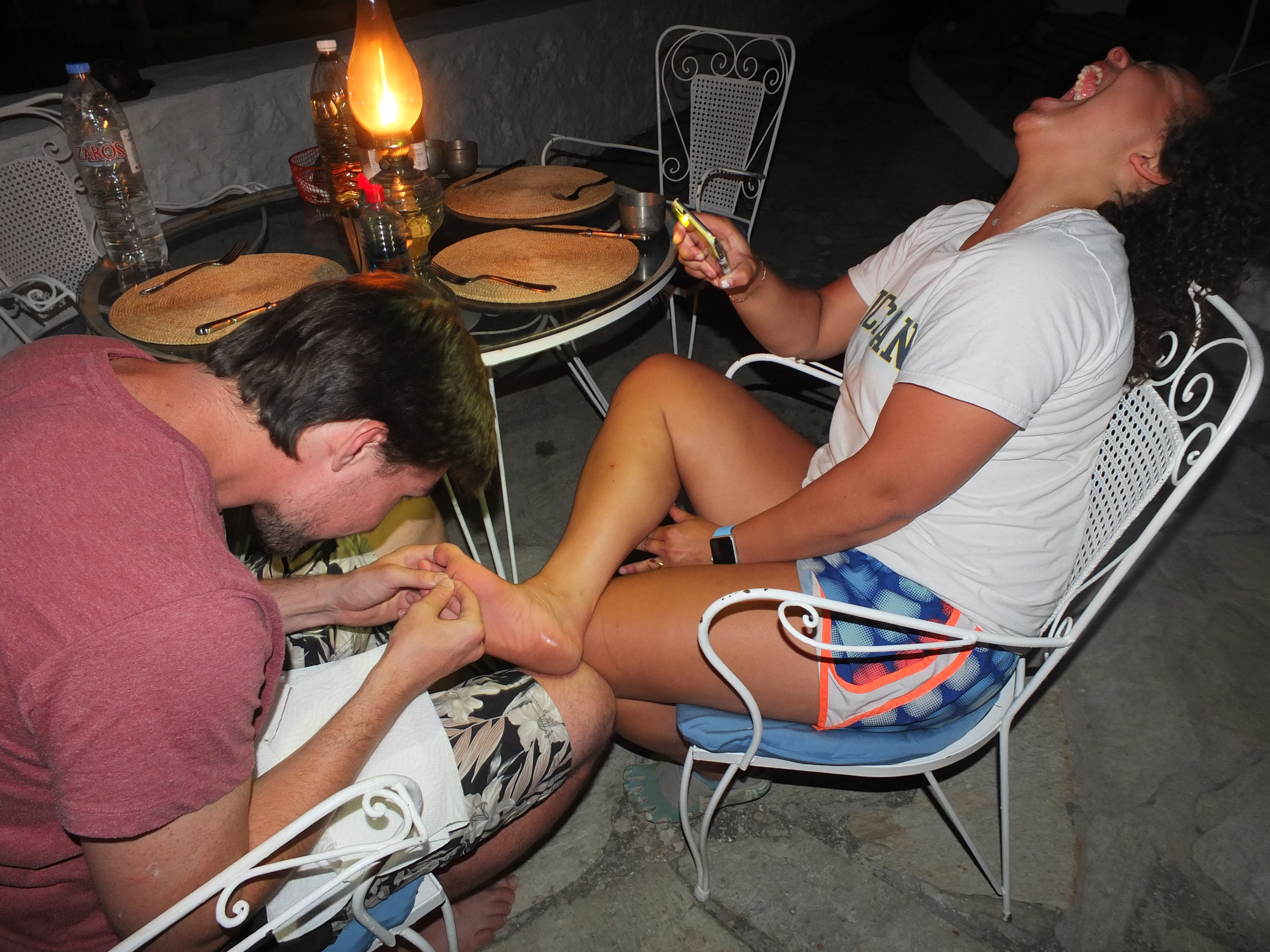
So, some might say its a Greek initiation. (However, I have– unbelievably– been able to avoid it over the last 30 years.) The sea urchin injury claims almost everyone at some point or another…and it hurts! The spines are very brittle and break off easily into the careless swimmer’s foot. And unlike, say, a thorn or a splinter of wood, the spines have no structural integrity, and cannot hold together through the extraction process. They break off or flake away in pieces, leaving the tip of the spine hopelessly buried in the skin. As you walk, the spines press down painfully and there’s nothing you can do except wait for the body to push them out.
Fluid builds up around the remains of the each spine, pushing the black implants back up to the skin’s surface. Ten days later, you have your foot back. Tread carefully if you don’t want the majority of your vacation compromised!
Share this on social media:

Five Days/Five Greek Photos Day 3: Once in a Blue Moon
 My favourite routine each evening was to have dinner on the front patio looking out to sea, watching the sun’s orange glow slowly dip and disappear. For a short while, as the sun descended, the horizon displayed fantastic shades of purple, which sadly faded as the light gave way. The orange moon ascended and turned white. This year the municipality turned off half the island’s street lights to save money, so the moonlight featured even more above our darkened view of the town below. Every night the lunar show was repeated but every night it was a little different.
As the days passed and our evening moon became fuller and fuller, media chat started about the forthcoming blue moon, which was just an expression to us before. We learnt, like the rest of the planet, that its the rare second full moon in one month, and we decided to spend it on the beach.
I loved how brightly the blue moon burned and lit up the rocks on the beach. We barely needed the lamp.
Share this on social media:

Five Days/Five Greek Photos Day 2: Harrods

Fifteen years ago when we lived year round in Greece, if you needed thread, pillows, tableware, fabric…just about anything really…you went to Harrods to see if they had it in stock. If it was on the island at all, Harrods was often your best bet. The British community had affectionately dubbed it after the famous Knightsbridge store in part because it was the was the general largest store on the island and had seemingly be around for ever. And in part, I think, because it highlighted just how limited our shopping options were at that time.
Inside the store was a fascinating mix of old style retail design with funky old Greek products and modern items from all over the world. The main sales counter also doubled as the haberdashery section with bolts of cloth on spools lining the wall behind the cashier. The main floor was covered in motley displays of everything: men’s, women’s and children’s clothing, lingerie, bathing suits, pressure cookers and reels of floral plastic sheeting that Greeks love to use to cover dining tables. Above, a traditional narrow mezzanine floor stored boxes and dusty old promotional posters for 1970s L’Oreal products and Sloggi underwear. It was a time warp, and there was nothing else like it.
Twenty years before I remember several similar department stores in Athens. Some still had wire or cash carrier tubes to carry cash and receipts and the same old-fashioned mezzanine floors. They are all gone now as far as I now, but Harrods lived on, at least until about five years ago when I returned one summer to find it closed. One summer soon I expect to return again to find it gutted, characterless and selling $400 designer jeans. Its the way the world turns I suppose, but I would love to get another peek inside at its faded glory and its glimpse of another time.

Five Days/Five Greek Photos Day 1: Oh the Veg!

We spent a very fast month at home in Greece. When we arrived it seemed far longer than just a year since we were last there. The events during our last three months in Nepal left us desperate for some peace, quiet and calm, which Spetses has in abundance and we desperately sucked in.
Unusually this year, I never went out to hike and explore, which is one of my favourite things to do. It wasn’t an effect of the earthquake but a small, persistent injury that kept me from the hiking trails. So this year, I just focused on the simple pleasures of the low-hanging fruit – both literally and figuratively.
Oh the Greek fruit and vegetables! How I love thee! And how I loved shopping in the local twice weekly market, seeing fresh, abundant produce piled high on the tables. They glistened in the early morning sun and screamed “buy me”… even calling out suggestions for dishes I could make. That’s how good they are!
Road Blogger (I am not)
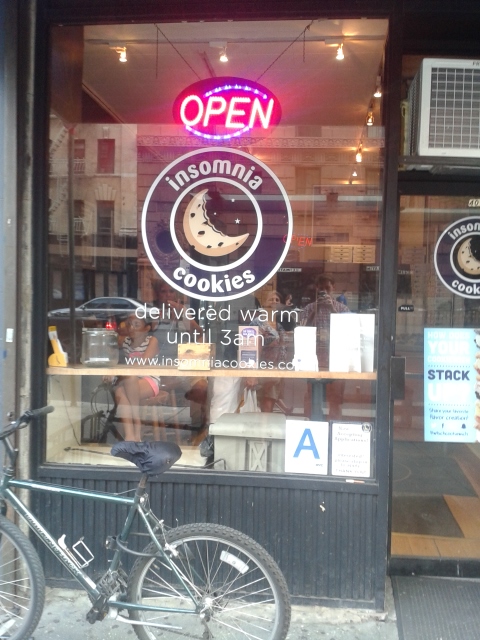
Hello from New York. Sometimes it hard to believe that such different cities (from the one I just called home) exist on the same planet. I went from a world that barely knew what a cookie was to NYC where they are available served warm and gooey for insomniacs until 3am. After five weeks of traveling, the difference is mind-bending for me, but something that you have to have experienced to necessarily appreciate…and maybe not really blogging material, at least at the level that I want to examine it. What was once normal can rapidly become normal once again, but I’m still enjoying crosswalks, sidewalks,traffic rules, fresh air and no horns. (No horn honking especially is still a pleasure!) Blogging in the midst of all this rediscovery has not been a focus or realistically possible given all the competition from travel, seeing friends and family, and just the packing and unpacking of our voluminous stuff. Last time my blog needed a little kickstart I reignited it with several short posts with the five days, five stories challenge, so I though I’d do that again starting tomorrow. This time with a Greek focus…stay tuned!
Share this on social media:

WPC: Inspiration

This week the Weekly Photo Challenge asked us our definition of Inspiration.
This is one of my favourite photos from my time in Nepal. I took a blind Nepali exchange student (who had recently returned from study in the US) to a Kathmandu school to talk about her experience in America. She was an inspiring speaker who talked about the challenging of tackling a culture very different to her own, not only as someone who had never been out of Nepal, but also as a blind person. The audience loved her, especially the girl in the photo, who stayed at the end to ask so many questions. For me, it was the very definition of inspiration.
WPC: Elephant Eyelashes

This week’s Weekly Photo Challenge is Close Up, an opportunity to get close up and personal with your subject. In Chitwan I loved the chance to get up close to animals that I had only seen before in zoos.
The Library
The last story I have out of Nepal (at least for now) is my biggest tale, at least in terms of my focus and efforts over the last year. The U.S. State Department has opened American libraries all over the world and Nepal we already had about six, plus the Book Bus and a seventh library inside the U.S. Embassy in Kathmandu. But that space is small and security is tight, and the potential was there for a second Kathmandu site that could handle more outreach programs and deliver books to underserved communities on the other side of the city. As it turned out the timing of the opening was better than planned, as it came at a time when the few libraries that exist in the city were devastated by the earthquake.
Public libraries in Nepal are rare. Most schools don’t have them either, or only have a small selection of text books that are kept under lock and key. Lending libraries are even rarer. The plan to lend books out from the new space was often met with incredulity as people simply couldn’t believe that anyone would ever return them. Nepal libraries are usually reference centers and still only about books. American Spaces are more multi-media center with computers and electronic resources and, although Nepal mainstream is not really ready for new technology, the need is growing, and the new Innovation Hub will be at the forefront. Its very exciting, I’m just sad that I won’t be in Nepal to see it grow. It was a fantastic project opportunity, which was challenging to handle as it was educational for me, as I’m not a librarian. With the help of a small army–and despite a major earthquake– I managed to open it before I left. I’ll be keeping an enthusiastic online eye on its growth!

The earthquake-wrecked library at Tribuhavan University. Very Sad. None of the bookshelves were bolted down.

The original space before we started: Books covered with quilts of dust; broken shelving units; old paper card index systems; spider-web covered windows. This corner also had termites.

The librarians worked to clear the space and it slowly started to clear out.

As the space opened up, the windows started to become more of a focus. They gave great light and the promise of a bright, open space.

After the electricans had finished, we started to focus on a colour scheme. Custom built furniture was erroneously delivered two months early and had to be removed – that was fun!

Eventually we picked orange for its energy and freshness. Along with the excellent light, it made the space very cheery and welcoming.
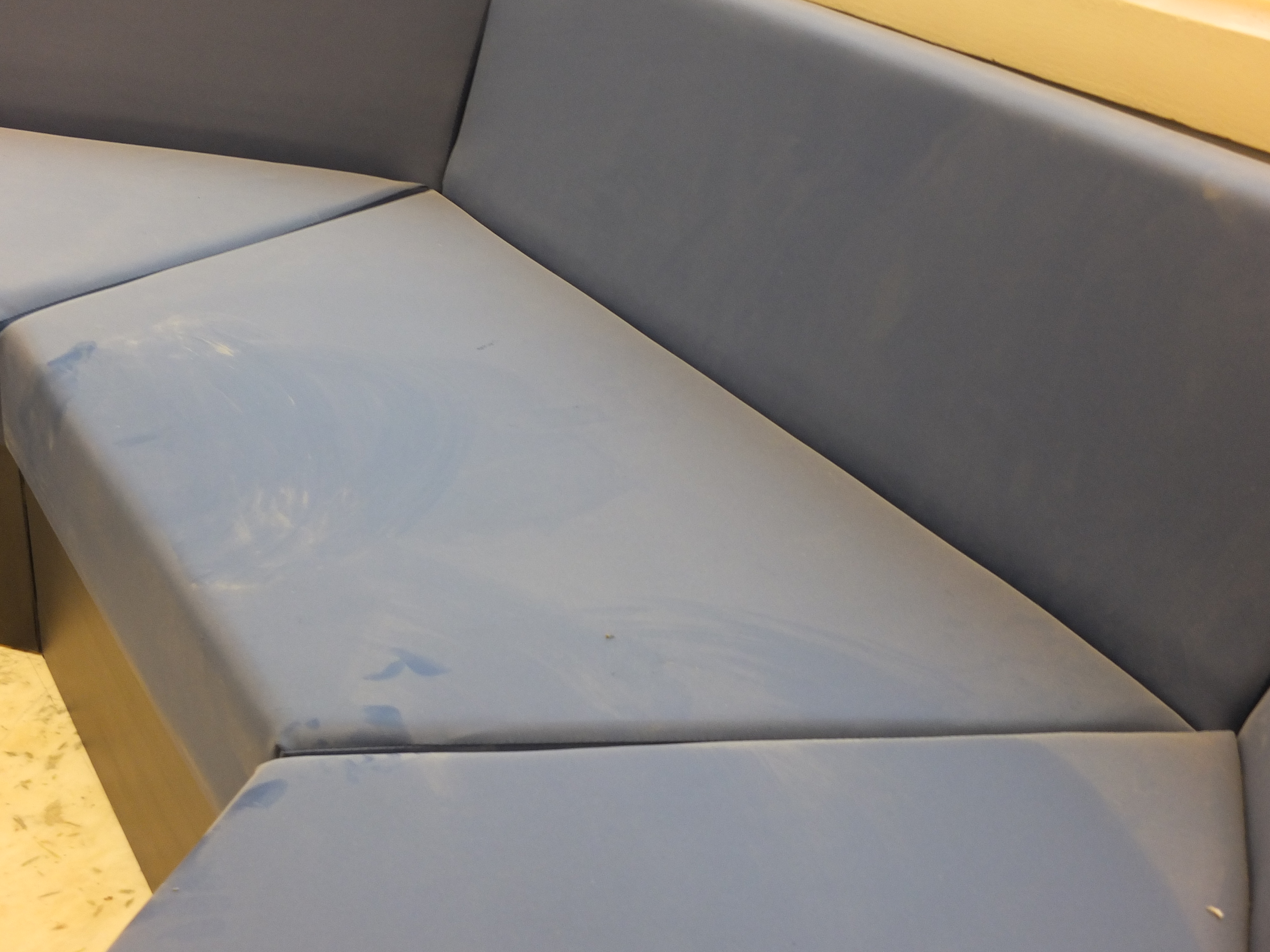
This was the condition of the custom built vinyl seat as delivered to me. Not the blue I selected, not the Formica I selected, and covered in dust from sitting around in the factory. It was a very frustrating experience.
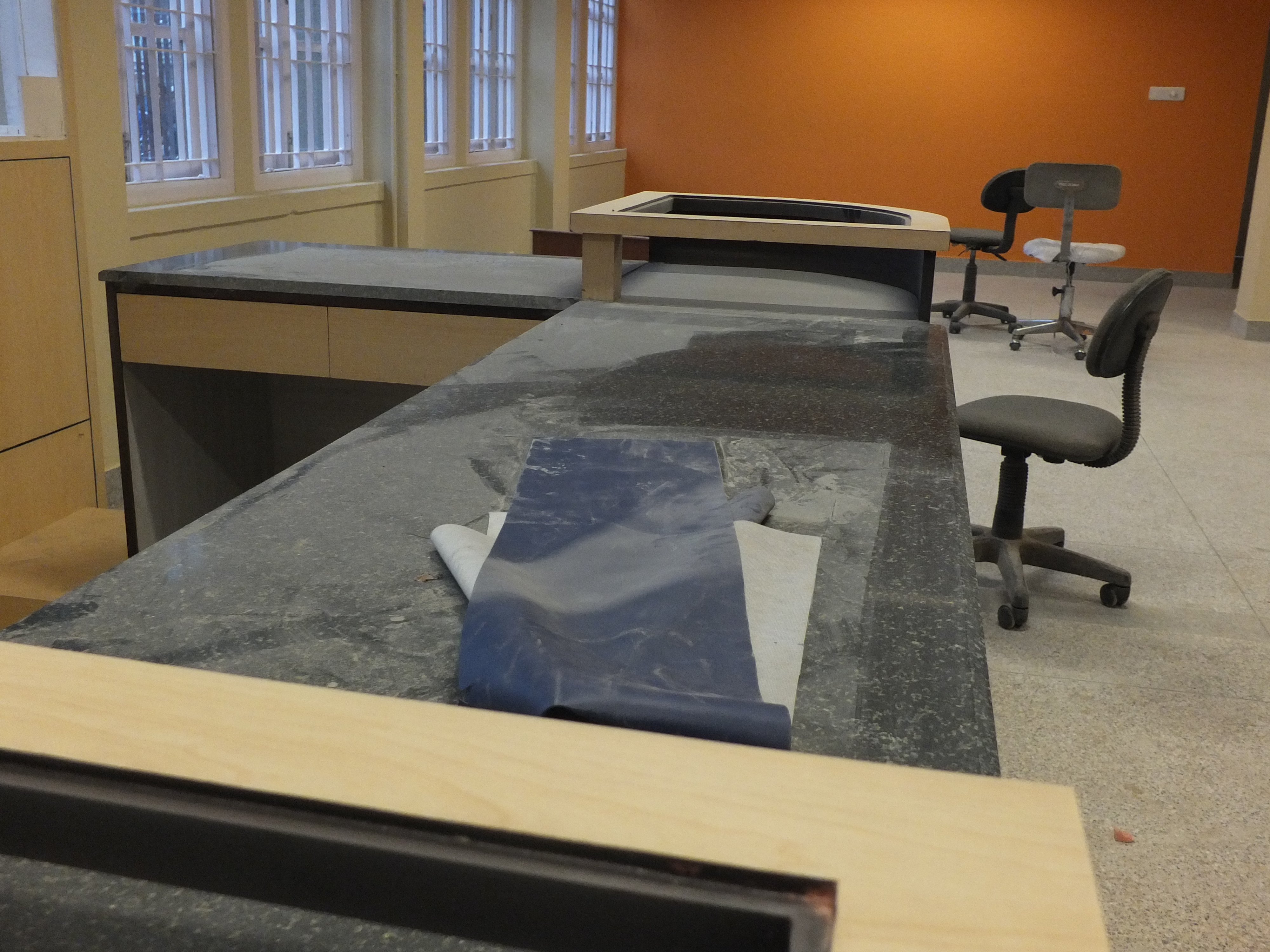
Ditto with the circulation desk. I took this photo to show just how awful it looked when it was delivered. The formica was chipped and scratched and the whole thing was filthy. There is no recourse. So often there is just no understanding of quality standards – a very challenging part of the project.

I kept this picture just for the irony. Termites kept invading the library in new spots. I took this photo the day before the earthquake and the next morning a pest control guy arrived with the poison. Two hours later we had a lot more than termites to worry about.

Adding inspirational quotes to the library walls…

…which I was actually doing when the earthquake struck. Carpenters were in the middle of assembling metal shelves when they had to run out of the building. The bookcases were not yet bolted down and swayed dangerously next to my ladder.

Shelving crashed down everywhere except where I stood on the ladder. I was very lucky. For two weeks, the bookshelves lay where they fell alongside the unassembled units on the floor. Finally I got help from the USAID Disaster And Rescue Team (DART) who were still in Nepal but with no longer anyone left to rescue from the quake, they came to my aid instead.

It was so exciting to finally see the shelves going in….

….and the DART teams guys moved like lighting. And, yes, they bolted the shelves down!

A group photo at the end of a job well done. I was so grateful for their help! With the shelves completed the library team could move in with books and start to turn it into a real library
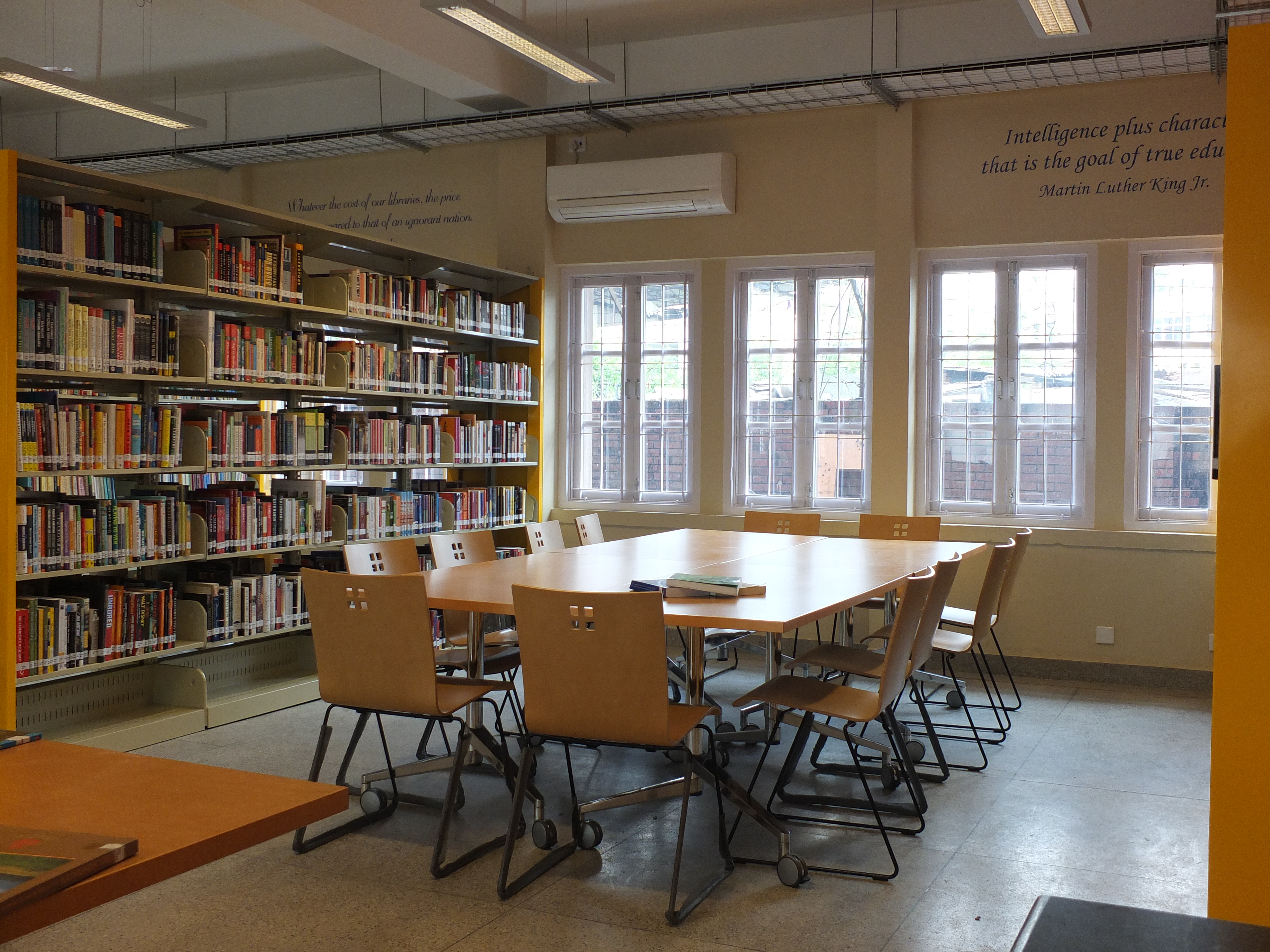
Books on shelves…looking good!

Showing teachers and students around, explaining what the library does and how patrons would be able to borrow books – a pretty new concept for Nepal.
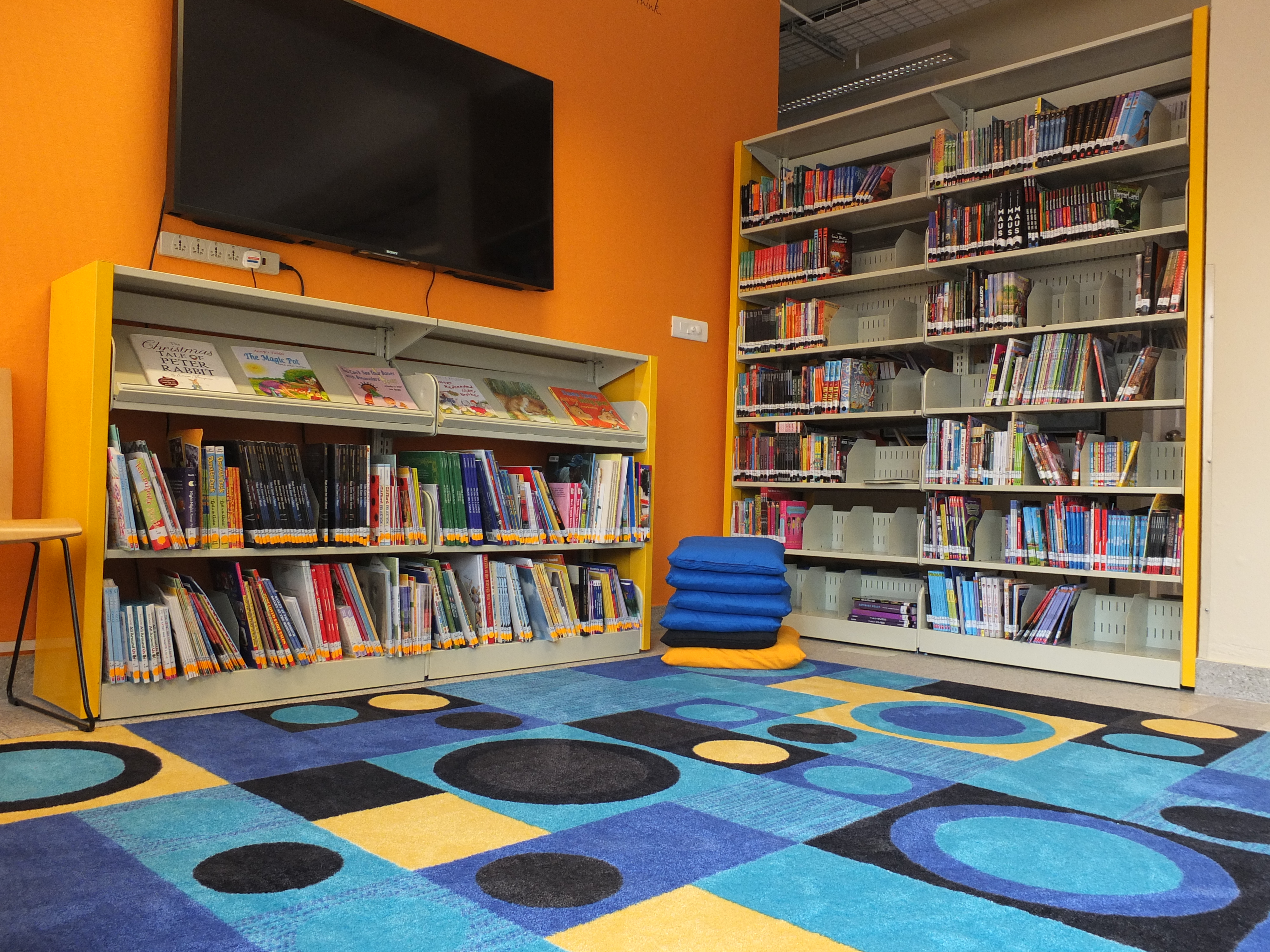
The children’s corner made cosy with children’s picture books, a carpet and cushions.

The first group of school kids visited the library. It was pretty special for me to watch them take it all in.

Cutting the opening ribbon about a week before I left Nepal – one month late because of two earthquakes. No bad really! So amazing that we were able to finish it in time.
After the Quake – Part 3
I spent most of my last year in Nepal opening a library. (Post to come on that one.) I would arrive at the building in Teku every week for months and would always notice three Hindu temple towers in the near distance. I had no idea what to expect, but wanted to find some time to go over and explore. It was just a few minutes walk away, but work schedules never allowed the time until one weekend –prior to the earthquake– I supervised a cleaning crew before our soft opening. At lunch time the crew headed out to get something to eat, and Kalpana and I went out to explore. Partnered with a Nepali, I got a little braver at snooping around. We struggled at first to find a way in through the locked gate, but we learnt that entrance was long forgotten and another path took us into the heart of the temple. It was a fascinating combination of cared for and unkempt, and clearly was in need of funds for renovation. The main temple was boxed in by traditional out houses, laid in a square. I’ve seen them used as meeting halls, schools and storage spaces. Covered verandas were piled high with old carved beams, stone cornerstones and salvaged religious artifacts. Dog sat caged and barking in one corner and we watched chickens run around in another.
Outside the main temple, lanes ran off to the right and left. Overgrown paths led to dirt tracks. Exploring further, we pushed open gates blocked by weeds or broken hinges and what we found was an amazing labyrinth of temples – small and large, ramshackle homes with laundry hanging outside, and inhabited homes and forgotten buildings…all jumbled together. Some buildings were so tenuously standing that they appears to held together with just one beam. It was like a secret, forgotten place.
Among all of this were signs written in Nepali. I asked Kalpana what they said. “They’re donations”, she said. “People donated money. But I don’t understand. Where did all the money go?”
It did seem extraordinary that such a significant site that was clearly of important religious significance had been left to such extensive neglect. Anywhere else in the developed world it would be repaired, groomed and open to the public, the gardens would be kept and visitors would stroll through them with a guide, and locals would sell coffee and trinkets to the tourists. But here the site sat lonely and unnoticed, just five minutes walk away from every day life.
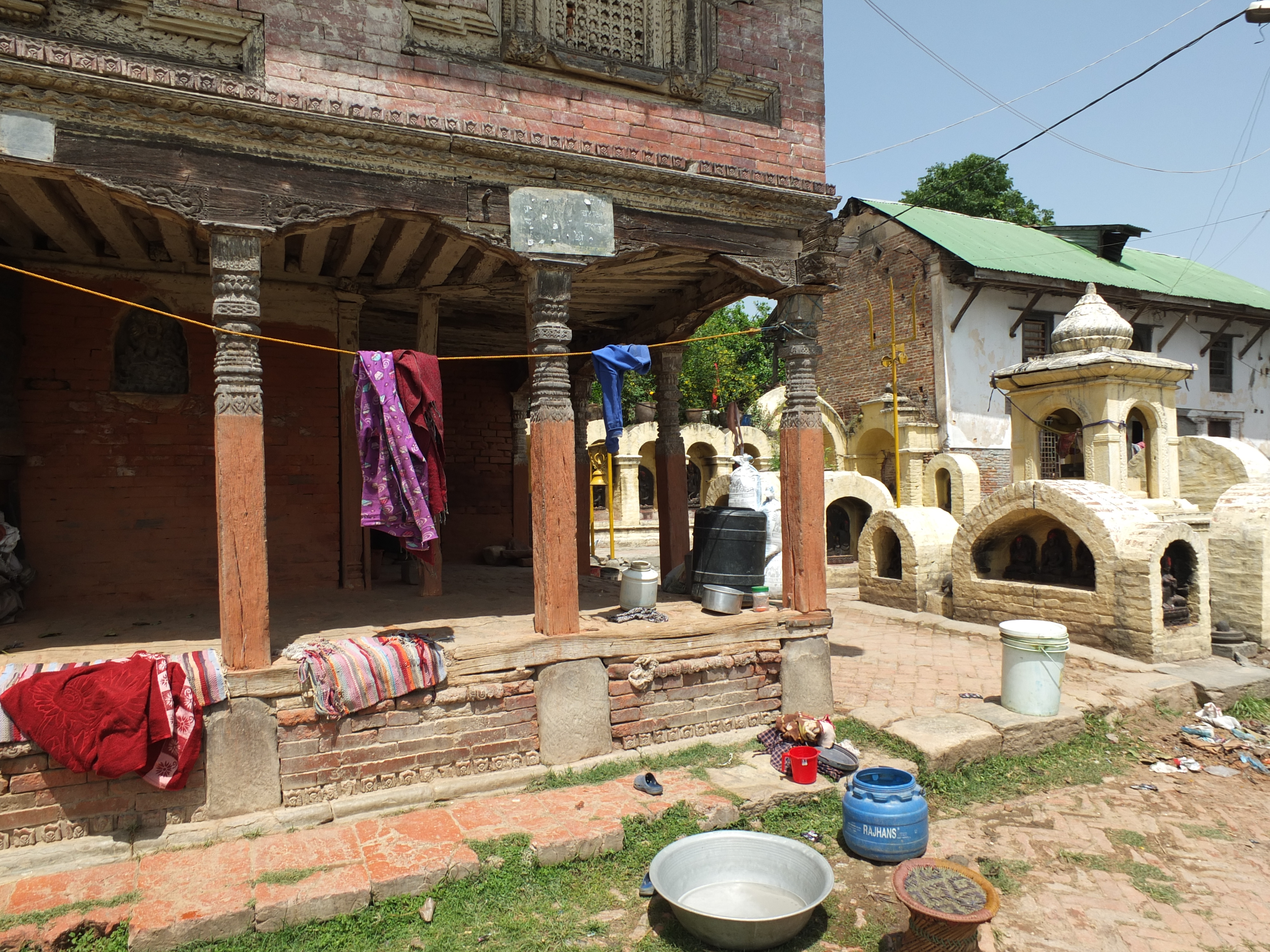
It was amazing wandering around the area where everyday life and ancient temples mixed.
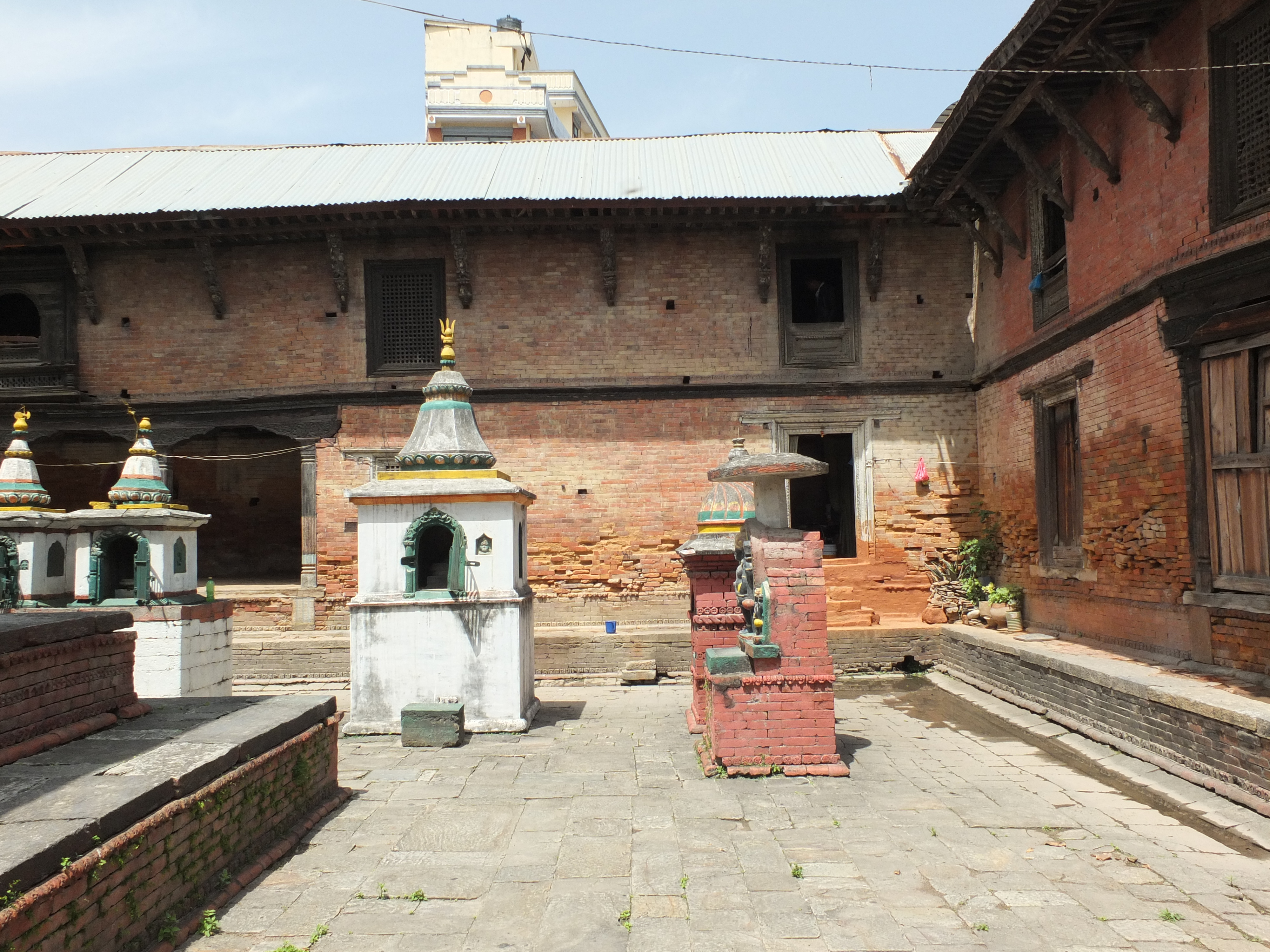
The surrounding courtyard buildings of Tin Deval housed salvaged artifacts, kenneled dogs and chickens. At least half of these buildings are now piles of rubble.
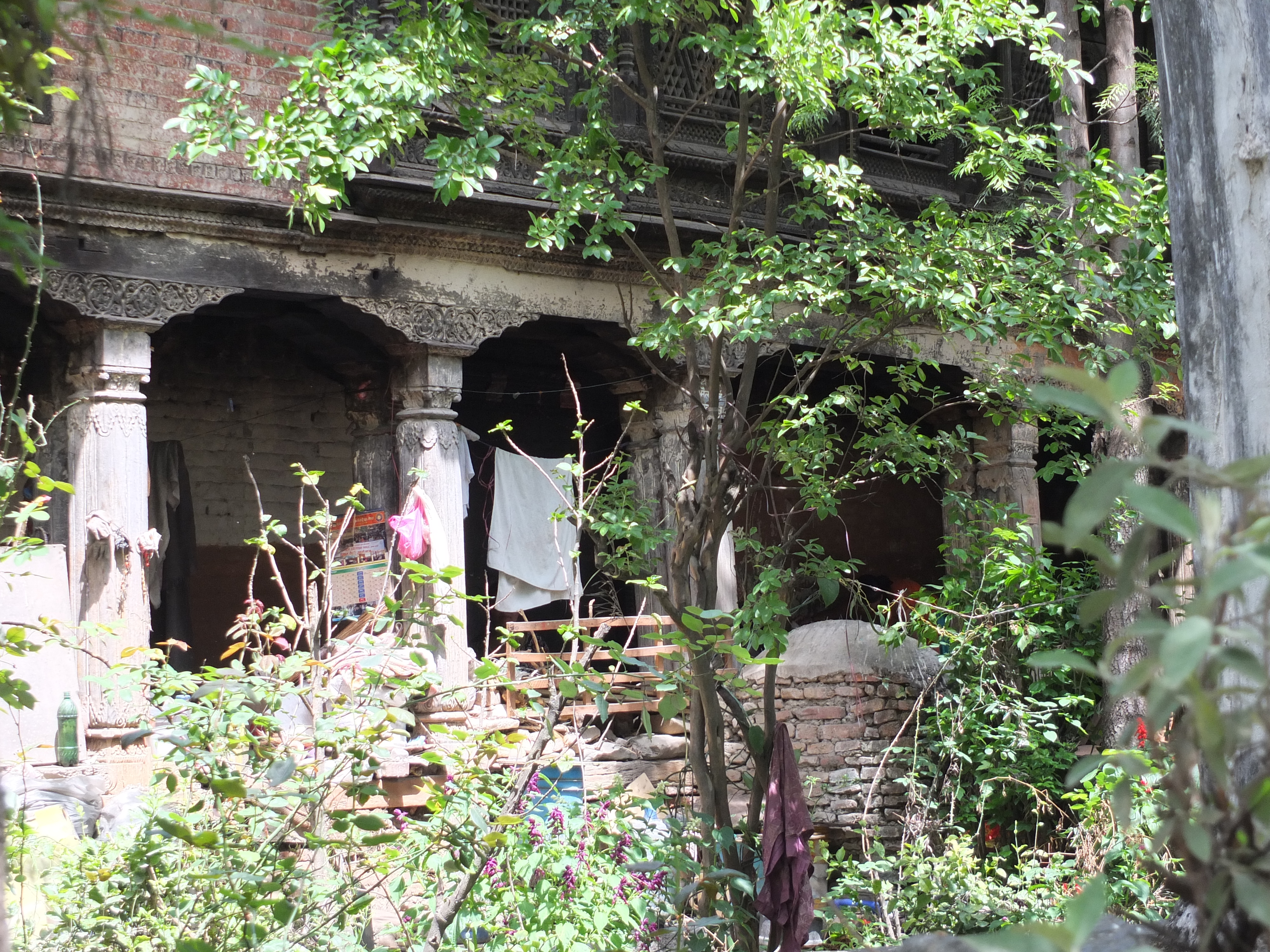
More everyday life among the temples. This corner was also overgrown and felt like a secret garden

Dozens of small temples were tucked around every corner

We wandered around, exploring all the nooks and crannies.

Each one with its own special carvings and detail work….
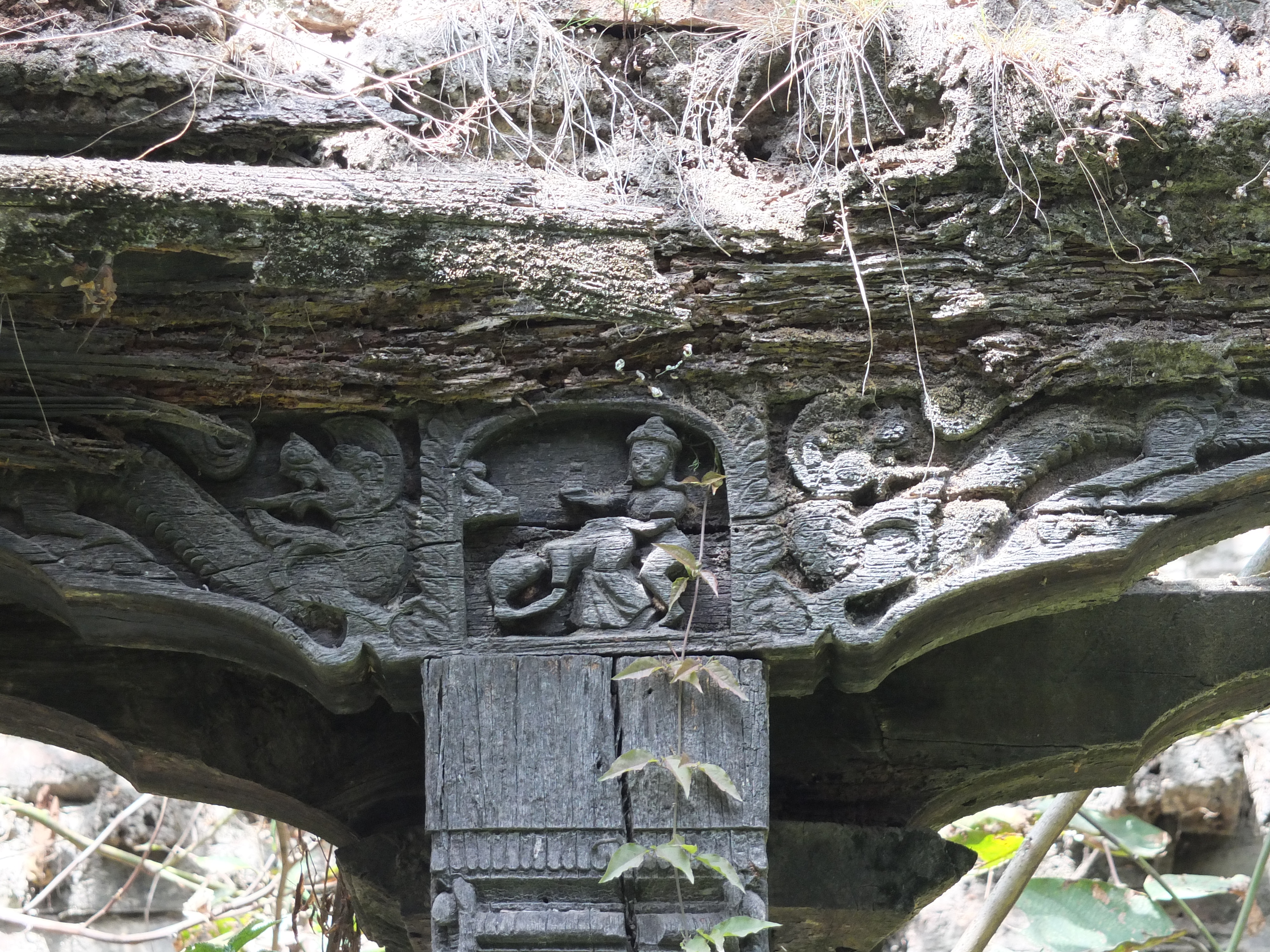
…like this one for example! Where are they now? Buried under a pile of rubble?

I very much doubt that this building is still standing.

Going…going…gone. Tin Deval before the earthquake

…and after. How precarious that middle cap looks! How unsalvagable with no crane or equipment! It’s doomed to break.

After the second quake. The third temple was clearly damaged also. These were taken down before they fell.
Even though I was in Teku daily during my last month in Nepal, opening the library to the public, I never went back to the site. It was just too scary. The aftershocks meant that it was foolish to wander around in ruins. There was nowhere safe to run. A part of me didn’t want to see extensive damage to a site that I knew would never receive the funding attention that Kathmandu’s famous squares will receive, but I would have gone in the end…just out of respect. I am sure very much of it is gone and it won’t be recovered. I am so glad I at least got to take photos and have captured a little of it here.
 Wright Outta Nowhere