Pashnupatinath Temple


DSC01448

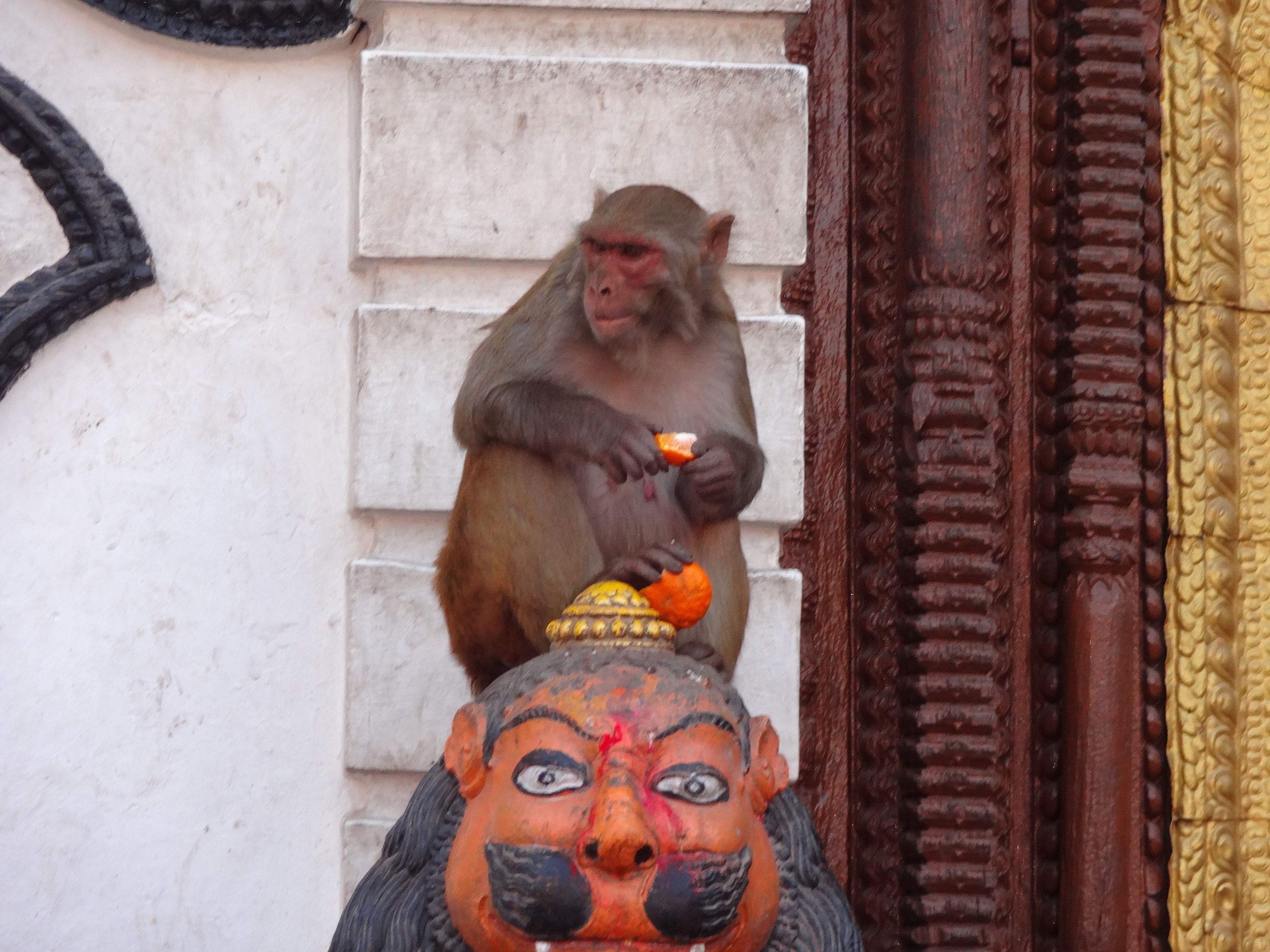
Monkey at Pashnupati Temple.  Don’t even ask…this guy’s not sharing his orange!

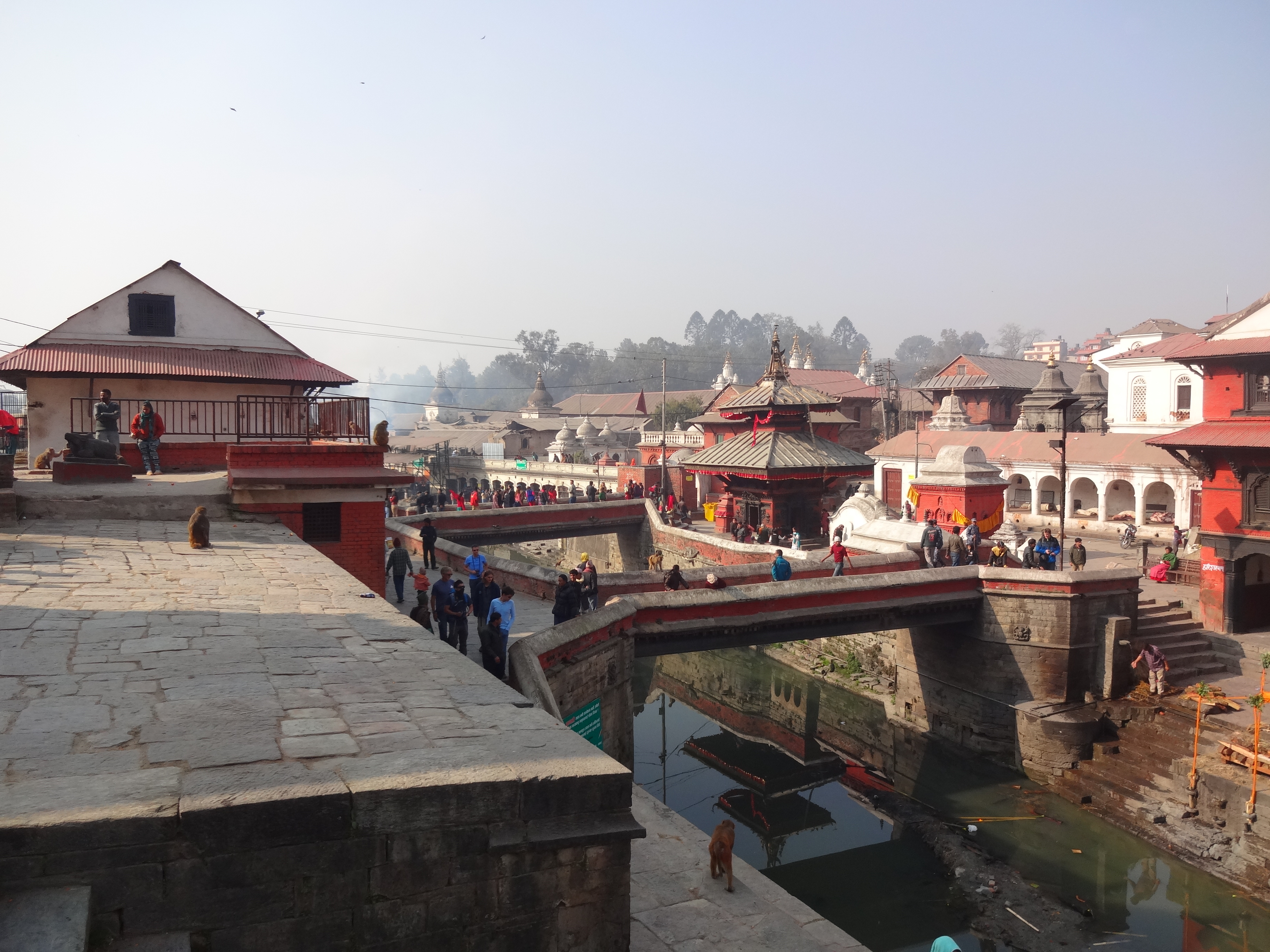
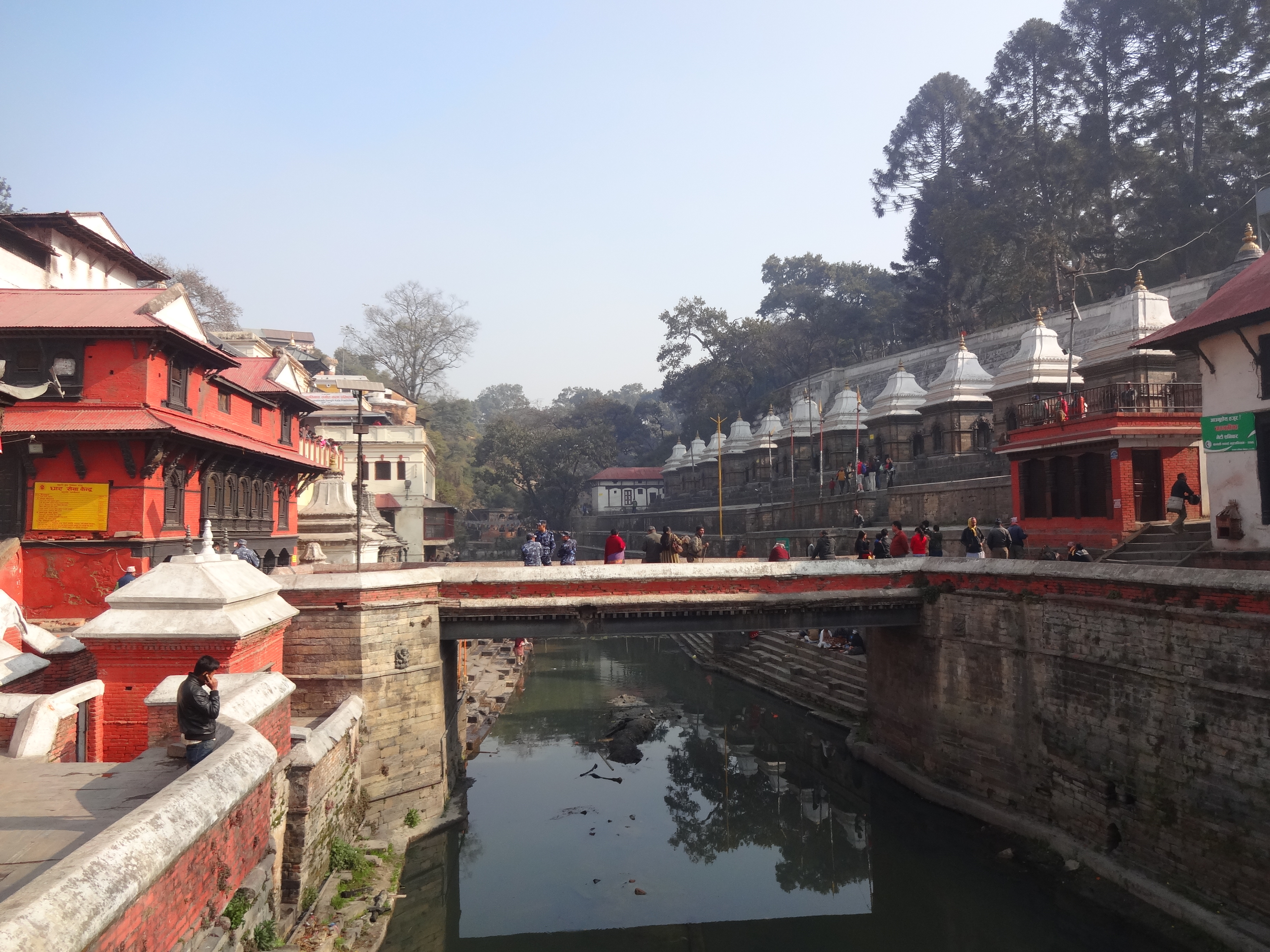
The first thing you see when you leave Kathmandu Airport is a “World Heritage Site” sign plastered several times along a rickety corrugated tin fence.  Behind it is an open area with garbage.  You wonder where the Unesco World Heritage site could possibly be in this ramshackle area and what kind of place it would be?  Its Pashnupatinath Temple, one of the most sacred sites in Nepal, attracting pilgrims from all over Nepal and India.  The temple complex straddles the Bagmati river which, until recently, people bathed in its very holy waters.  Unfortunately nowadays they are very dirty waters, and the bathing has stopped.  I’d heard terrible stories of a garbage-choked river, but now weekend clean up teams have been hard at work removing the trash, although the water remains very unclean.

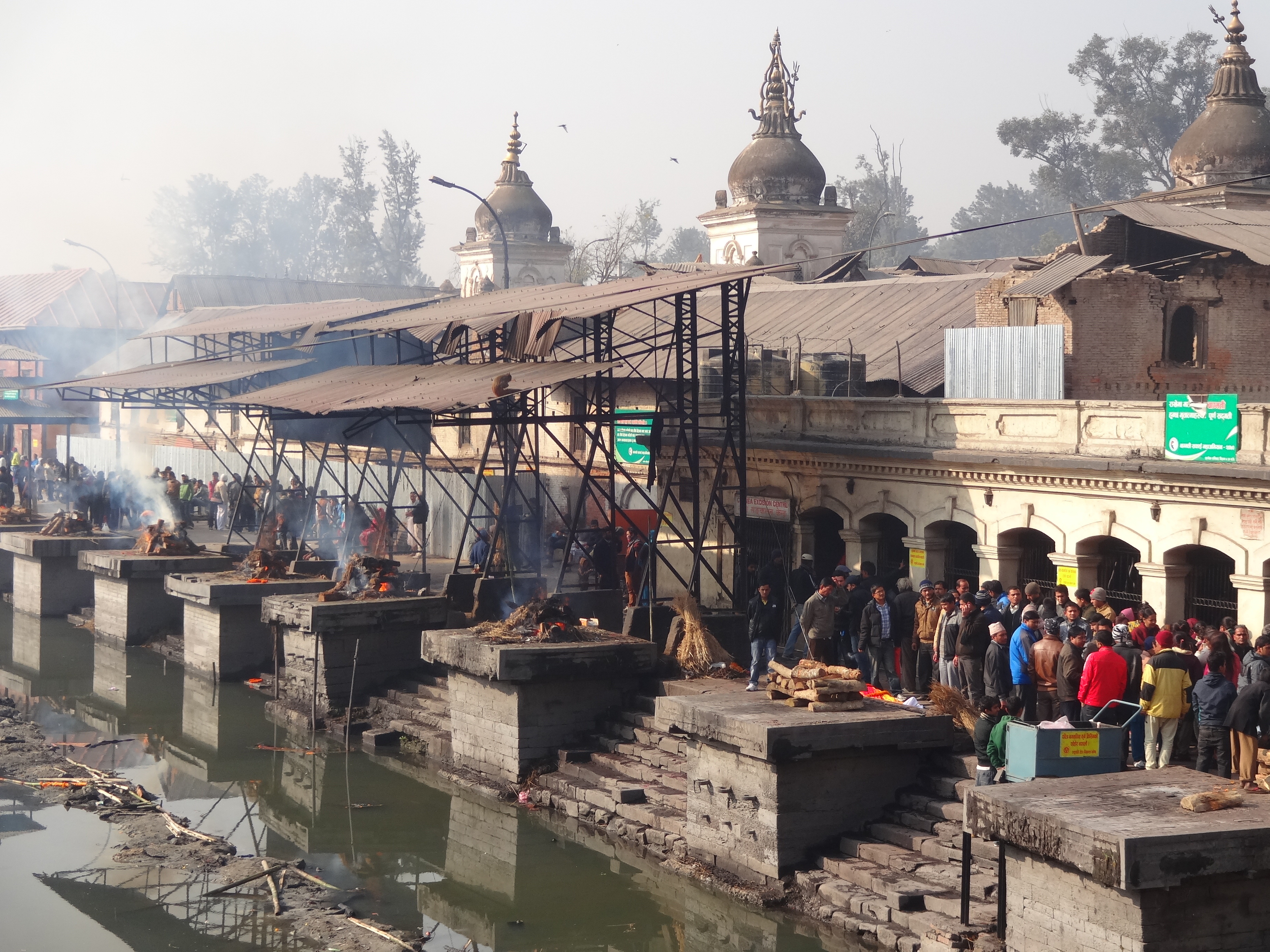
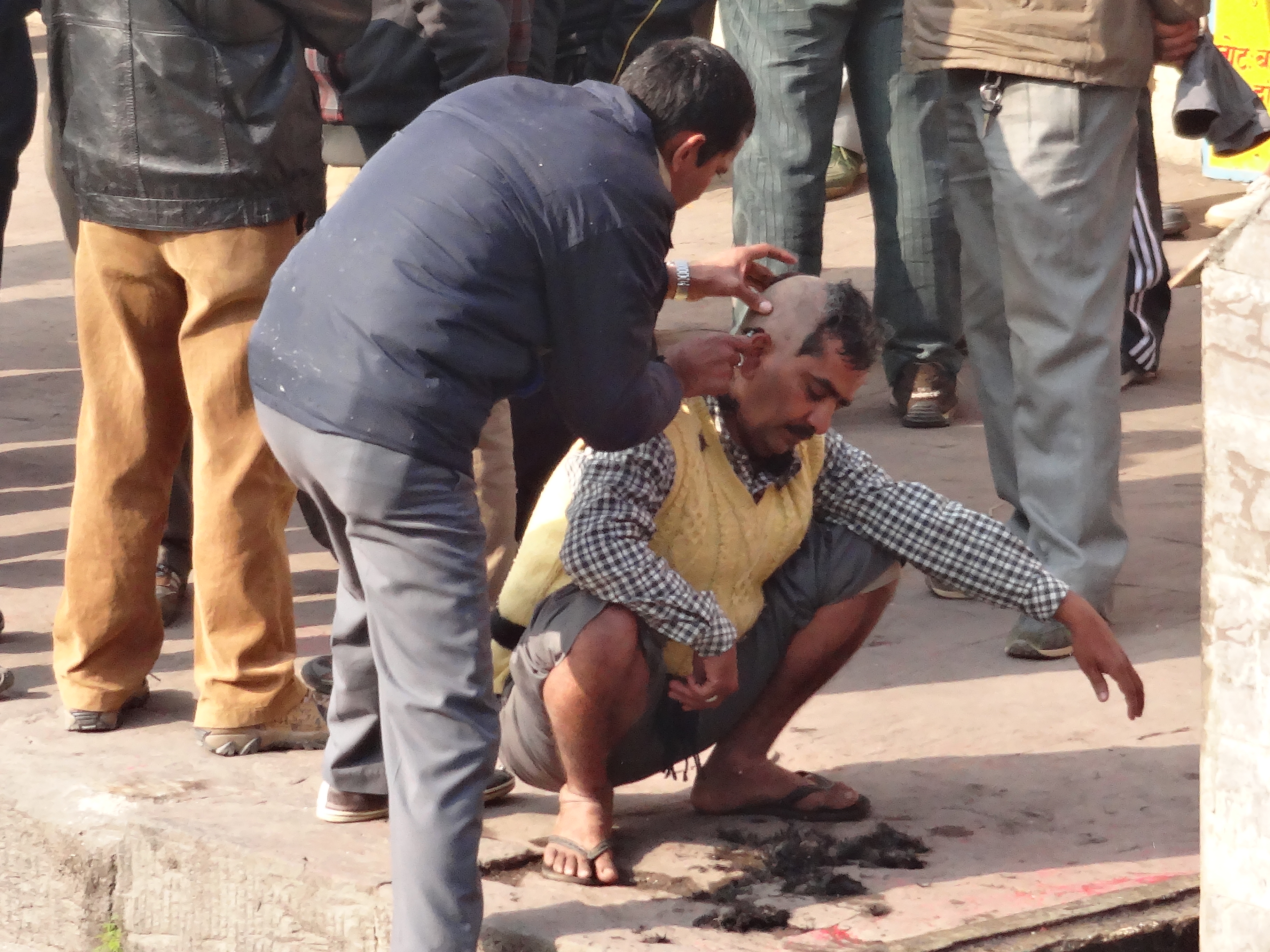
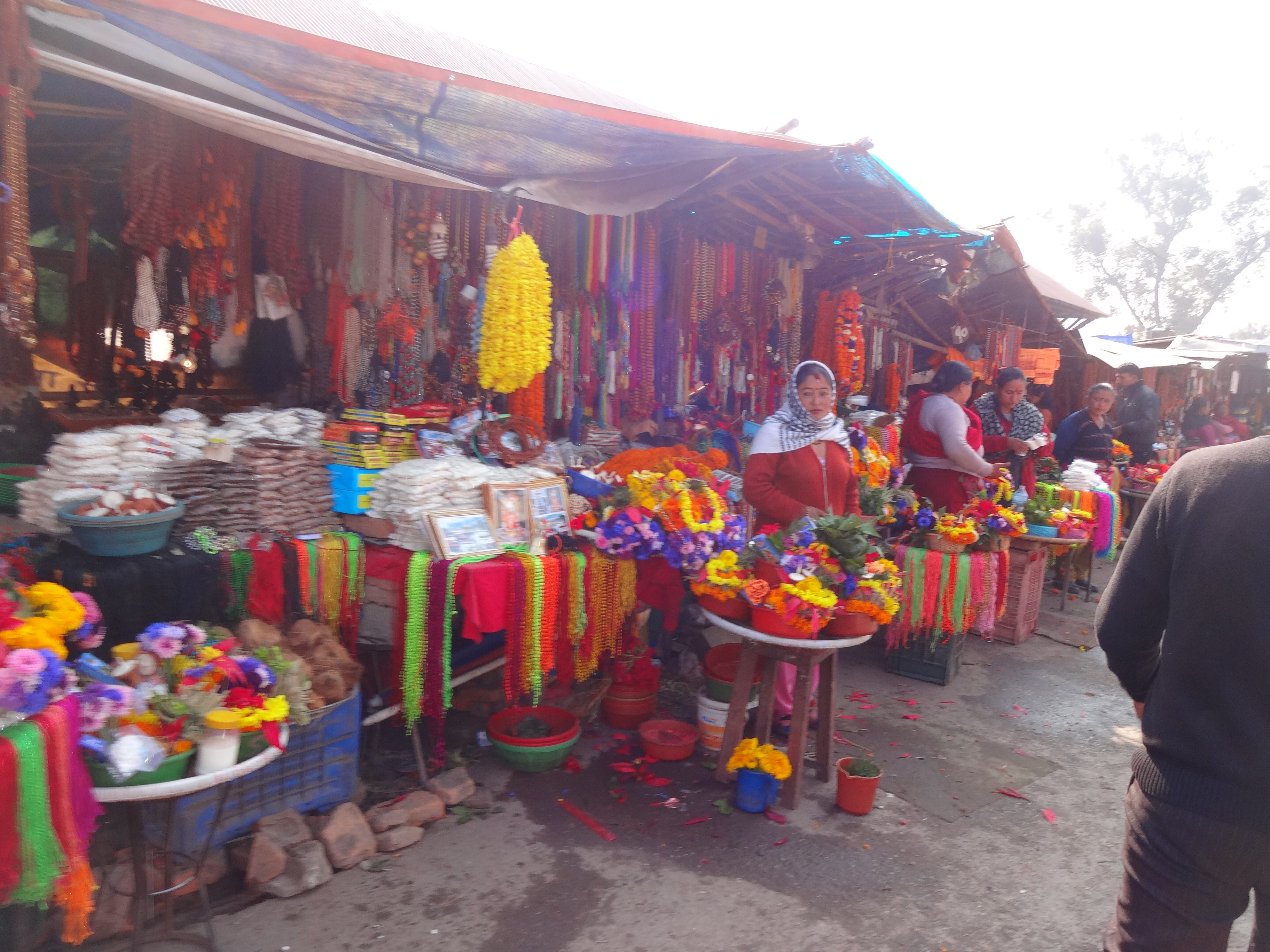
Pashnupati is also a crematorium, and the bodies are burnt on the ghats alongside the river …..out in the open, for all to see.  The mourners gather by the burning pyres, the men shaving their heads as a sign of mourning.  Onlookers are on the other side of the river, at a respectable distance. There were very few westerners.  Just devotees visiting the temple, funeral parties, monkeys, and vendors selling devotional beads, garlands and gifts.  It was busy but not crowded, and we walked around largely undisturbed to look in amazement at the vast array of “life” (and death) going on around us.

Here are some snapshots from the overwhelming array of scenes going on all around:
DSC01414

Crossing the Bagmati

DSC01425

DSC01415

Funeral attendees beside the crematorium ghats
DSC01418

Amongst the crowd, a mourner shaves his head.  Right there on the ghat.

DSC01421

Preparing the wood for the funeral pyre

DSC01423

The body is brought in

DSC01416

the crematorium

DSC01417

In case you are wondering, I was far enough away that I didn’t feel like I was intruding, otherwise I could never have taken the photos. It was so strange and so real at the same time…everything being played out in the open.

DSC01433

Back on our side of the river, holy sandhu men sat…..

DSC01440

….and the cows and pigeons hung out in peace…

DSC01442

….most of the time!

DSC01446

In front of the Hindu temple.  (Non-Hindus not allowed.)
DSC01450

A whole lane of flower sellers lined the entrance to the temple.  Our first and last view in the Pashnupati complex.

An A-peeling Cultural Discovery….


We recently had the opportunity to go to a traditional Newari ceremony, which was a great experience, but it did dig up a lot of challenges on the cultural context front.  So to continue the theme a little from my last post, here’s the story:

My coworker showed up with a very pretty red and gold envelope with my name on.  She explained my “daughter’s getting married party” and that I was invited to come to the event.  I thought I understood that it was her daughter’s engagement party.

I took the invitation home, but it was written completely in Nepali, so I couldn’t understand a word.  I showed my Didi as I was looking for advice on what to bring.  She looked at me and said, “Mam, its Newari wedding.  There are two daughters.”  Oh..I thought.   I misinterpreted her words.  She had not said “my daughter’s getting married” but “my daughters (are) getting married”… ok.  Got it.  The next morning I spoke to an American and she told me that it was a Newari custom for the girls to both marry because it saved problems with widowhood, should the husband pass away.  (Widows are vilified here.)  So ok….the two daughters were getting married to one man, or they were perhaps marrying both husbands at the same time.  Something like that, I wasn’t sure.

Next day I spoke to my Didi again.  She told me “no, no…no husband, mam.  They marry proots.”  Now I know that Nepalese have a problem with “p” and “f” (just like Filipinos and she really must have meant “fruits”.  But of course, that made no sense, as no-one marries a fruit.  “They are marrying fruits?!”  I asked, sure I was getting it wrong somewhere.

“Yes, mam. Proots”

“I don’t understand.  They are marrying fruits.  Like a banana?  I don’t get it?!!”

“No not banana, mam.  Bell.  They marry bell.”

Now I’m really confused.  “They’re marrying a bell or marrying fruits?  There’s no husband…and its a marriage?”  I gave up.  I was obviously missing something.

I asked for a recommendation for a gift.  My didi suggested maybe some toys, or we could give some money in an card. Now I was buying toys as a wedding gift.  Why?

“They are little girls, mam.  You can buy toys or give money.  Now people prefer if you give money”

So now we had a child wedding…two child brides and no husband.  It was getting really odd.

It was only in the car on the way back to work that my driver explained it so I understood.  Young Newari girls are married before puberty to the nut of the Bel Fruit, an actually fruit, which is worshiped as a symbol of Lord Vishna. And, yes, the ceremony is done to prevent widowhood. As they are married to an immortal god, the Newar girls never become widows should their human husband die first, for they are still married to the god.  In the same way it helps to prevent child marriages – there is less need to marry very young girls since they are already married to the bel fruit and, later, to the sun, and are protected.  So actually, traditionally, Newar girls marry three times in their lives. The first marriage is to the bel fruit, then they are also married to the Sun and finally when they marry a real man, it is their third marriage.  So who knew?!  Its a little strange…and also strangely practical…and I learnt something new this week.

Sign Language: Cultural Context


DSC01454

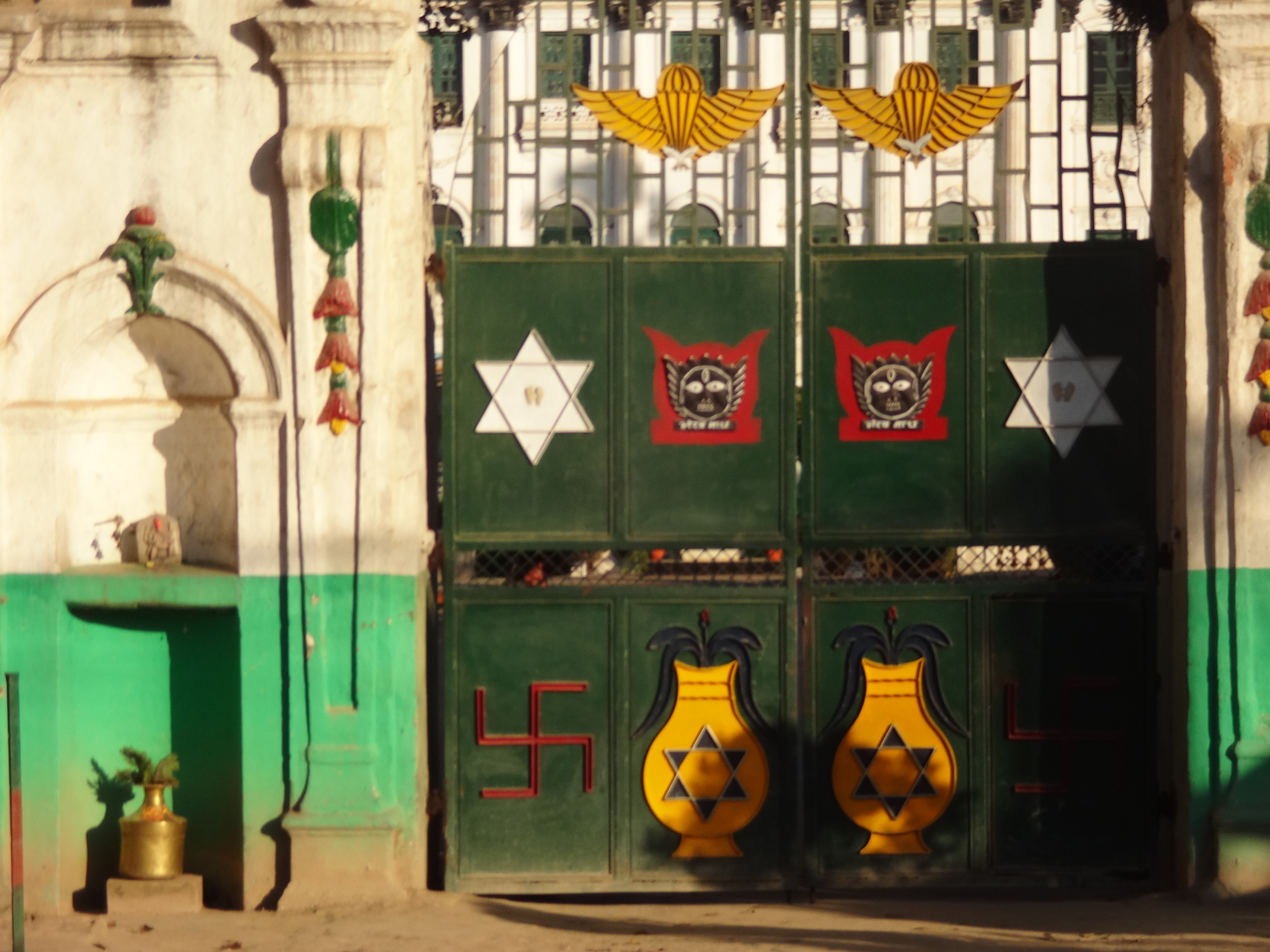
I first saw this gate on the first day or two after we arrived in Kathmandu. I did a double take. It was extremely strange to see the Nazi Swastika and the Star of David side by side. Just bizarre really. But moments later I remembered reading that swastikas are all over Asia, but the meaning was very different. However, I had no idea that the hexagram (or six pointed star) was anything other than Jewish….but here they were on the same gate.

The Hindu (or Buddhist) swastika is a symbol of luck.  It bestows auspiciousness on people or things that it embellishes, and that explains why you see it so often on residential gates or painted over shops.  Its so ironic that the Nazis hijacked the symbol so that Western eyes see it as a mark of evil, and yet its original meaning is so different. Slowly, I have become less startled when I see it around.

The Buddhist Shanmukha, or six-pointed triangle, has a similar spiritual meaning as the swastika, so it makes sense that you might see them side by side.

In Buddhism, I understand that some old versions of the “Tibetan Book of the Dead”, contain a hexagram with a Swastika inside. If I see one of those, I’ll let you know.

The post is being revisited for https://dailypost.wordpress.com/dp_photo_challenge/symbol/ as I cannot think of a better example in all my travels.

Live Television


DSC01410

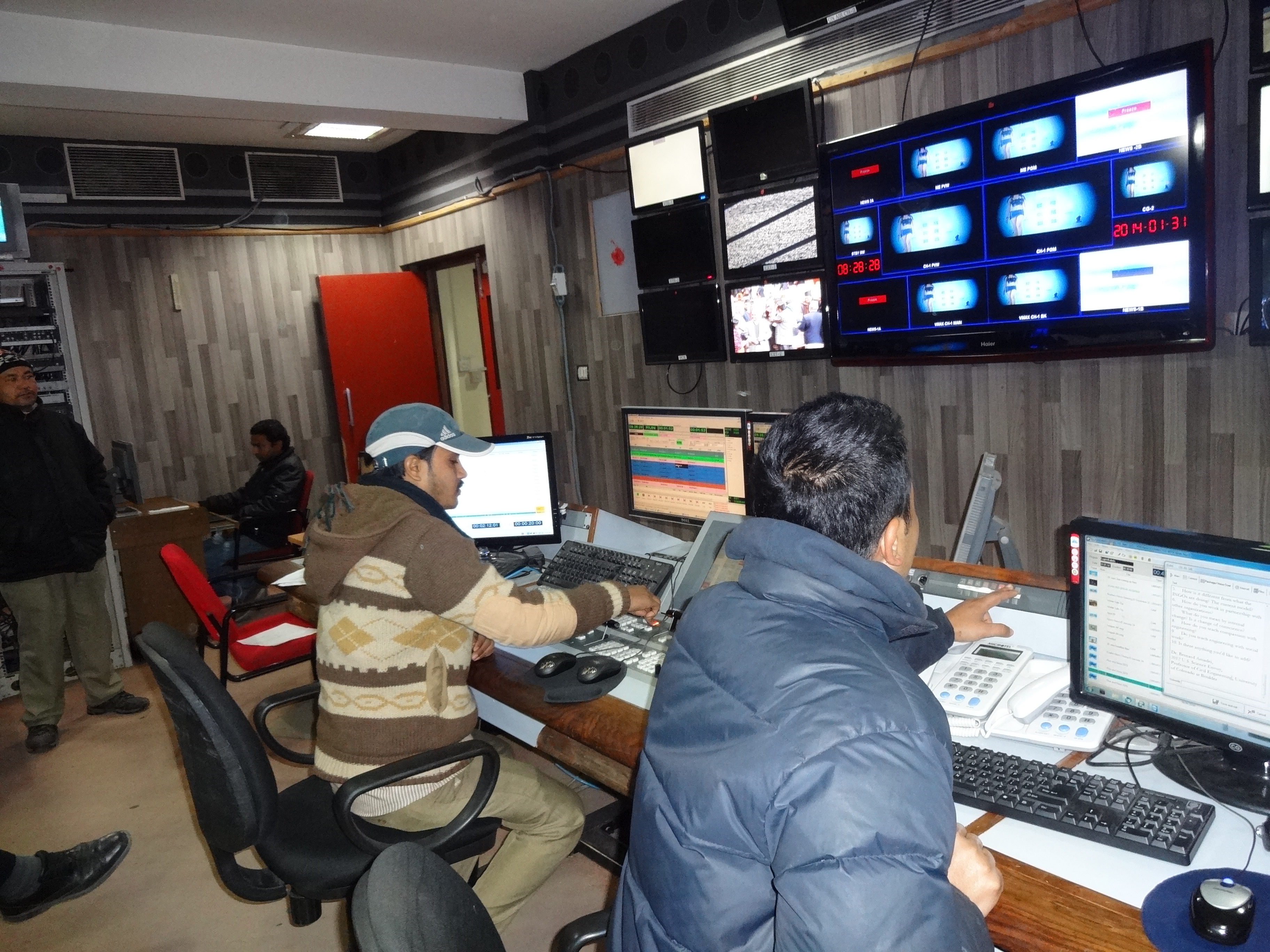
I had an opportunity last week to go along and see the live broadcast on an interview on the English-language morning show “Rise and Shine”. They were kind enough to let us into the control room during broadcasting and it was very interesting to watch. I had never been so close to a producer at work, and I watched over his shoulder as he controlled the camera, monitored the teleprompter, spoke into the interviewer’s earpiece, and ran breaks for commercials.  The TV offices were shabby but the broadcasting and journalism was very professional.

Launched in 2003, Kantipur TV was the first commercial television station in Nepal, and then quickly behing it a wider, more diverse selection of broadcasting channels emerged. Prior to KTV, only the state-run Nepal TV offered programming and, as is often the case with government-run monopolies, it was essentially a government mouthpiece and the only voice of news and opinion that the Nepali public heard.   In just 10 years, broadcasting has opened up enormously.

DSC01412

it was a great experience watching a live television show at work. But I think my greatest takeaway that morning was yet another insight into how many changes this country has undergone in the last ten years and how easy it is to forget that in just a few years its gone from a Kingdom to a Republic to a fledgling democracy, and with that its undergoing so many changes …. free journalism being one of them.