Volcano Hiking at Mount Pinatubo


A few weeks ago now, while Helen was visiting us in April, we went hiking at Mount Pinatubo.  It’s something I’ve wanted to do for a long while, but it takes some organization and prior planning.  I had visited the area earlier, but we only viewed some of the devasation it caused to a local church.  This time we were going to get a close up look at the volcano itself.

It’s a pretty unique opportunity.  Mount Pinatubo is a volcano which erupted in 1991, causing the second largest volcanic explosionn of the 20th century.  Its eruption coincided with the heavy rainfall of Tropical Storm Yunya, which amplified the devastation significantly. The eruption lasted 9 hours, caused two earthquakes, and the erupting lava mixed with the excessive rain resulting in 10cm of ash covered an area of 2000 square kilometers, killing more than 800 people.  Half a billion dollars in property was destroyed and entire communities were wiped out.  The top of the volcano collapsed creating a massive caldera, which today is a large lake.

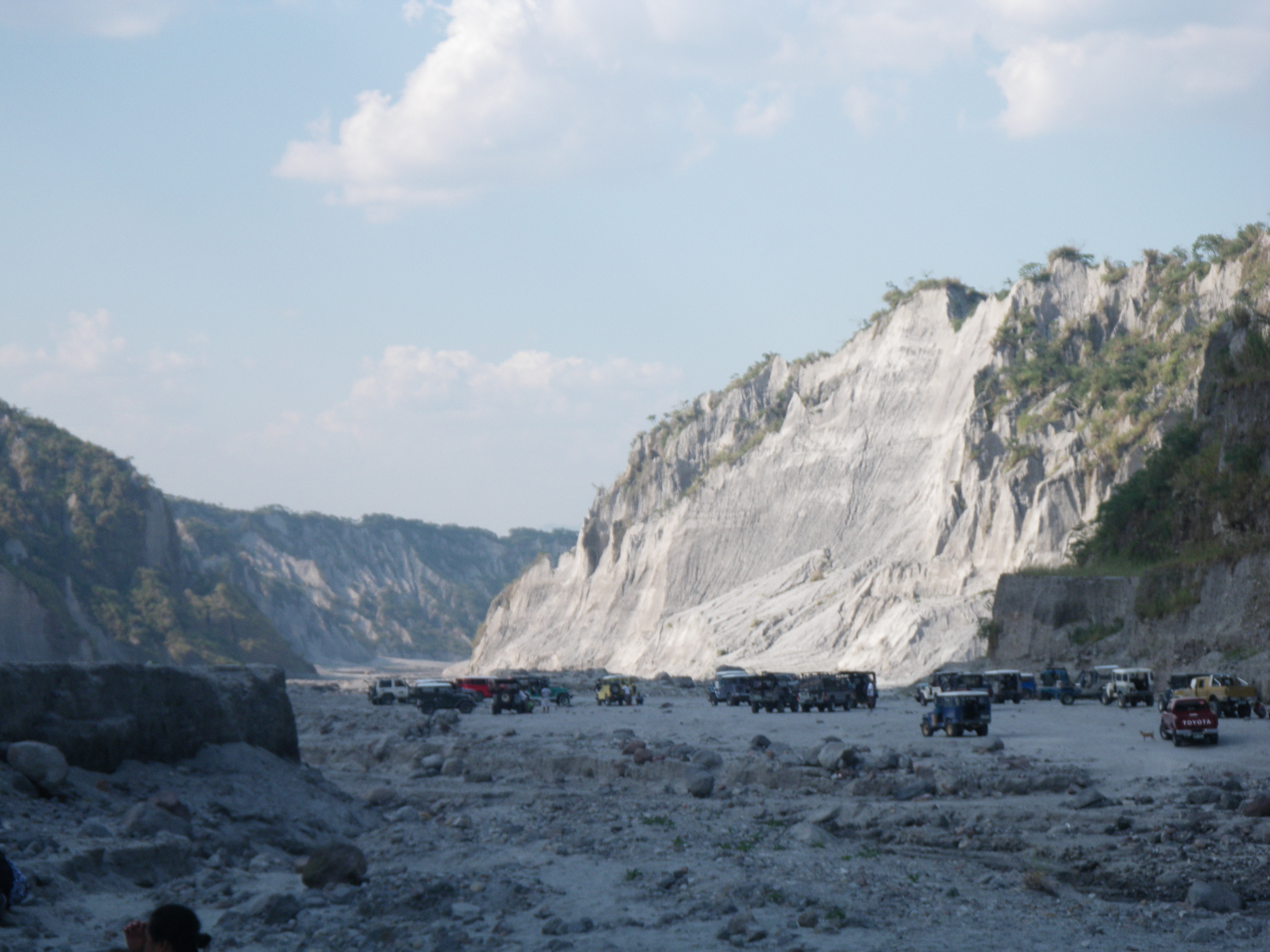
20 years later the cliffs formed by the volcanic explosion are starting to grow greenery

Today the journey from the outskirts of the devastation to the lake is across a lunar-like landscape, broken up by multiple riverlets running down from the caldera lake.  The first part is covered via jeep for about an hour, as it can only move at a very slow place across the rocky boulders and river beds.

The lunar landscape that is crossed by jeep

An hour out, the journey moves to foot.  Rattled from the jeep experience, and under the burning sun we walked for almost three hours to reach the lake.
The ascent is gradual, and the path is relatively straightforward. But that doesn’t make it easy. There’s lots of scree and its easy to slide on the loose gravel, and it was particularly hot that day. The sun came out and stayed out. I wore a hat but felt like my brains were being boiled! There was very little shade. It took almost three hours to reach the last part of the journey, up some steep steps to the plateau in front of the lake.

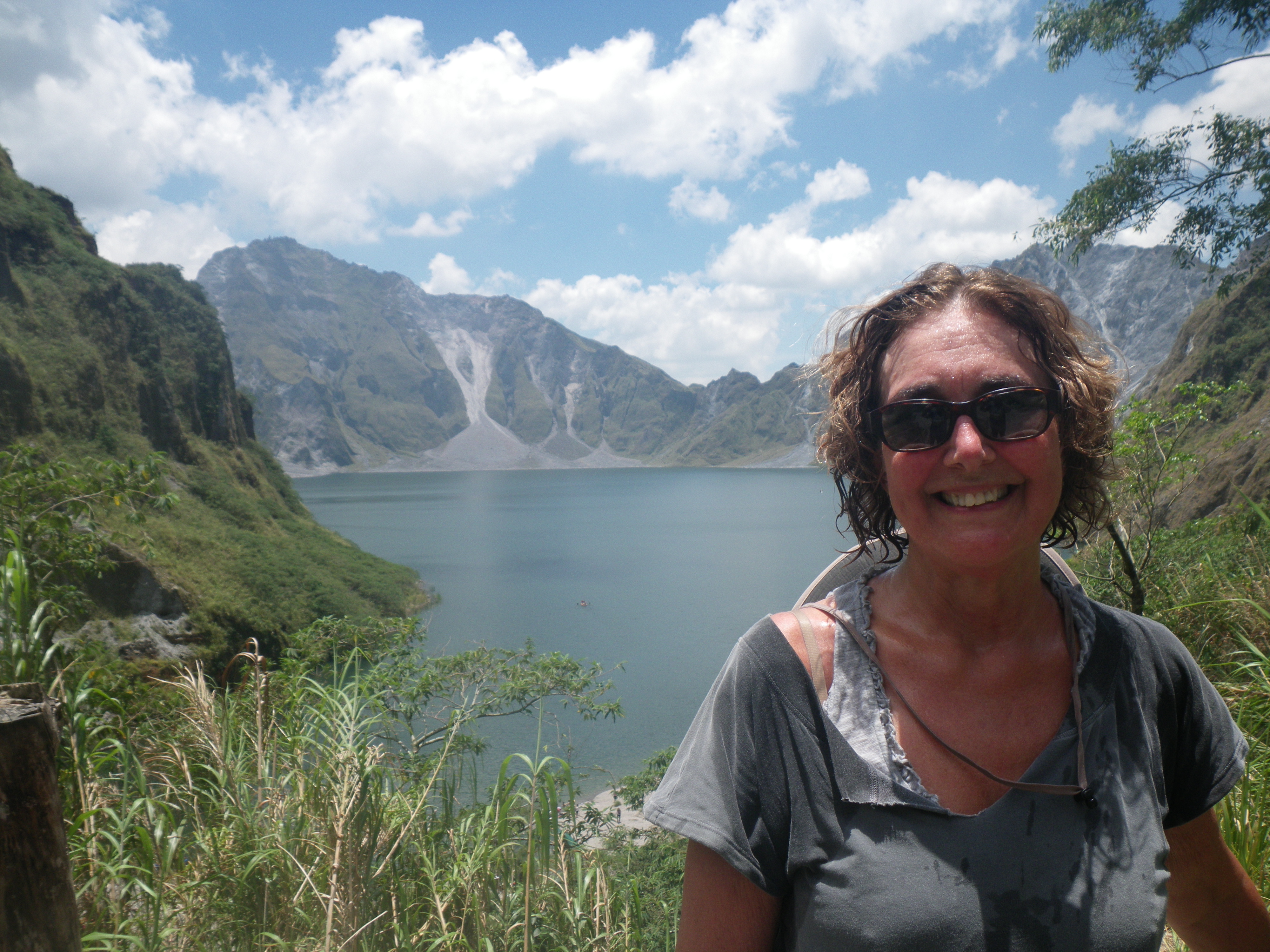
A victorious smile from Helen who was a trooper!

I was dismayed to see that there was little shade at the top, which was occupied by others, and it was another steep climb down to the actual lake shore, which meant another climb back up. We took a little rest and a food break and found the energy to go down to the shore.
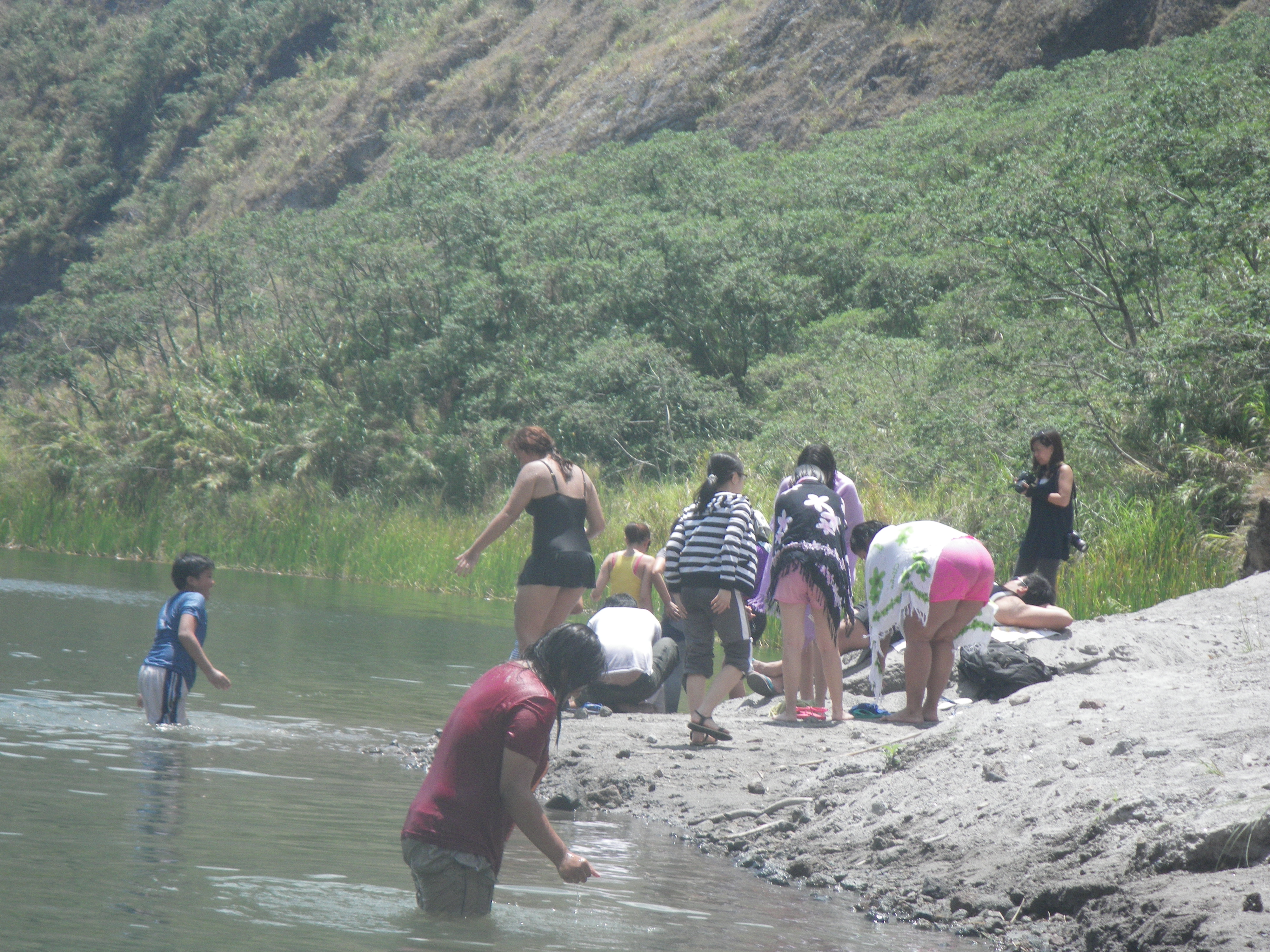
Others paddling down by the lake’s edge

Some were in the water, but changing into swim wear was not an easy option, and the banks of the lake were really steep – it was caused by a volcanic explosion after all – so we stayed on the lake’s edges and paddled. A bit disappointing really, because the thought of plunging into cold water kept me going all the way there.

Taking a boat out on the lake and a close up of a landslide, which were all around

We had started the day at 2.45am, waited in our building lobby one hour for the driver who didn’t actually show up until 4.30am. That put us at basecamp one hour late, and  there were no more jeeps available to pick us up. We were 7 people, and the jeeps only hold 6 (so we were told) so we had to split be up into two parties when the first jeep was finally found, which probably meant we couldn’t all hike together. 45 minutes later, Helen, Latham and I were finally picked up by a driver who didn’t know where he was going. The back door was broken, the side doors opened by themselves. We stopped to help another jeep with a flat tyre that turned out to be our stranded friends. We all piled into our jeep, which now was magically holding 9: the driver, the 7 of us, their guide and our guide. That’s three in the front, four in the back, one guide on the bonnet and the other holding on to the back of the vehicle. Photos don’t begin to show the whole picture!

The guide sat on the bonnet the entire time (with the other hanging off the back). How they stayed on is a mystery to me!

Being packed like sardines had its advantages when we drove in and out of river beds or bounced across dried mud and tire tracks. It stopped us flying around the vehicle as we were all jammed so close together. There were no handrails. The key fell out of the broken ignition on particularly bumpy spots, stalling the vehicle. The insides of the doors were missing, revealing the inner workings of the window and door handles. It was the crappiest, most abused vehicle I have ever traveled in.

However, our experience wasn’t even close to one reported by others. Other friends, coincidentally, had decided to visit Pinatubo that day. However, they had gone with a large group of about 30. Instead of supplying 5 jeeps to hold six-a-piece, some genius sent everyone out on a not-quite-large-enough bus, so some of the group had to sit on the roof. Of course, a long vehicle can’t handle the steep up and downs on the rugged trail, and after 20 minutes it got stuck out in the muddy, middle of nowhere. They were stranded in the lava fields for over two hours in the burning sun. They arrived at the crater lake, looking mighty pissed off, just as we were leaving.

The day was long and tiring, filed with amazing vistas and memories of a unique experience, but marred by really terrible communication and horrible transportation. It’s not the first time I’ve experienced this type of thing here. But for the uninitiated, the challenge is thus: Going in you know that the trip will probably encounter unexpected difficulties. What they will be, and how bad they will be, is unknown. Forewarned may be forearmed, but often there is nothing much you can do. Do you say no to the next one? Or do you make the best call you can and go for the experience?

Banaue Public Foot Bridge


Not sure if it warrants its own post, but it was kind of interesting and didn’t fit into any of our other tales….  so meet Banaue’s unique footbridge, which cuts off a good 20 minute walk from one side of the town to the other- by going directly from A to B — via a very large rice paddy filled ravine.

We first spotted it on the map on the day we arrived, and set out (in the wrong direction) to find it.  We, of course, failed and tried a second time that evening.  Failed a second time too…this bridge was well hidden…  However on our return visit, a third try was successful when we nipped down an alley next to the police station and caught site of it.

It was well used.  We watched locals move swiftly and deftly over the metal bridge, which swayed quite considerably with all the use.  We looked at each other to gauge whether or not crossing it would be a smart move.  After all the footing looked like this:

I remember thinking that the odds it would collapse the one time I used it were pretty slim, so we ventured out onto the rickety construction.   If Indiana Jones can do it, so can we!  With all the people coming and going, and the slippery, inconsistent bridge floor, I just couldn’t bring myself to use less than two hands and I certainly wasn’t going to take the camera out and take pictures.  So I did the best I could to capture the bridge from the safety of the other side:

Wow, did it ever buckle in the middle!  It wasn’t just the vibration from walking or the swaying of the wind.  The whole metal construction had warped, so midway you had a very distinctive sense of leaning to the left.  Scary stuff.  We arrived on the other side, just a little glad to be alive.  However, we were then faced with the reality as everyone else, now you’ve gotten there..you’ve got to go back (or walk 20 minutes around).  So back we went again – I mean, what are the odds, right?!

Caving in Sagada


Well camouflaged and hard to see, but the coffins are hanging midway down in the centre

Our trip to Sagada was part two of our travels in Northern Luzon last month, which I am unfortunately only getting around to writing about now. Sagada is about a 3 hour drive north from Banaue.  Its not really that far, perhaps about 50kms or 30 miles, but the roads are long and windy along the edge of the mountains, and a fair section of them are unpaved, or partially paved, so it takes much longer to go a short distance.  Originally we were scheduled to leave early the next morning to do the bumpy drive to Sagada, and then do the same 3 hr drive back to Banaue at the end of the day and then immediately take the 10 hour night bus back to Manila.  Sounds exhausting, right?  So with a little negotiation, we managed to turn our 3pm arrival back from the rice paddies into a 4pm exit for Sagada and started the journey out of town.  All went well until a flat tyre en route, which was fixed pretty promptly, but the 30 minute delay meant we arrived in Sagada after dark.  After quickly finding a room for the night, we managed a quick dinner before a local restaurant closed.  The hotel was reasonably clean and the room big – or “too wide” as our hotelier had warned.  We were the only guests in what had once been a fairly fancy governor’s house.  Of course, the obligatory visiting cockroach just had to make an appearance, but this time I got him with my shoe!

Early morning Sagada had plenty to see.  The Saturday market was in full swing selling everything from vegetables, to pig heads, to household items.  Fresh local yoghurt seemed to be the thing to have, judging from menus on different walls.  So we enjoyed it with fresh fruit, and very good it was too.

We were meeting our guide at 8.30am at the tourist office, but were still pretty vague about the day’s plan.  Caving and hiking in some sort of mix, we hoped.

Sagada is famous for its hanging coffins.  The local tribes didn’t believe in burying their dead, so they hung the coffins off the sides of mountains allowing the deceased spirits to be free.  Sort of a nice idea actually, unless you’re the person assigned to get the coffin up there.  Goodness knows how they managed it.  Our guide explained that it was a community effort, starting with a long procession.  The coffin was carried to the site and everybody participated in raising the body up to its precarious resting place.

Wooden coffins camoflauging into the cliff face

The alternative to a cliff-side burial was a cave burial.  All over the countryside around Sagada are numerous burial caves, their locations kept secret.  But one or two are opened for tourists to view and our guide took us on a short hike to one of them.  This particular cave had many coffins piled on top of one another.  As our eyes adjusted to the light, more and more coffins appeared.

Most were shorter than the average human height because the dead were buried in the foetal position.  However, I noticed that some were a more standard shape, and our guide told us that coffins had also been brought in from different locations.  Coffin construction was simply a hollowed out log with a plank lid, held in place with a wooden toggle.  From the side, all piled up, they kind of looked like funny faces.

While we were discovering the coffins, at the back of the cave we watched a group of people gather with headlamps, kerosene lamps and ropes.  Our guide explained that the group were going to do the cave connection – a 3-4hr underground scramble from this cave to another one a few kilometers away.  I was curious.  I would sort of like to do that next time, as long as it wasn’t too taxing.

The stone steps at the cave entrance…about as far in as my camera would register

Our guide had a kerosene lamp too.  A big one – about three times the size of the usual kind you might use as dinner table lighting.  He explained that we were going into the cave and that after a while the steps would stop, and we would have to scramble over rocks to descend.  All the while, neither of us really knew what to expect.  I thought perhaps were being taken into a chamber to be shown a few stalactites and stalagmites and we would take pictures and come up.  We had in fact booked to go hiking, so at this point who knew..   Down and down we went in the dark, lit only by the kerosene lamp.  At the rear, Michelle was having trouble seeing the next foothold if the guide went a few feet too far ahead.  My all-terrain river sandals were quickly dubbed “no terrain” sandals, as I felt the potential of every step as a slip.   Sure enough, the stone steps stopped and the rocks began.  We descended into a chamber.  Our guide held his lamp above his head and we looked up.  You could sort of hear a high pitched noise, but the bats were so high you couldn’t make out individual animals, just masses of bats clumped together.  We descended further down and the smell of bat urine filled the air.  I tried to grab rocks without bat shit coating them, but it was slippery (because of said bat shit) and I grabbed what I could.  Better to be slimmed than fall…  We went down further and further.  You could hear voices and giggles from other cavers further down and the sound of running water.  Next our guide told us to remove our shoes.  We had now crossed the limestone and marble rocks and had arrived at the polished sandstone that was easy and safe to walk on with bare feet.  We walked through pools of cold cave water and Michelle took pictures of weird and wonderful rock formations.

Standing on a sandstone boulder in a rock pool in front of “curtains” – one of the amazing rock formations we saw.

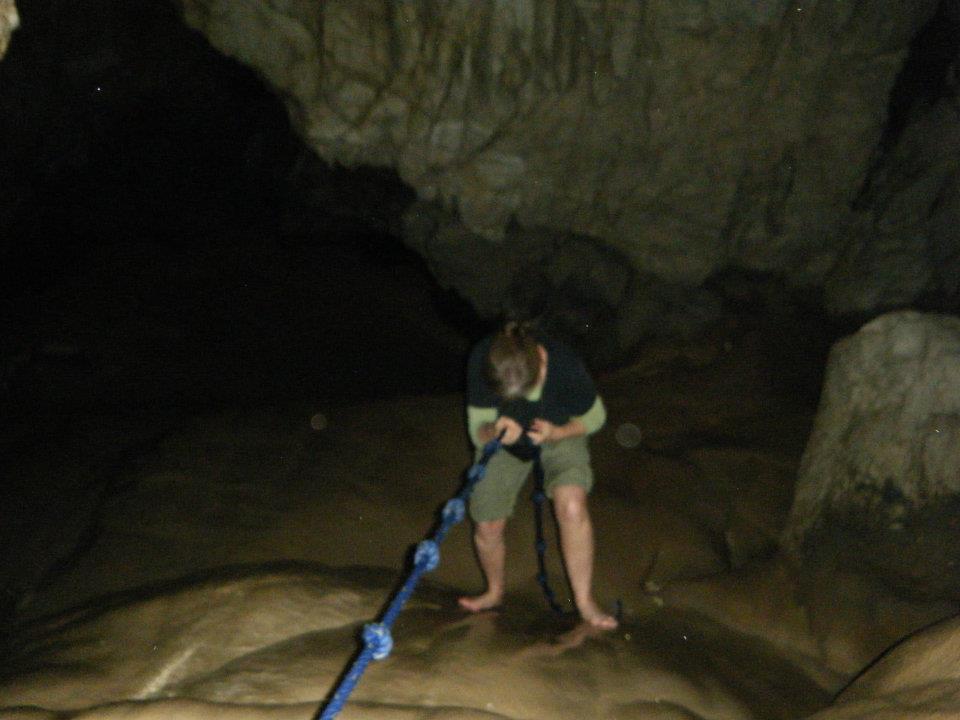
Rappelling down a boulder with a rope. The only caving “convenience” on offer during the whole caving experience.

On the other hand, as my camera flash was dead, I managed to take zero pics.   So without Michelle’s blessing I am stealing borrowing some from her FB page to bring this tale to life. Thanks Michelle!

We were in the cave approximately 2 hours and descended about 200 metres.  What made this cave experience unlike any other was that it was left completely natural inside. No gravel path ways, signs, concrete steps or taped music.  And no lighting….save the kerosene lamp.  Michelle had actually had the foresight to bring headlamps on the trip but then left them in the jeepney!  But that always seems to be the way with these adventures.  Its hard to know what to prepare for, what justifies the extra weight in your pack, and what to actually take out for the day.  But that’s part of the adventure I suppose, the unexpected!

Banaue and Batad Rice Terraces


While other people were settling down to Valentine’s Day dinners, my friend Michelle and I set out on a 4-day adventure to the romantic rice terraces of Banaue and Batad.  Taking the 8-9 hr night bus from Manila to the Northern part of Luzon was not something we were looking forward to very much, but was the only real choice if we wanted to see the spectacular terraces that the Filipinos bill as the 8th Wonder of the World.  Pretending to sleep upright on cramped seats we drove through the night until the 8am arrival in Banaue.  With a tad more energy than expected, we had the day free to explore the town, grab a quick nap, and take a short tricycle ride to the rice terraces viewpoint.

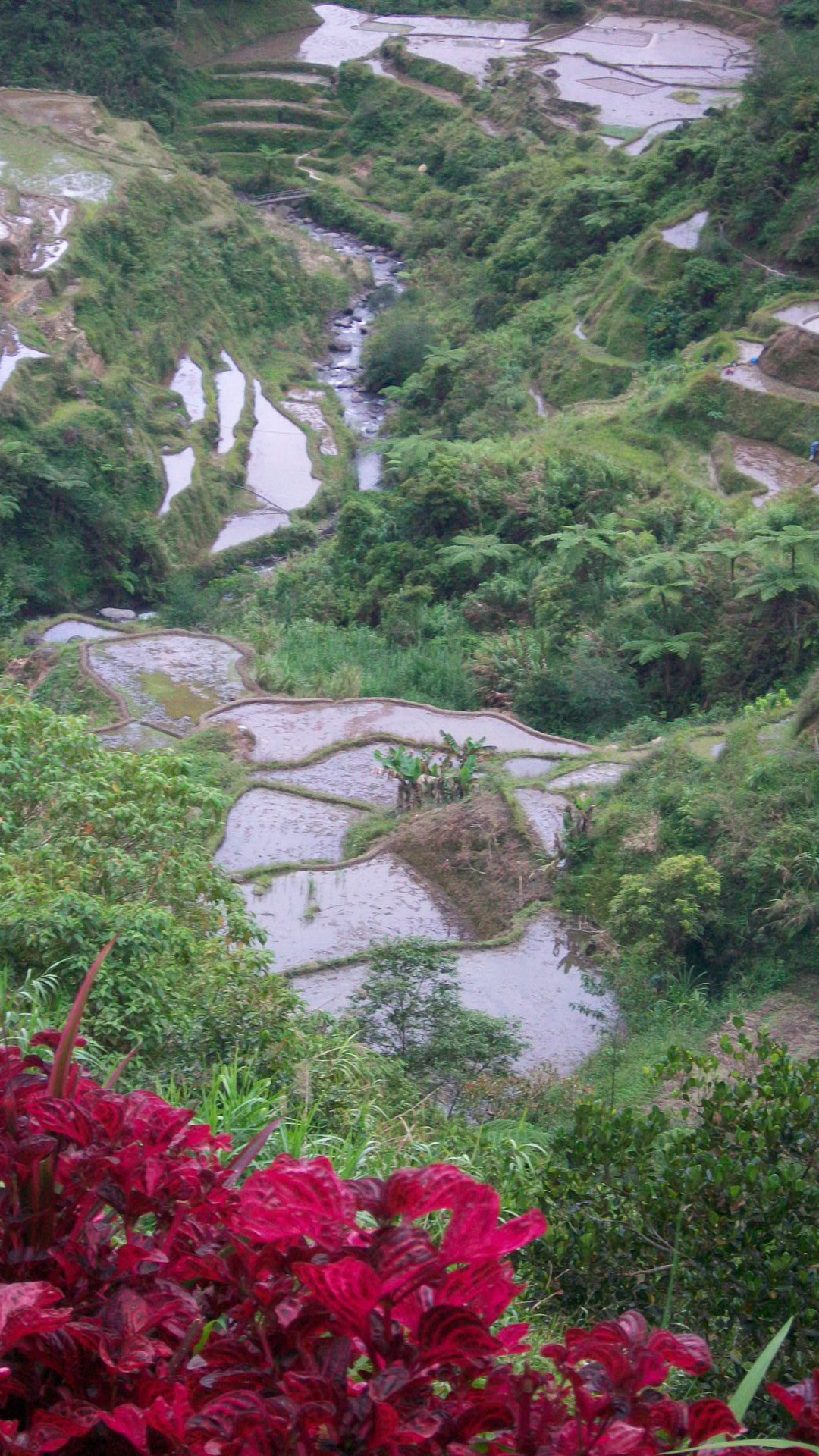
The terraces were everywhere and lived up to the many tourist posters that you see all over the Philippines.

From one of the viewpoints, they actually pointed out the view that is printed on the back of the 1000 Peso note.

That evening we ate an early dinner at the Greenview Restaurant, struggling to stay awake past 8pm.  Both lunch and dinner had been pretty good…fresh vegetables and decent choices that quite honestly I hadn’t expected in a such a remote area of the Philippines.

The next morning our guide picked us up and we transferred to Batad, via private jeepney, a journey of about 14kms.  With only partially paved and winding roads, unexpected roadworks and other obstacles, the bumpy journey took over an hour.  Our guide dropped us at the trailhead where it met the national road and we started our 45 minute descent down to the village of Batad.  An easy ramble. The biggest hiking challenge to date had been trying to get reliable or complete information on the kind of trails and hiking offered in the area.  Most of the guides and tourist offices have their preferred packages and it was hard to ascertain what was really being offered and whether or not we wanted what something different.  The fear was that hiking wouldn’t feature enough on the agenda and this easy walk made us a little suspicious that we might be right.

When we arrived in Batad we found it unspoilt, simple and charming in its own way.  It was a bit like stumbling on a secret place, a very small hamlet with about 30 buildings, a couple of hotels and restaurants and a handful of hikers.  The view from every position was of the rice terraces and we had an early lunch at our little pension and enjoyed it from their terrace.

View of Batad village

Al Fresco squat toilet (with views of terraces)

The accommodation itself was described as “basic”, a word which means different things to different people.  Here is meant a communal bathroom with no hot water; small rooms with only a bed, door and plywood partitions; ceilings that didn’t quite touch the walls, and a little wildlife (read: night time bugs and a visiting cockroach in our room.)  Not for everyone, but everyday living for millions that I could surely tolerate for one night in exchange for a rare opportunity to see such a special place.

In the afternoon we headed out for 2-3 hour hike to the Tappia waterfall.  I had been warned that it was a tough hike, and having not done any real hiking since 2010 in Arizona, I was feeling it!  We walked along the terrace walls, descending down the stone steps that helped workers travel from one terrace to the next. Up close we could see the rice paddies in their various stages of development.  Most were unplanted at this time of year, but many had nurseries with young seedlings ready to prick out in the flooded fields.

Nursery of young verdant shoots ready to be planted

Some were already planted for the season, and some were abandoned.  (Volunteer restoration is ongoing now to save some of the abandoned terraces that are starting to collapse.).  Once we reached the saddle and, after a short rest, we descended the steep slope on the other side of the mountain down to the valley floor.  Tappia falls came into view and I wobbled down the last 200 meters of steep steps as my legs started to seize up from 500 steep steps down.  We rested for about an hour to enjoy the water and cool down.

As you can imagine, the hike back was hard work, but actually a bit easier than the descent, helped by the rains that started as we began the trek back.  Beautiful views, a challenging hike and the satisfaction that we got to actually experience the terraces close up.  A wonderful experience.

Wild pink flowers grew up randomly on the terraces

Day 3: Ennerdale Bridge to Black Sail


Ennerdale Water

Ennerdale Water

Something I learned about English weather – you never know what’s gonna happen.  In the picture above you see lots of grey clouds – which on the East Coast of the States usually means that some storms are on the way.  However, these types of clouds would typically blow over, and we’d get rained on when we least expected it.

views of Green Gable and Great Gable from Black Sail Youth Hostel

Views of some pine tree plantations. In the 1930s someone thought it would be a great idea to plant pine trees in Northern England - even though they aren't/weren't native.

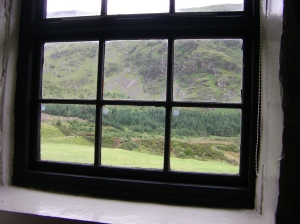
View from our room at Black Sail Youth Hostel

View from our room at Black Sail Youth Hostel

Day 1: St Bees to Ennerdale Bridge


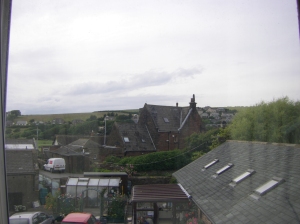
view from our room at Stone House Farm - 9:30PM (I was amazed at that hours of daylight - loved it!)

view from our room at Stone House Farm - 9:30PM (I was amazed at that hours of daylight - loved it!)

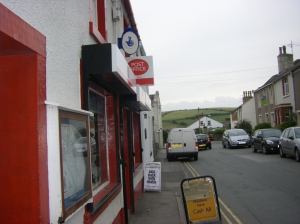
Post Office in St Bees.  The Post Office was not only the place to mail stuff - it was like a general store, too.

Post Office in St Bees. The Post Office was not only the place to mail stuff - it was like a general store, too.

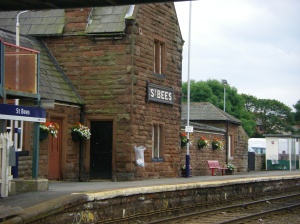
St Bees train station

St Bees train station

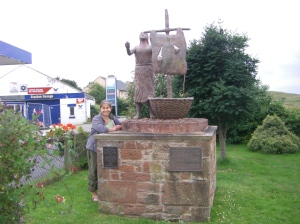
statue of St. Bega for whom St. Bees was named.  She was an Irish princess who fled her native country sometime between the 6th and 9th centrues to avoid an arranged marriage with a Norwegian prince.  She lived as a hermit, but was known for the good deeds she performed - including opening an convent.

statue of St. Bega for whom St. Bees was named. She was an Irish princess who fled her native country sometime between the 6th and 9th centrues to avoid an arranged marriage with a Norwegian prince. She lived as a hermit, but was known for the good deeds she performed - including opening an convent.

A tribute to some incredible people


As we planned our trip, and created our donation page, we encouraged people to email us with the names of family or friends who’s lives were lost to cancer – or to those survivors who are kicking cancer’s butt.  It was my intention to dedicate each day of this walk by making a post “This day’s walk is dedicated to…”  Unfortunately, we dealt with unreliable internet access, so I decided to create a special post to recognize these folks.   We are grateful to the following incredible people that reminded us to put one foot in front of the other and continue the challenging journey:

Lila

Sam

Shelly

Sharlene

Cathy

Merle

Theresa

Dale

Judy

Linda

Bonnie

Ralph

LaVerne

Fred

Irene

Linda

Eddie

Josiah

Sharon

Brenda

Lisa

Pam

Trish

I cab honestly say that these folks helped get us over some major fells (hills).

Just for Fun: Vocabulary lesson for Carla


As you might expect, I kept a journal during our C2C journey.  Part of my journal included my new vocab words.  Caroline was a great interpreter, and taught me many new words.  Here are some examples:

Cheers (also Ta) = Thank You

Pudding = steamed cake (if anyone offers you Sticky-Toffee Pudding – take it!  However, I also had a Suet Pudding which was steamed beef and potato entree served in a crust of suet.  I tried lots of interesting foods in England.)

boot = trunk of the car

serviette = napkin

jacket potato  = baked potato

Sarni / Buttie = sandwich

Plasters = band-aids

Chips = French fries

Crisps = Potato chips

Fell = Hill

Beck = Stream

Tarn = Lake

Sweeties = candies

Boiled sweets = hard candy

Cream tea = A cup of tea which is served alongside scones with jam and clotted cream (again, if you are offered a cream tea – take it!)

Off-license = a place to pick up alcohol that is not a pub

Slimline = diet tonic (This was an important one for me.  I drink gin and tonics, so I’d order a ‘gin and slimline’.  Another change, the English use lemon instead of lime, and typically don’t have a bunch of ice in their drinks).

flannel = washcloth

sultanas = raisins

porridge = oatmeal

courgettes = zucchini

aubergine = eggplant

mash = mashed potatoes

bicky = Cookie

Biscuit = Cracker

Day 13: Much stronger now – our walk is complete!


We did it!

Our time on the trail in England went by so quickly.  I’m pleased to report that with sore feet and big smiles we walked into Robin Hood’s Bay

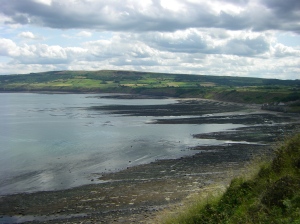
Robin Hood's Bay - before high tide

Robin Hood's Bay - before high tide

and finished the Coast-to-Coast walk at 3pm (GMT) on Saturday, July 25.

woo hoo!

woo hoo!

As is tradition, we walked into Wainwright’s Bar at the Bay Hotel and ordered a drink to toast our achievement.  We signed a C2C registry to mark our trip completion and even got Completion Certificates.

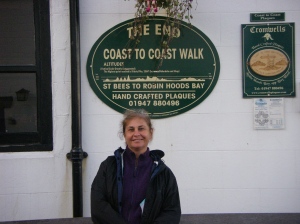
Great job, Caroline!

Great job, Caroline!

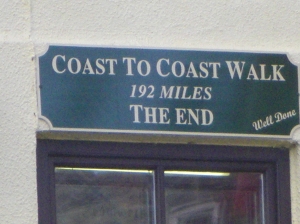
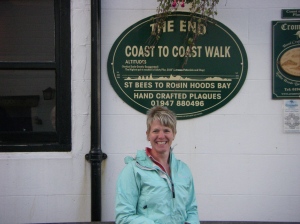
who's excited to read the THE END sign?!   ME!

who's excited to read the THE END sign?! ME!

Day 9: Day Off in Richmond


We took a well deserved day off in Richmond today – which was GREAT despite the rain.  In fact, we were glad the rain day was today, and not tomorrow when we have some miles to put away.

So, we took care of some function stuff like banking and laundry.  Not many banks or washing machines on route, I might add.  Then it was off to explore the streets of Richmond.

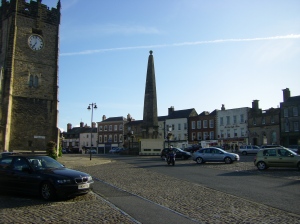
The Market Square in Richmond

The Market Square in Richmond

The town is our largest enroute with a large-ish market square, lots of pubs, shops and, of course, banks etc.  But the biggest attraction was that it has a castle, museum and some interesting places to poke around.

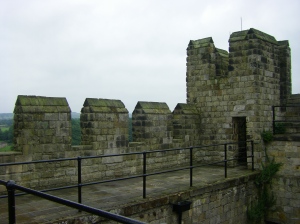
Richmond Castle

Richmond Castle

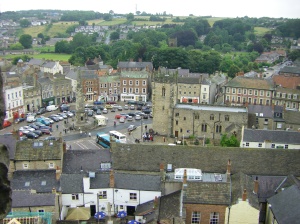
View of town from Castle walls

View of town from Castle walls

Our B&B - Willance House - where we are staying for two whole nights!

Our B&B - Willance House - where we are staying for two whole nights!

After exploring the museum and castle in the rain (great views!) we headed over to the old railway station that has been converted into a movie theater and watched Harry Potter.  Perfect!  It was great to do something completely different.

Tomorrow we are crossing the Vale of Mowbray which is a flat stretch of farmland between the Yorkshire Dales and the Yorkshire Moors.  At 23 miles its going to be a long one… praying for fine weather!  Rumour is that the pub in Ingleby Cross has an internet connection, so will post again from there if we can.