Tihar in Pokhara


Tihar Festival

Tihar Festival

Tihar, also known as the festival of lights, is celebrated throughout Nepal.  We chose to spend the four day break in the mountain town of Pokhara, which is about a 5 hour drive or a short 25-minute airplane ride from Kathmandu.   (We chose to fly, but as it turned out driving would have been much quicker. But C’est la vie! we made it finally, despite the weather.)  The festival began a few days before our departure with the Day of the Crow, where offerings of food, coins, oil-wick lamps and incense in are set out in their honour.  Unfortunately, I didn’t get to see this for myself, but our driver filled me in on the details.  He also explained that the second day is the Day of the Dogs, when they are anointed with the red tika, adorned with garlands and fed well, whether they are stray or pets.  This I did see and it was adorable.  Dogs were running around the city with little red dots on their foreheads and strings of marigolds around their necks.  Unfortunately, it was a work day and I was not in camera-mode.  But here is a sample from the interwebs…he doesn’t seem too pleased about it:

dogtihar
The third day is the most important one in Tihar. In the morning, cows are also given tikas and garlands, and doused with yellow and red powder. People touch the cow’s body with their heads, bow down to its feet, and even crawl between its legs on all fours, for the purpose of humbly asking for assistance and guidance for their souls when they leave this world. On the evening of this day, after the homes have been well scrubbed and cleansed with red mud and cow dung, each one is embellished with tiny oil lamps, and candles.  From this comes the meaning of the pretty light festival, which also happened to be the second day of our arrival in Pokhara. That evening we watched shopkeepers lay down a line of tiny lights around their stores and a pathway was painted on the ground leading inside.  I later learned that the pathways marked by the lamps and the footprints (or painted pathways) made from rice flour paste are to show the goddess Laksmi the way to the family’s treasured possessions.

The fifth and final day is Bhai Tika, when sisters worship their brothers by making holy circles of water and oil around them and by feeding them specially prepared foods, and sweets. The brothers in return give their sisters presents. If a boy has no sister, then a close female relative may perform the ceremony.

I also witnessed another tradition that no-one has explained to me yet, and perhaps it was only local to Pokhara: street dancing. We went for a hike in the morning on the first day and saw groups of singing and dancing kids along the hiking trail up to the peace pagoda. The next morning a few dancers performed outside the stores in front of the Lakeside stores.
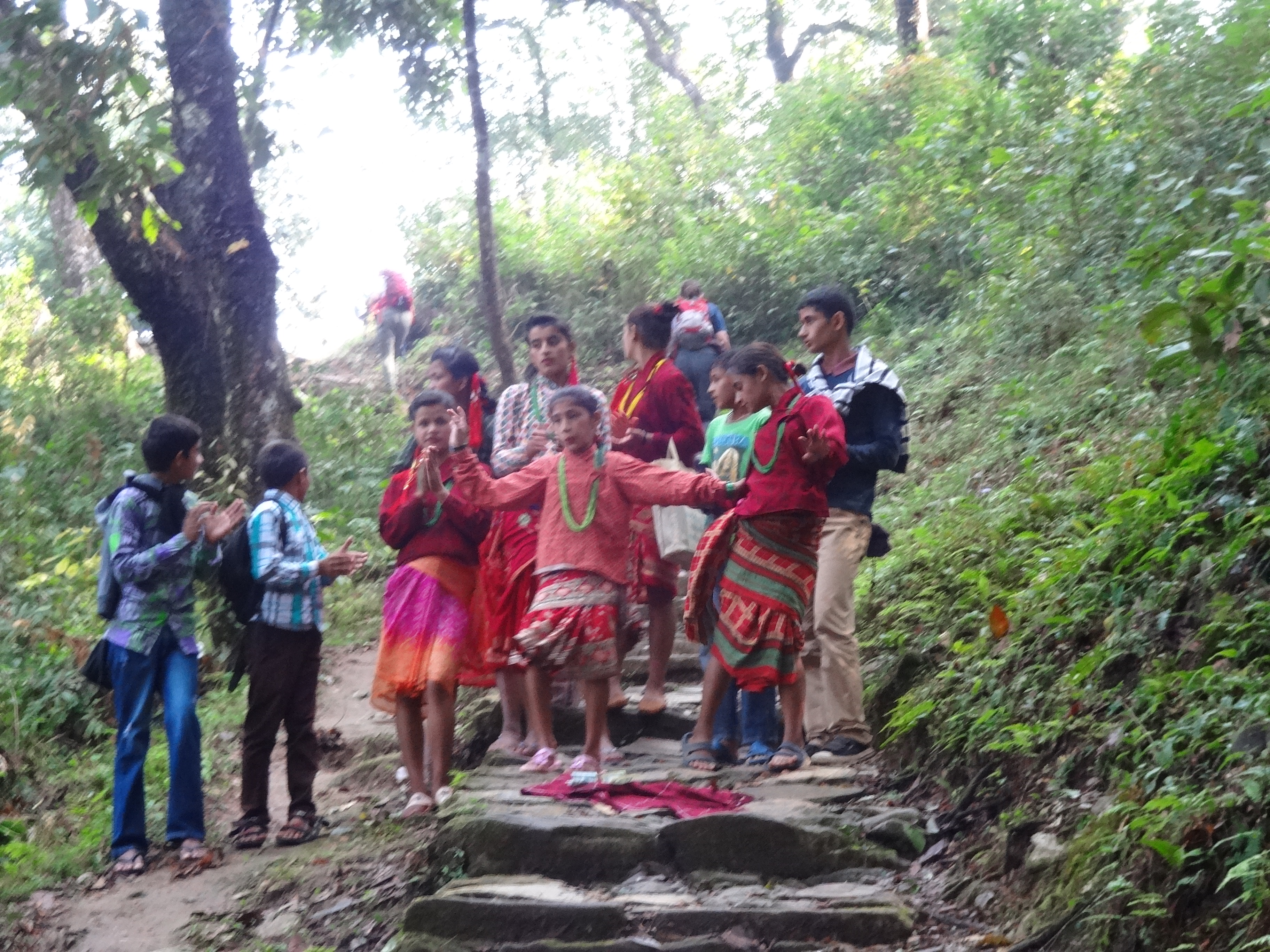
Tihar Dancers

Early Tihar dancers getting into their act, near the Peace Pagoda, Pohkara

On the second day, it became clear that this is what everyone was doing, and it was quite a sophisticated affair. All down the main tourist shopping area of Lakeside, and in the main town away from the tourists, small dancing troupes were singing to shopkeepers. We saw traditional dancing groups, modern Bollywood productions and even the Gang-um Style horse dance. That evening, they kicked it further up a notch. In the darkness they had brought more candles and electric light displays, speakers, microphones and full-scale productions. The audiences were always passersby, gathered in a circle around the act in front of each store. You could spot them from a distance away.  These performances were not one dance wonders, but well-rehearsed, multiple acts with musicians.  After dinner from our hotel on the other side of the lake, the town was lit up with lights, music and dancing that went on until well past my bed time.
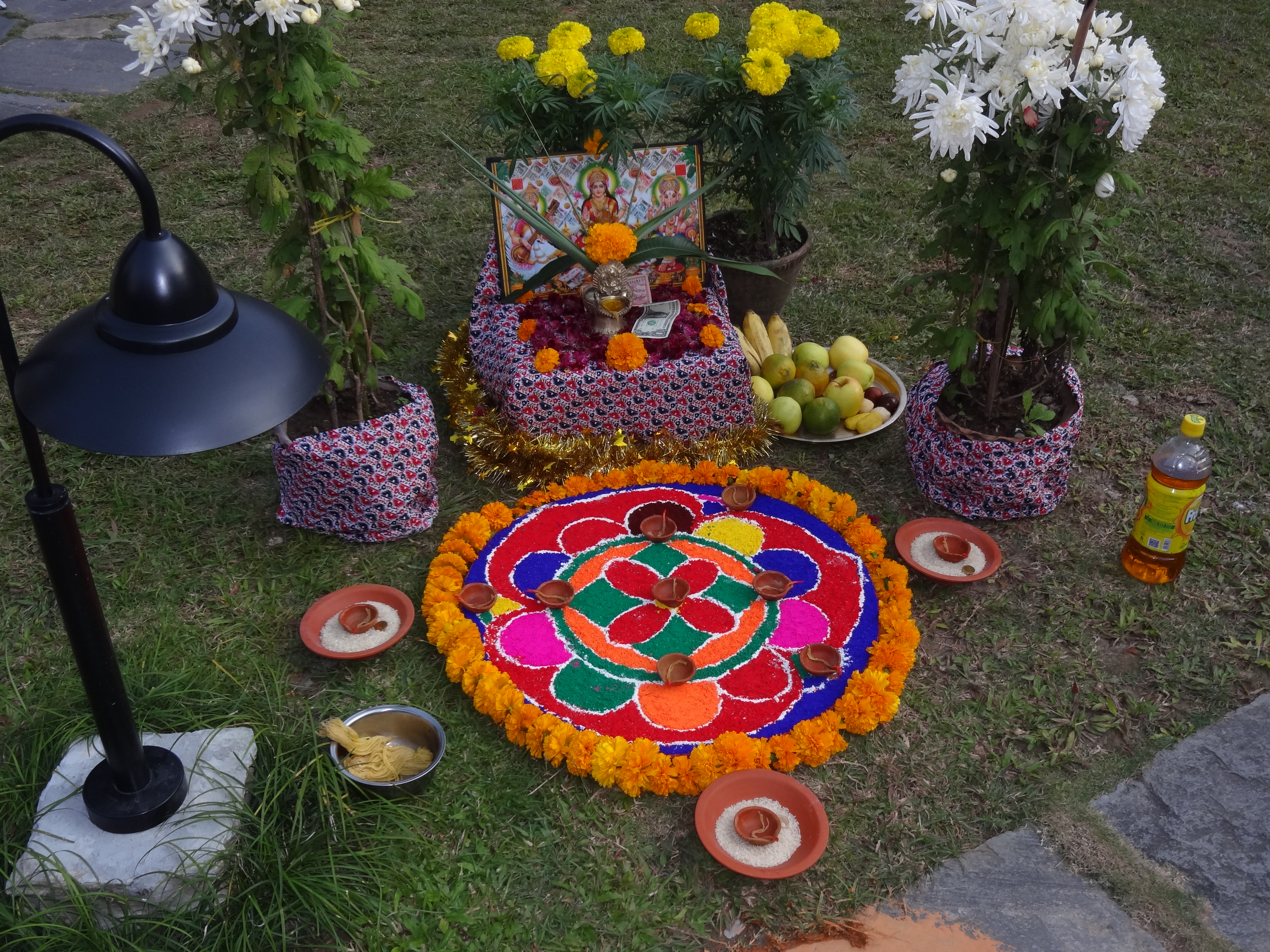
Rangoli

Rangoli, rice flour design at a Tihar offering

Kathmandu Domestic Sojourn


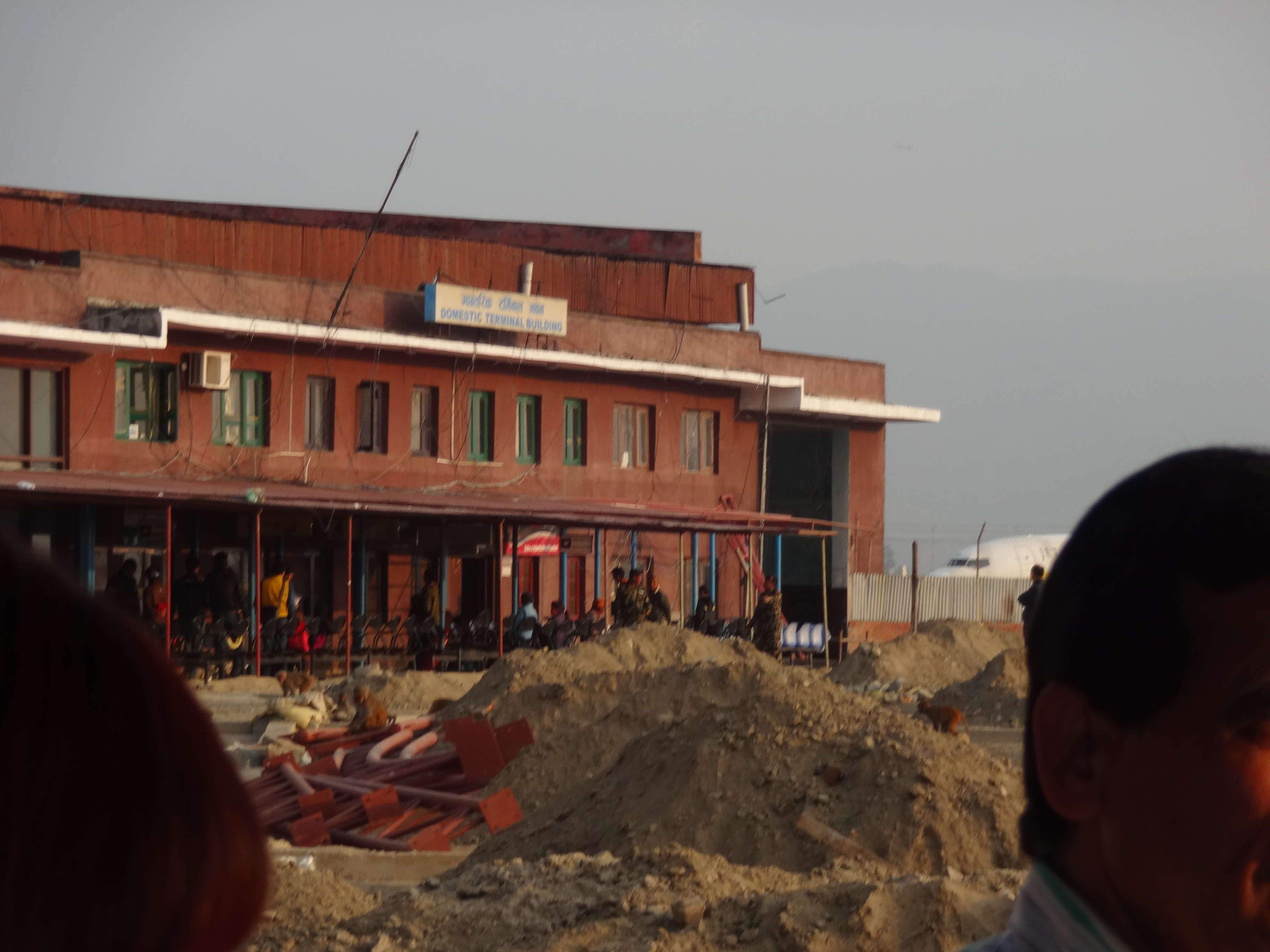
Rather unbelievably, this is the domestic terminal in Kathmandu. I don’t know what I expected before we pulled up for the first time. I certainly wasn’t anticipating a small, clean modern place, but nor was I expecting this.  When we arrived in Tribhuvan International Airport back in late August. I pretty much got what I expected. It was small, old and rough around the edges, but not a surprise in one of the world’s poorest countries. The domestic terminal was a different story.
DSC00773It was hard to believe that every trekker’s flight out of the city starts here.  My first impression was certainly made worse by the construction for what I am guessing is a parking area in front of the terminal.  Word is there are plans to build a new terminal at some point in the near future, but who knows when…in the mean time this is the gateway to the mountains.

DSC00669

All of the poured cement rectangles (for the new car park?) were being dug out and leveled by hand using a spade and wheelbarrow.  Passengers took shortcuts past the mounds of dirt.

We arrived on the first cool, crispy morning of the year. My light jacket wasn’t doing enough, my sock-less feet were starting to feel the cold, and I could see my breath for the first time in three years. We negotiated our way into the terminal past the many obstacles and security blocks only to find that our destination, Pokhara , was currently closed due to bad weather and our flight was delayed at best. The terminal was crowded confusion and, with no working monitors, it made more sense to stay outside and wait where there was at least some seating available.

DSC00667

Waiting to hear if our flight was even going to take off today…

To cut a long story short, we waited over six hours in there.  One hour outside, and five hours on the other side of security in a large room that felt like an old bus station.  As rough as it was, it was also a marvel to see just how many flights they handled with just two gates and a handful of buses. It was relatively organized, and we were handled with courtesy by the airline staff.  No one appeared to be misbehaving or having a meltdown because they had the wrong seat number.  Finally, to everyone’s credit, Pokhara airport opened, they caught up with the backlog of flights and we took off for a four day break in the mountains. Hopefully they really will do something about the domestic terminal soon.  The Nepali tourist industry, the Nepali people and the rest of us deserve better!

DSC00777

Monkeys added to the confusion…and to the surprise…as monkeys tend to do

DSC00668

Yup. That’s the baggage claim


Village Rice Harvest


DSC00612

One of the things I really like about Kathmandu is how quickly you can get out of the city.  In about thirty minutes you are out of the maze of chaotic streets. After 40 minutes, you are in the countryside.  It makes a day trip easy, and you don’t have to worry about endless hours in traffic like we did in Manila.

I like the closeness to country life that is still evident here.  I like seeing how food comes to the table.  In Nepal most activities are still handled manually.  All around you can see the seasons and routines, and how everything harvested has a function to feed people, animals, or fuel fires.

Our recent trip to Sankhu was just a 45 minute drive and we stayed at a small cottage with views out across the rice paddies.

DSC00640

The bedroom/kitchen/living space of our little cottage

DSC00636

Looking out across the rice paddies at different stages of the harvest

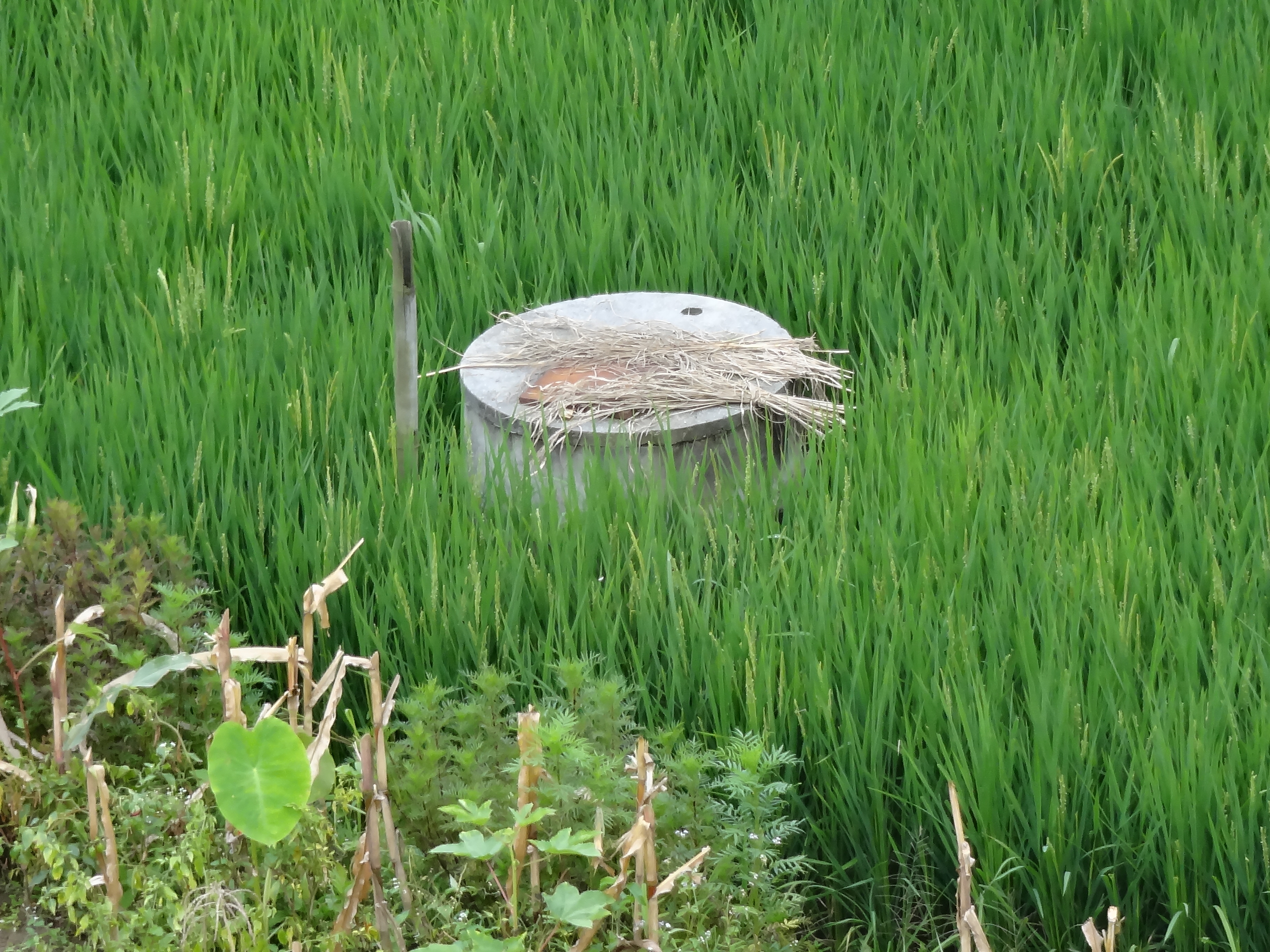
From our ringside seat, the views across the valley were of farmers bringing in the rice crop. Its a family team affair with at least one person cutting down the tall rice stalks, another shaking the grain on to a hessian cloth, and another tying the stripped stalks into bundles.

DSC00637

The tied bundles of rice straw are then layed out across raised mounds of dirt to dry in the sun. The dirt mounds and furrows are actually planted potatoes that are already in the ground waiting for the rice crop to vacate. Unfortunately, the rain stayed a little late this year and this farmer’s work lies drenched in the flooding. A reminder that farming is risky business.

Once they bundles are dried out they are piled in haystacks, and eventually brought inside for storage.

Haystacks

Haystacks seemed to be a form of self expression. We saw quite a few different techniques!

Towards the end of the day, farmers gathered up the rice grains from the burlap sheets to put into sacks for transportation. But the final task beforehand was to toss piles of grain in the air to remove some of the husks, dust and dirt. Only then could he fill the sacks and carry them home for the day. We saw a mechanized version of the grain cleaning while we walked through the village:

cleaning rice grains

Same idea, but with a little help from electricity (when its working). Grains fall in front of a spinning fan, which blows away husk debris. The “aired” grains pile up on the plastic sheet, waiting to be bagged.

DSC00627

This farmer got a head start on his potatoes.  The  potato crop is already on its way.

Its a lot of very hard work and risky business. Watching the harvest come in gives you a whole new level of respect for a simple bowl of rice.

‘Til the Cows Come Home


In many ways it was such an everyday scene.  An end-of-the-day evening routine. Both the farmers and the cows knew the ropes and within minutes their journey from the fields to the barn was over.  But I happened to be standing there with my camera, and happily snapped away for a few minutes enjoying just how idyllic it seemed.

DSC00615

The farmer led his cows down off the path and across a small muddy stream. The cows knew where they were going.

nepalese farming

His wife followed behind. Her cow’s red tika matching her dress. Unbelievably a seagull swooped down and arrived in my shot with perfect timing. (Seagull? In Nepal? Well, maybe not, but do you know what it is?)

DSC00619

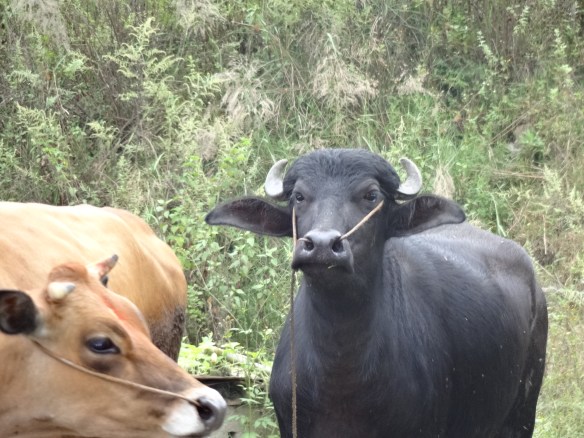
Ooo…look at that face!

DSC00621

DSC00620

Traditional Style Home, Sankhu

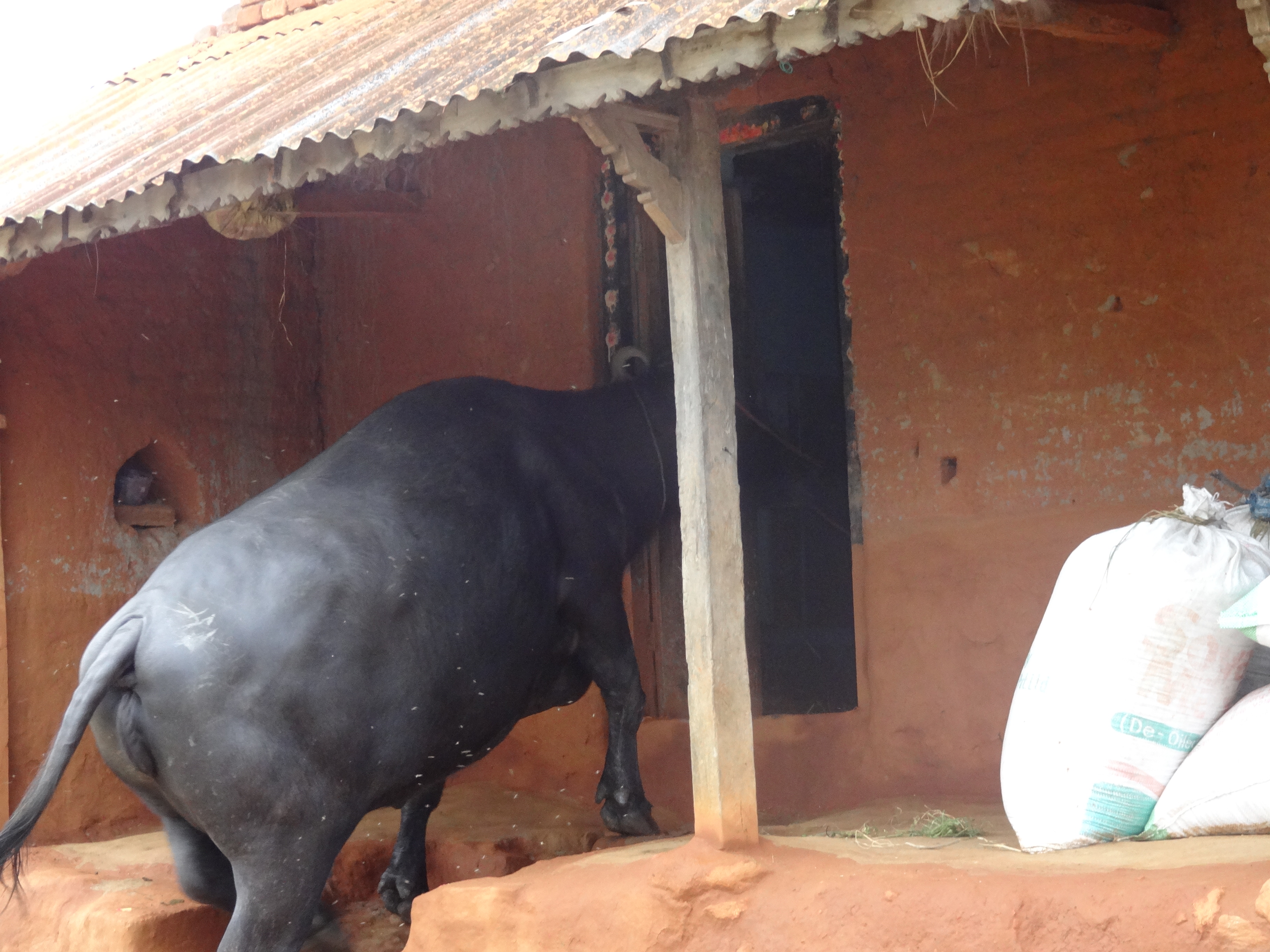
Home was a traditional mud brick home in Sankhu. The animal entrance is on the left.

DSC00618

The big guy goes in, heading for bed….

DSC00622

…And a few minutes later, along comes the next family carrying their day’s work in the field on their backs


Of course, their life is less than idyllic. My host showed me around his mud house and the upstairs bedroom with only a straw mat and a badly caving roof. There is no bathroom or kitchen, and the downstairs space is used for storage and animals. In fact my mind flashed back to just a few week ago in Devon, staying in a home that was originally designed to house humans and animals together. Life in Devon and Nepal seemed oddly connected.

Bhaktapur – Medieval Trades Up Close (Part 2)


Bhaktapur is a beautiful city that’s world famous for its historical and religious architecture. But I felt that it deserved a separate post here on its amazing array of living, ancient trades that I had never seen before in such hands-on detail all in one place.  These weren’t museum activities, reenactments for tourists, or struggling ancient trades desperately trying to survive in modern society, but everyday life, money-making pursuits of Bhaktapur village.

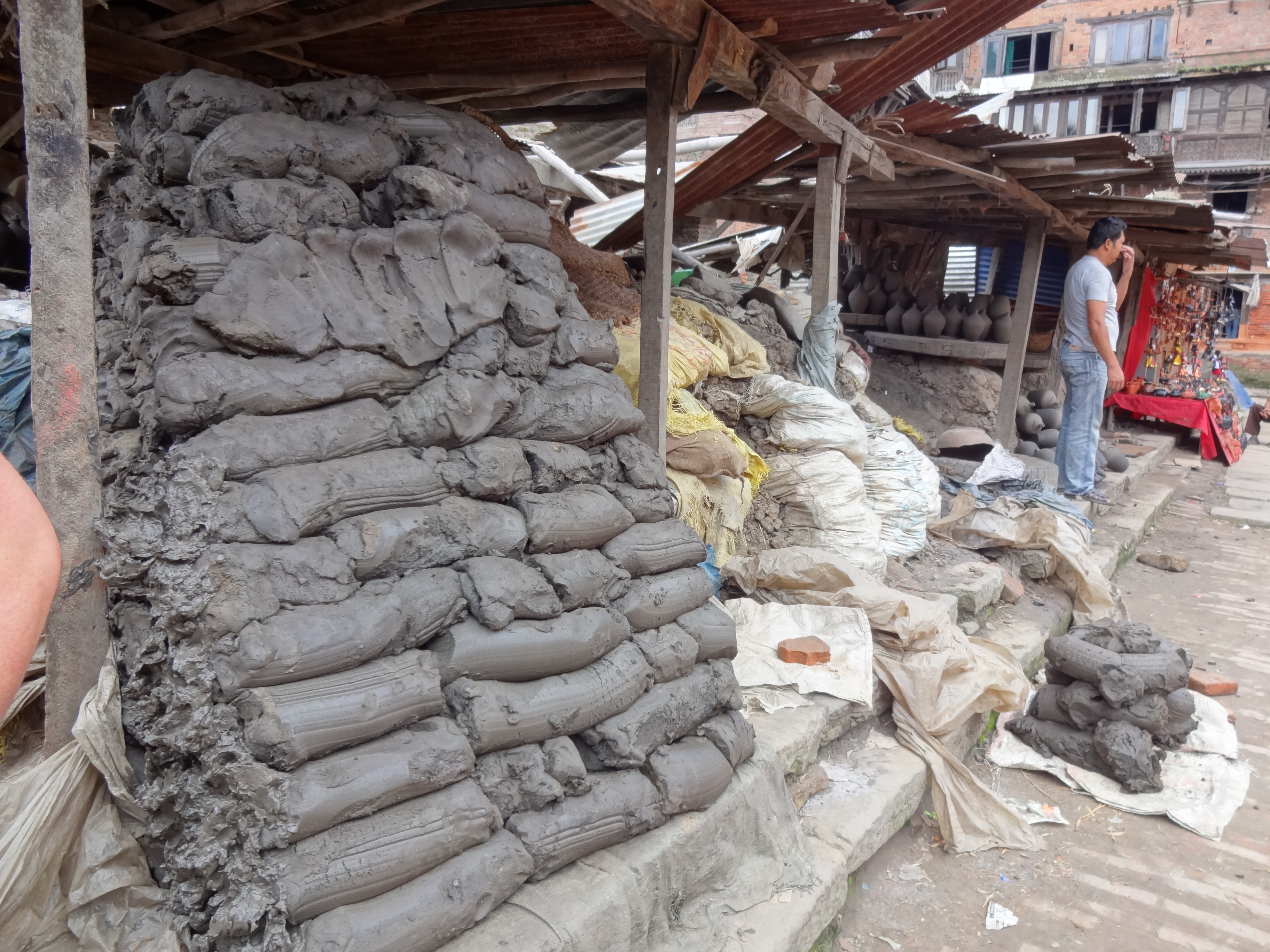
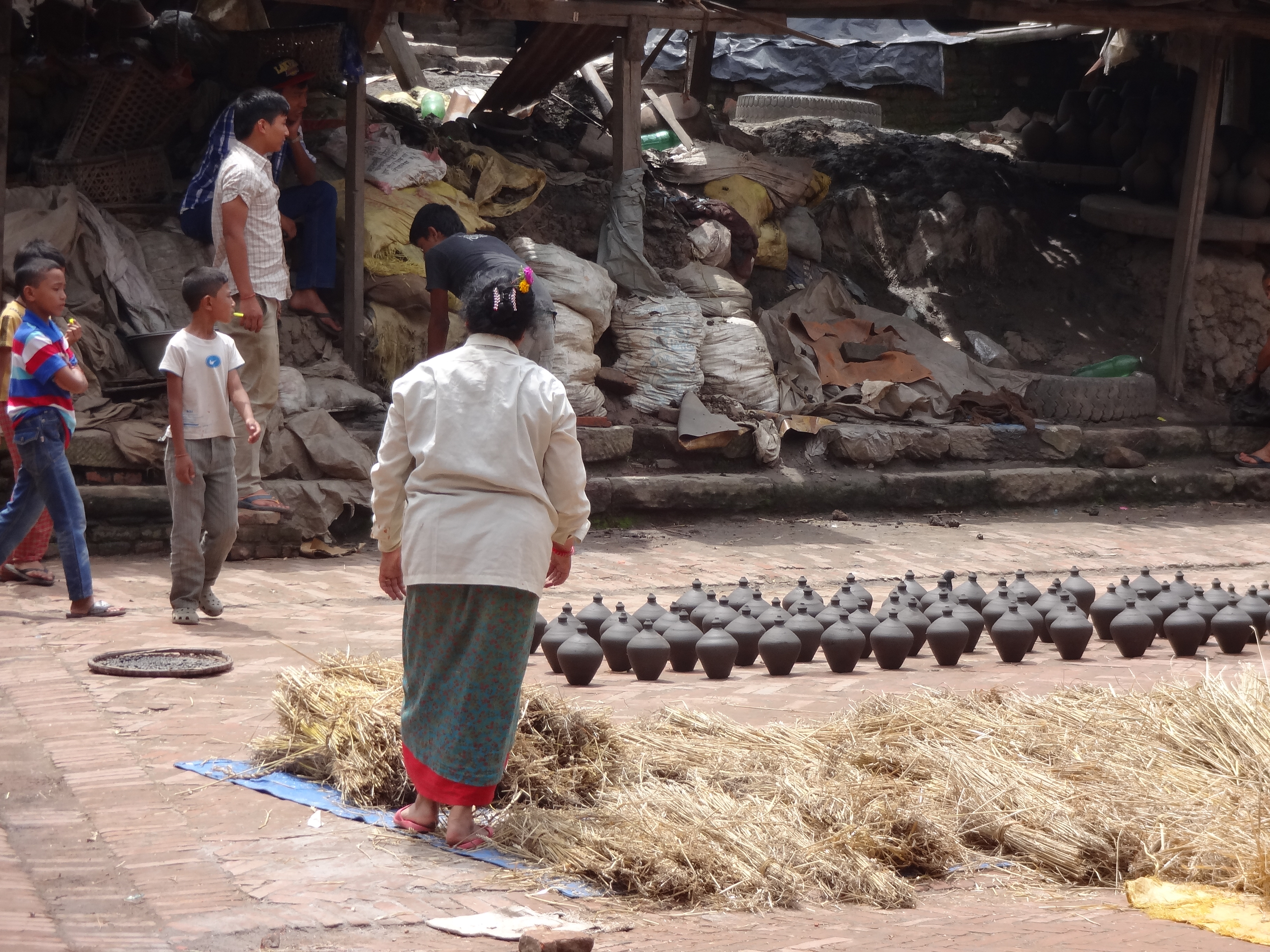
As we walked through the narrow streets, almost every other open doorway had an ancient trade behind. We saw carvers, potters, metalwork, bakers and butchers, creating and crafting from raw materials without power or technology. We saw full processes and complimentary trades working side by side.  It was particularly fascinating to see the clay arrive in bags, a potter spin pots, and then watch them dry in the sun before heading to the open air kilns.

It was also highly unusual to me that this other medieval world existed alongside a national and international tourist attraction that was still unspoilt, still preserved, and still part of living history. The city’s famous architecture must help support Bhaktapur’s economy, but the pots they made and the flour being ground was not just to produce tourist income. There were tourists shops and touts, but it was very low key. The town felt authentic but at the same time was familiar enough with outsiders that we didn’t feel voyeuristic as we walked around. A very difficult and rare balance achieved and an amazing glimpse into the past.

Bhaktapur Pottery

Piles of clay waiting for the potter

Bhaktapur Pottery Square

Potter shaping a pot on a manual pottery wheel

Bhaktapur Pottery Making

Processing corn husks ready for kiln kindling

Bhaktapur Pottery Square

A potter stopped to show me his kiln. Love the Superman tshirt!

Bhaktapur Pottery Square

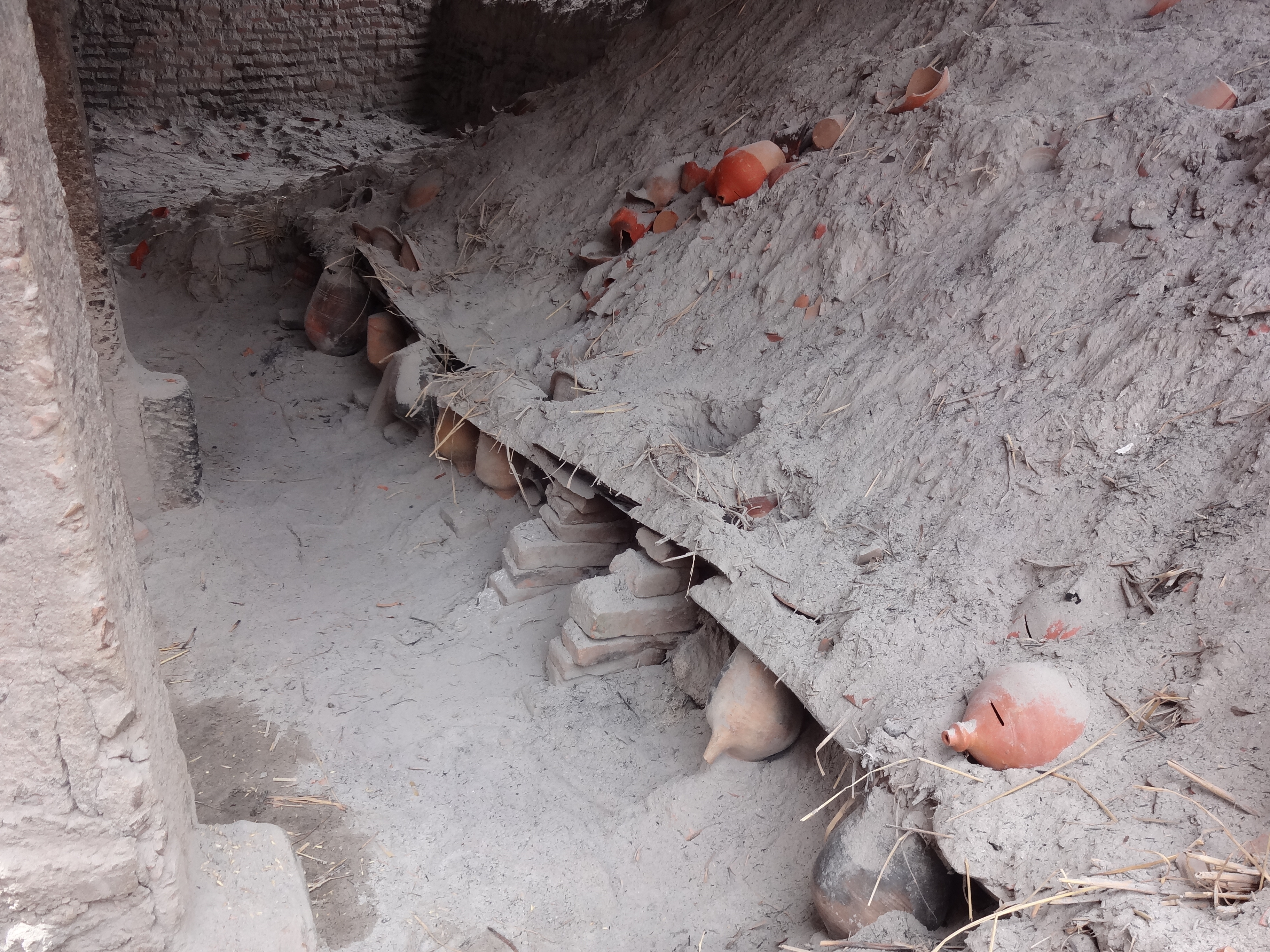
Newly baked pots from the kiln

Bhaktapur Pottery Square

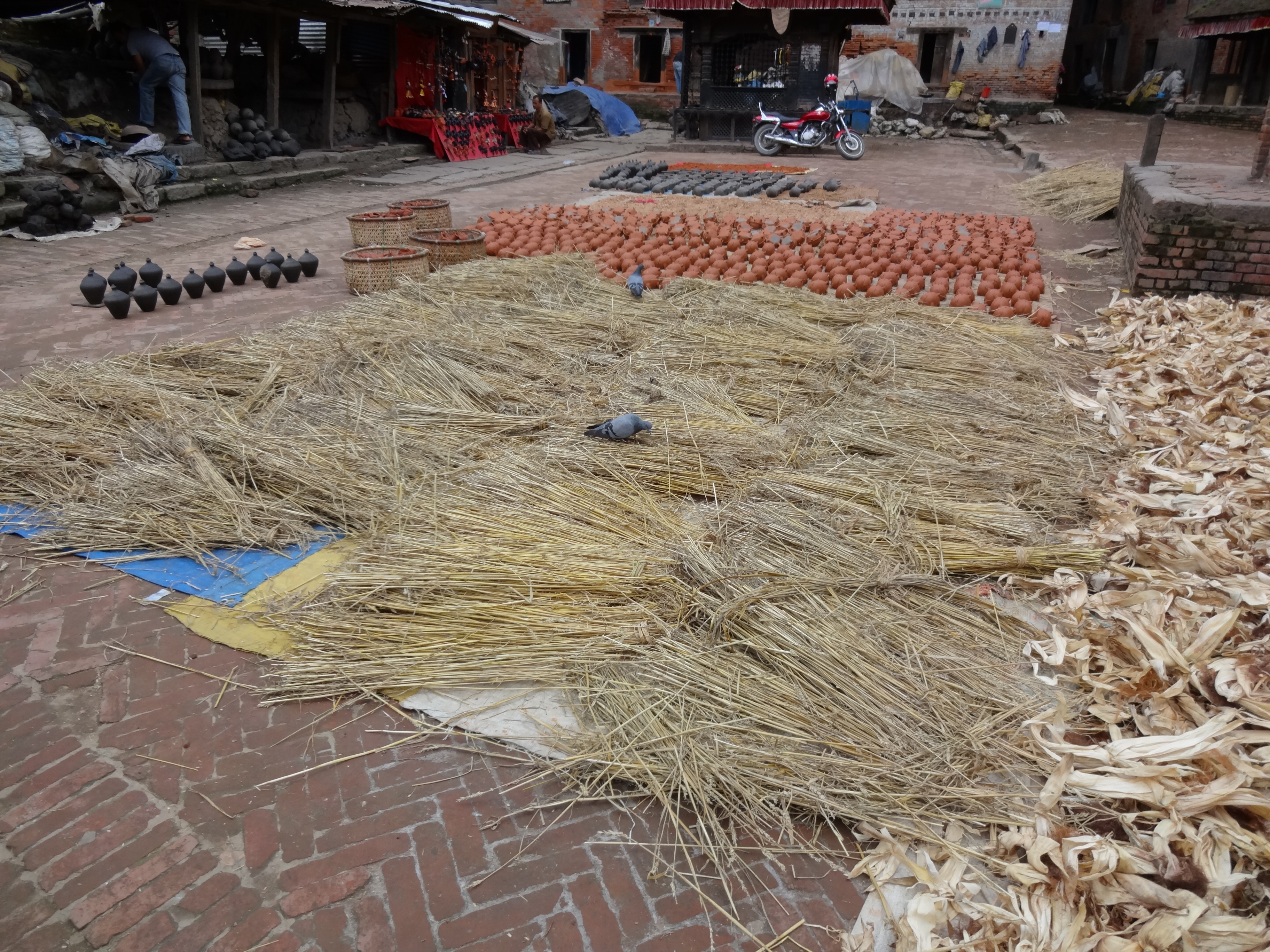
Corn and rice husks drying side by side in the main square…..

Bhaktapur Pottery Square

….. alongside the freshly turned pots.


Bhaktapur Doorway

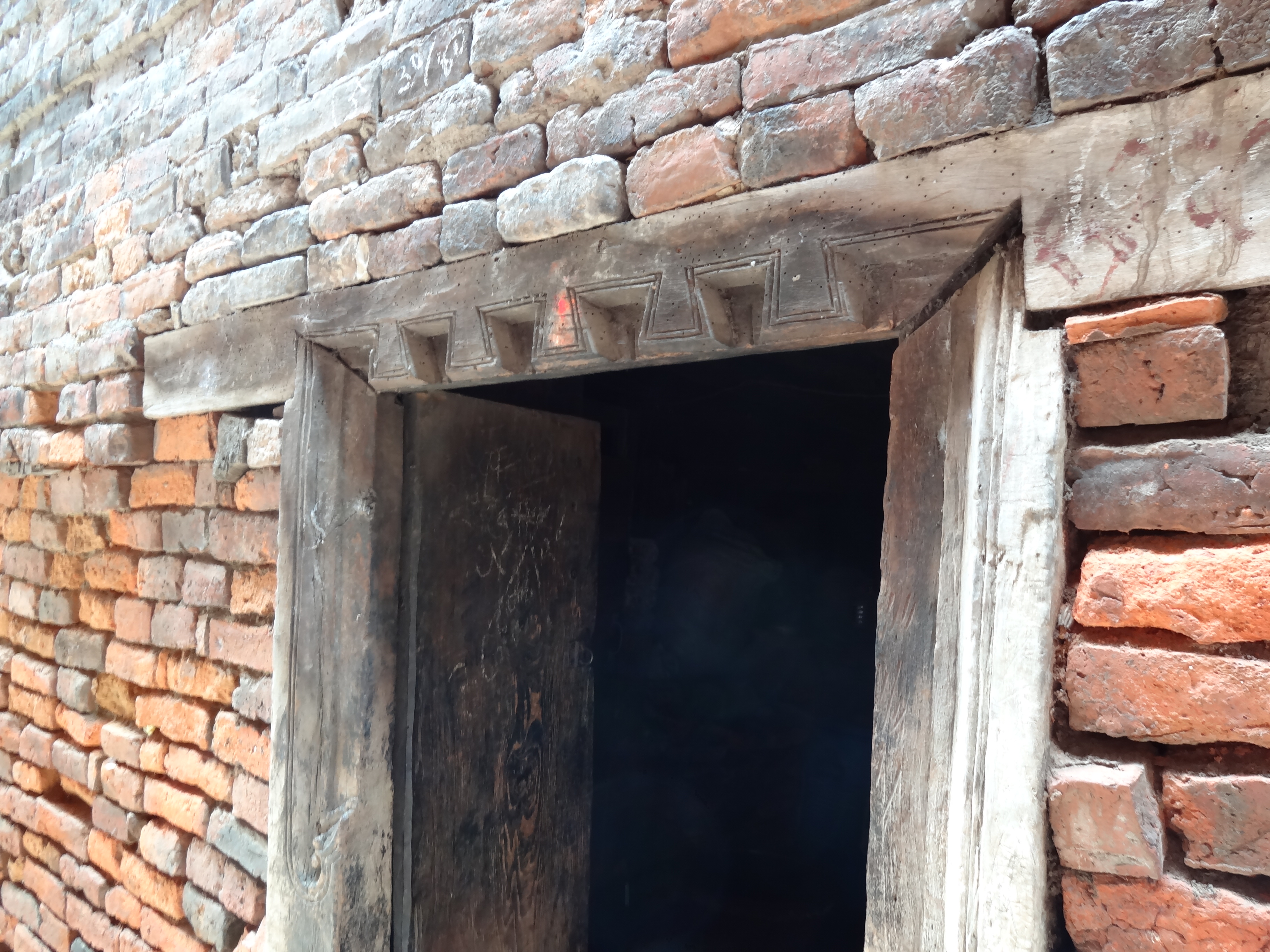
Typical Bhaktapur doorway with decorative lintel. Peering through one would reveal anything from a small living area to a trademan working.
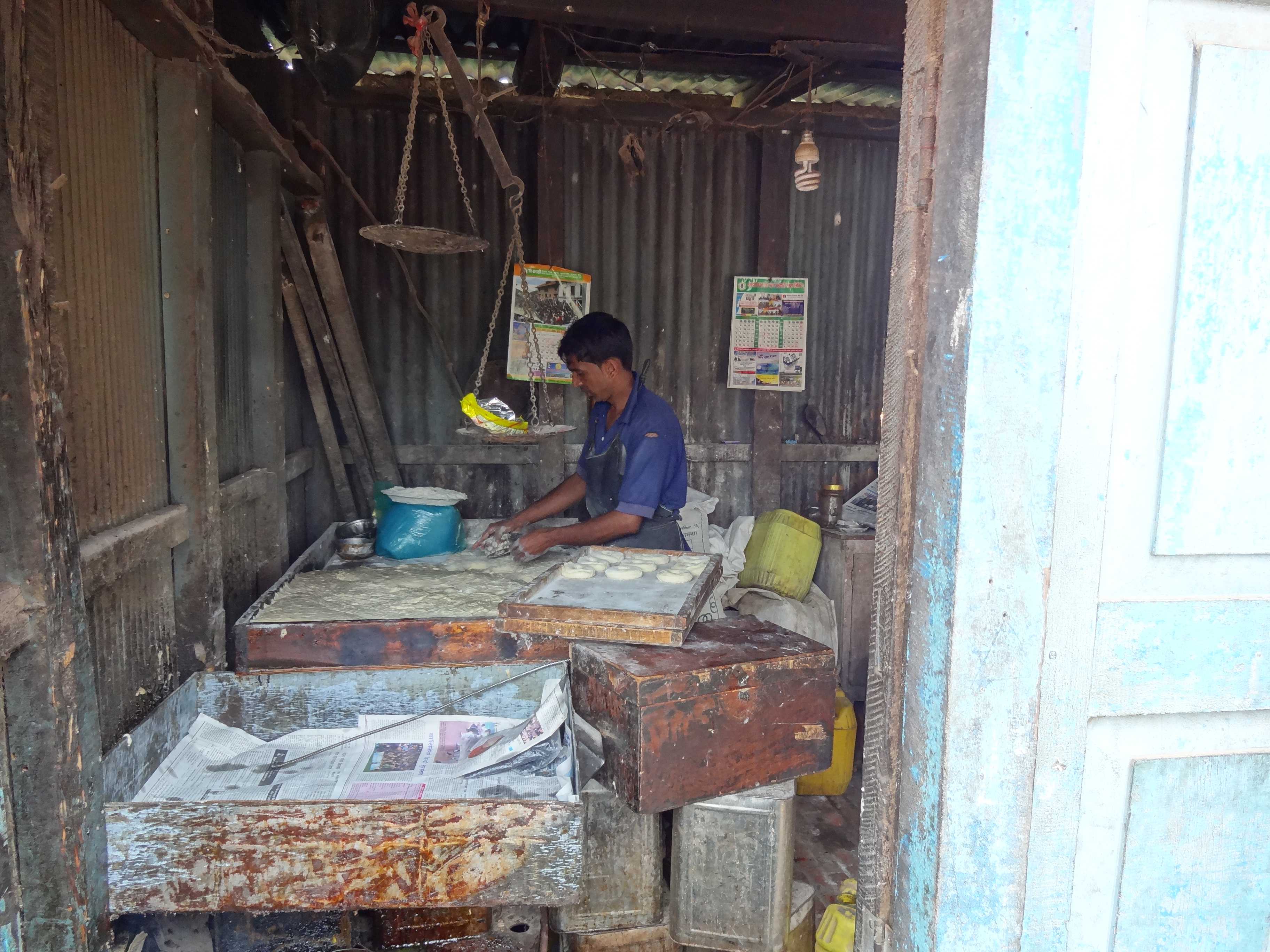
Bhaktapur Weaving

The lady is spinning yarn. But she also had a side business going of making mats from reeds.

Grinding Flour in Bhaktapur

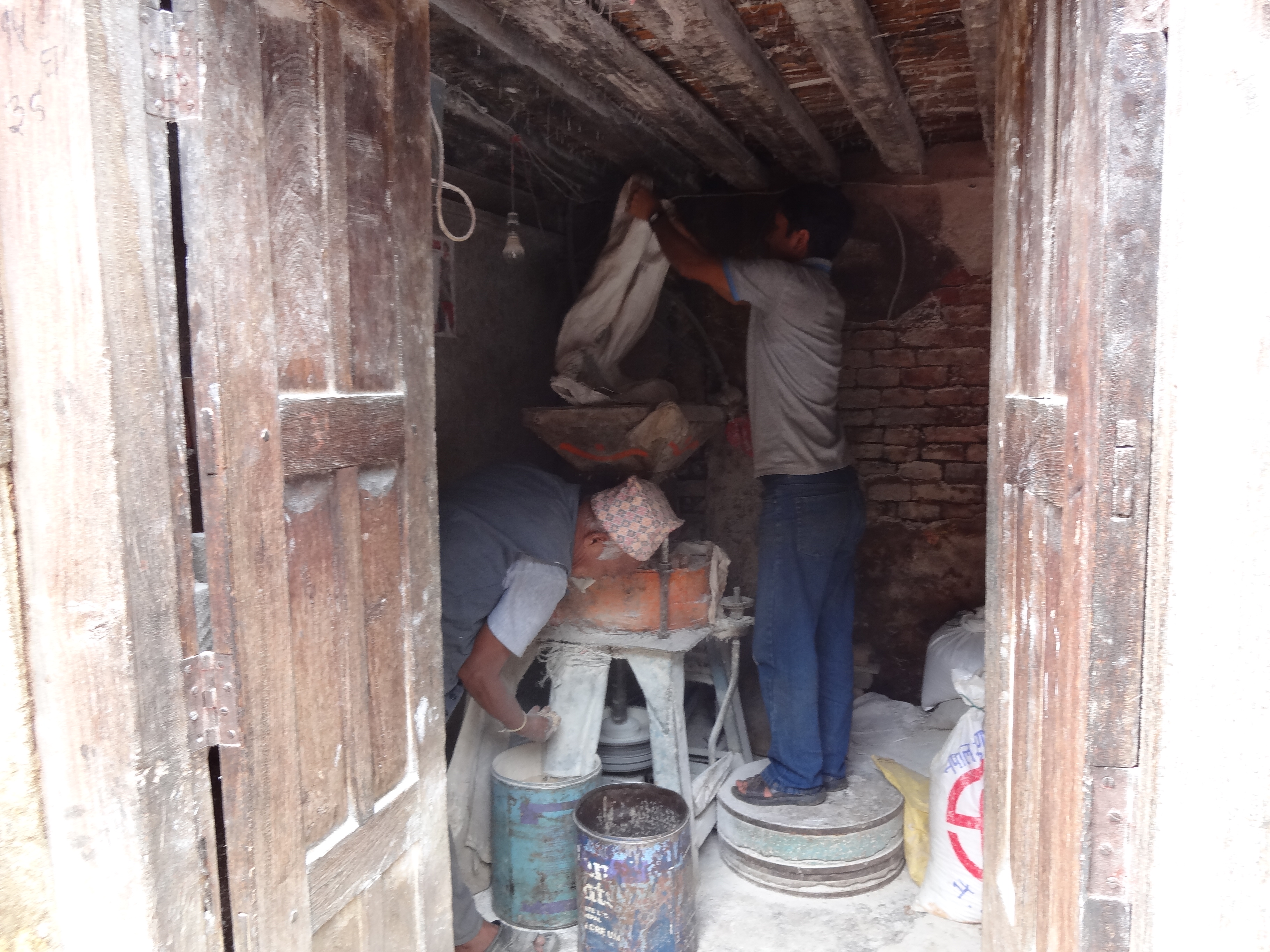
Wheat (or rice?) being emptied into a grinder to make flour. We watched the white powder and husks being collected in sacks

Bhaktapur Bakery

We watched this baker hand shape donuts from his huge tray of dough, stacking the donuts and leaving them to rise some more.

Bhaktapur Bakery

Tray of handmade donuts ready to be fried in the large wok of oil on the floor. We returned in the evening — cameraless– and saw these for sale, crispy brown and dusted in sugar.

Bhaktapur – Around Town (Part 1)


DSC00396

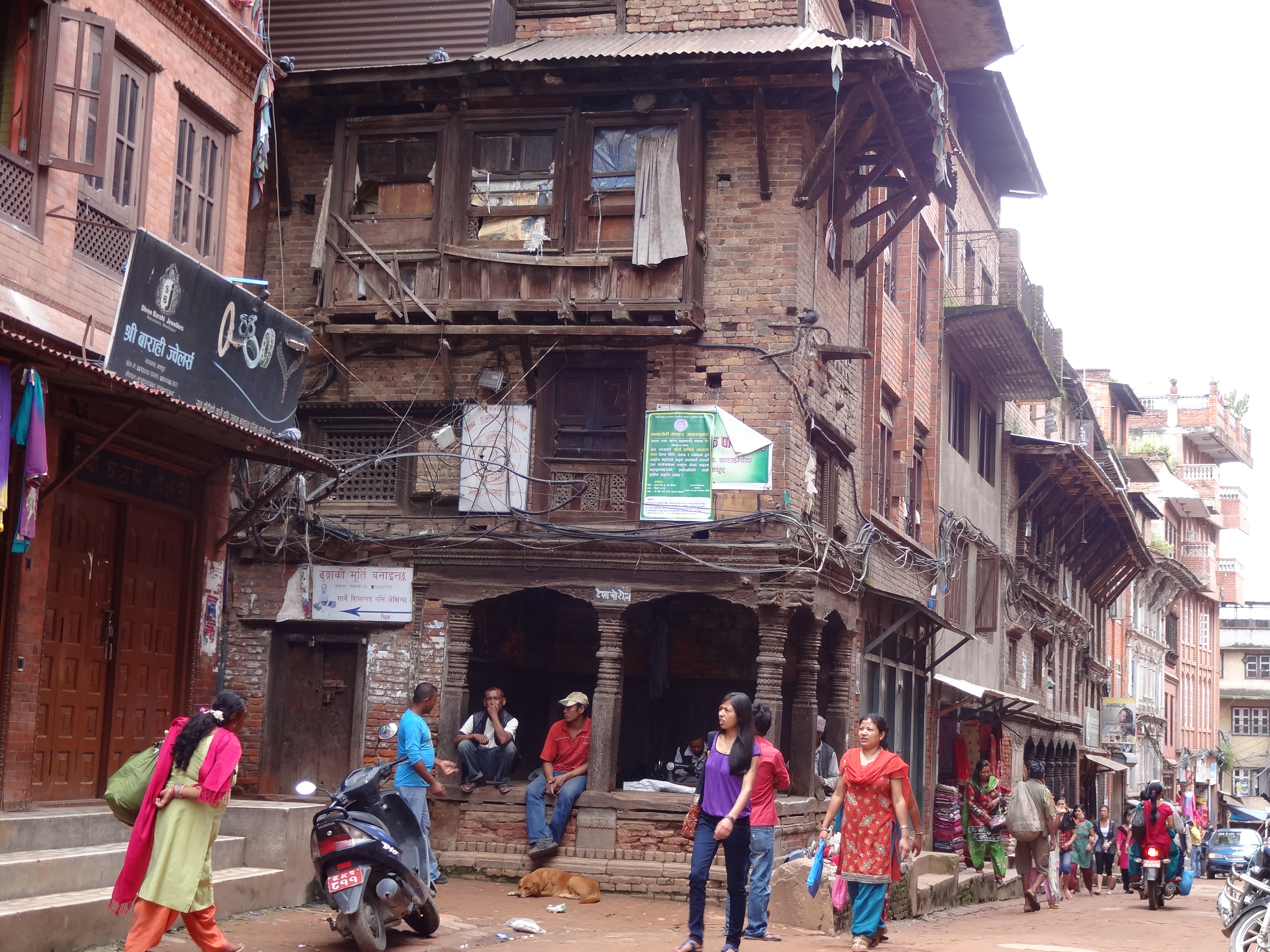
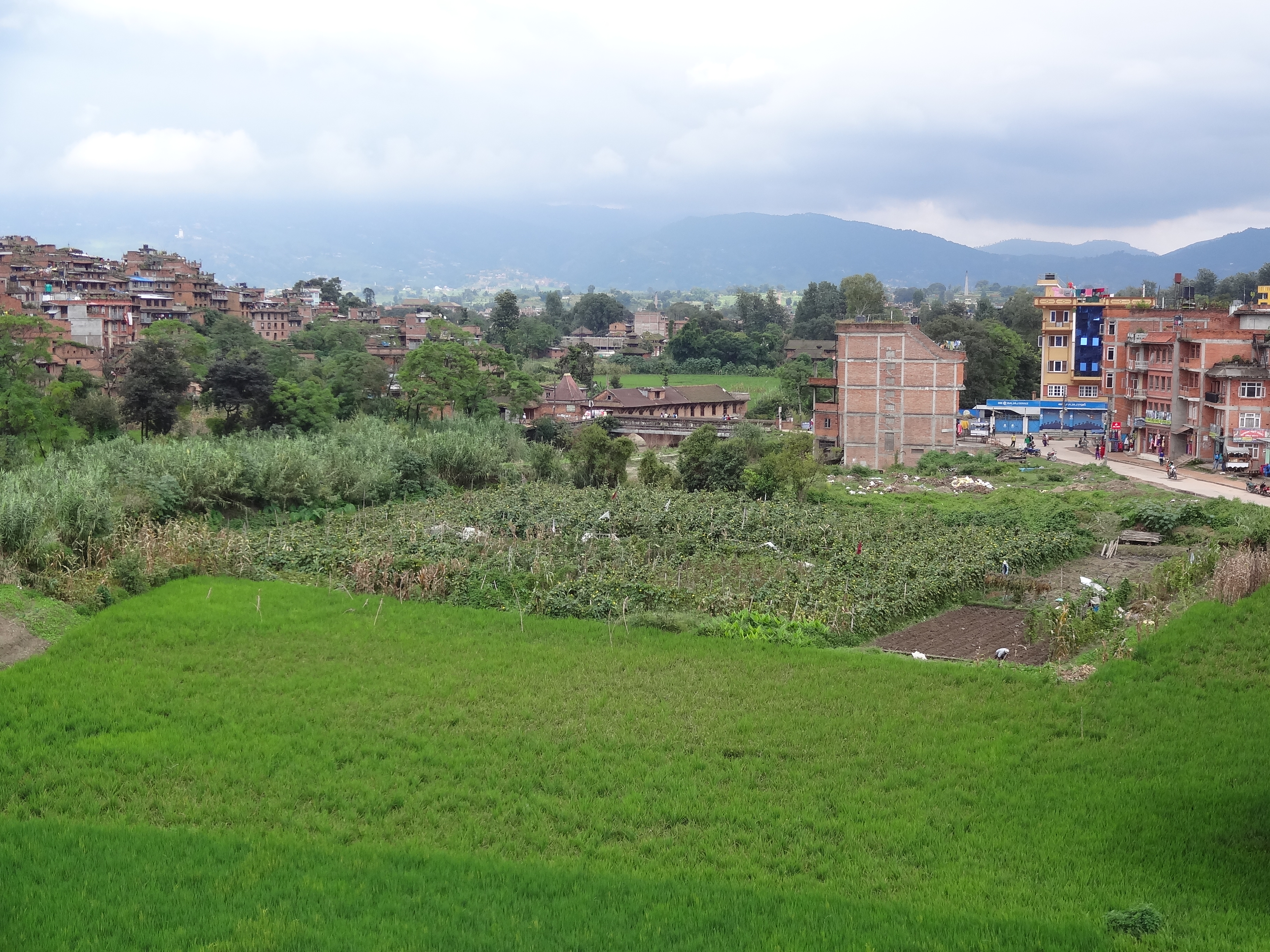
Bhaktapur village. From a distance the village looks quite large but ramshackle. Close up its a different story.

Shortly into our first few weeks into Nepalese life, it was a three day weekend and our only and last chance to see something of our surroundings before Latham and I had to leave for London to settle him into University. Knowing very little about where we were and what there was to do, I asked around for advice. Bhaktapur is a short drive of less than an hour out of Kathmandu and recommended by many, so we headed there for a two night stay.

DSC00397

Surrounding rice fields with Bhaktapur in the distance

We stayed at the attractive Heritage Hotel a short distance outside the town, surrounded by rice fields. From our room on the 5th floor we had access to a roof terrace and 360 degree views to the town and its outskirts. It was wonderful to be out of a city environment after such a short drive and watching every day life and the world go by was fascinating.

DSC00393

Watching crops being planted in nearby fields. That’s okra growing to the left.

DSC00399

Small shrines and unexpected antique construction is tucked away in unexpected places.

DSC00401

DSC00406

Crows seem to everywhere in Nepal. These were watching over the world just like me.

The village was a 5-10 minute walk from the hotel across an ancient bridge. There’s a quite steep entrance fee of approximately $11/person for foreigners which is towards the preservation of the village (hopefully). With a photocopy of your passport the entrance fee becomes valid for several days, but no one seemed to be watching after our first visit. There weren’t many western tourists, so perhaps they just recognized us and left us alone.

DSC00369

Bhaktapur streets were bricked and narrow. Busy with everyday traffic, apart from the occassional motorcycle, car or printed advertisement, there was very little of 21st century life to be seen.

DSC00370

Considering there were few western tourists, I felt pretty comfortable walking around. I felt noticed but not conspicuous, so it was easy to wander and explore.

DSC00374

DSC00379

DSC00380

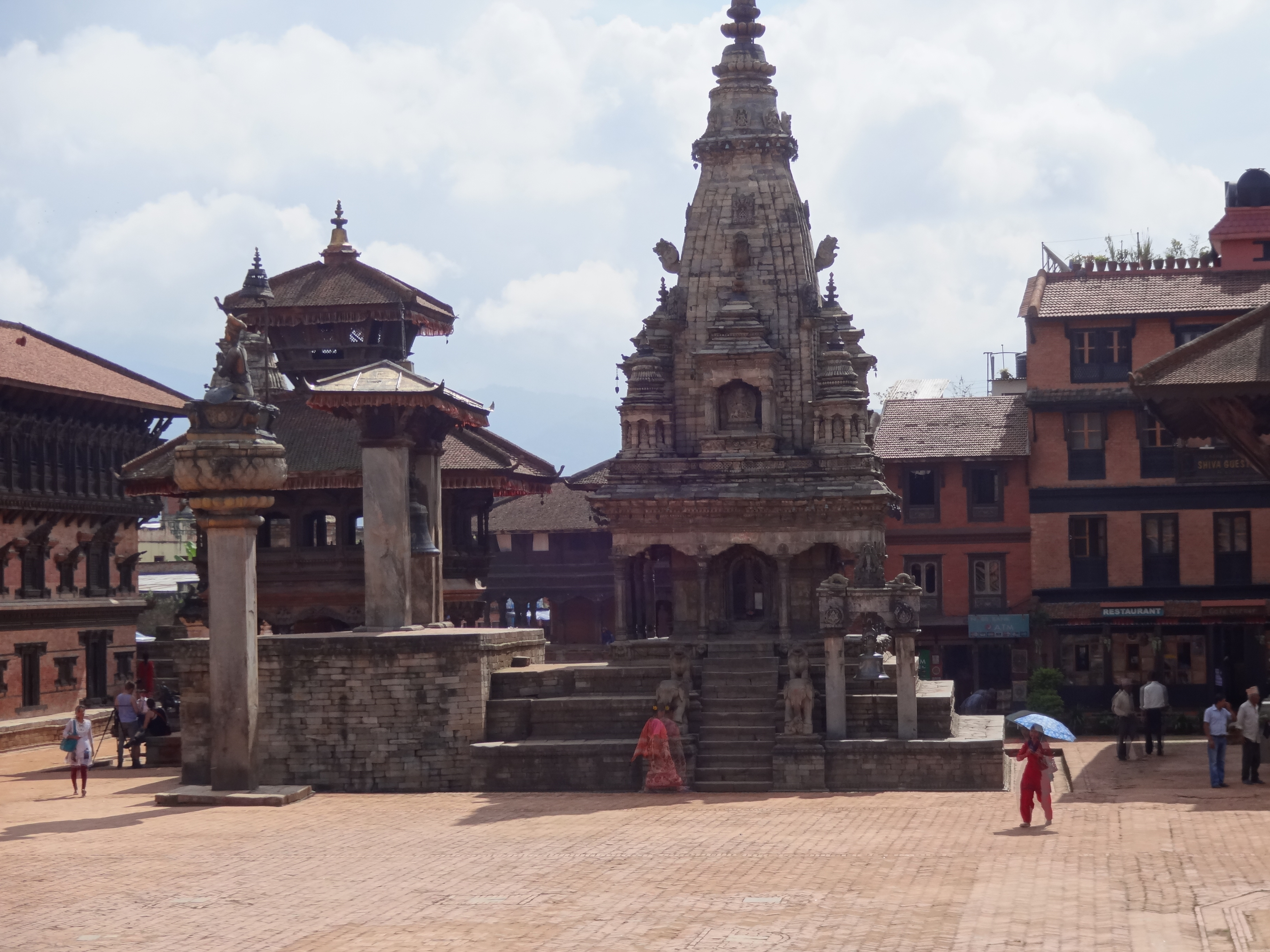
Bhaktapur is pretty large to explore on foot and a warren of streets. We spent two days looking around but certainly didn’t discover it all or see find half of it secrets. The main attractions are the large squares, Durbar Square being the largest and a world heritage site. Its a pretty amazing collection of temples, sacred sites, statues, gateways, and ancient architecture which is all mind-blowingly packed into a large medieval square. All of could do is sit and stare in wonder. Most amazingly of all, if you explore a little further out, there a more and more squares to discover. Durbar Square may be the largest and most impressive but it is not a small remnant of ancient Bhaktapur, it is just part of the whole amazing medieval preservation which is alive with everyday life and not just a tourist enclave.
DSC00412

Impressive gate guards in an old square doorway

DSC00417

Durbar Square, Bhaktapur

DSC00424

Highest man made temple in Nepal

DSC00428

DSC00430

Living rooves too!

DSC00445

DSC00446

Anyone mad enough to come and visit us absolutely needs to spend a few days here. We’ll be back too.