Weekly Word Challenge: Brick Wall


DSCF7689

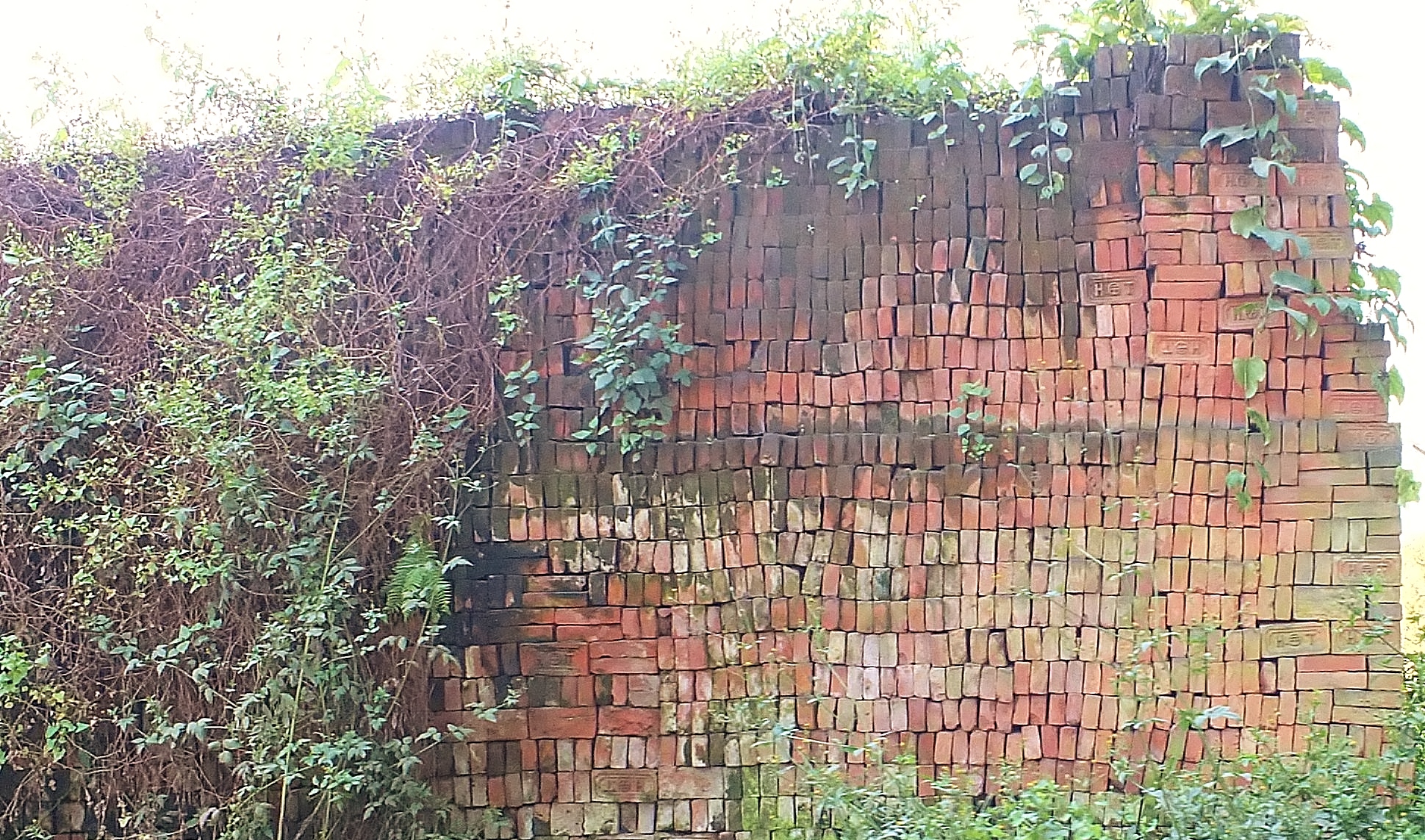
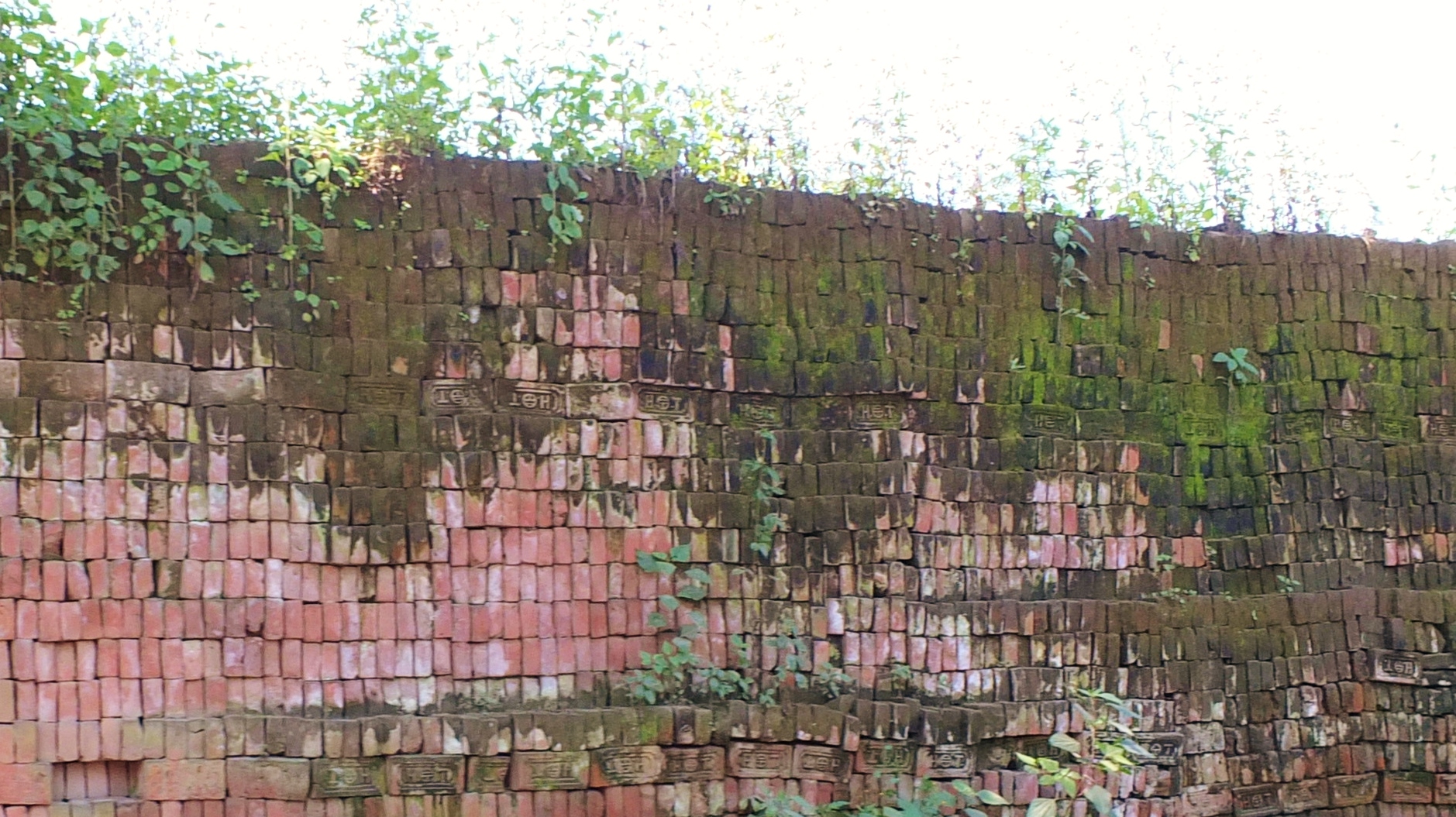
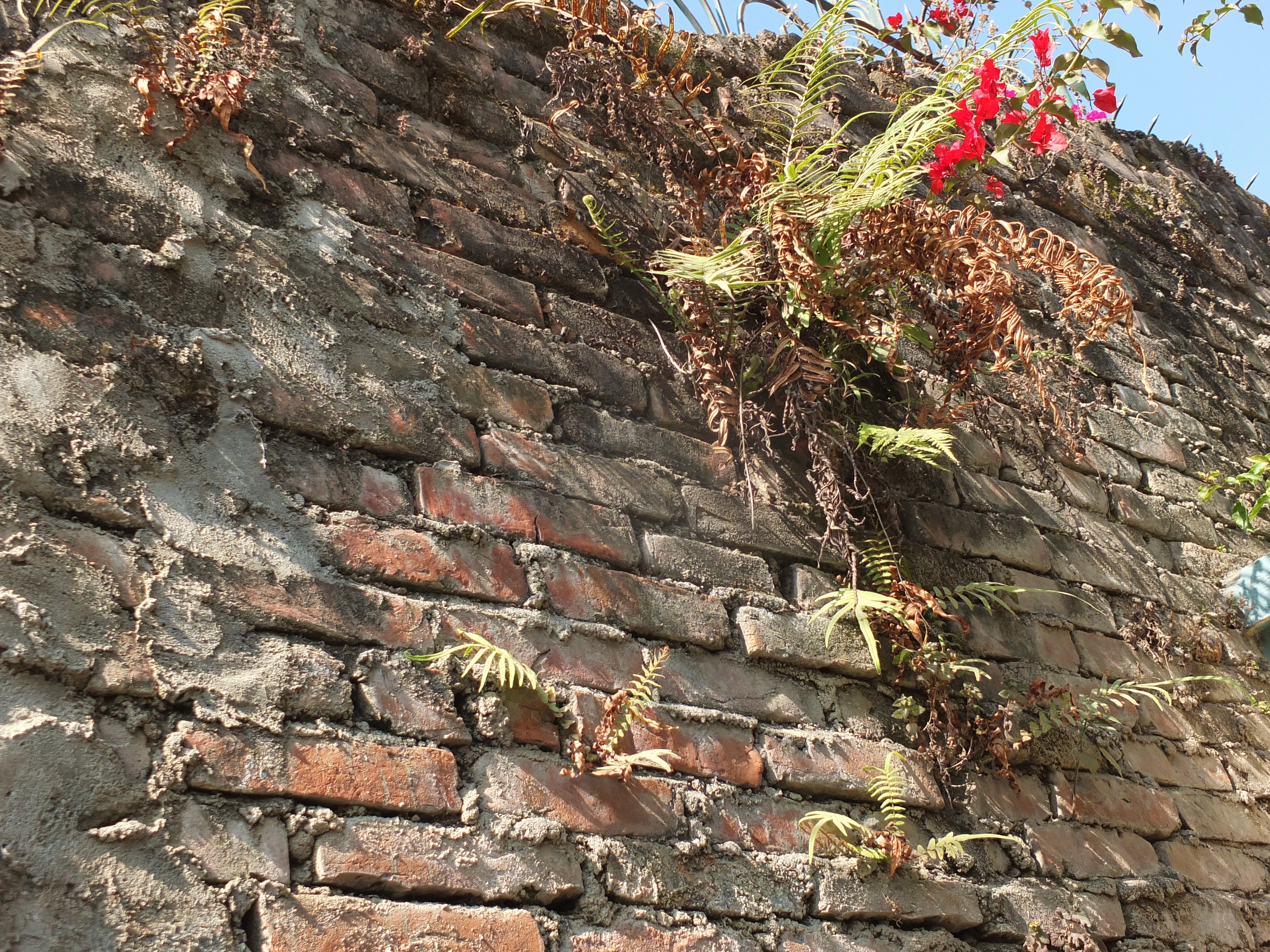
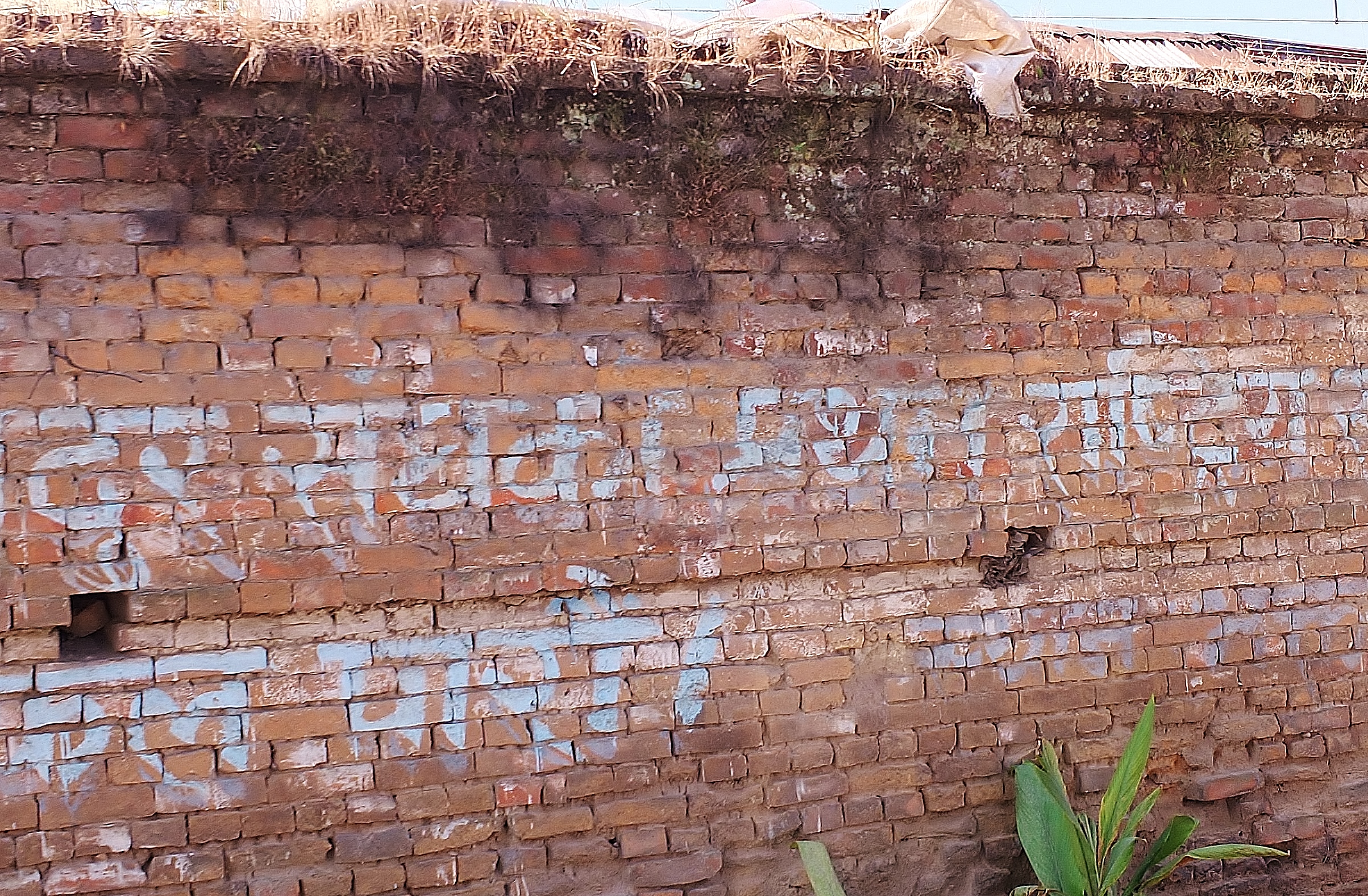
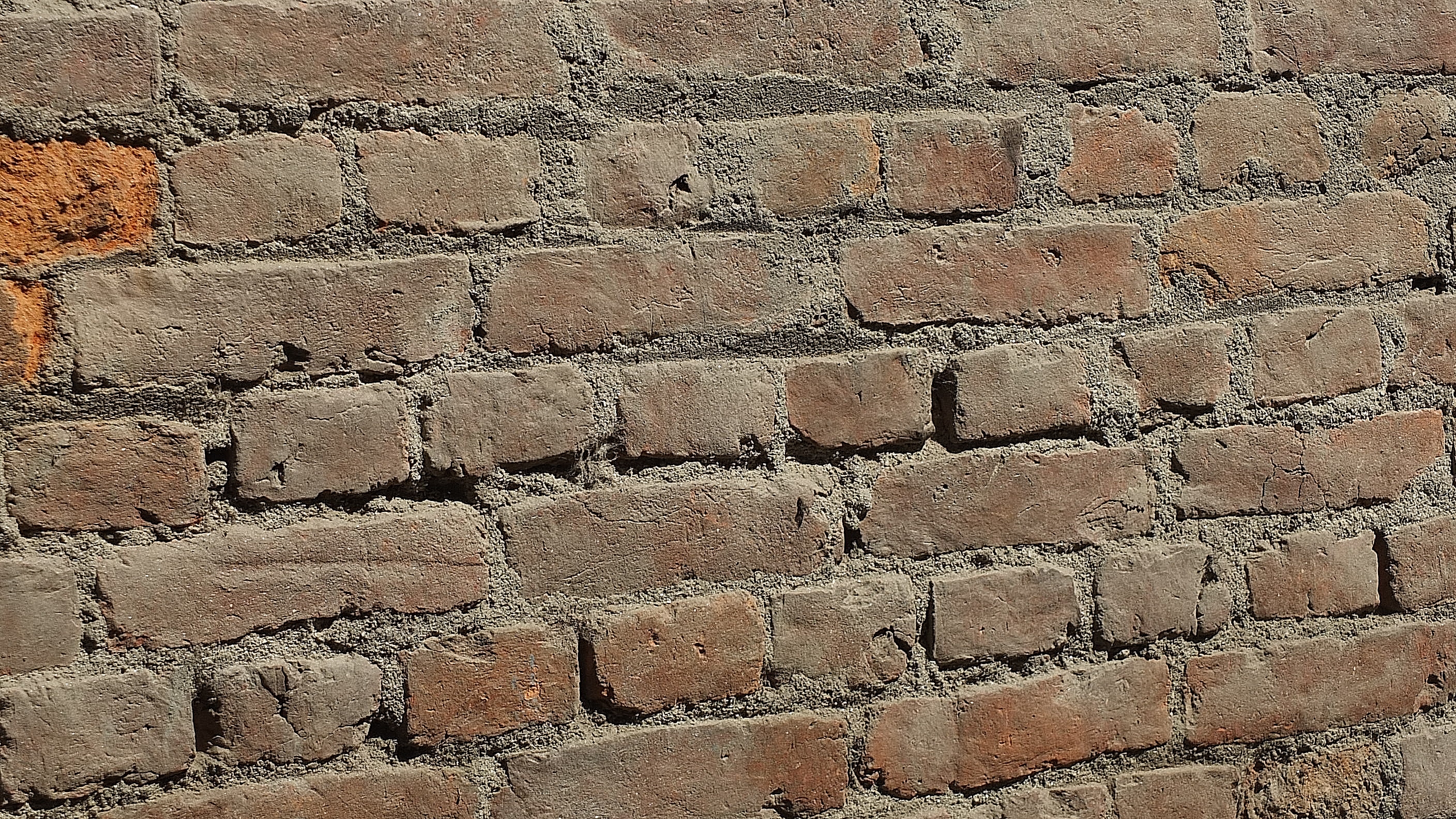
I love how these challenges help me out sometimes. I’ve been subconsciously collecting photos of brick walls: Half crumbled or moss covered or sprayed with slogans. Brick walls are everywhere in Kathmandu. I wasn’t quite sure what I was going to do with them, but I was fascinated by the variety of textures and the whole mini eco-systems they come to support. Anything made out of brick looks so much nicer than the modern alternatives of concrete, and cold, blue-tinted glass. In the 21st century, Kathmandu is scattered with  a mix of the old and the new.

Traditional Nepali bricks are cut by hand, dried in the sun and then low-fired in tall, chimney-like kilns. Ironically, the traditional brick is at odds with the modern day. The giant construction boom has led to more and more kilns pumping out increasing volumes of black, sooty air.  This traditional craft is now make a significant contribution to the appalling air quality in this city. Once green valleys are now hosting belching kilns and rice paddies now longer produce rice, but are used as platforms to air dry the bricks. Its a pretty disturbing sight.

The quality of the bricks is pretty low. Although they look quaint when they host moss or grass sprouting from the cracks, they don’t last long if they aren’t maintained. Very often brick walls aren’t rendered well, leaving them with cracks vulnerable to invasive roots or even unstable enough to wobble around rumbling traffic.
DSCF7,555

DSCF7168

Kathmandu wouldn’t be the same place without it brick walls.   Everything I love about the architecture of this city includes carved stone and wood, and the traditional red brick.  Yet, environmentally, bricks are a disaster.  Closely followed, unfortunately, by the environmental disaster that is concrete construction, with quarries and mines stealing stones and gravel from river beds, changing the course of rivers and destroying their health.  Where is sustainable development in Nepal?

Lastly, a tangent thought:  When is a brick wall, not a brick wall?  When it is a pile of bricks waiting to be sold.  Here are some brick “walls” that have been sitting for way too long, waiting for a buyer….constructed, I think, by someone a little too enthusiastic about the brick market or his talent to sell them.
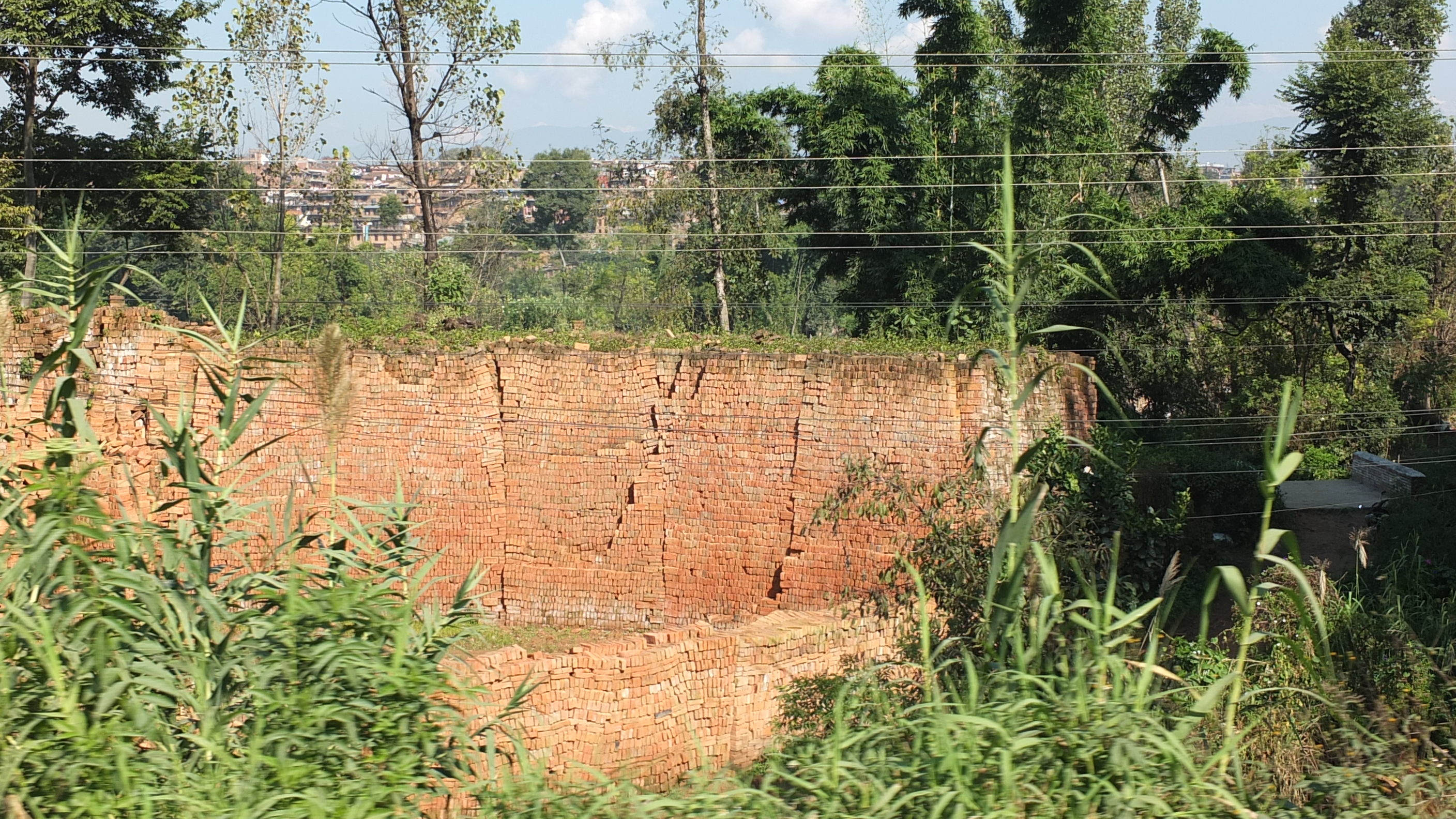
DSCF7335


DSCF7558


DSCF7557

Weekly Photo Challenge: Wall


30 Seconds: Bead Market


The Bead Market is in the central area of Kathmandu and kind of tough to visit as the traffic can be really bad in that area of town. But its worth seeing the riot of colour and to watch the necklaces be made or altered right there in front of you. Lots and lots of choices, especially if you like green, red and gold! Looks Christmas-y to me, but the colours are a symbol of martial status here in Nepal. Enjoy!

30 Seconds: Kathmandu Dhurba Square


There are three Dhurba Squares in the Kathmandu Valley: Kathmandu, Patan and Bhaktapur.  All three of them are World Heritage Sites for good reason. Continuing my theme of 30 second videos – here’s a quick glimpse of the amazing Kathmandu Dhurba Square:

30 Seconds: Boudha Stupa


I’m breaking over a month’s blogging silence with a new feature that I hope will help me share some of the sights and impression of Nepal so much better and improve my video skills as well: a short 30-second film on a topic. I’m hoping to do this regularly, at least twice a month. Here we go…starting with the fascinating Boudhnath Stupa in Kathmandu. Enjoy! (and feedback welcome!)

Working Women


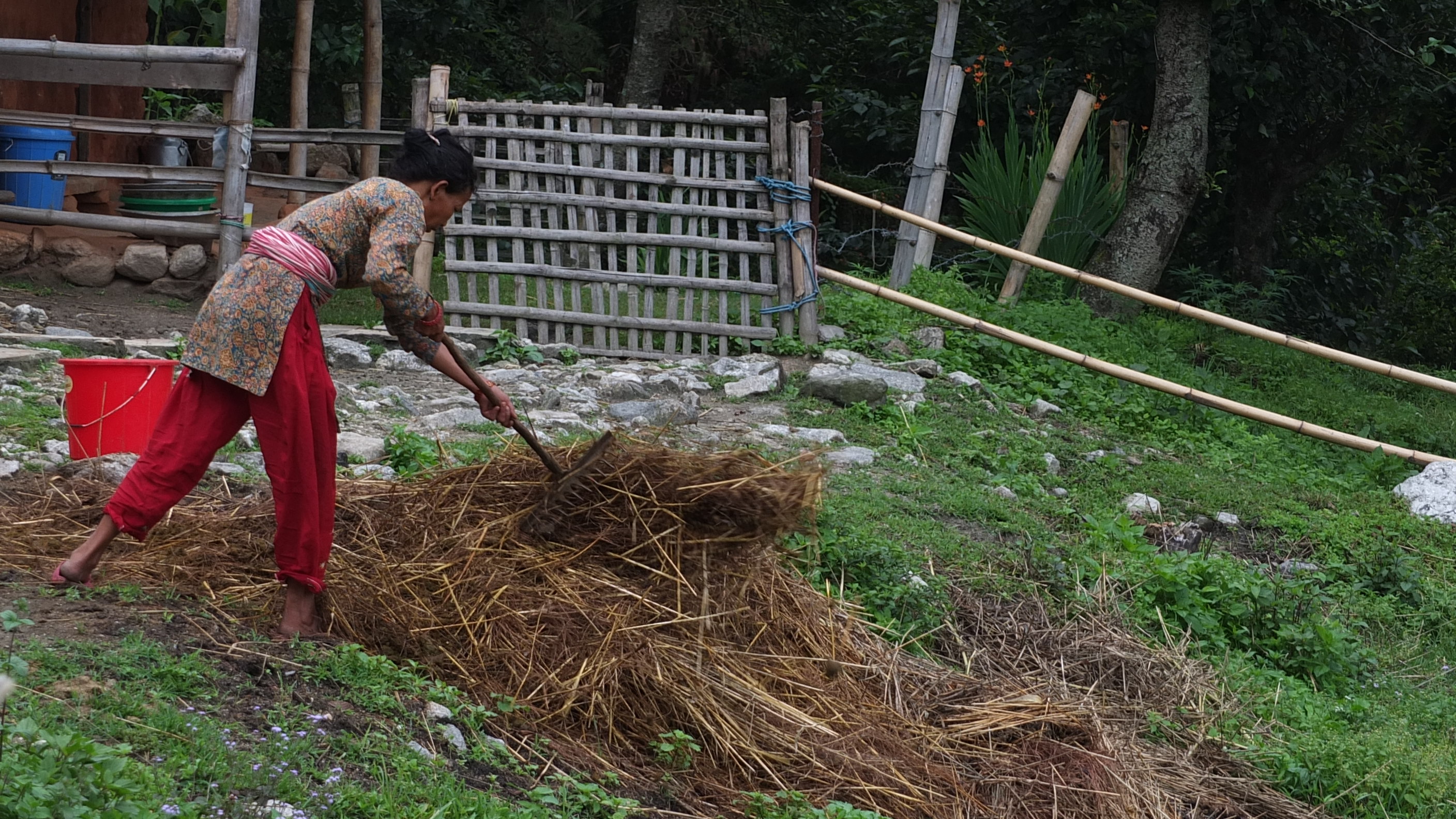
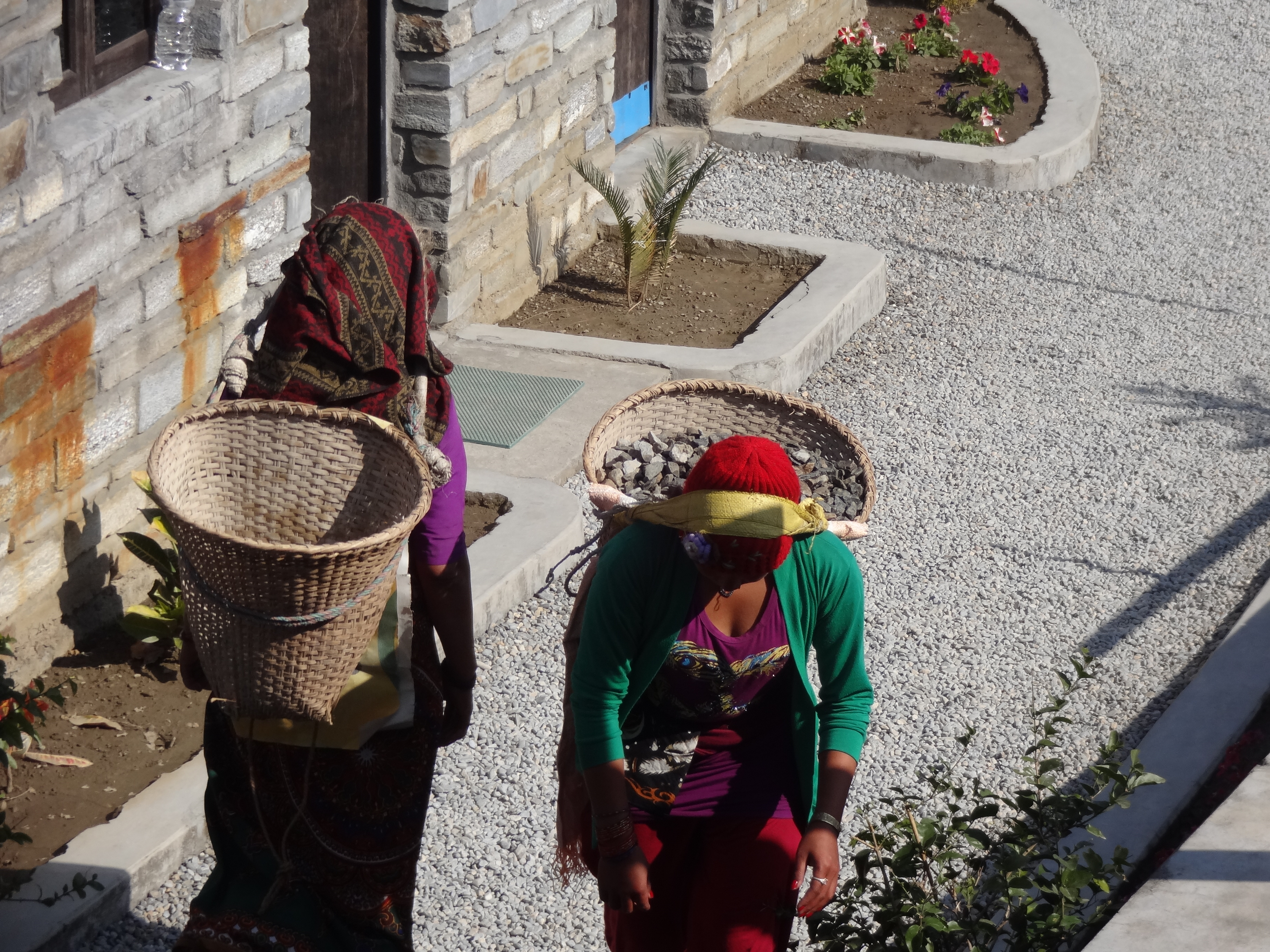
I didn’t make a special effort to collect  pictures of Nepalese working women, they showed up as photo opportunities …time and time again…and I just took pictures. It was shocking at first to see tiny women hauling big sacks, and it continues to make me uncomfortable because I still don’t see men hauling weight very often…its nearly always women.   Quite what they are doing while the women are hauling rocks, I’m not so sure.  I suspect not so much.  After a day shifting bags of cements, many women then go back and cook, wait for their husbands and sons to eat their fill, and then eat what’s left.  The imbalance is astounding. The more I learn, the worse the picture grows.

women planting rice

Yet, despite all this, these were women were cheerful and worked as a team all day planting rice, and I was a welcome break from all the hardwork.  There were one or two guys there helping too.

DSCF4470 IMG_9421

DSCF7682

She was like a shoveling machine! (Note man watching!)

DSCF7698

Another random street photo. That’s a 50lb bag of rice!

DSC01276

Hauling wood up the hill, snapped from our car.

DSC01107

This is probably the most poignant of all. Ten women from the Tibetan refugee camp near Pokhara were moving a mountain of gravel to a construction site. The male supervisor stood on top of the pile barking orders and poking the gravel around with a spade.

If rural working women here even knew about the western concept of women’s liberation (and the right to work), I’m sure they would find it extremely confusing. Here a 1950’s world where women stay home to only cook and clean must see like a bridge too far.

The S**t I do!


I don’t like having a four letter word in my blog post title.  But do you ever do things and catch yourself wondering what the hell you were thinking?  I had that kind of a moment a couple of weeks ago when I watched about twelve guys try to glue the end of a 32 foot banner for me.  The banner was way too long for their print shop table, so the project had to be taken out of the shop and into the covered shopping mall walkway.

As you might imagine in this dusty, polluted city, the walkway was filthy and I knew it had to be glued face down.  Guys with a yard stick appeared and measured the space, another set showed up with sheets of newspaper.  The 32ft strip was laid down, rolled length ways and flipped on to it face.  All the time I thinking “Jeez, how long is this going to take, I have a meeting at two.”  “Is it going to actually stick?”  “Have they done this before, or am I going to end up with an experiment gone wrong?””It’s going to crack or be filthy.”

It actually worked. Two hours behind schedule I was in the car and heading back to work with a clean banner that was ready to hang.  They did a good job.   How did I ever doubt myself or them?!!  Leap of faith, guys….jump and hope the net appears!

16 days

Reminders of Christmas


As much as I despise the over commercialization of Christmas, its hard to feel the season around here as Christmas is almost entirely absent from stores, streets or the TV.  Such a contrast to our time in Manila when Christmas started in September and drove us nuts after too many months of Christmas carols.

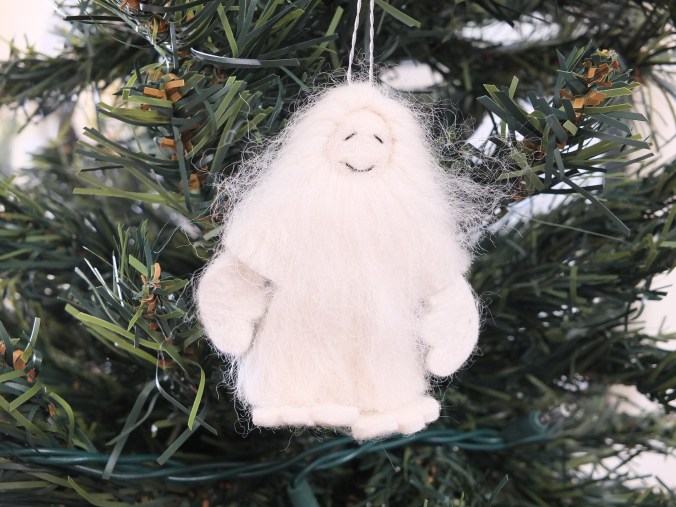
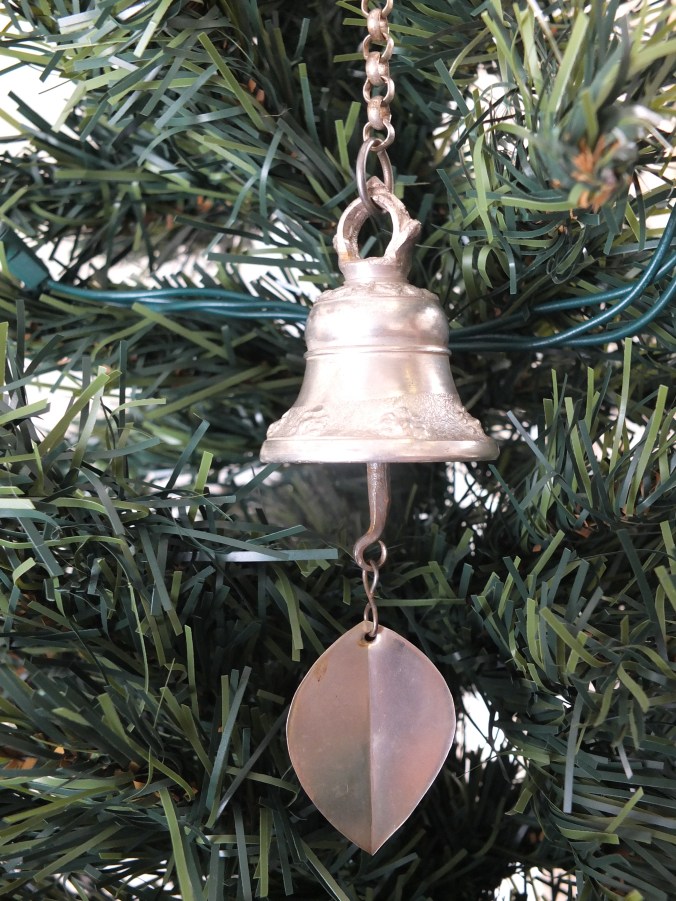
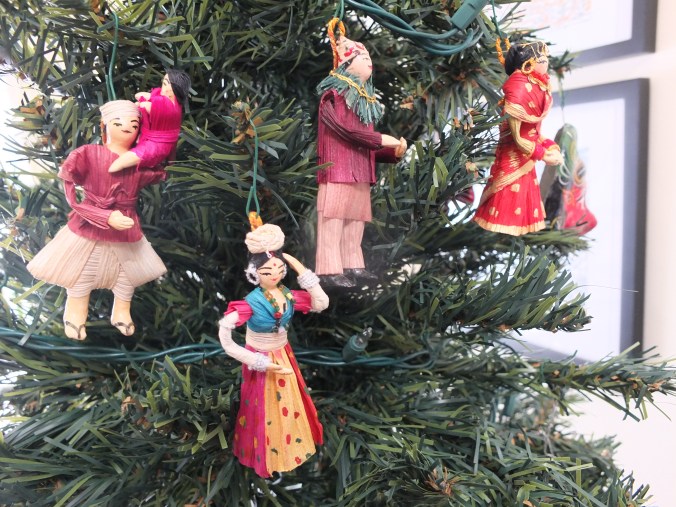
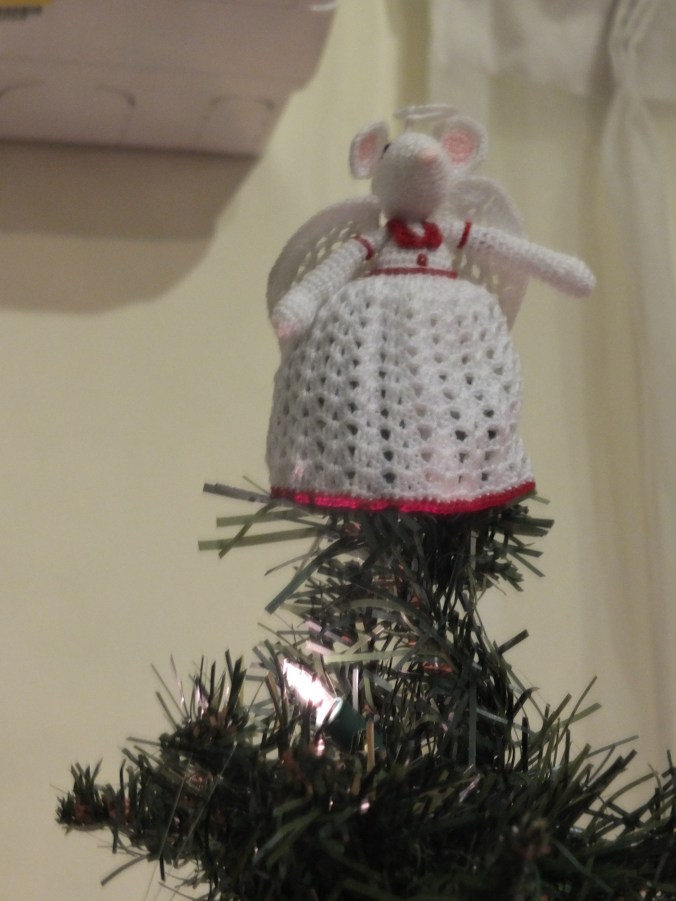
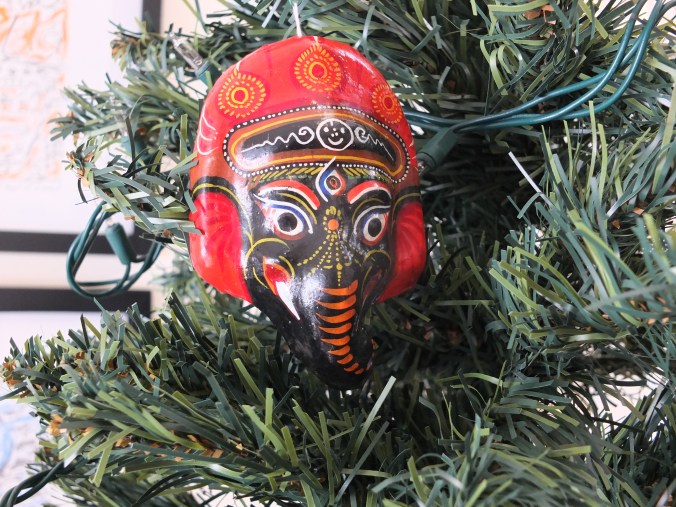
I also have enough going on that I haven’t really thought about it, except that its nice to go out and have an excuse to be a tourist and buy some things for the tree. Little tourist bits and pieces, reminders of our time here, are something that I would never usually buy — except for the Christmas tree.  I like not having them around as dust collectors for most of the year, but its so fun to pull them out every Christmas and enjoy them all over again.   Here’s the 2014 additions to the collection:

Boudhha: A Little Wash and Brush Up


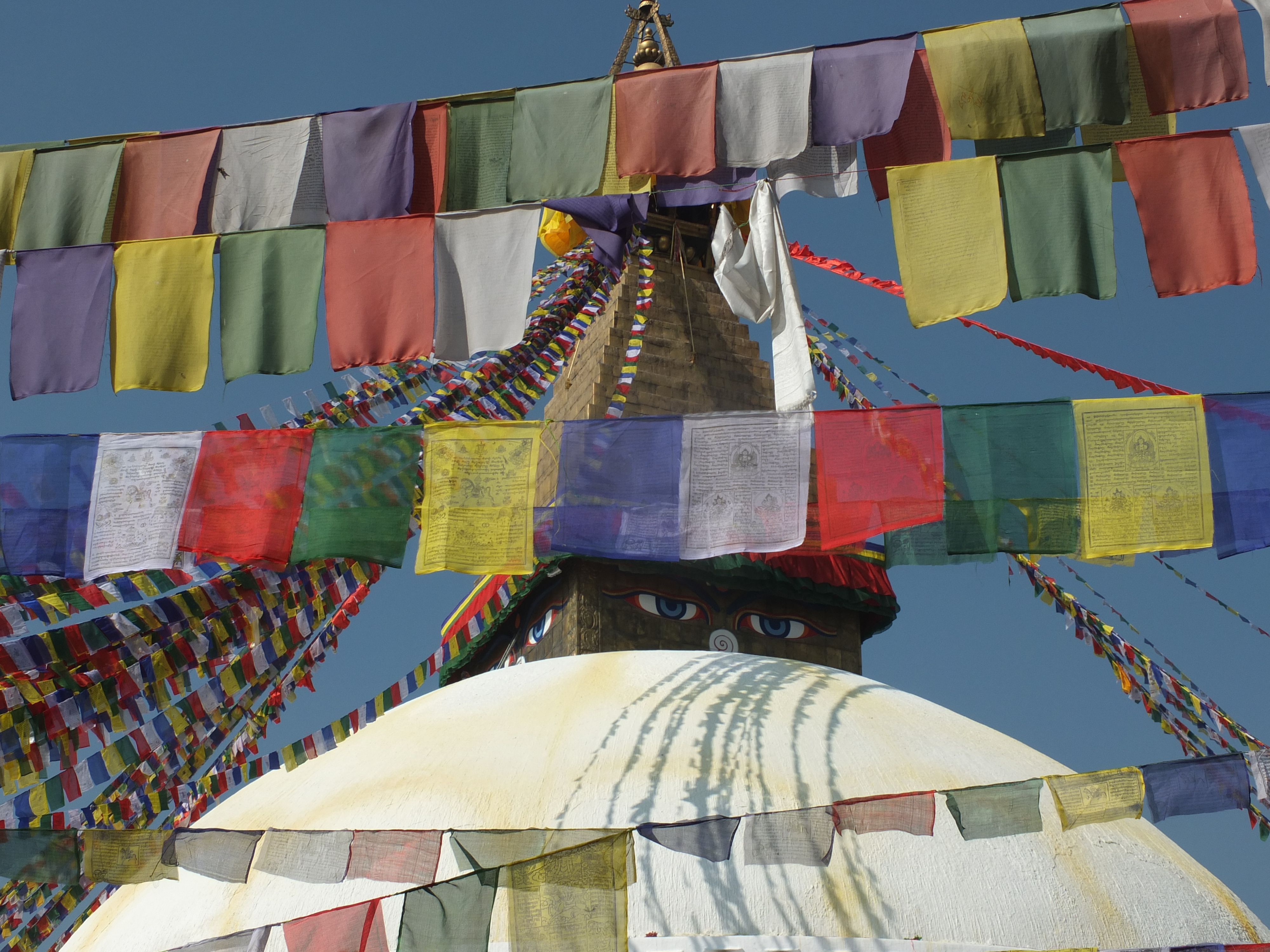
Boudha Stupa is probably THE cultural destination in Kathmandu…for a reason. It is an extremely atmospheric place that continues to be a fascinating draw for me even after 18 months of living here, and my blog header for reason. There aren’t that many tourists but those that do come, click away at the mesmerizing Stupa eyes, and every tourist must have something similar to this iconic shot:

DSCF7721
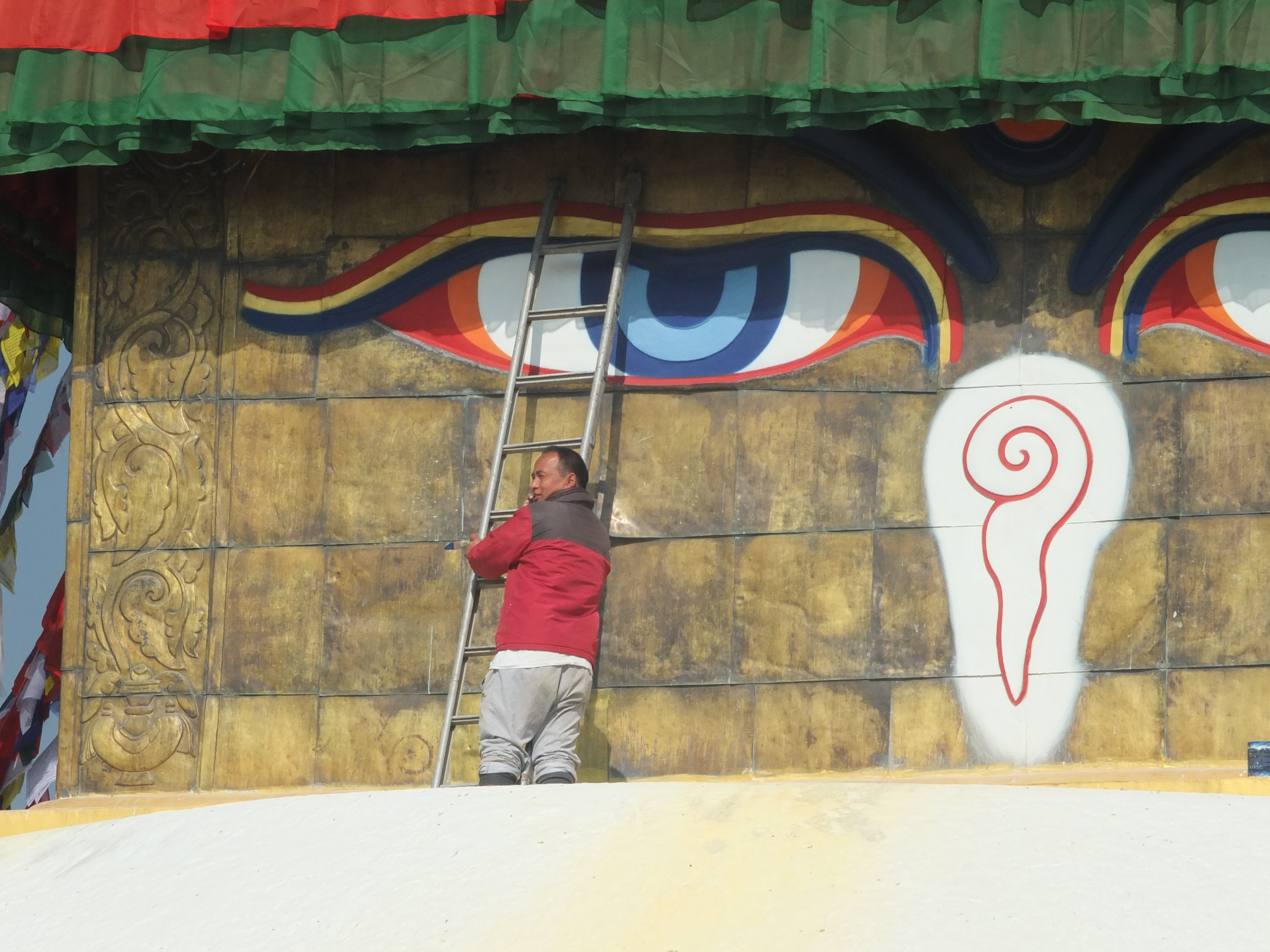
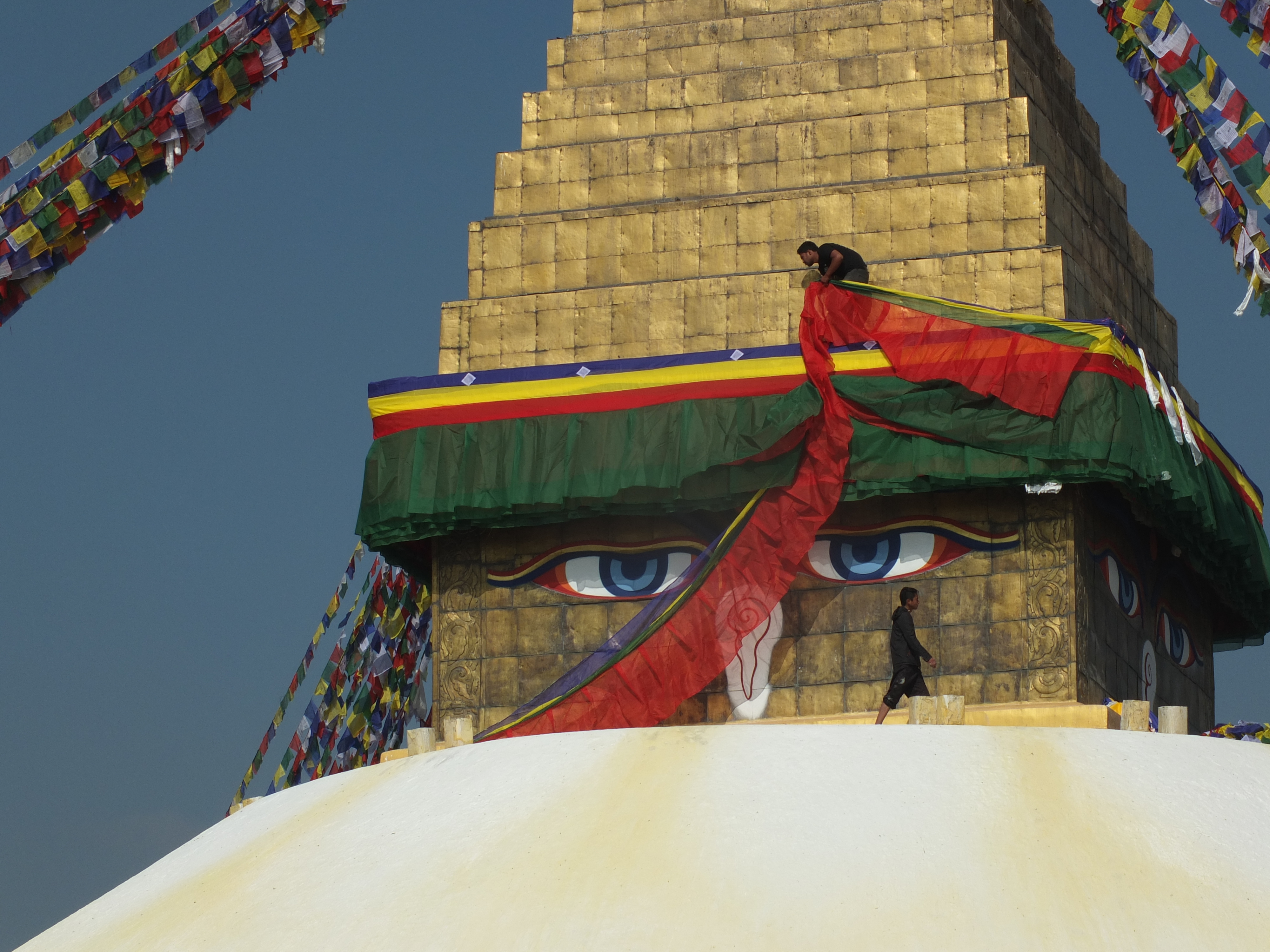
Yet we got to see a different side of the Stupa this weekend. It turned out to be a maintenance routine day, and it was fascinating to watch.  It gave me a much better sense of its scale (and vulnerability) to see the guys up there with ladders.

Buddha eyes, Buddhanath Stupa, Kathmandu

It started with a guy and a ladder. “What’s he up to?” we thought.


Buddha eyes

Maybe an eyelash problem? Smudged makeup?  No.  Must be something else… ;o)


Buddha eyes, boudhaneth Stupa

It turned out that he was the advance party, heading up to the top part of the face. His job was to drape a fresh skirt around the temple. (I’m sure its not called a skirt, but I have no idea of its name or its religious significance? Perhaps someone could enlighten me?

Next the painter showed up.  We saw buckets of what looked like whitewash and, sure enough, in a few minutes more guys showed up with more buckets and a very fast “paint job” was underway.  Whitewash isn’t paint and behaves very differently.  (If you’re interested in how to whitewash see my earlier post).  I’m sure our Greek friends would be interested to see the “chuck it” method of whitewash application!

S0027732

There did actually appear to be skill in the throwing method. The whitewash was was thrown in an arch. The archs were carefully  spaced out and, if you look carefully, you can see that the whitewash has repeatedly been thrown in the same places so that they form a pattern.

S0067742

opening

So having solved the mystery of arches on Nepalese stupas, I also answered another question:  The thickly encrusted white stripes on the base of stupas comes from years of dribbled whitewash, not pigeon poop.  Phew!

Cee’s Odd Ball Challenge


DSCF7342 I wish I knew what the sign says?!  “this is a very accident prone area, high speed (on your vehicle) may take your life away(kill you).”

http://ceenphotography.com/2014/12/07/cees-odd-ball-photo-challenge-week-40/