The Inch War


DSC02615

I had 60 metres of waterproof material to make 12 flags for work, and no one to sew them. What I needed was simple, but not so obvious to find in Kathmandu, where there’s a sewing machine on every corner with only a cramped sidewalk sewing patch, with no place to sew 60 metres of fabric without dragging it in the street gutter.  I needed an inside location with a work table and a little space.  I needed an ally who could translate the project in to Nepali and, most of all, I needed a tailor who could reliably follow directions.  It was going to be challenging.

The good news was that there was a sewing place just around the corner from work and accompanied by two helpful Nepali women with great English, we headed two minutes up the road to check it out.  The flags were very simple to make, but it was important they were made to the correct dimensions and would all be the same size on completion. I was armed with a small sewn mock-up, marked with finished measurements and velcro points so that what I wanted would be as clear as possible.  Both ladies had asked me questions in advance and were really clear on what was needed.  I was feeling optimistic that we could pull this off.

Two seamstresses worked inside the small tailor shop on small pedal-powered sewing machines while we waited for the guy to show up. They very kindly let me have the only spare stool to wait, and my eyes strayed around the room.  The cutting table was very small and more of a storage table, so there was nowhere to really cut and handle so much fabric except the floor, which was covered in off cuts and sewing debris from probably months of work.  I was starting to doubt whether this was the right place. It’s not uncommon to see people working in messy environments and its hard for me to handle.  Why wouldn’t you simply sweep up your own mess when you’ve finished?  It so much easier to work fast and efficiently and cleanly when you’re not tripping over your own mess.

The confusing thing about buying fabric here is how imperial and metric systems are mixed together.  I bought 60 meters of 60 inch wide fabric, and then had to decide which system to use to calculate measurements.  I advised to do everything in metric, so I converted the 7ft drop to 2.2 meters and decided on a 1 meter width.

The guy showed up and I greeted him with “Namaste”.  He didn’t return the greeting or even acknowledge me, and my helpers started the conversation in Nepali.  (I’ve seen this attitude before.  I’m not sure what the mindset is behind it, but if you want to tick me off…that’s a good start.)

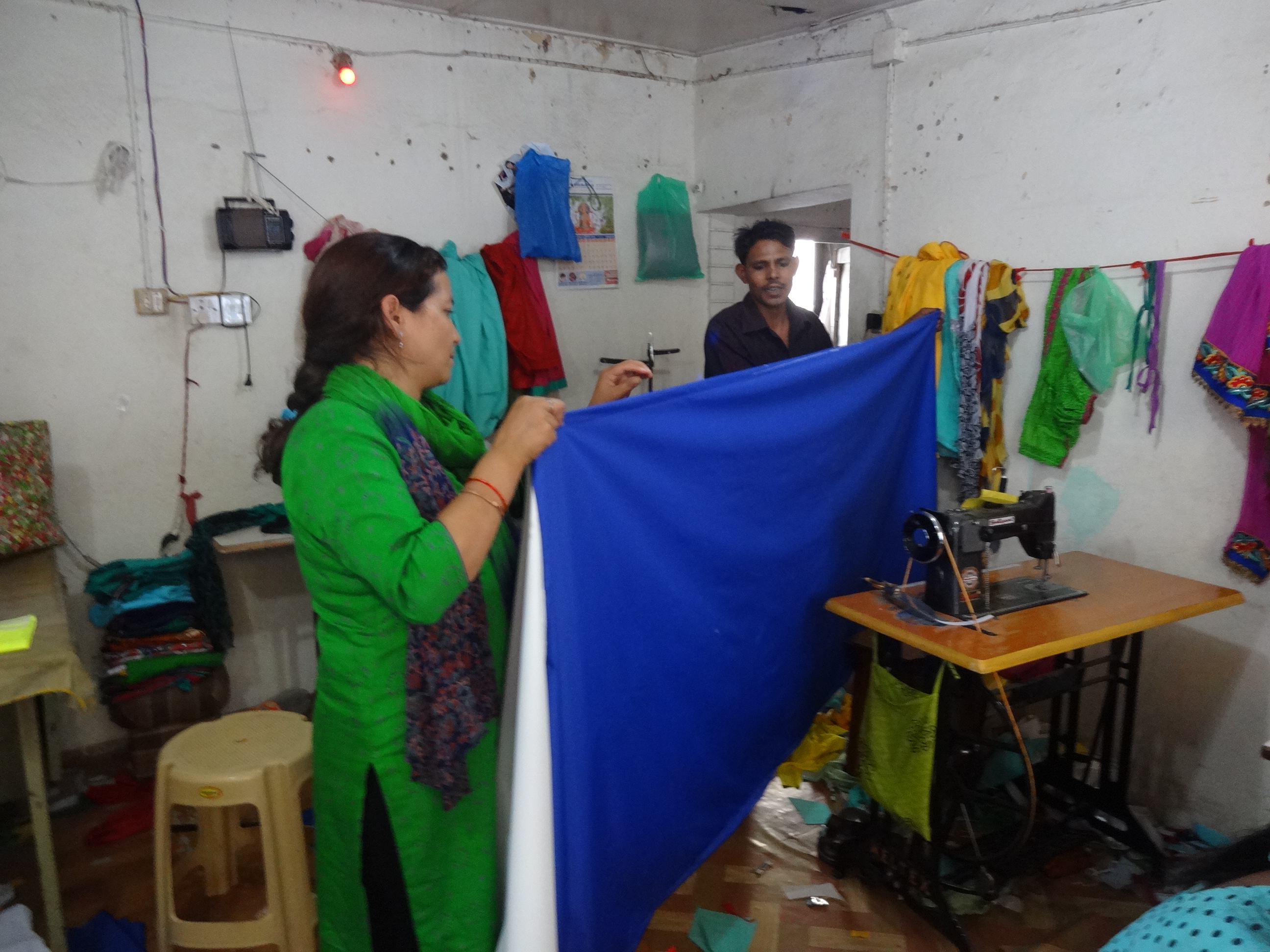
They picked the 10 meter length of purple fabric to talk about the construction requirements.  They showed him the sample, but he didn’t really look at it.  He wanted to be shown. Each finished flag needed to be 2.2 meters long.  For the next 15 minutes or so, there was much discussion and measuring.  He was making me nervous as he kept measuring the fabric with a inch tape measure, and, as I needed the sizes to be accurate (and not just estimated), this was not boding well.  Then I noticed that the tape measure had been cut off at the 39″ mark.  He had converted a imperial tape measure into a  “meter stick.”  It was useful for measuring meters, but nothing else.  What’s more it already had metric marks on the other side of the tape, but these were useless as the first part of the metric side had been cut off to “convert” it to a meter length.  Jeez…ok.

The fabric was lain on the floor, over all the mess, and he started measuring the length.  Measuring 2 meters was easy.  More difficult was how to do the .2 measurement.  I could see that he wasn’t clear that is meant 20 centimeters, and I tried to explain that if he flipped it over and measured a 20cm span from, say, the 60 cm mark to the 80cm mark, he would have the measurement.  But that wasn’t going over, so it suddenly seemed so much to easier to switch to inches. “Let’s make it 86 inches long”, I declared, knowing that complete accuracy of the length was less important than having all the flags be completely consistent in length. Things got easier from there.

Next he went from testing the fabric on his machine (will that kind of fabric sew properly?), to cutting, and then actually completing all stages needed to finish the first flag.  I did not expect this.  It took three hours.  At no point was the construction unsupervised.  The mock-up had served its purpose by showing my friends what was needed.  But he needed them to translate the mock-up.  Each time he folded and repositioned the fabric he had three people holding material in place to stop it slipping.  I asked if perhaps he had any pins?  No, no pins.  I sent my driver out to buy them.  When they arrived he refused to use them.  I don’t know how he’s going to sew the next 11 flags without people standing there to hold the fabric.  Perhaps he will use them after I leave?!

The next 7 flags are due for pick up tomorrow.  Fingers crossed.  Watch this space!
Kathmandu Tailor


Weekly Photo Challenge: Extra, Extra


DSC00617

A farmers wife heads home at the end of the day. Her cow’s red tika matching her dress. Unbelievably a seagull swooped down and arrived in my shot with perfect timing.  (Seagull? In Nepal? Well, maybe not, but do you know what it is?)

A beautiful pastoral Nepalese scene. For the full story see ‘Til the Cow’s Come Home.

This post participated in the Daily Post’s Weekly Photo Challenge: Extra, Extra

The Sound of Screeching Brakes


car wallWe’re midway through June and this is just my second post this month.  Suddenly, after months of regular blogging, I am struggling to put finger to key and tell stories ….and there’s a reason.

It’s not like there’s nothing going on. Our son is here, we’ve been on trips, picnics and all kinds of work-related travel. I have stories from the farm and mountains.  Life is good.  But somehow I can’t bring myself to put any of them out. I’ve discovered that with blogging I get caught in some kind of road block of my own invention and its not “writers block” but something quite different. Its more like hitting a wall, where the wall is the reality that my blog no longer gives a balanced representation of what’s going on in my life, and only showing pictures of adventures with elephants no longer cuts it.  The larger  social issues I see daily feel too enormous to cover in my little blog, so I leave them untouched like the 2 ton elephant in the room (pun reference intended.)

I have reached a point in our time here in Nepal where things are no longer new. I’ve discovered the basics and I know enough about life here to know how much I don’t know on a deeper level. I’ve been here 10 months straight and I’m ready for a break. I’m tired of the overwhelming, endless social problems, worsening pollution, incessant noise, honking of car horns, and just the lack of basic sanitation.

I have mediocrity fatigue.  I want something to work without coercion.  I’m tired of apologizing for my own elevated living conditions and concentrating on being grateful for what I have compared to most everyone else here, where this is all  normal.   This isn’t normal for me.  Toilets here stink, there’s dog shit everywhere, and I’m sick of the garbage.  I can’t walk the streets without fear of twisting my ankle, being run over, or treading in something nasty.   I just need to feel my own exhaustion at the mayhem, take advantage of the fact that I can recharge, and admit that sometimes all of this just drives me nuts.  There….. I said it.  And now it feels more honest to move on to the things that are beautiful and special here – and there are many.  Roadblock removed….at least for now.

Happy!


tondo 023

One of the most amazing memories of my time in the Philippines was the attitude of Filipinos, especially those that had little but somehow managed to be happy despite all the hardships. These two kids were having fun, playing chase in the mud and puddles in Tondo–a garbage dump city on the outskirts of Manila–shortly after a major hurricane had passed through. Somehow they had fun anyway.

The visit to Tondo was eye opening and heartbreaking.  Here’s the full story.


This post participated in A Word in Your Ear’s Weekly Photo Challenge: Happy

Rhinos for Breakfast


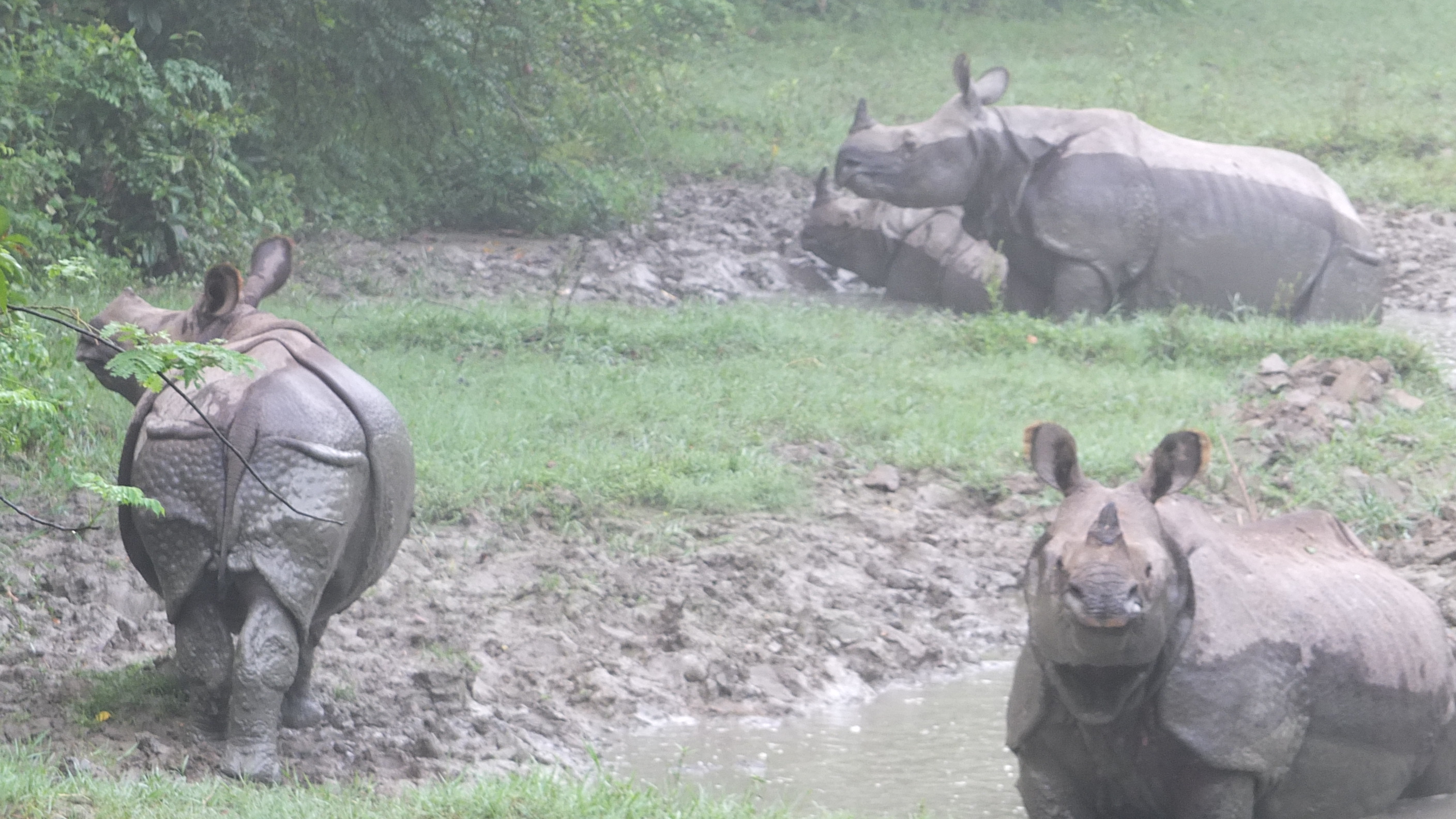
We came upon them so quickly I wasn’t ready with my new camera, so the photo isn’t focused properly on the subject.  But you can see them hiding there in a mud hole, looking very much like giant clumps of mud, except for the giveaway ears.  We see you, Mr Rhinos!

Chitwan rhinos in mud bath

…And they saw us. Sitting on an elephant looking down, we watched them take an early morning breakfast bath in the glorious mud. Last night it had rained for the first time in four months, heavy jungle rain that left everything soaked and steaming, and we had lain awake listening to the thunder and lightening the night before.  Everything was now so wonderfully cooler, and the rhinos were enjoying what must have been their first mud spa of the season.

chitwan rhinos in a mud bath

Not surprisingly they were not too happy about being disturbed, but they weren’t really skittish or aggressive, just a bit put out. It reminded me more of young kids forced out of the backseat of the bus now that the big kids want their seat back. And the big kid was the elephant, not us. Apparently rhinos and elephants get along just fine. They don’t notice us humans freeloading on the elephant’s back. Its all about the elephant, not us, and the rhinos knew to move over so the big guy could take a turn.  Sorry guys!

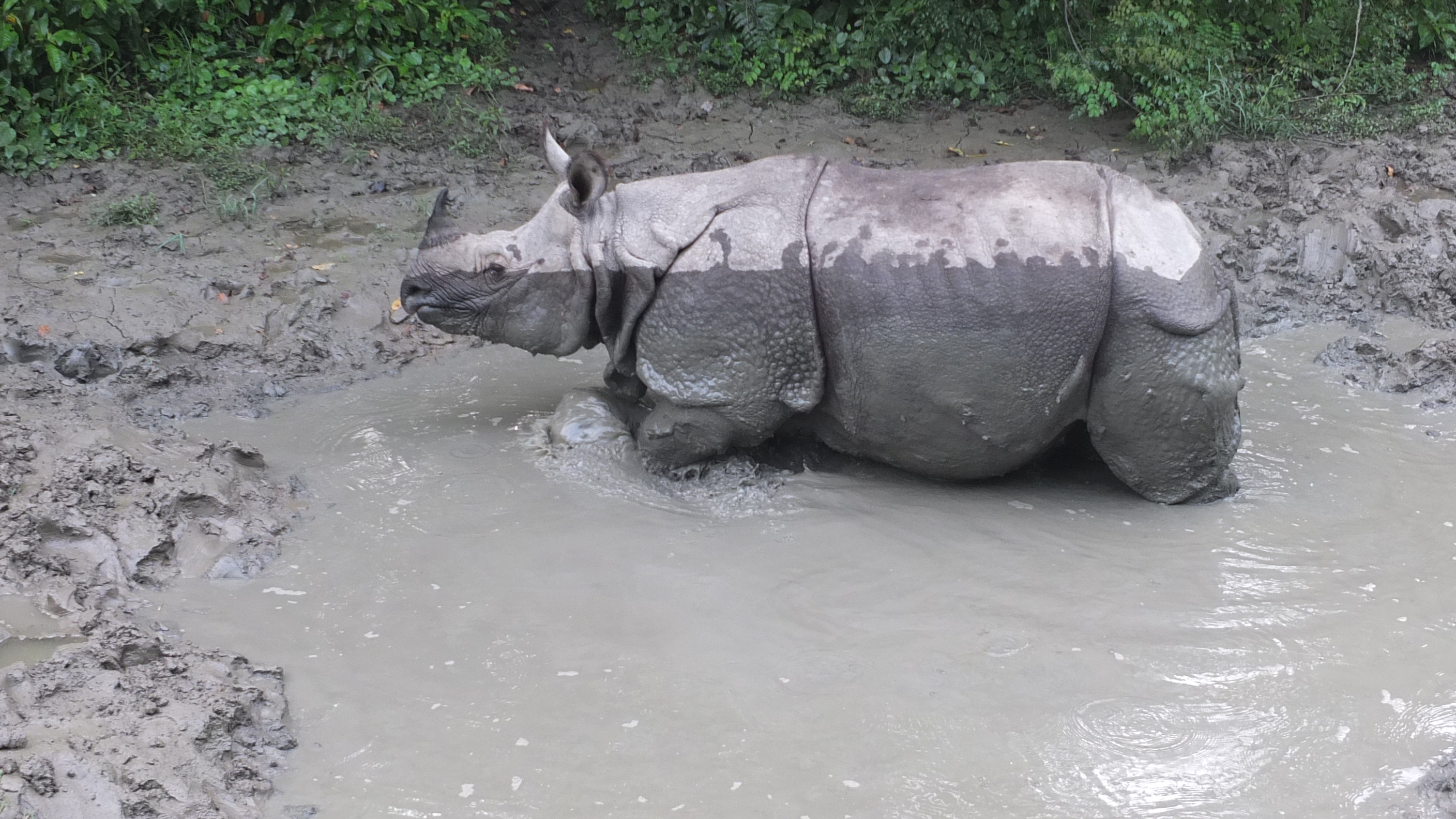
chitwan rhino is a mud bath

We stopped to take a close up and the last rhino posed for the shot. I love his mud stripe!

Carry!


DSC_0577

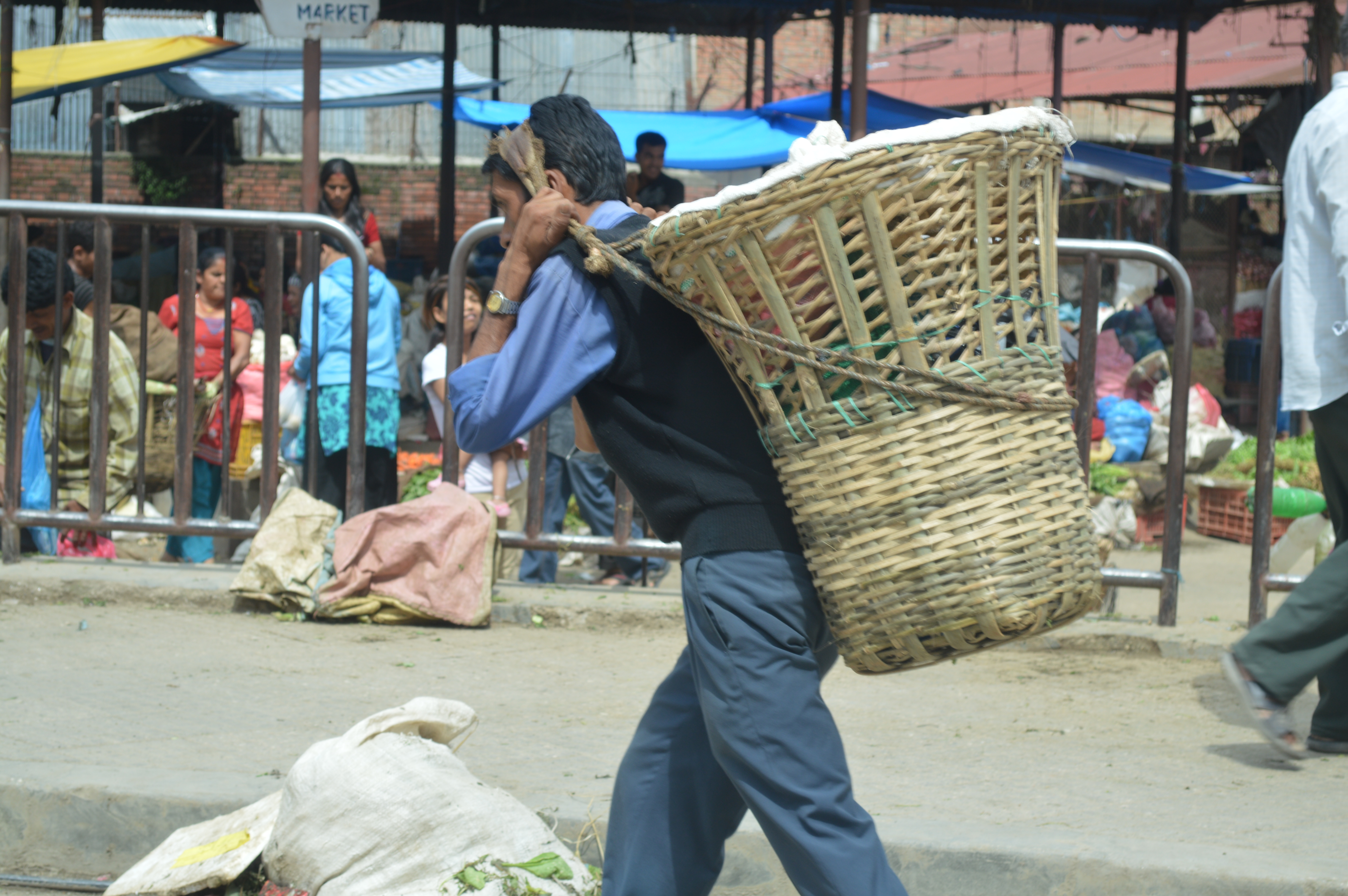
Moving stuff around in Nepal happens on the streets right in front of your face, all day.  Its not that it doesn’t happen in other places of course, but here there are less trucks and more individual sellers, all independently trying to get their goods from A to B any way they can.  If you can’t afford a truck or don’t even have a bike, then you get to carry things by foot….which is how most people get things done.  So, the traditional “dokos” or cone-shaped baskets are ubiquitous here.  Everywhere you look they are either being sold or used, secured to the carrier with a very painful looking headstrap.  I have watched tiny woman carry loads this way that look twice their size and three times their body weight.  They look like ants carrying impossibly large loads.

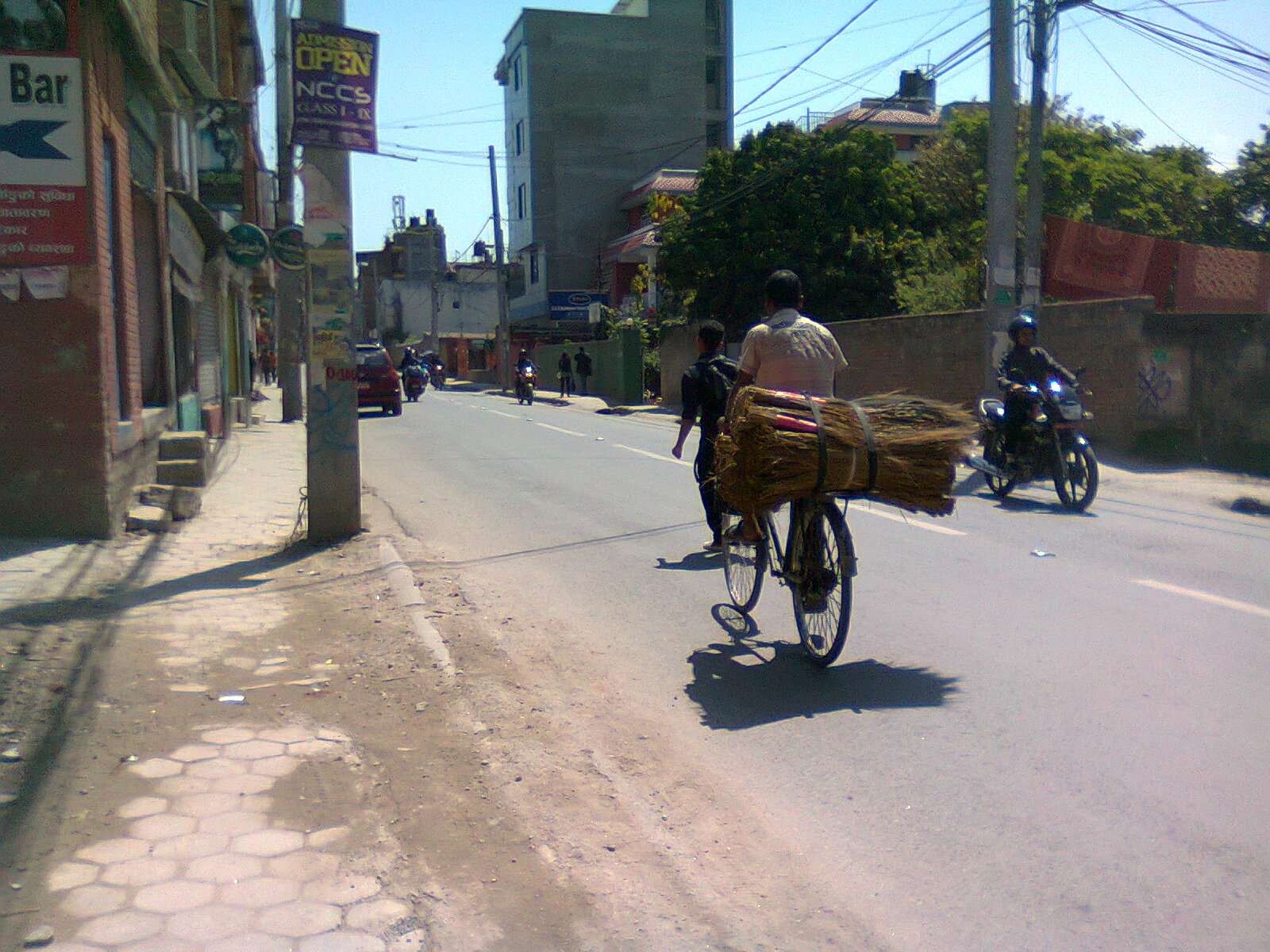
The  load-bearing cyclists are everywhere too.  I did an post a while back on the Nepalese trusty bicycle, and they still grab my attention on a daily basis today.

Photo0002

the broom bike guy

Or there’s the head-basket method that I see in the rural areas, especially in the South.  Its mostly women carrying laundry loads or small items for sale on their heads with only a mat or straw for padding, which levels their loads and helps protects their heads from the strain of the heavy, precariously-balanced weight.  And they are very good at it!

DSC01478 - Copy


h too.  At Pashnupati temple, family pallbearers carry the deceased to tfuneral

DSC01423

Life is always on display here…and death too. At Pashnupati temple, family pallbearers carry the deceased to the funeral pyre.


DSC_0744

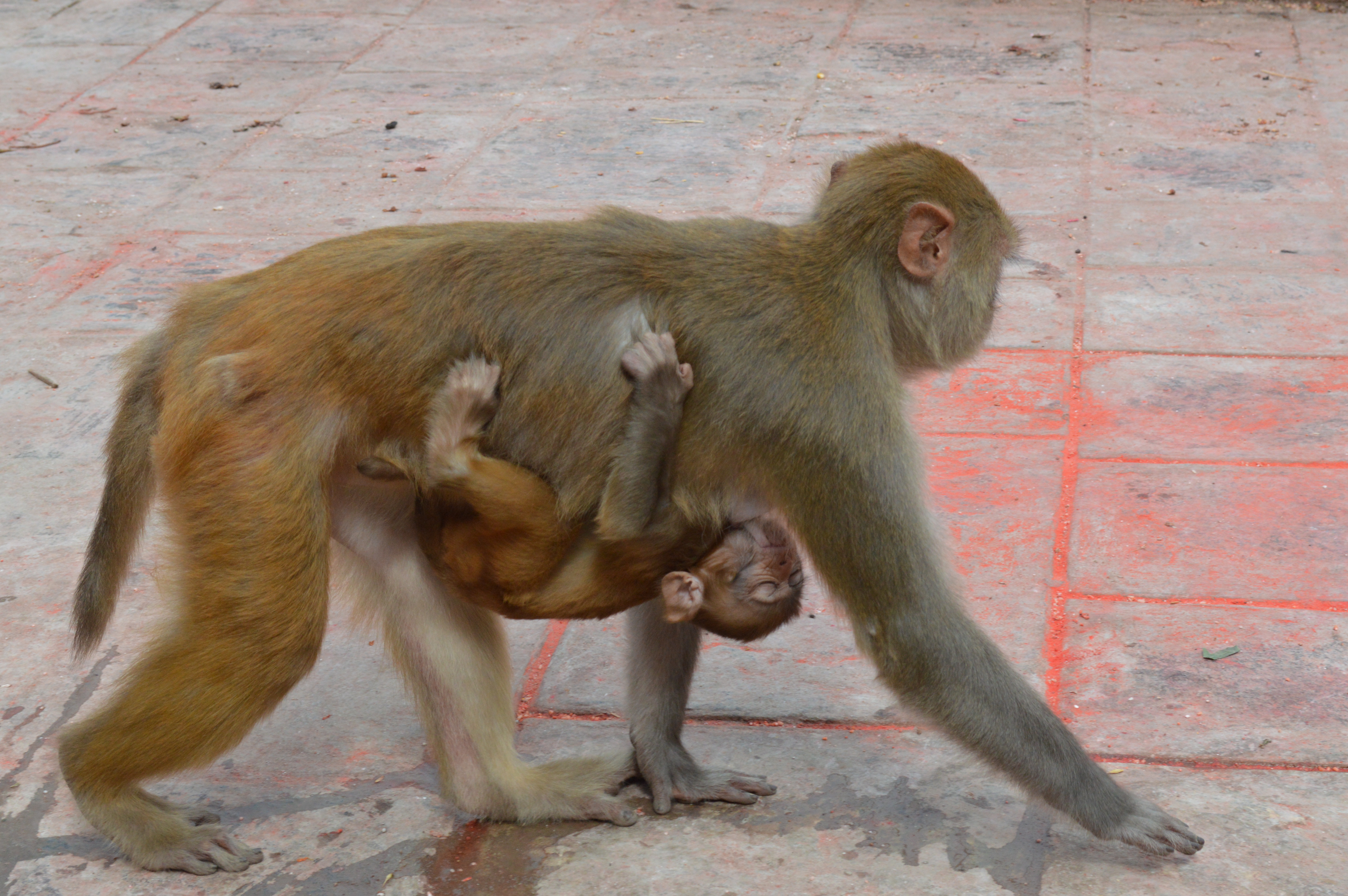
..and last – but by no means least – had to include this little guy!   Carrying, monkey momma style!


This post participated in A Word in Your Ear’s,  A Word a Week Challenge: Carry


Weekly Photo Challenge: Twist


100 yr old Balete Tree

Rasta in a Dreadlock Tree!

Two twists with a twist for this post!  Firstly Bob Marley in a twisty banyan tree.

And then this fish who seems to be suspiciously eyeing a new camouflage spot…

292


This post participated in the Daily Post’s Weekly Photo Challenge: Twist

Sign Language: Single Women


DSC01716

It wasn’t that I was unaware that women here undergo a great deal of discrimination and denial of basic human rights. Its just that the label “single women” to me just meant unmarried.  I had noticed signs all around the city using  the “single women” term, but it was only when I became aware of  how shameful the word “widow” is in Nepal (and how difficult their lives are), that I began to understand how using the phrase “single women” had become a positive attempt at creating an all encompassing term for unmarried, widowed, separated and divorced women.

Through awareness raising and lobbying, womens’ groups are battling to achieve changes in discriminatory laws against single women.  Piece-by-piece that are making changes to the law, but there’s still a long way to go. Discrimination against widows here is deep-rooted, and I was also surprised to learn that it cuts across all castes, religions and categories of society.  A woman from an educated, middle-class family can still be as vulnerable as one from a poor, rural one.

However, things are slowly changing:  Now the law says that the property of deceased husband does not need to be returned after remarriage.  A widow no longer needs to be 35 years to inherit deceased husband’s property. Male consent is no longer required while acquiring a passport and citizenship.

Through the efforts of groups like Women for Human Rights, widows are increasingly aware of their rights and WHR works to increase their skills, and social and economic status.  Job creation programs teach women how to start their own businesses and learn to be financially independent.  I’m hopeful that things will change dramatically for the next generation of Nepali women, but sometimes — looking at the size and extent of the problem —that feels like a long way off.

DSC01719

Hitting the Trail: On the Move


This week’s photo challenge inspired me to look at my favourite way of moving…along trails. And what a lot of different trails, leading to beckoning destinations just over the horizon..! Suspiciously missing here are Nepalese mountain trails. I’ve yet to do any real Himalayan trekking.  Still working on that one….:

on the move anagari

Family hike on Spetses, Greece

on the move cleveland

On the Coast to Coast in Northern England

The long haul across Lairigmor

The long haul across Lairigmor, West Highland Way, Scotland….

rannoch moor onwards 027

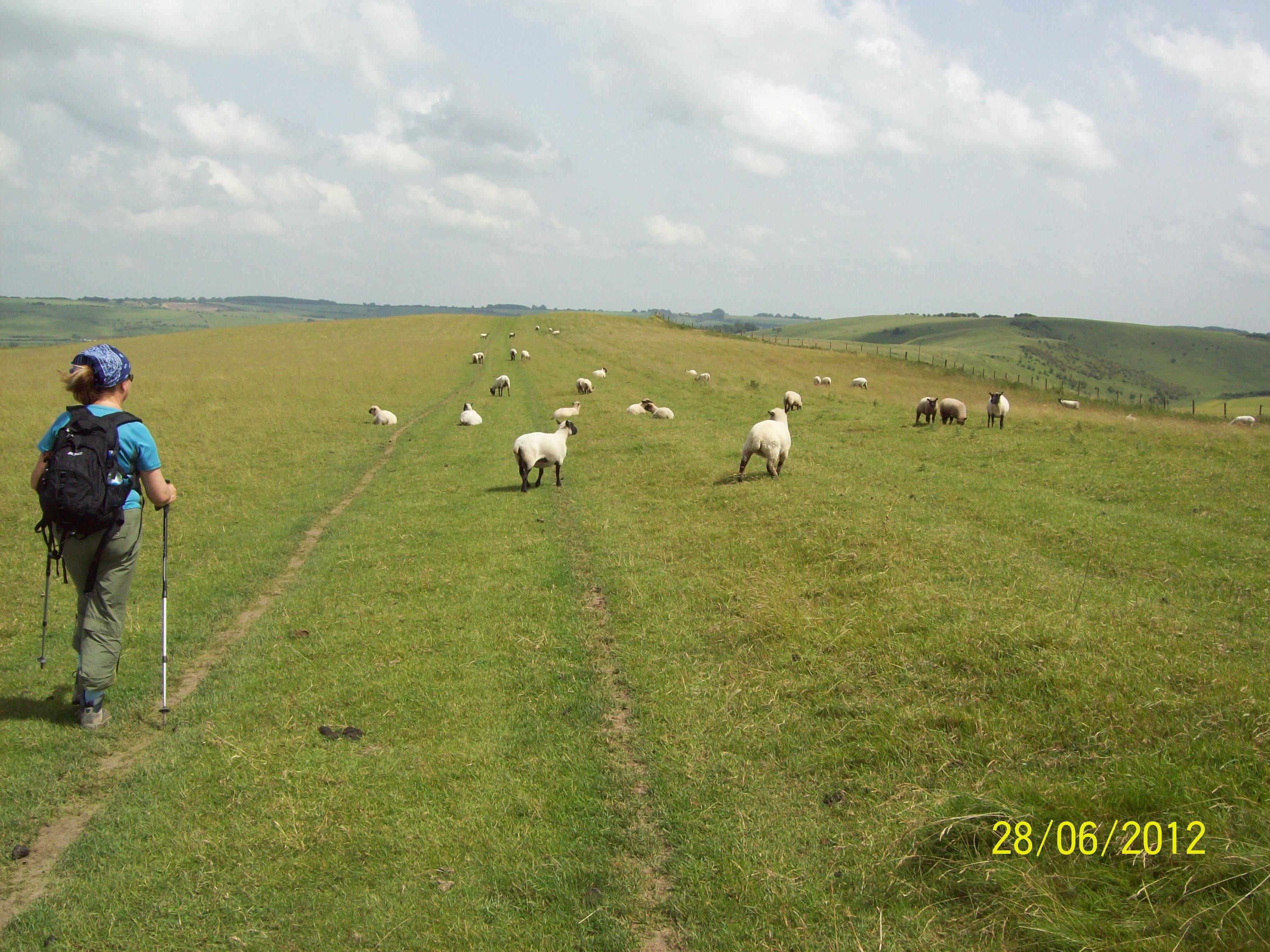
…a couple of sheep friends join us on the trail…

on the move ridgeway

…with more of our sheep friends on the Ridgeway, Southern England

on the move dumaguete

Cliffside trail, Dumaguete, Philippines

DSC01342

Trekking through the Himalayan hills, Namobuddha, Nepal

IMGP2657

Desert climb, Phoenix, Arizona

DSC00567

And just for good measure, Southwark, an urban hike on the London end of the Thames Path. I guess I prefer it when I’m not on the move with others.


This post participated in the Daily Post’s Weekly Photo Challenge: On the Move.

Visting Godavari Knowledge Park


IMG_9434 - Copy

The Knowledge Park at Godavari

When I first learnt about a knowledge park in Godavari, about an 1.5 hours drive east of Kathmandu, I didn’t know what to expect. I think I thought it was some kind of interactive educational place, although in Nepal I wasn’t quite sure what that meant….

Turns out its a 30 hectare “educational farm” developed by the International Center for Integrated Mountain Development (ICIMOD) as a demonstration and testing site for sustainable farming in the Himalayas. With modern development and climate change threatening the livelihoods of so many rural communities throughout the Hindu-Kush area, ICIMOD tests different environmental farming methods and environmentally-sustainable agricultural practices.  That means Afghanistan, Bangladesh, Bhutan, China, India, Myanmar, and Pakistan,,, not just Nepal. The center serves as a resource for visiting groups from all over the region.

There’s lots to see, and in the short 1.5hrs that we were there, we only saw highlights, but I really enjoyed the tour. The park was well kept and groomed, with labels and information boards explaining what we were observing. We strolled through a variety of different areas including orchards, crop fields, greenhouses and a display of alternative energy. There are nursery gardens, pigeon roosts, chicken farming, angora rabbit raising, and composting areas. We also viewed mushroom farming, forest floor management programs, and the raising of unusual crops including medicinal herbs. Their training center runs classroom and practical training courses on the many different kind of practices they maintain, training trainers so they can back to their respective communities and build on the idea.

Here’s a few pictures of the different practices going on there.  I found it really interesting:

IMG_9416

Solar heaters like this can boil water in about 30 minutes, providing families with free fuel to cook their meals.

IMG_9405

Briquettes can be manufactured from paper, mulch and other organic matter, which are mixed with water, compressed, dried and used to make a pretty efficient source of fuel.

IMG_9409

Briquettes like the ones manufactured above can burn for 30-60 minutes which is enough time to cook a meal.  Not only are they another free source of energy, but their use means less wood burnt for everyday use, and helps prevent deforestation.

IMG_9413

Demonstrating a pedal-powered water pump for irrigation

IMG_9395

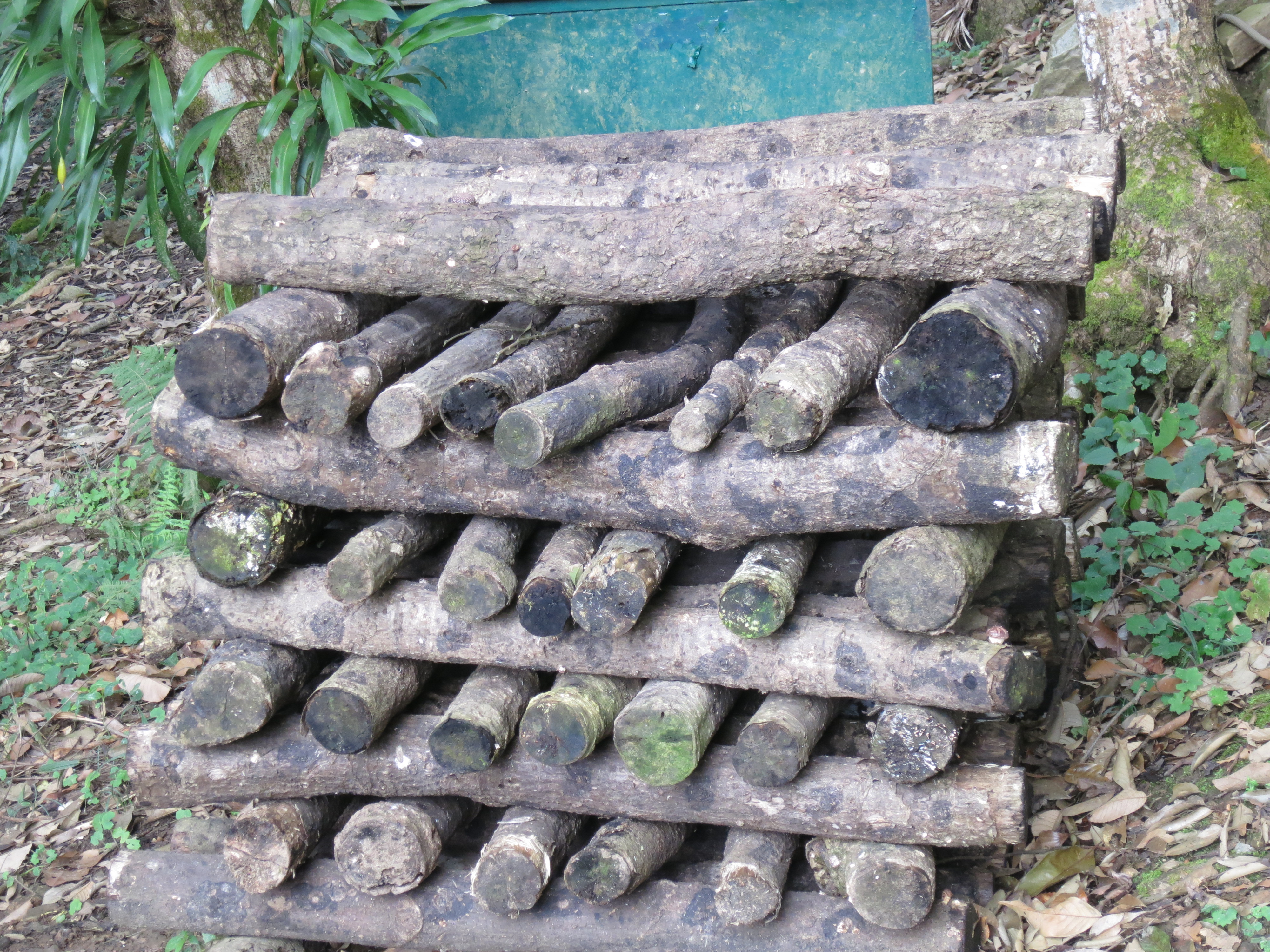
Forests in the park are maintained to keep them healthy, and the cut logs are injected with mushroom spores.  The logs produce mushrooms for several years.

IMG_9421

IMG_9399

And finally, a couple of pictures from the orchard. There’s probably something more I could say about what they were doing there, but I enjoyed being in a blossom-filled orchard so much that I wasn’t really reading the signs! A beautiful break from the dust and grey of the city….

IMG_9401