And the whole reason we went….


Trains, rickshaws, temples and Mithila art were all experiences grabbed at the beginning or end of each day, but the real reason I was in Janakpur was work-related. The Embassy does a roadshow each year, visiting a different part of the country each time to engage with schools, share books with the kids, and share American culture and movies with them. Its a busy couple of weeks for everyone involved. I was just there for a few days at the end of the trip.

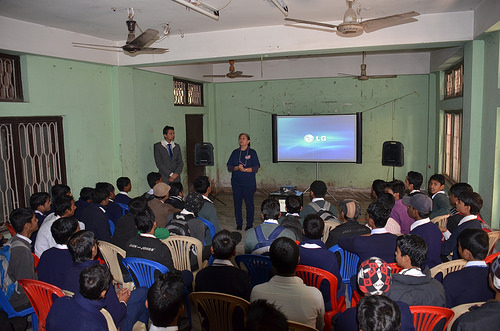
The best part of the experience was meeting the kids, and answering their many questions about America and American life. Here are a few scenes from the week:

DSC01459

Early on…before the crowds descend

DSC01464

Books for the kids to view. They are later donated to schools, but they’re available for kids to look over as many of them don’t have access to libraries or there are very limited books in the schools.

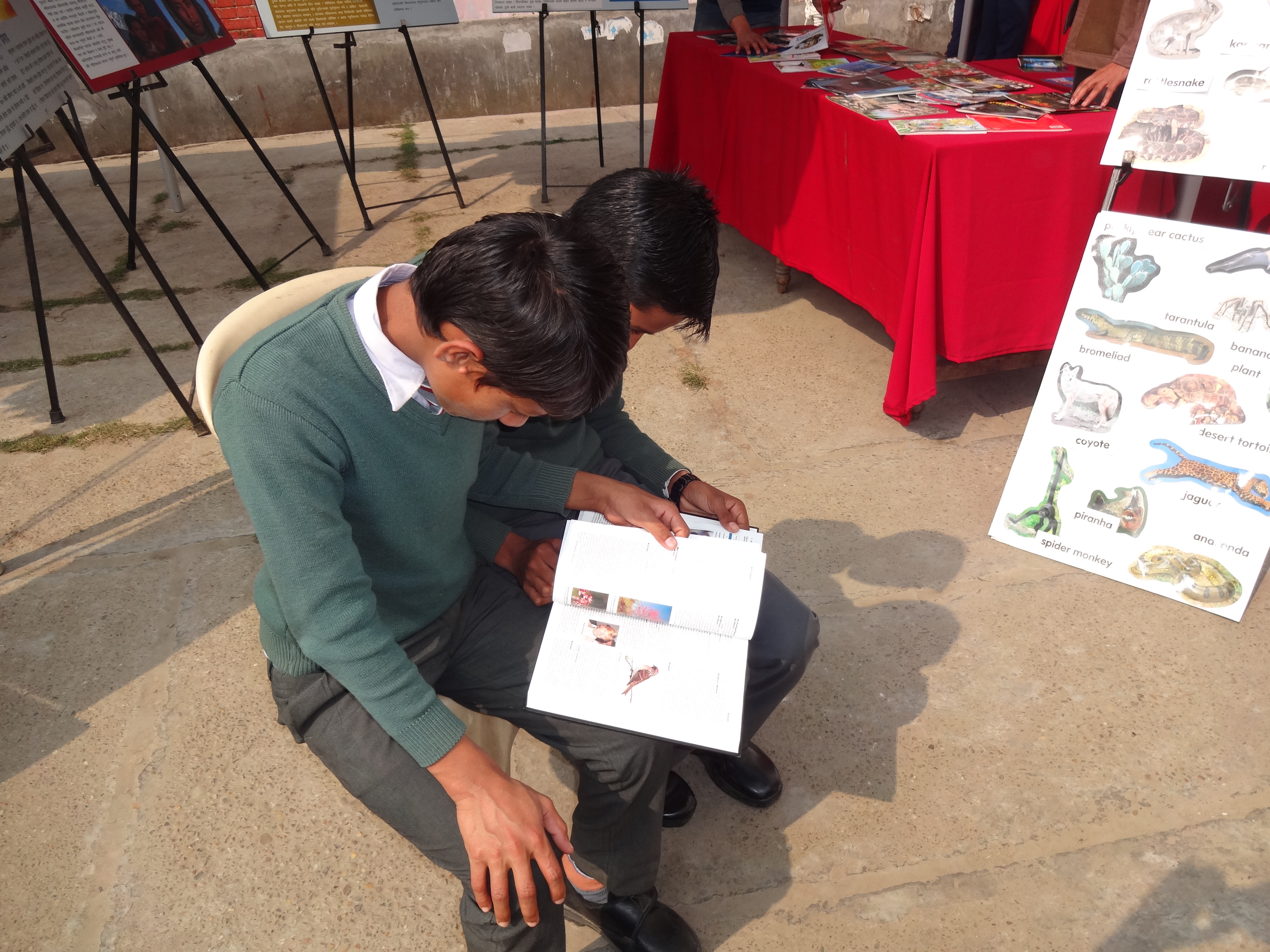
DSC01468

Two boys engrossed…sharing a book and a chair

DSC01470

Mass Read-a-thon

DSC01466

Sharing eco-friendly cooking techniques with the kids.  Many eco-friendly cookers were old-school techniques – like cooking with dung.  Some of these were still alive and well in Janakpur already….

DSC01471

The kids loved the book bus with its mobile library, solar panels on the room and mobile theater

DSC01510

One of the best scenes for me was seeing kids engrossed in books. It made a pleasant change from all eyes on an ipad.

12395663504_65bd98b7e9

I talked myself hoarse answering all the questions. I’d answer three, then look up and I’d have 20 kids circling around me.

12440626765_d5f874a380

Movie time

Meeting Janakpur’s Mithila Artists


I loved the Mithila artwork I saw in Kathmandu, long before I knew anything about it or where it came from. Mithila paintings and painted objects, such as mirrors, trays and cups, have a distinctive primitive style that is colorful and appealing. You can find their handiwork in most “Fair Trade” shops in Kathmandu for a very reasonable price, and before I had the chance to go down and see the artists at work, I had collected quite a few pieces that I loved, as well as sending them as gifts for friends and family.

So when I learnt we were going to Janakpur, I hoped that I would get a chance to see some of the art being produced.  I’m not sure what I expected but it wasn’t to see the art incorporated into everyday life such as government buildings and schools.  Even the otherwise, very shabby airport building had a wonderful collection of Mithila paintings.  It was surprising and delightful to me that the tradition still held strong without tourism spurring it on.

So when I had the chance to visit the Janakpur Women’s Development Center, I was very excited to see what their operation and watch the artists at work.

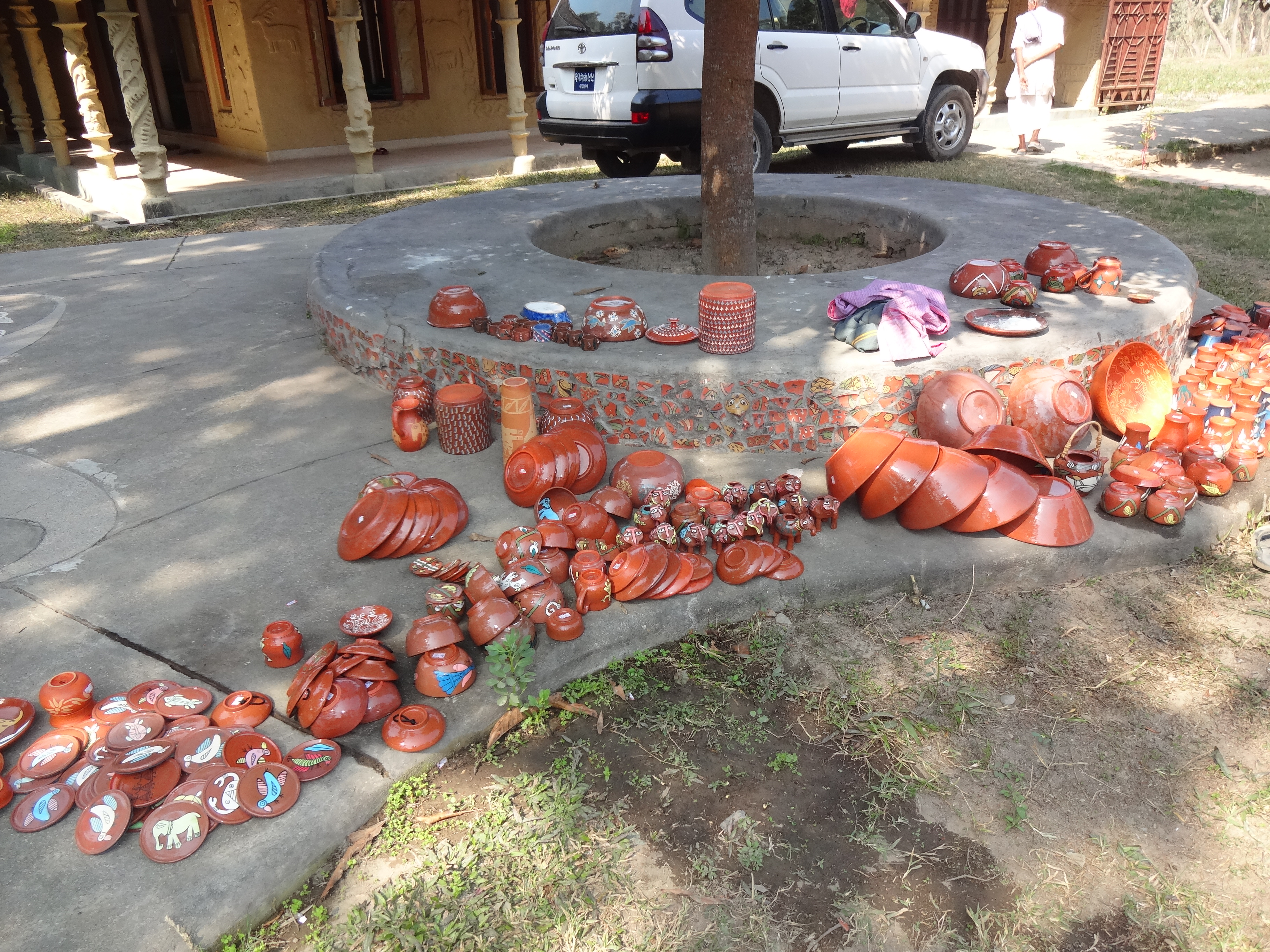
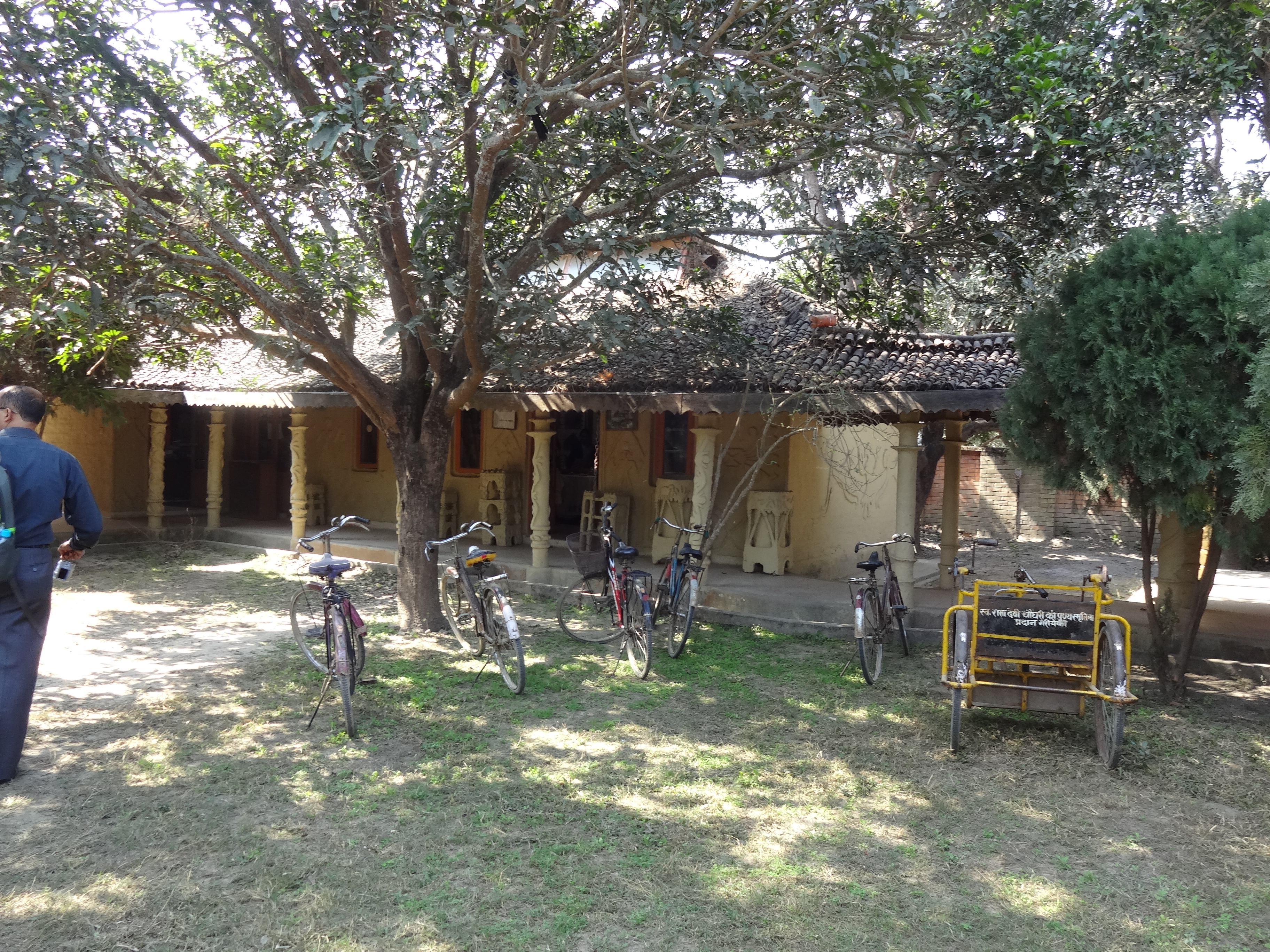
The Center is located in an attractive wall compound about 15 minutes outside of Janakpur town.  Screenprinting, art and pottery studios surround the internal courtyard and the ladies showed me around all the activities going on.  The walls and pillars are decorated in a traditional local style that reminded me of South Western native american Adobe.  It was a very peaceful place.

DSC01487

DSC01490

DSC01492

DSC01495

DSC01499

DSC01500

DSC01503

20140207_163531

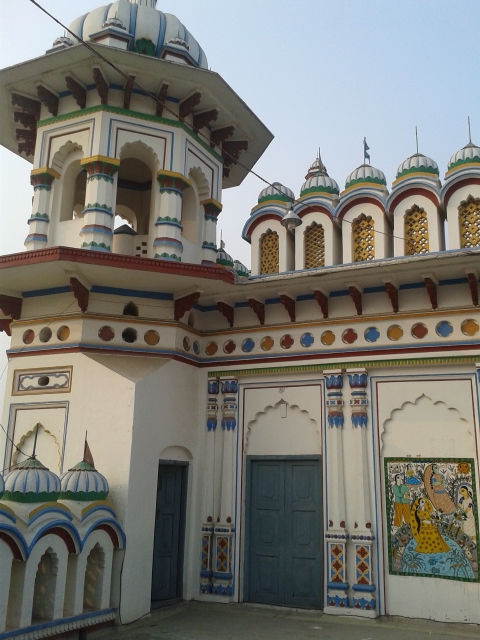
Mithili art at the nearby Janaki temple

The Center provides a great opportunity to keep the Mithili art tradition alive, as well as providing an independent income to rural women in the area.  Its open to the public by prior appointment for tours and they have a small sales room were you can buy their works. Totally worth a visit if you are in the area.

Janakapur Train Station: No Blast from the Past


L1000158

I wish I had taken these first two images. Not only because they are great photos, but mainly because it would mean that Nepal’s only train station — here in Janakpur — was still open. The photographer is unknown to me, but kudos to him/her and I hope s/he doesn’t mind me using the photos. They were shared with me by the hotel manager at the place where we stayed. He wanted to show me what the station looked like when it was last open, which was just over a year ago.

The reason for its closure was veiled in the usual confusion of partial information: management problems, money problems, and plans to connect the line with the train line on the other side of the Indian border.  Which…by the way… it may also be already connected to.  No one was very clear on that either.  Chances are it stopped on one side of the border, but it didn’t connect over completely.  But I think a unified Nepalese/Indian connection is now on the cards.

It was the only train line in Nepal, and perhaps the only still functioning, original steam train in the world.  The word is that it will reopen soon, but not as a steam train unfortunately.  That blast from the past won’t be heard again at Janakpur station.

I’m told the old steam train traveled so slowly that you could jump off and walk beside it.  Which, of course, helps explain the bravado of the roof and door riders.  Not so scary when its not traveling at sixty miles an hour.

Today the images are quite different.  The train sits permanently in front of the station, like it might actually be leaving some time soon.  And outside the station, there’s still a bunch of rickshaw drivers waiting to pick up a ride like no-one actually told them there trains had stopped.  (I guess old habits die hard.)

DSC01485

Rickshaw drivers waiting outside the station. I guess its still their turf…train or no train.

DSC01477 - Copy

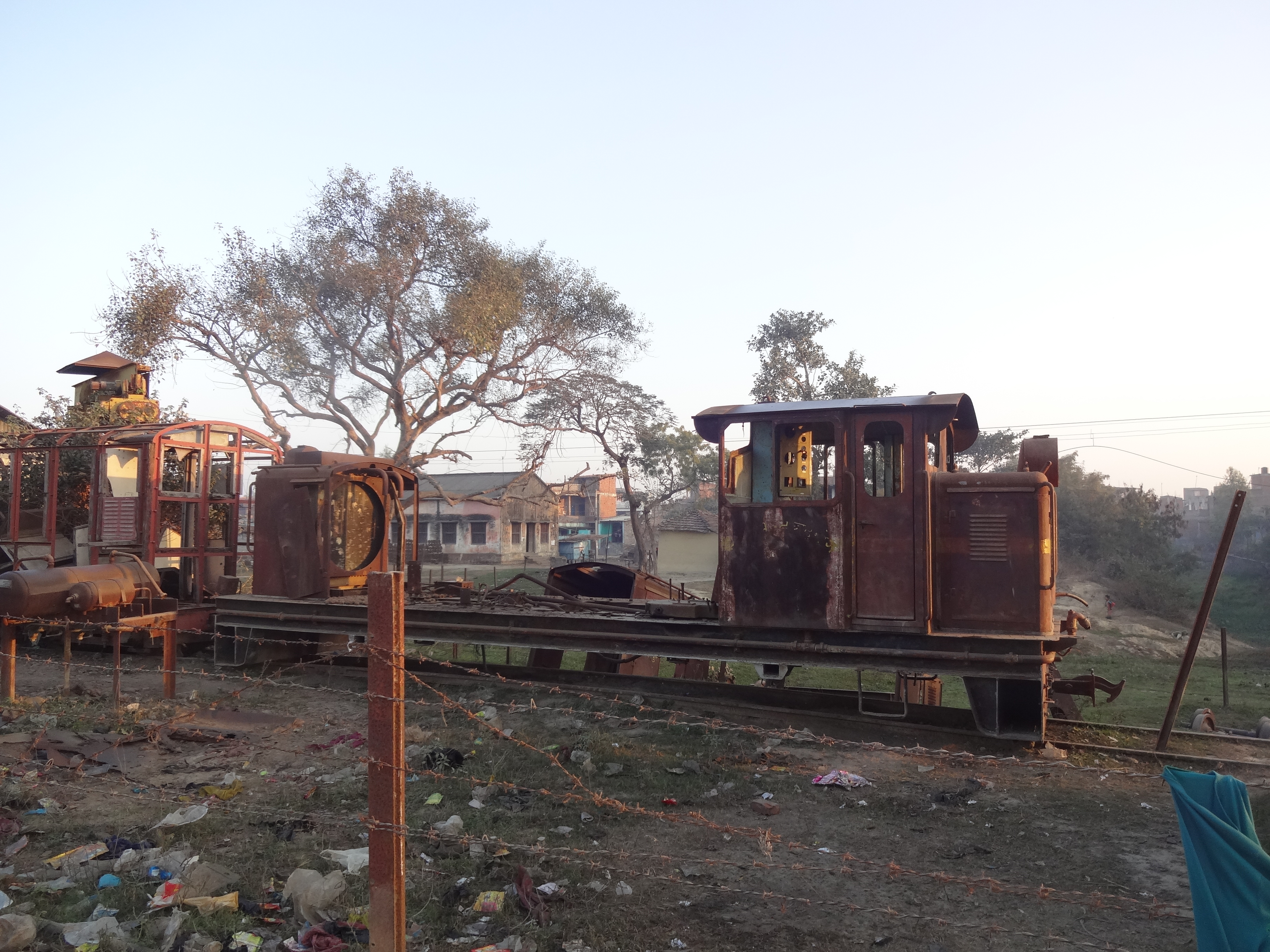
The lonely train sitting at the station in 2014

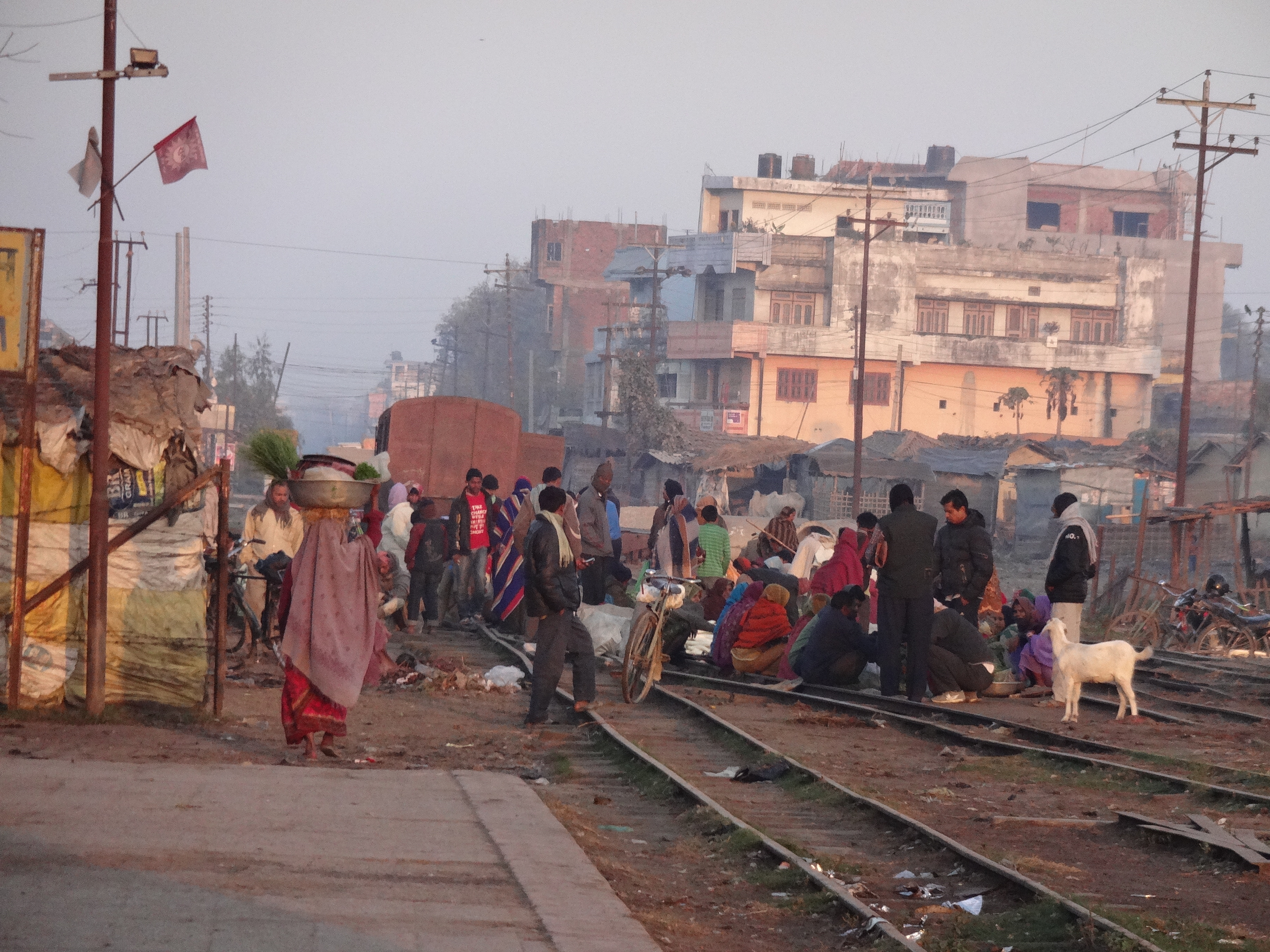
But the station’s closing doesn’t seem to have had too much impact on its visitors. The station and track were teeming with life. We walked a ways along the track with many others who were using it as a road to work or school. There were bikes, vendors, customers and garbage a plenty. Life was going on as normal, just without the functioning train.

DSC01478 - Copy

DSC01479 - Copy

DSC01480 - Copy

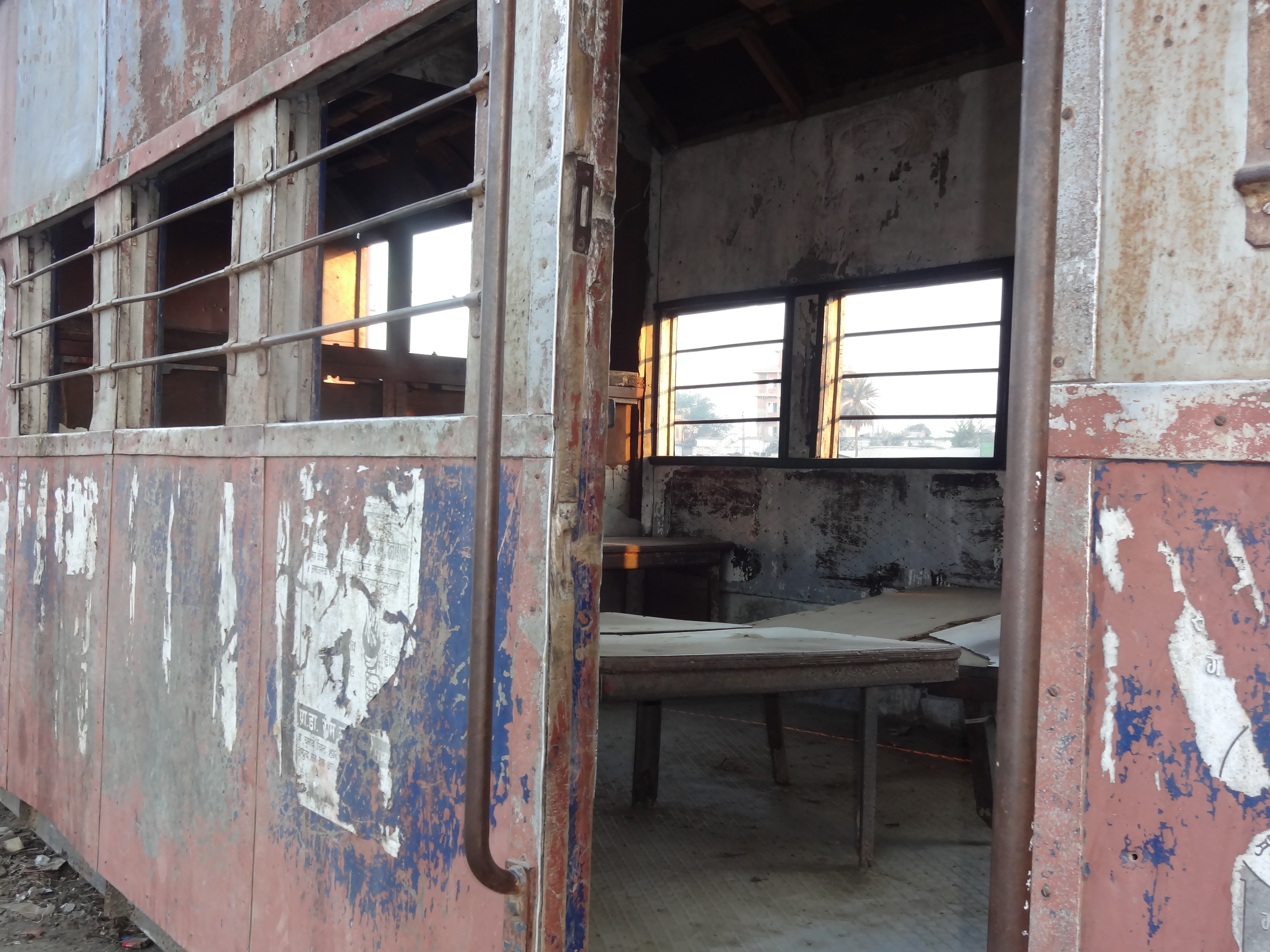
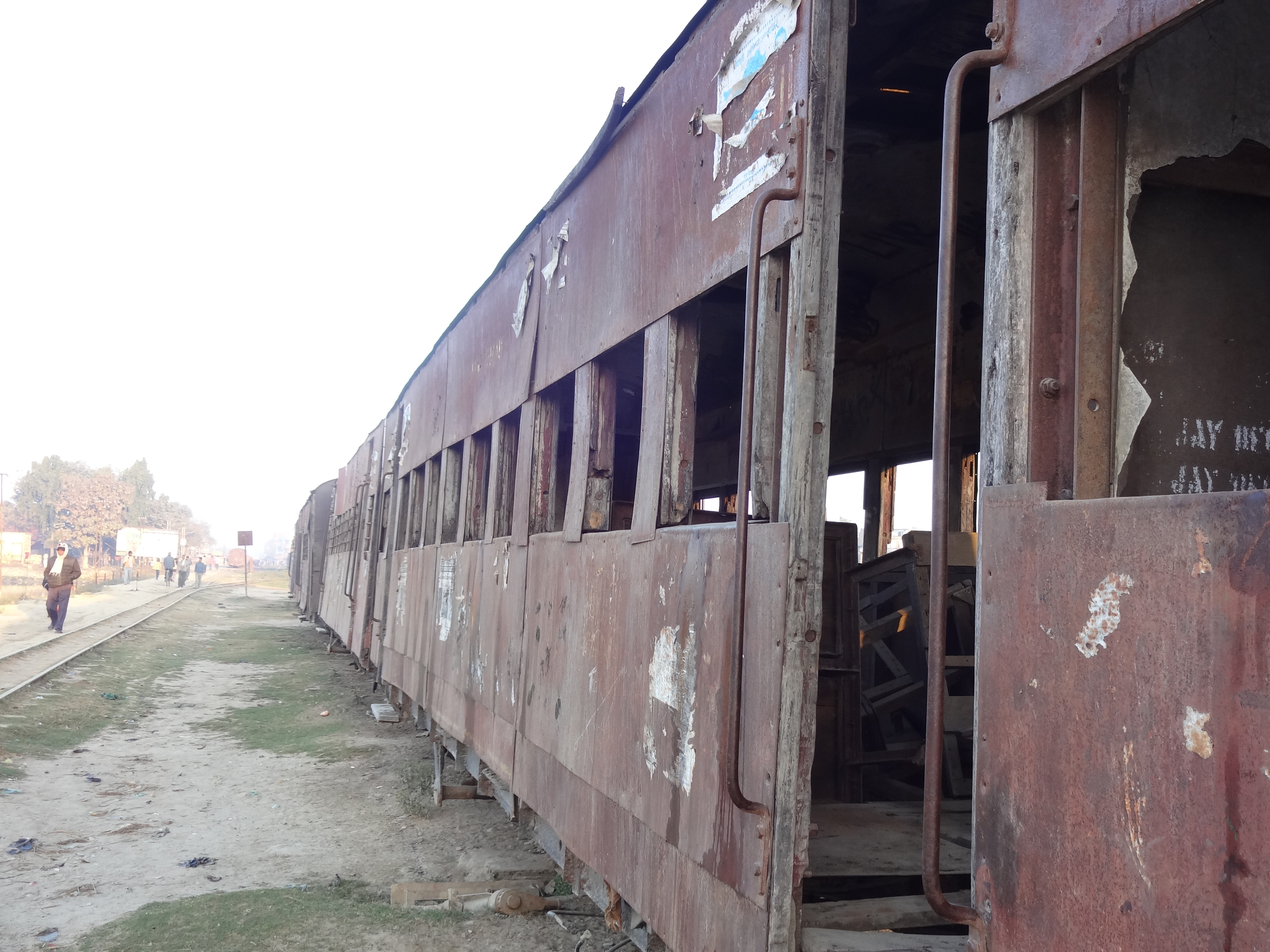
Peeking inside the dilapidated carriages.

DSC01481 - Copy

DSC01482 - Copy

The tree is behind the train. The bush is growing inside it.

DSC01483 - Copy

“Passengers” walking along the tracks

DSC01484 - Copy

The only billboard I saw, advising passengers that they were entering a district with malaria.

Janakpur Temple: Janaki Mandir


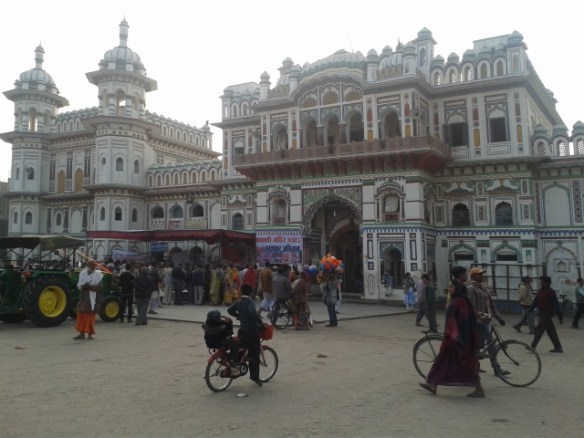
Its called Janaki Mandir, the very large – surprisingly large – and important temple in Janakpur. I had seen pictures before I came and had expected a palace-like building on a hill somewhere, overlooking the town. But its not elevated. Its downtown, amid all the chaos. Just sitting there, overshadowing everything else.   Janakpur’s temple is dedicated to the gods Rama and Sita and, as they are major figures in Hinduism, Janakpur is an important pilgrimage site for Hindus.

20140207_160939

There was a protest going on the day we arrive, with crowds and police hanging out in front of the temple.

As I started to unravel some of the legends surrounding the gods, I began to notice references to them in paintings and sculptures. Upstairs in the cultural museum, for 15 rupees you can watch mechanical animations of the stories from Rama and Sita legends, protected behind glass.  Although a little cheesy for my taste, it was cute to see the effort put into them as colourful, dancing mechanized dolls slid up and down rails, chanting or dancing, relating scenes from the religious stories.   For me, the animated displays weren’t the reason to pay the entrance fee.  I loved the view you got down from there into the temple courtyard.  In a way it was the “usual” temple scene, with praying, eating, kids and cows all going on simultaneously.  But it was also different as the architecture was completely unexpected and unlike anything else I have seen in Nepal so far.

Janaki Temple

Inside the temple’s exterior walls, the main temple sits in the middle of the courtyard. This was a “shoe off” zone and probably not for non-hindus, so we never went inside.

The temple is around 150 years old and kept in very good condition, especially considering the many maintenance challenges here. But I couldn’t help wondering why so place so beautiful and so holy wasn’t kept cleaner. I did see someone trying to clean up, but she was old and slow, and only one person. The litter, dirty water and cow messes were everywhere. That was a real shame.

20140207_162614

There were many decorative pieces around the temple painted in the style of the local Maithil artists. Clearly this is another representation of the marriage of Rama and Sita.

20140207_162841

20140207_164527

My first encounter of Janaki temple chanting was the evening of our second day in Janakpur when it started, broadcast noisily over loud speakers. 36 hours later it was still going strong, having continued all through the night and, quite honestly, it was starting to drive me a bit nuts. When I asked around I was told there the temple had a chanting tradition, which goes on 24/7 year round. This didn’t quite make sense as the town was quiet the first day, and sometime later the chanting inexplicably stopped. Did it go on 24/7 or not? I never did quite get to the bottom of it. The best we could figure out is perhaps someone paid for the chanting to be broadcast (during a wedding perhaps?) and the reminder of the time a holy man chants quietly in the temple somewhere,  hopefully geting someone to change shifts with him occasionally….. Ram Sita, Ram Sita….

Janakpur Town: The Wild Wild South


I just returned from a trip to Janakpur.  Back in Kathmandu it’s dusty.  In Janakpur its dustier.  Kathmandu is pretty dirty….Janakpur is dirtier.  Back here in Kathmandu things are looking more organized…I’m sure you can guess why.

But it was a good trip.  And Janakpur is interesting place to see, despite its difficulties.

Its is in the Terai, the southern part of Nepal, close to the Indian border.  The Terai is flat and fertile — the bread (or rice) basket of Nepal — less populated, less developed and much more Indian in style and flavour.  Rickshaws are very common. There are more bicycles than motorcycles, but not so many that you can’t walk in the street without fearing for your life.  Cars are few.

It took a while to get used to the flow of street life.  People, bikes, and rickshaws traveled slowly, weaving together in continuous intervening streams.  Janakpur had the feel of a  . dusty border town from the wild, wild west – minus the horses and guns.  But what it lacked in horses it made up for in chickens, cows and black boar.  Yes, Pumba roamed the streets here.  Dozens of them.  And I was drawn to them with fascination — as I am now over the street cows (which are so yesterday darling) — and loved watching the squealing black piglets running down the side streets.  Often the street cows and pigs grazed the garbage in peace, side by side.

DSC01455

Foraging piggies….in the mist.  My best shot ;o(  Never work with children or animals!

We took a couple of early morning walks through the city.  Even at 6.30am in the early morning mist, there were already throngs of people walking to work or school.  We headed into the unknown through the fog, past storefronts just opening or shopkeepers still curdled up under bedding.

By the end of my stay I was ready to leave the dust and dirt.  But I took home some good memories of the people, countryside, and the famous Janaki temple – which I will leave to another post.

DSC01504

DSC01505

DSC01473

Hotel Welcome – where welcome never ends ;o)

Pashnupatinath Temple


DSC01448

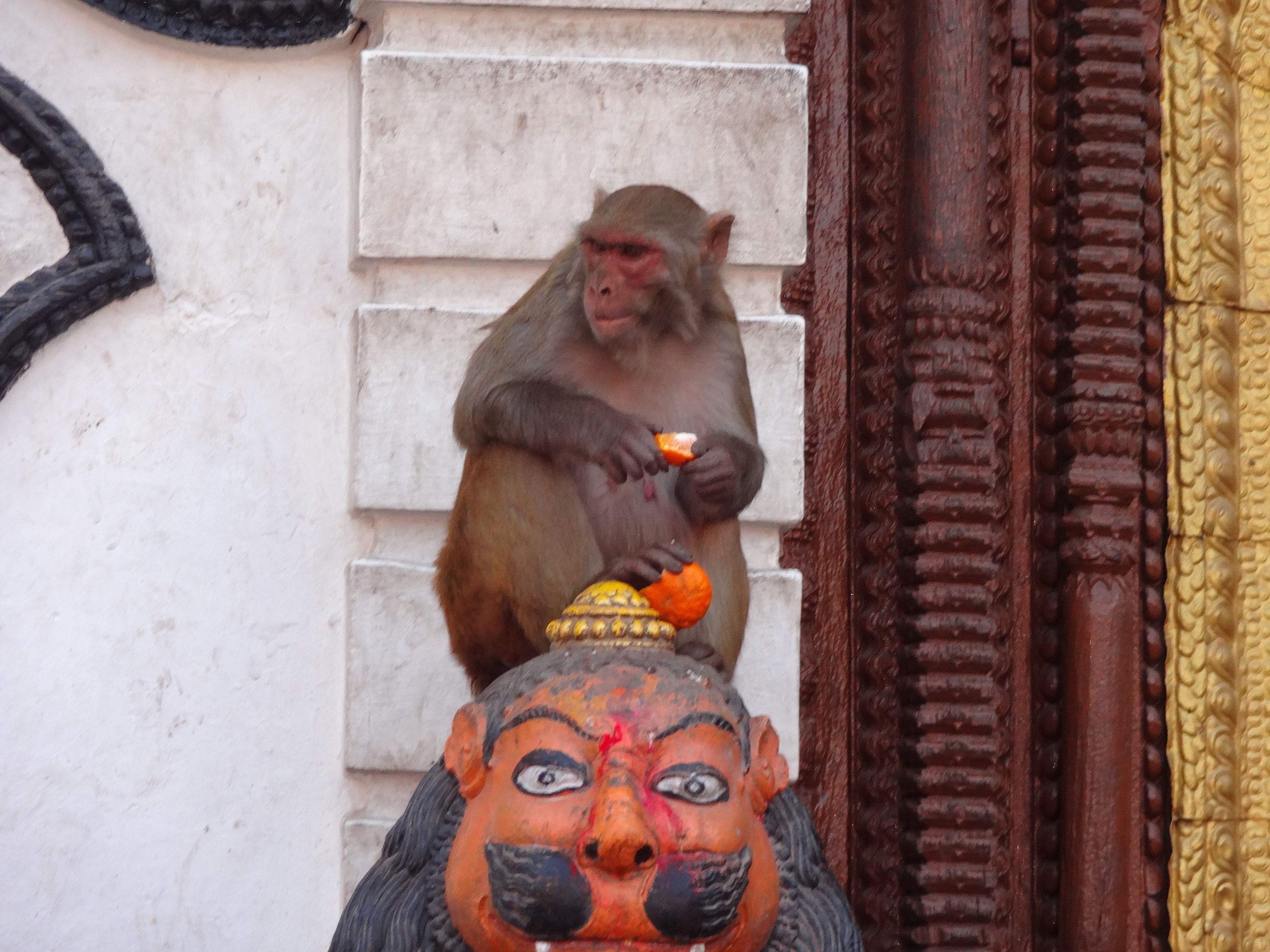
Monkey at Pashnupati Temple.  Don’t even ask…this guy’s not sharing his orange!

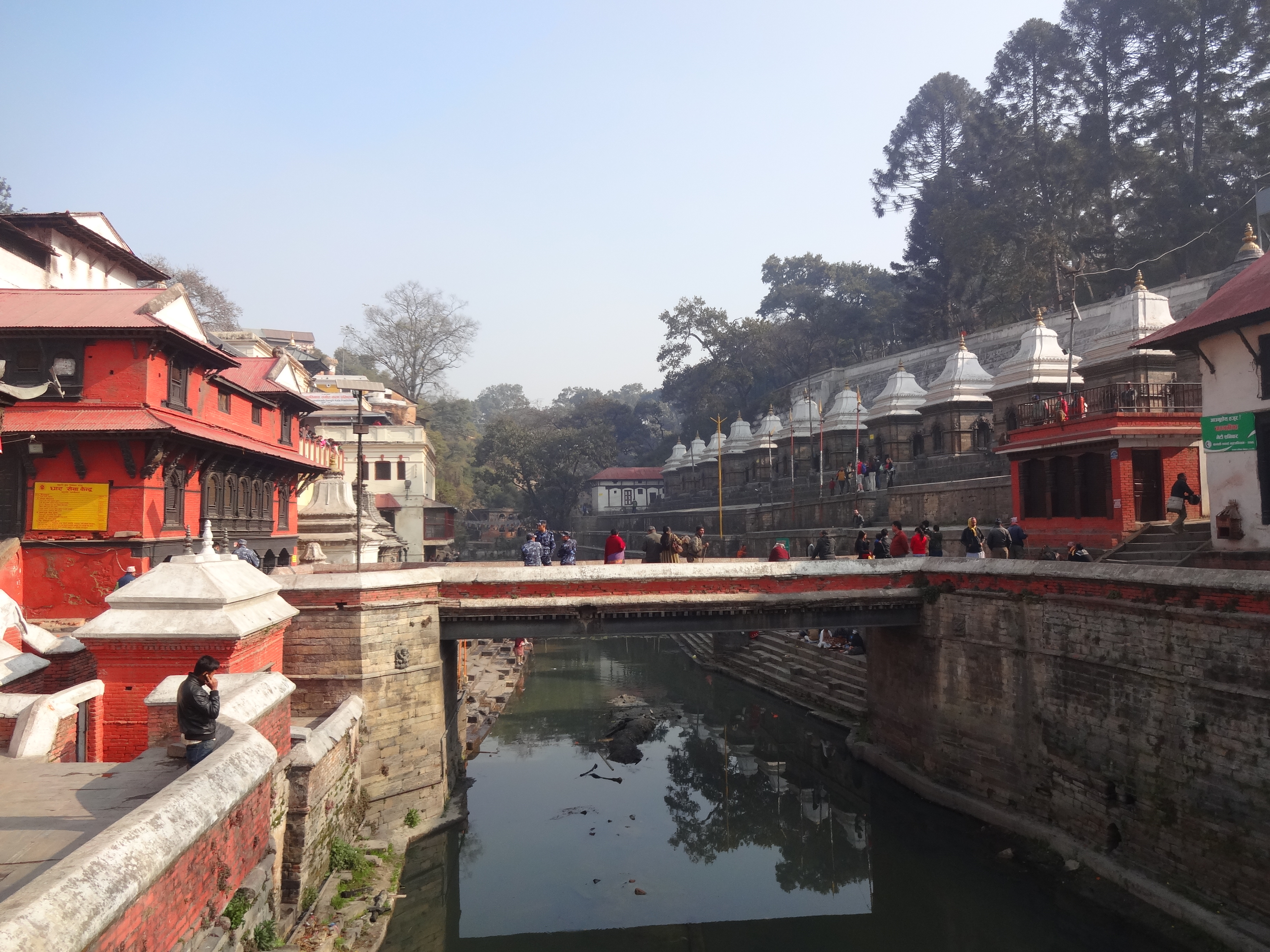
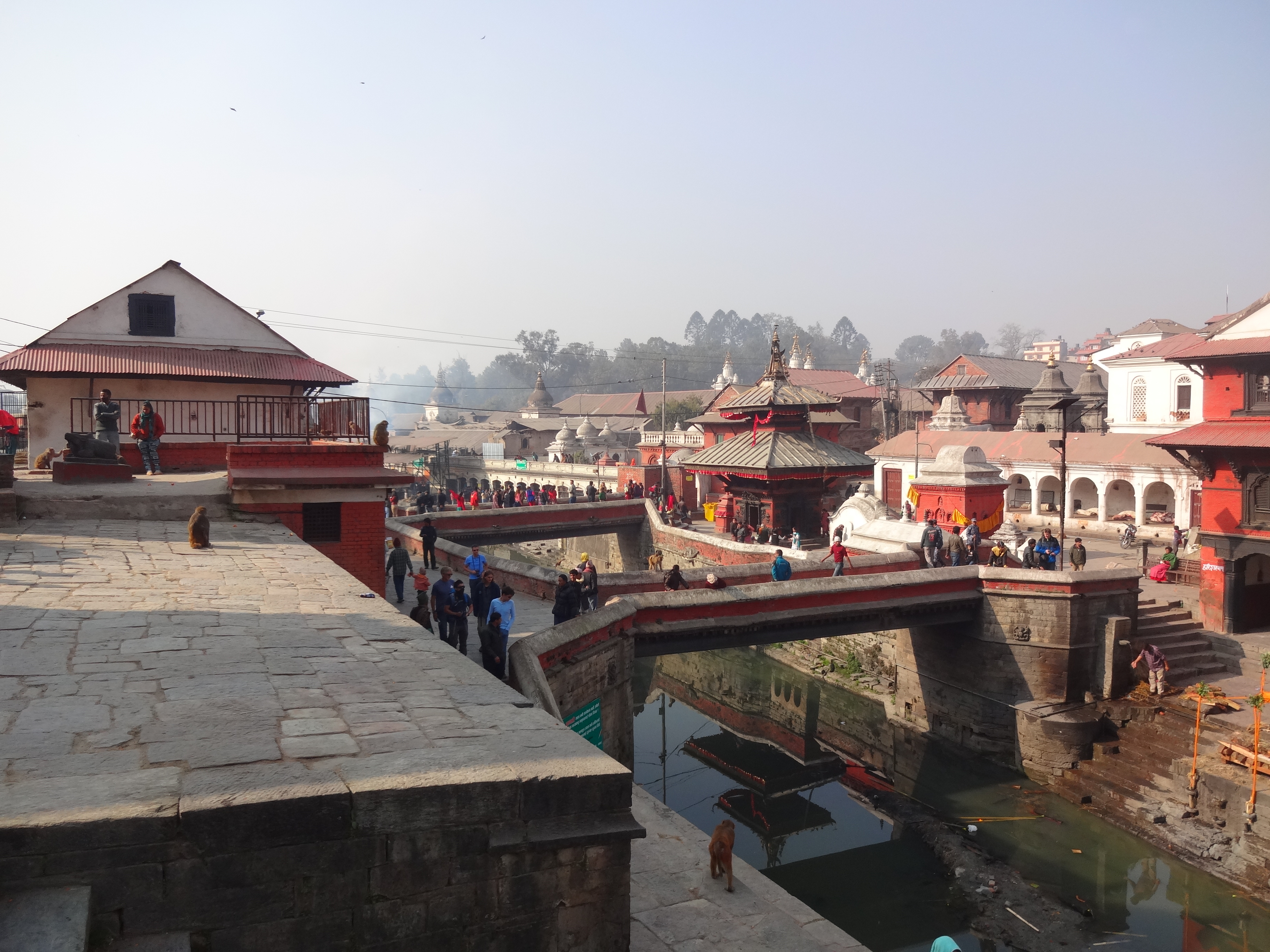
The first thing you see when you leave Kathmandu Airport is a “World Heritage Site” sign plastered several times along a rickety corrugated tin fence.  Behind it is an open area with garbage.  You wonder where the Unesco World Heritage site could possibly be in this ramshackle area and what kind of place it would be?  Its Pashnupatinath Temple, one of the most sacred sites in Nepal, attracting pilgrims from all over Nepal and India.  The temple complex straddles the Bagmati river which, until recently, people bathed in its very holy waters.  Unfortunately nowadays they are very dirty waters, and the bathing has stopped.  I’d heard terrible stories of a garbage-choked river, but now weekend clean up teams have been hard at work removing the trash, although the water remains very unclean.

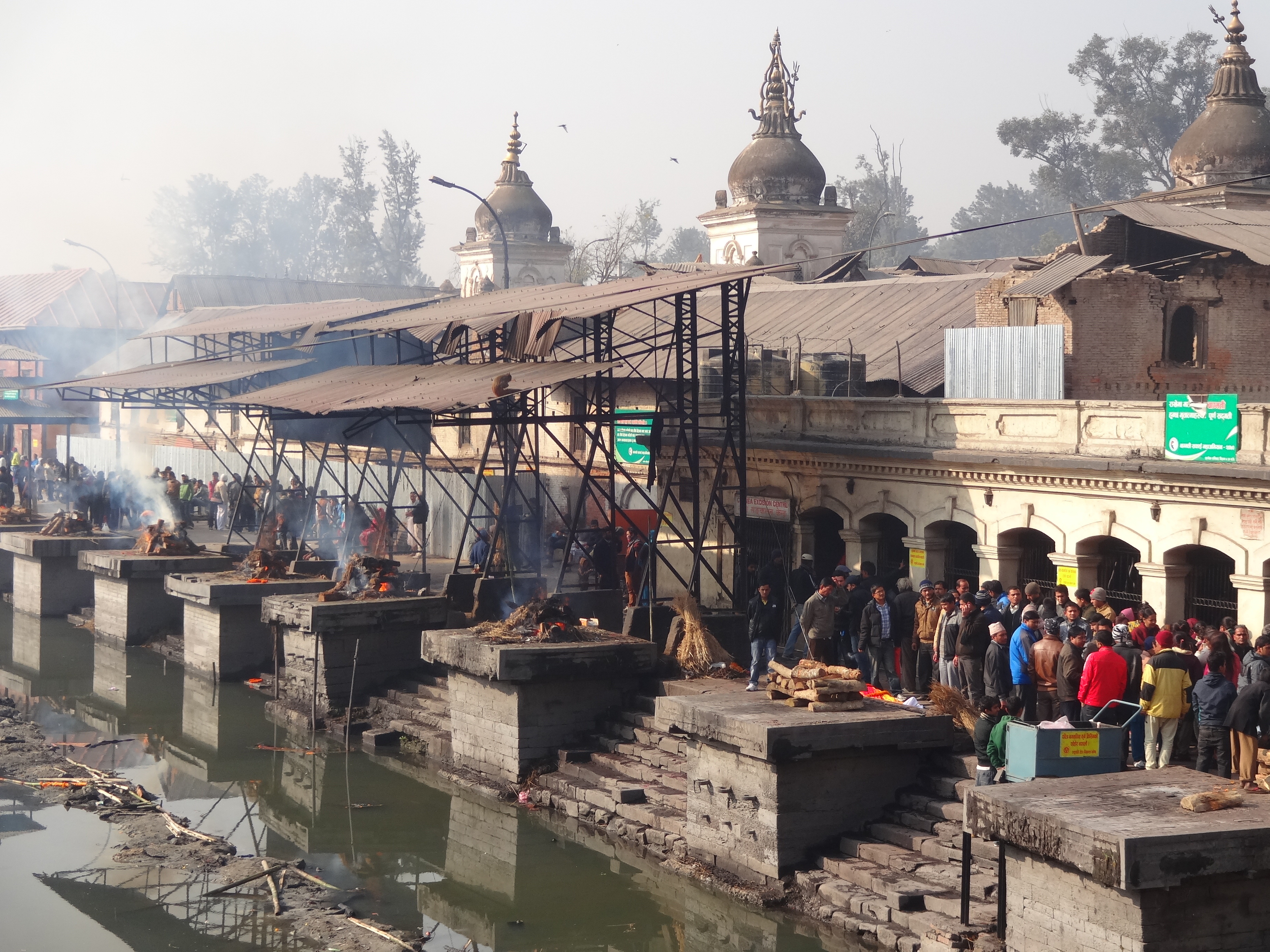
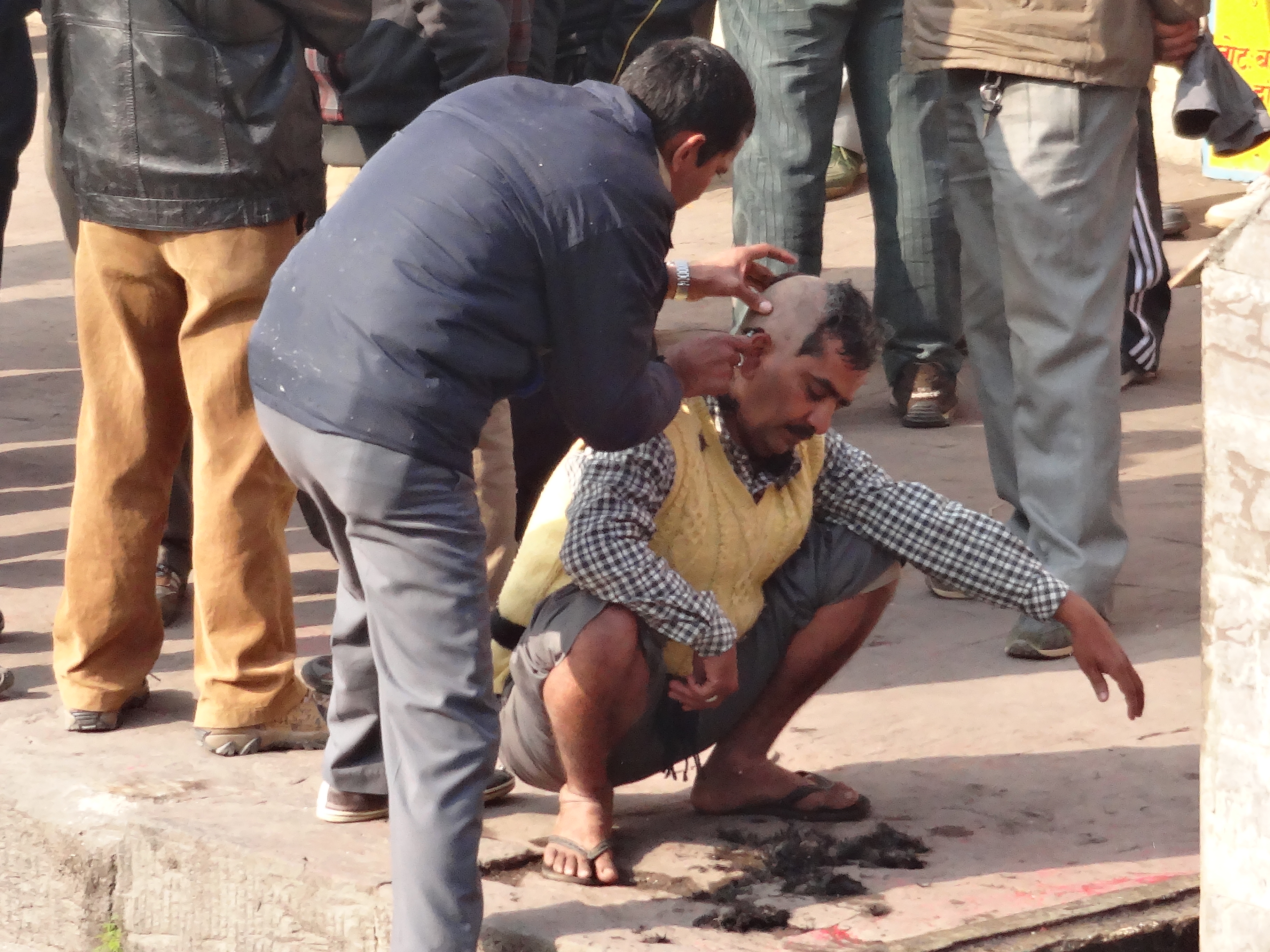
Pashnupati is also a crematorium, and the bodies are burnt on the ghats alongside the river …..out in the open, for all to see.  The mourners gather by the burning pyres, the men shaving their heads as a sign of mourning.  Onlookers are on the other side of the river, at a respectable distance. There were very few westerners.  Just devotees visiting the temple, funeral parties, monkeys, and vendors selling devotional beads, garlands and gifts.  It was busy but not crowded, and we walked around largely undisturbed to look in amazement at the vast array of “life” (and death) going on around us.

Here are some snapshots from the overwhelming array of scenes going on all around:

DSC01414

Crossing the Bagmati

DSC01425

DSC01415

Funeral attendees beside the crematorium ghats

DSC01418

Amongst the crowd, a mourner shaves his head.  Right there on the ghat.

DSC01421

Preparing the wood for the funeral pyre

DSC01423

The body is brought in

DSC01416

the crematorium

DSC01417

In case you are wondering, I was far enough away that I didn’t feel like I was intruding, otherwise I could never have taken the photos. It was so strange and so real at the same time…everything being played out in the open.

DSC01433

Back on our side of the river, holy sandhu men sat…..

DSC01440

….and the cows and pigeons hung out in peace…

DSC01442

….most of the time!

DSC01446

In front of the Hindu temple.  (Non-Hindus not allowed.)

DSC01450

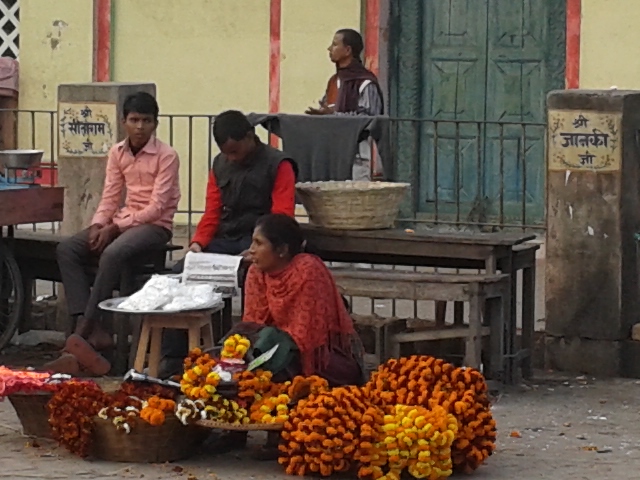
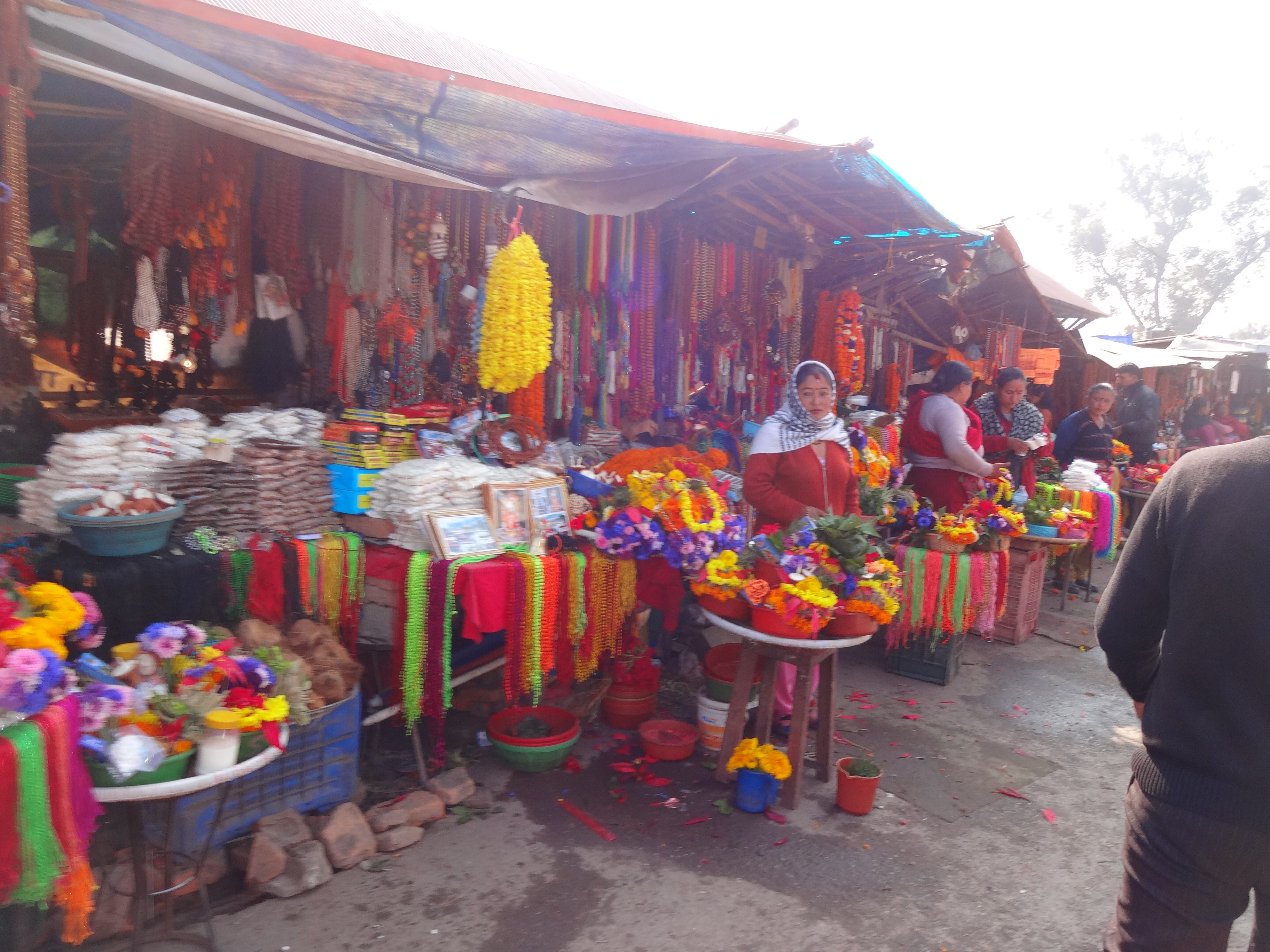
A whole lane of flower sellers lined the entrance to the temple.  Our first and last view in the Pashnupati complex.

An A-peeling Cultural Discovery….


We recently had the opportunity to go to a traditional Newari ceremony, which was a great experience, but it did dig up a lot of challenges on the cultural context front.  So to continue the theme a little from my last post, here’s the story:

My coworker showed up with a very pretty red and gold envelope with my name on.  She explained my “daughter’s getting married party” and that I was invited to come to the event.  I thought I understood that it was her daughter’s engagement party.

I took the invitation home, but it was written completely in Nepali, so I couldn’t understand a word.  I showed my Didi as I was looking for advice on what to bring.  She looked at me and said, “Mam, its Newari wedding.  There are two daughters.”  Oh..I thought.   I misinterpreted her words.  She had not said “my daughter’s getting married” but “my daughters (are) getting married”… ok.  Got it.  The next morning I spoke to an American and she told me that it was a Newari custom for the girls to both marry because it saved problems with widowhood, should the husband pass away.  (Widows are vilified here.)  So ok….the two daughters were getting married to one man, or they were perhaps marrying both husbands at the same time.  Something like that, I wasn’t sure.

Next day I spoke to my Didi again.  She told me “no, no…no husband, mam.  They marry proots.”  Now I know that Nepalese have a problem with “p” and “f” (just like Filipinos and she really must have meant “fruits”.  But of course, that made no sense, as no-one marries a fruit.  “They are marrying fruits?!”  I asked, sure I was getting it wrong somewhere.

“Yes, mam. Proots”

“I don’t understand.  They are marrying fruits.  Like a banana?  I don’t get it?!!”

“No not banana, mam.  Bell.  They marry bell.”

Now I’m really confused.  “They’re marrying a bell or marrying fruits?  There’s no husband…and its a marriage?”  I gave up.  I was obviously missing something.

I asked for a recommendation for a gift.  My didi suggested maybe some toys, or we could give some money in an card. Now I was buying toys as a wedding gift.  Why?

“They are little girls, mam.  You can buy toys or give money.  Now people prefer if you give money”

So now we had a child wedding…two child brides and no husband.  It was getting really odd.

It was only in the car on the way back to work that my driver explained it so I understood.  Young Newari girls are married before puberty to the nut of the Bel Fruit, an actually fruit, which is worshiped as a symbol of Lord Vishna. And, yes, the ceremony is done to prevent widowhood. As they are married to an immortal god, the Newar girls never become widows should their human husband die first, for they are still married to the god.  In the same way it helps to prevent child marriages – there is less need to marry very young girls since they are already married to the bel fruit and, later, to the sun, and are protected.  So actually, traditionally, Newar girls marry three times in their lives. The first marriage is to the bel fruit, then they are also married to the Sun and finally when they marry a real man, it is their third marriage.  So who knew?!  Its a little strange…and also strangely practical…and I learnt something new this week.

Sign Language: Cultural Context


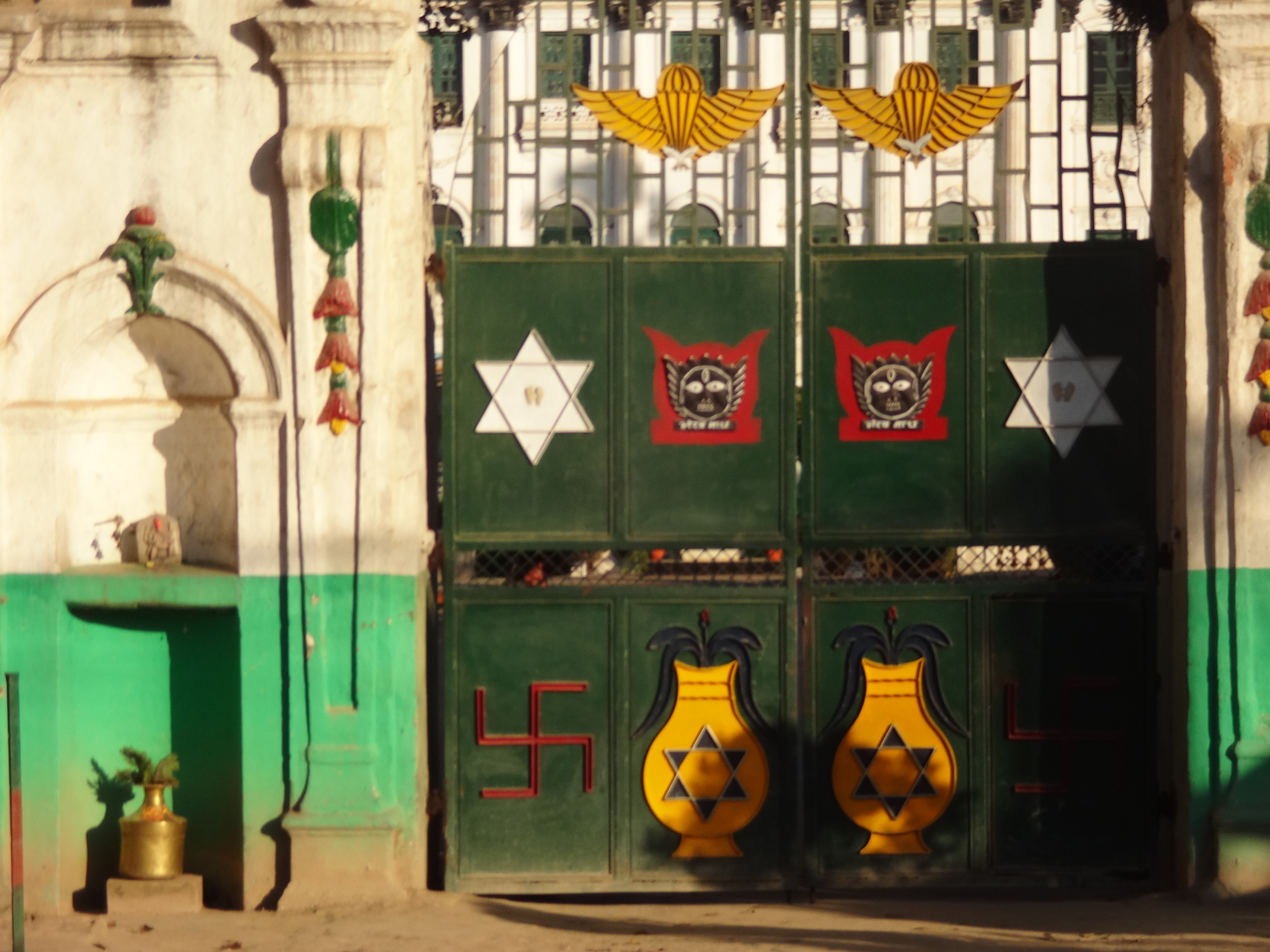
DSC01454

I first saw this gate on the first day or two after we arrived in Kathmandu. I did a double take. It was extremely strange to see the Nazi Swastika and the Star of David side by side. Just bizarre really. But moments later I remembered reading that swastikas are all over Asia, but the meaning was very different. However, I had no idea that the hexagram (or six pointed star) was anything other than Jewish….but here they were on the same gate.

The Hindu (or Buddhist) swastika is a symbol of luck.  It bestows auspiciousness on people or things that it embellishes, and that explains why you see it so often on residential gates or painted over shops.  Its so ironic that the Nazis hijacked the symbol so that Western eyes see it as a mark of evil, and yet its original meaning is so different. Slowly, I have become less startled when I see it around.

The Buddhist Shanmukha, or six-pointed triangle, has a similar spiritual meaning as the swastika, so it makes sense that you might see them side by side.

In Buddhism, I understand that some old versions of the “Tibetan Book of the Dead”, contain a hexagram with a Swastika inside. If I see one of those, I’ll let you know.

The post is being revisited for https://dailypost.wordpress.com/dp_photo_challenge/symbol/ as I cannot think of a better example in all my travels.

Live Television


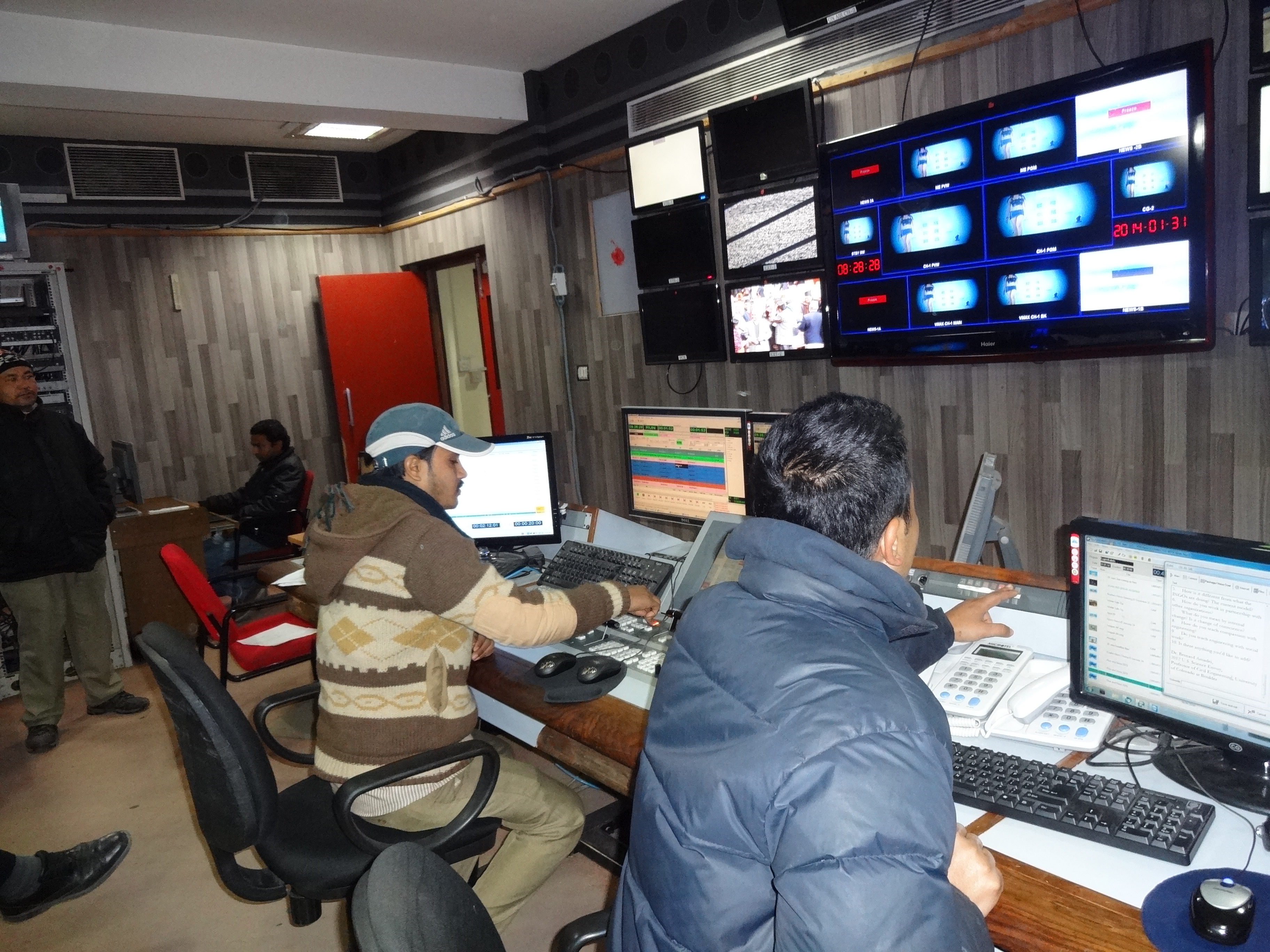
DSC01410

I had an opportunity last week to go along and see the live broadcast on an interview on the English-language morning show “Rise and Shine”. They were kind enough to let us into the control room during broadcasting and it was very interesting to watch. I had never been so close to a producer at work, and I watched over his shoulder as he controlled the camera, monitored the teleprompter, spoke into the interviewer’s earpiece, and ran breaks for commercials.  The TV offices were shabby but the broadcasting and journalism was very professional.

Launched in 2003, Kantipur TV was the first commercial television station in Nepal, and then quickly behing it a wider, more diverse selection of broadcasting channels emerged. Prior to KTV, only the state-run Nepal TV offered programming and, as is often the case with government-run monopolies, it was essentially a government mouthpiece and the only voice of news and opinion that the Nepali public heard.   In just 10 years, broadcasting has opened up enormously.

DSC01412

it was a great experience watching a live television show at work. But I think my greatest takeaway that morning was yet another insight into how many changes this country has undergone in the last ten years and how easy it is to forget that in just a few years its gone from a Kingdom to a Republic to a fledgling democracy, and with that its undergoing so many changes …. free journalism being one of them.

The Big One


DSC01403

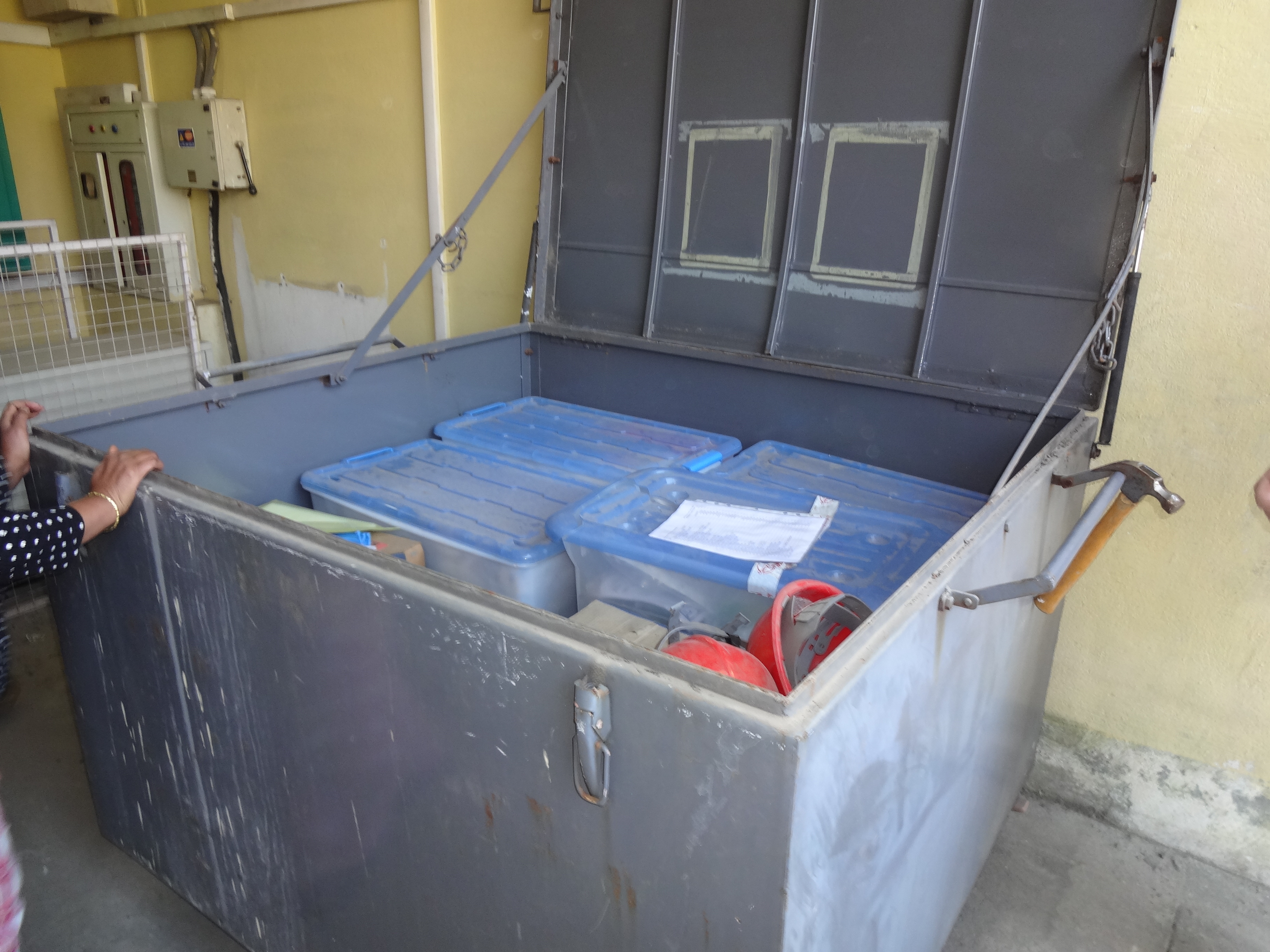
Opening that baby up….

We live in an earthquake zone. A high risk earthquake zone that is due to experience “the big one” every seventy years or so. The last big one was in 1934…you do the math. It’s overdue. Knowing this is part of the Embassy’s strategy to try and keep us safe, and with that policy comes an “earthquake kit” that we store in our garage. It looks a lot like a dumpster, but its full of essential supplies in the event of an emergency. What’s more in contains supplies for about four families. We are the rally house for our Embassy community as our home is deemed the most earthquake resistant in the area.

Annually we’re required to do an inventory of the contents to make sure they aren’t expired, damaged or missing. So this past weekend we did a thorough check of the contents. What’s in it?  I wondered the same and opened the big metal bin to go through everything. There’s mats, blankets and tents for sleeping, water and MREs (meals ready to eat), a wide selection of medical supplies, ropes, axes, hammers, crow bars, torches, batteries, even pens and pads of paper for leaving messages.  We did search and rescue training back in October, which teaches the basics on what to do in the immediate aftermath of an earthquake.  The helmets, head lamps and crow bars brought up memories of training on how to move huge concrete slabs with wedges and levers. The list of items was long and it was a reality check of what it might really be like if a disaster happened. It so hard to imagine a scenario when the contents of the chest are all we have to survive for an indefinite period of time. Let’s hope it never happens.

DSC01404

Everything was dusty from sitting around for a year in the world’s dustiest city (almost)

DSC01407

DSC01405

Items were stored in plastic containers that looked like they needed replacing more than their contents.

DSC01406

Checking items off from the list

According to this blog — at least lately — my life is one long resort visit. Its not. But its more fun to post about the joys of life than its problems…at least that’s the way it works for me. Occasionally, I think its interesting to share some of the less romantic, gritty realities of living in a developing country. At least, a few of them as the pertain to me. Earthquakes are the flip side of the coin to living in this extraordinary place.