Siquijor: New Year’s Eve 2012


Lechon Celebration

Serving Lechon on New Year’s Eve

New Year’s Eve is often an anti-climax for us. After all the pre-Christmas activities, Christmas, and birthday and anniversary stuff…by New Years Eve we’re usually ready for bed at 9pm. However, this year we were in no place for an early night. Coco Grove had a big dinner buffet planned and a self-proclaimed show extravaganza. Who were we to say no?!

We got a great table near the front, ate a very decent buffet dinner and everything was so pretty with lantern, candles and flowers. It was, however, nearly impossible to get a drink. But that’s big party events for you. Almost no one does them right….! I waited 30 minutes for a bottle of oxidized white wine, sent it back and ordered red. Half an hour later, we got a bottle of chilled red wine….but I digress…let the show begin!

_COX4667

Traditional dance routine: wonderfuly colouful, deeply cheesy, and joyous all at the same time!

_COX4657

…and then some….(note:  click on the photo to get a close up.  It’s worth it!)

_COX4651

Plus a little bit of earth music made for a very entertaining show.

But what I liked the most were the wish lanterns. Its a Filipino tradition to light them and make a wish, and set them airbourne carrying your wish up into the sky. They are simple paper lanterns with a wire base that holds a wad of fuel-soaked cotton. It takes a little practice to make them take. They gave instruction, but most people needed more assistance and most lanterns crashed and burned after a few seconds. However three did take off and soar, floating and throwing their light like traveling stars until they were no longer visible.  Latham’s was one of them:

Wish Lanterns on Siquijor

Lighting wish lanterns


_COX4688

I loved the focus and lantern light as everyone tried to make it work

_COX4695

_COX4696_2

Latham’s lantern rising about the sea. Hope his wish comes true…

Christmas Cupcakes


Photo-0045

Making lots of Rudolph cupcakes!

I’ve never done a cupcake tree before, and I got it into my head this year that I’d like to do one for Robert’s FM department Christmas party.  There’s over 120 employees that attend.  That’s a lot of cupcakes, but when I broke it down into manageable chunks it didn’t seem so scary.  I had a lot of fun last year making a themed Christmas Cake, but I wanted to see what I could manage this year with little individual cakes.

Unlike last year, I didn’t have the help from Latham, who was tied up in school activities.  So I baked the cupcakes a couple of weeks before and froze them.  Icing can easily be prepared a week in advance, and I spent a couple of weeks sourcing all the various candy embellishments that I needed for the designs I chose.

The day before, I sat down with everything and started the production line.

Photo-0046
There was about three dozen melting snowmen, at least a dozen Rudolfs, fluffy Christmas sheep, iced candy canes, Christmas present bows (and a number of other designs) that needed to be pumped out.  It was fun but — as always — more time consuming than planned.  It took 5-6 hours to get all of them finished and packed up for transportation the next day.  Just getting the cakes down in the lift to the car was a production.

Here’s the final result:

FAC 013 FAC 016

I think it went over very well at the party.  (But note to self:  Learn from the last two years!  Frosting and candy do not mix well with 80 degree heat, no matter how well I think I’m transporting them in AC-controlled conditions.  The second they get out into the humidity everything starts sliding apart!)  Next Christmas we’ll be in Nepal in cool weather, so  problem solved I guess…

How is the Taste Regarding Your Food?


Walk into a store and you will typically be greeted by a wall of staff. But do will they know what it is that you’re looking for?

It takes a little while to get used to the service experience here.   It starts with the different use of English. I’m not talking about the distinctive accent or pronunciation, although that certainly adds to things.  Its the mixture of missionary English, American English and unique Filipino phrases, that sometimes ask the ear to do a double take. Always polite, always sincere, the phrase comes at you, and the brain says “What?!”

“How is the Taste Regarding Your Food?” was a recent inquiry put to me from a waitress in Shakeys Restaurant.  She was checking whether we were happy with our food.  Its a much more formal way of asking “Everything ok?”   And a much quirkier way of asking “Is everything to your satisfaction?”  It sort of nailed it for me with the language barrier.

And there are other new experiences to handle when you first arrive and are purchasing something:  anything, like a cup of coffee or household supplies.  I can’t remember exactly where we first did it, but our initial experience at the department store in Metro Market is the one that I remember best:  You’re standing at the cashier island, with one person in front of you. There are two employees and two cash registers.  The first employee is involved in ringing up the first sale.  So you stand near the empty register and hand your item to the second employee — the one not doing anything — and hand her your item expectantly.  She very politely signals that the other employee will handle your transaction and steps back.  (It took me two tries at this on two separate occasions to figure out that the second person’s job was as bagger.  Baggers don’t use the register. Cashiers don’t bag. Get used to it.)  Its your turn and both ladies do their jobs and you hand over the money, then she says it:  I receive one thousand pesos, mam.  Or I receive the exact exchange, mam.  She’s signalling the denomination for the cash received and it has to — always — be stated out loud.  I don’t bat an eye anymore when it happens but it takes at least a dozen transactions to get used to.  Orders are the same way in the restaurant:

Customer:  Can I have a cup of black coffee please?
Waitress: Yes mam.  I repeat your order.  One cup of black coffee.  Thank you.

I repeat your order, Mr President…..

If you’re not expecting it, it throws you, especially if your ear is not tuned to the accent yet.  Your order will *always* be repeated back to you at every restaurant, every time.  No matter how long or short your list.

Transactions here are very formalized and regimented. You see the rows of employees outside the store first thing or at shift change, the supervisor drilling them on something, probably the same thing they were drilled on yesterday.  Cashiers are taught to ask customers if you have the company loyalty card at the beginning of a sale.  But if the answer in no, that conversation is over.  They don’t try and get you sign up for one (thank god!) but they can’t answer you on how to obtain one either. (No one trained them on that).

The whole transaction experience is a reflection of the values of where you are, where ever you are.  It is frustrating when there are five people serving you, but none are able to help you, or no one can think outside of the box to solve your problem.  But compared to other places where no one can be bothered to serve you, there is no one to serve you, or where you have to beg for a menu – here its a positive pleasure.  Returning to the Philippines after Greece to smiling, courteous faces is a bit of a relief.  Of course I’d like competency with courtesy and friendliness, but two out of three ain’t bad!  Its also a striking contrast to have a minimum of two assistants in a world that’s heading increasingly towards self-check out.  How’s the service where you are?

An Acquired Taste


Balut. The notorious Filipino street dish. Its a duck embryo inside of a hard boiled egg. A powerhouse of cheap protein, but maybe not to everyone’s taste.

American/European meat preferences are quite different to mainstream Filipino expectations.  Filipinos use every part of the animal to cook, and are very creative in utilizing body parts that westerners turn their nose up at: tongue, heart, lung, feet, bone marrow, cartilidge…you name it.  Most westerners squirm and make faces at just the thought of grilled lung on a stick.  I don’t eat meat at all, so I take the western luxury of choice and preference to a whole new level.  Vegetarianism is truly a luxury for those that can afford it or, for the poor or devote (not in the Philippines), the most dire and humble of diets.  An interesting contrast.

No-one I know has been hungry enough to eat anything they can find or choose to eat only lentils because of necessity.  I appreciate and admire the filipino ethic of zero waste, but as I won’t even go near Western meat recipes, I remain an interested onlooker in all of this.

The Filipino diet may originate from poverty, but middle-class and rich Filipino palates are more open to diverse meat dishes, so it a cultural thing as well.  The western palate largely confines itself to flavourful tender, lean cuts.  However tasty the flavour potential may be, westerners aren’t usually willing to dig around and work for their food, or to chew and chew to extract it.  This means no bones, no fat, no poking around with a fork to pull out the roe.

Filipino flavours also tend to be on the sweet side for Westerners.  My European palate thought Americans added sugar to everything.  Then I came here.  The bread is sweet, the mayonnaise is sweet, the meat sauces have a lot of sugar in them.  Unlike the Chinese sweet and sour concept, there less balancing of flavour.  Filipinos do add kalamansi to many dishes (its a small native lime) but its not always enough in my opinion.

So when a newly-arrived American family that has never lived overseas, is served chicken adobo by their newly-hired Filipino cook, there can be some surprises on both sides.  The cook may feel she’s done a good job of serving a tasty economical meal.  The American is wondering why there is a pile of bones and tons of rice.  Its a common point of contention, and some helpers who have worked for American families for years have learnt about American preferences.  Many others haven’t.

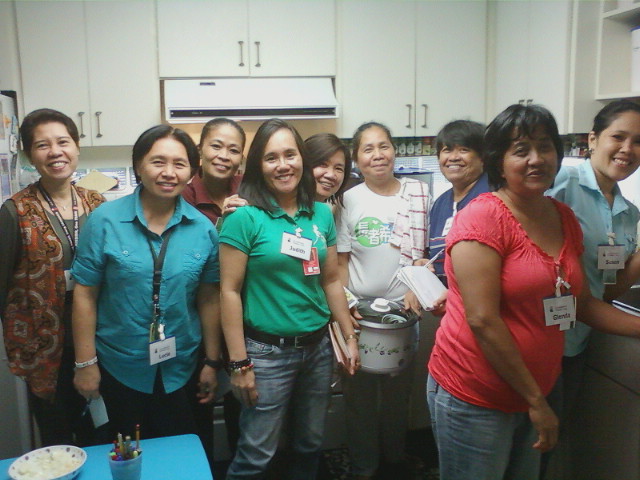
Which way is better is irrelevant if you’re not serving food that your employer likes.  So we decided to assist a little and run a cooking class for helpers on how to serve classic Filipino dishes to Americans.  It was well attended, and everyone had a great time.

The ladies from our Filipino Cookery for Americans class

I popped in from time-to-time during the work day to see how it was going.  Of course, the class was in Tagalog, so I could only watch and couldn’t understand the instructors message.  I did wonder a little if it became an exchange of regional differences on the each dish, rather than a lesson on American preferences.  Or perhaps it was both, I can only really learn from the sponsoring families whether anything has changed at the dining table.  Time will tell on that.  However, the morning itself was great fun, and a it was a privilege to be invited to eat with everyone at the end of their efforts.  I also learnt how many food items I mispronounce!

On the food front, personally, I continue to be mostly uninspired here.  Its been fun cooking with the tropical fruit, but I’ve found the lack of fresh vegetables challenging and without easy access to markets, my food imagination has suffered. I’m not the cook my friends might remember, and this is the first country that I’ve lived in where I haven’t learnt to prepare the local dishes.  I don’t expect that to change before we leave, but hope Nepal’s temperate growing climate and more vegetarian-based cuisine will inspire me again.

P.S.  Here’s a link to an interesting BBC article on Filipino cuisine:  http://www.bbc.co.uk/news/world-asia-19541960

P.P.S.  No, I won’t be trying Balut any time soon!

Would you like fries with that?..


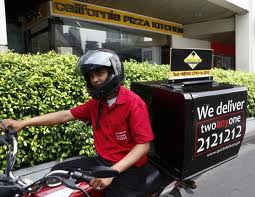
There are lots of lots of opportunities for home delivery of food here in Manila.  Just about everyone does home deliver … even McDonalds….even non-chain, independent restaurants.   You see the delivery motorbikes all the time, making dangerous moves in and out of the traffic.  We don’t really do it usually, but last night was an exception.  Latham had his final TOK rehearsal with his presentation partner, and I bought them delivered pizza to keep ’em going and keep ’em focused.

When the pizza showed up, I didn’t give it much thought.  It was just a pizza delivery. But what transpired was really adorable and sort of left me gaping.  The conversation went something like this:

Pizza Delivery Guy:  Good evening mam.  I present to you your pizza delivery.  Presenting your ham and bacon pizza, mam. <removes insulated carrier from his insulated back pack>

Me: Oh, er, thank you very much.

Pizza Guy:  Your pizza, mam, is delivered to you at 7:03pm, mam. A delivery of 24 minutes, mam.

Me: That’s great, thank you

Pizza Guy:  <removes pizza from carrier>.  Mam, this is your HOT on the DOT pizza. <he whips out a small plastic circular device and holds it over a thermal circle on the box. The disc reads “hot”> As you can see it is delivered Hot on the Dot.  <He points to the circle>

Me:  Oh, thank you, that’s great.

Delivery Guy: <opens box letting out half of the heat> Your pizza mam.  With no mushrooms as you asked.

<produces another box> Also, mam, your pigs in a blanket, mam.

Me: Thank you

Delivery Guy: <whips out a bottle from a previously unknown cooler on his other side>…and your Pepsi Max mam.  I must caution you to take care when removing the lid,  mam, to avoid accidents.

Me: Er, yes, good idea.  Let’s take care of the eyeballs. How much is that?….

Visit to the International Rice Research Institute


The International Rice Research Institute (IRRI) is about a 1.5-2hr drive from Manila.  I took a group out there this weekend to explore their facilities and meet some of the staff.  It turned out to be a great day!

IRRI was founded in the early sixties to help increase rice yields and improve rice production worldwide.  Their facility is huge with funding and staff from all over the world.  The compound includes offices, laboratories, housing and recreational facilities as well as acres and acres of experimental rice plots that monitor the growth of different rice varieties grown to combat challenges such as drought, soil salinization, pests and diseases.

Acres and acres of experimental rice crops

It also has the world oldest continuous rice cropping experiment which has been running since 1963.  For almost 50 years, the paddy has produced 3 crops a year in an experiment designed to teach scientists the effects of intensive cropping on long term sustainability and soil quality. It was developed with grat foresight in an era where sustainability was not a common area of concern, and has been a useful tool in combating some of the negative effects of the 1960s rice revolution that dramatically increased rice production by introducing new, higher yielding, non-local rice varieties.

Continuous high yield paddy

The long-term high yield experimentation fields

As these new, “super” varieties were introduced, IRRI also started a program to collect samples of ALL rice varieties from all over the world in an effort to save them from extinction.  They realized that varieties long grown in a specific location may offer have developed resistances to local conditions that the new “super” varieties had not.  Local varieties were disappearing and along with them their local “knowledge”.

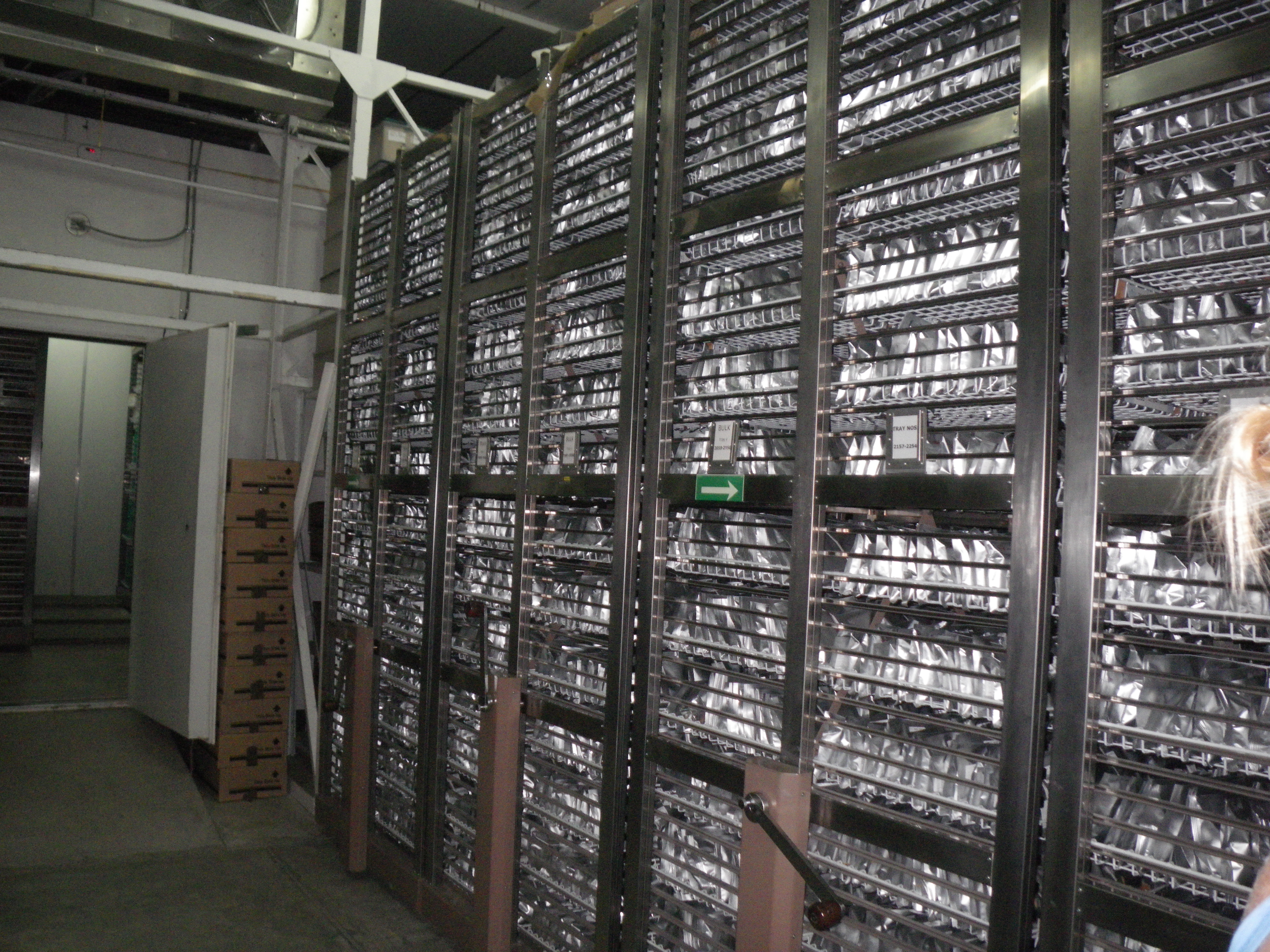
The IRRI Genebank now stores over 117,000 varieties of rice in specially designed cold storage rooms.  We visited the Genebank and stepped inside the 4 degree Celcius storage facility, which was like a library with rows and rows of silver pouches, each containing samples of a different variety of rice.  Interesting but too cold to hang out for long!

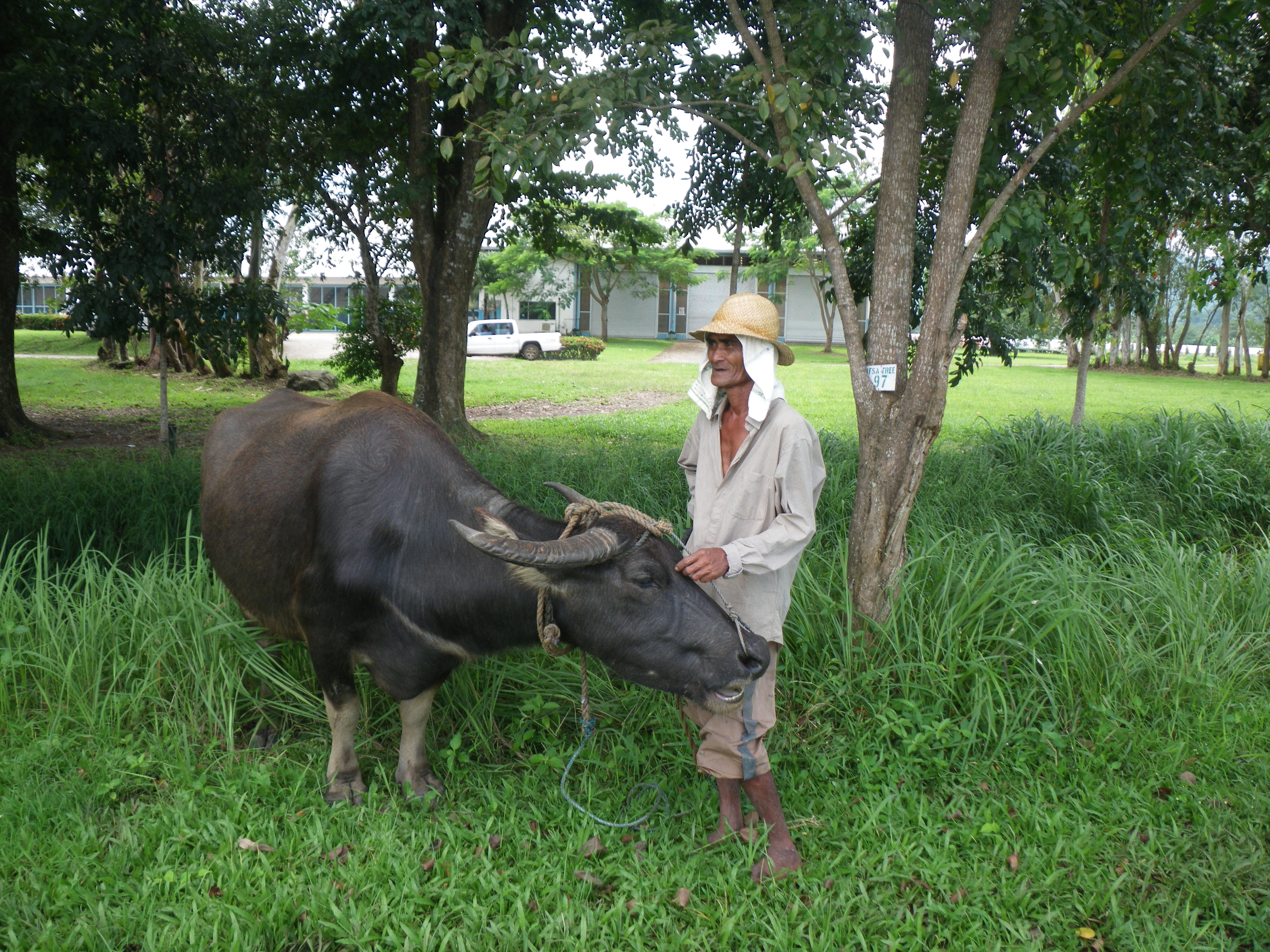
The last educational part of the day was a hands-on trip outside to learn about planting and cultivating rice.  Our group got to experience pulling a plough behind a carabao, as well as an power cultivator.  Others planted rice in the prepared mud.  Messy for sure, and a bit hazardous, as the carabao frequently stopped to “fertilize” the mud as he worked….but a lot of fun for those that didn’t mind getting muddy.

IRRI threw us a really nice lunch in their recreational area.  They were such great hosts and I know everyone really appreciated it.  The kids got to swim in the pool and cool off and around 2.30pm we sent off for the last part of the day – a short tour of the Makiling Botanical Gardens.

The tour lasted around an hour. The gardens were pretty, but more of a nature park than a botanical garden, in my view.  But certainly worth seeing and they made a pretty ending to a well-balanced day.  Great day out!

Discovering Divisoria


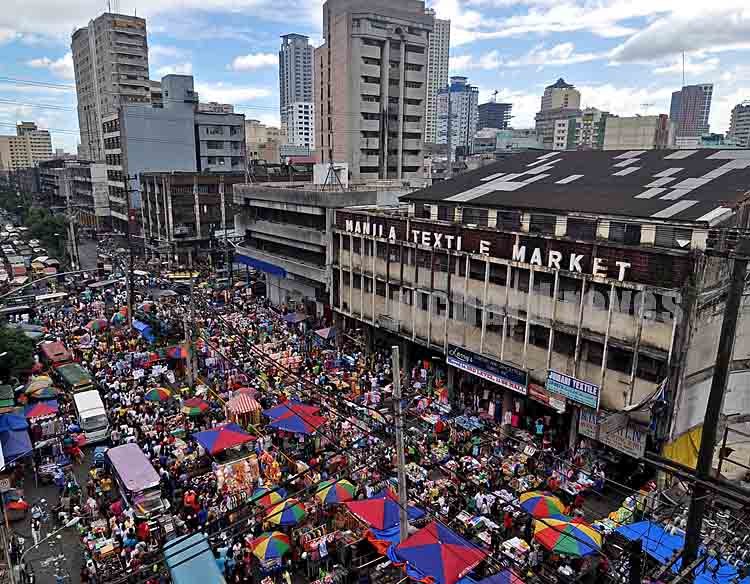
Part Two of our marathon party shop last week was to buy party decorations and other supplies from Divisoria, a sprawling street market, where you can buy anything and everything in different colours, shapes and sizes at vastly lower prices than anywhere else in Manila.   I’ve lived here for almost two years and yet last week was my first visit.  I’ve wanted to go for a while, but I knew it was best to tackle it with an experienced person (at least at first) as I don’t exactly blend in around there.  Pickpockets abound, not all vendors are honest, and its a real labyrinth if you don’t know your way around.

Its an assault on the senses in every possible way.  We visited after the heavy rain, so were lucky to find the streets unflooded, just really muddy.  Garbage is piled high in the middle of the streets, making the center traffic islands smelly and slippery.  Careful crossing the street!  Drains are clearly blocked by the debris, dramatically compounding the flooding problems.

Street with garbage-strewn centre island

Fortunately, the market wasn’t too busy.  At 10am it was still fairly civilized.  We picked our way through the narrow streets past distinct groups of different vendors:  car parts, fruit sellers, shoes, you name it.  It was hard to stay focused and move purposefully ahead with all the shiny objects beckoning in your peripheral vision, but we were on a mission looking for arts and crafts supplies, cheap toys for race prizes, and fruits and vegetables for the community dinner.

Meanwhile, my inner child is streaming my brain with dialogue like: Oh look at those shiny beads.  Why didn’t I realise before that I need shiny beads in fourty five different colours?  Wow, they’re so pretty.  I want to touch them. What can I make with all those beads?  I should learn to make jewelry…Oh look at those feathers… forty five different kinds of feathers….  But the first rule of shopping in places like this is to stay focused and look purposeful, so inner child suppressed, we headed in a small covered mall that sold crafts and toys.  I squeezed down the narrow rows between the warren of stalls and we found everything we were looking for within a few feet of each other. Goodness know how far back the labyrinth went, we never went the full distance in.  Instead we doubled back and headed to the fruits and vegetables.  The difference in quality between what I find in the grocery store and here was astounding.  The produce didn’t have the fresh dew still dripping from the stalk like in Greece, but I’m guessing most stuff was picked yesterday, not last week, unlike the unhappy looking veggies we so often see in S&R.  The prices were dramatically different too:  seedless grapes in Divisoria 120 pesos/kilo, in S&R about 300/kilo.  Carrots here, 30 pesos/kilos in S&R, 110 pesos/kilo.  Everything was considerably fresher and at least half the price.

Unfortunately, like the meat market earlier that day, going to Divisoria is a production and you need a crew to help.  So its not a weekly option for me.  However, I will certainly return before we leave, perhaps to look again at some of those shiny beads and heaven knows what else!

Shopping Like a Local


I’ve always shopped in the markets in different countries I’ve lived, or if I go to visit a new country, I make a b-line for the market to learn more about where I am through what’s available to eat.  As all market lovers know, its usually the best place to get the freshest food at the cheapest prices.  One of the challenges of living in Manila for me has been the strong lines of distinction that exist between expat shopping and local shopping – that’s geographically, product availability, and prices. Its not that we can’t shop in local markets, its just that after the first few months of making the effort to do so, it became more and more of statement rather than a practical way of getting in supplies.  It just isn’t easy.  There aren’t any within easy reach and people who live in upscale areas (like us) simply have a full-time cook and maid to do it for them.  Or they order from fancier grocers.  The rents are sky high here too, which makes it unaffordable for retail outlets to sell everyday items.

So I was glad to have the opportunity to go market shopping last week with a couple of filipina helpers from Embassy families who were helping us with the food for the Community Welcome party menu.  The first stop was a meat market in Pasay where we stopped to buy chicken and pork.  I’ve been to these markets before.  If you haven’t experienced the world of raw meat without refrigeration, stainless steel and gloves, it can come as a bit of a shock.  At each vendor, all parts of the dissected carcasses are piled — by body part — in large piles next to each other.  Aside from the usual cuts of breast, thigh, wing etc., you could buy chicken feet, necks, blocks of chicken blood (for bbq I learnt) and various cleaned innards.  Scrap bags were also for sale, containing odd trimmings, bones and discards from other sales for the poorest customers to make a broth.

Price was by negotiation, always.  Our cook haggled in Tagalog at several different vendors for 6 kilos of chicken, and finally settled on one that gave her the best price.  This guy however gave her a hard time.  He didn’t want to let her pick the individual wings and wanted to pour the raw “juice” in the tray onto the scale to include it in the weight.  She gave up on him in disgust and found a more helpful vendor who worked with us to prepare the chicken order.  It took quite a while and my eyes strayed around me to watch all the different scenes going on.  Butchers carried whole pig carcasses over their shoulder.  Customers rummaged through the raw meat on display like they were picking through the sale rack at Nordstroms – arm deep in different choices – seemingly unaware that they were handling raw meat.  Across from us a chicken vendor was piling cooked rice on half a dozen battered metal plates.  I wondered what he was up to until I notice a single burner and saucepan bubbling below the counter.  He’d been throwing meat scraps into the pot and was now ladling chicken bones and broth on to the rice plates.  Breakfast for the workers, I guess.  You would have to be very hungry to find it tasty, so I was in no position to judge.

I would shop here if it was easier and I had a little more time and training from a local.  You’d need to know who the better vendors were and learn how not to pay the expat premium prices.  Its not a realistic option this time around though.  Hope I can crack that nut in Nepal.

Flight of Fancy?


It’s been quite a summer.  During the last two months I have traveled on planes, trains and automobiles all over – not to mention 150 miles on foot.  I’ve eaten on the road, on the plane, or at a restaurant more often in a few weeks than I usually do in one year, and mostly the quality of the food has been at least ok, sometimes very good – with the dreaded exception of airplane food.

Bashing airplane food is easy.  There’s no end to the dried out excuses for meals that are handed out on planes all the time, and everyone’s had more than their fair share.  British Airways and Qatar Airlines dished out some pretty standard trays of overheld unappetizing food to me on the eight flights that I took this summer.  Coming back from Athens to Manila on QA, we upgraded to business class where the food was touted as a gastronomic delight from leather bound menus and presented course by course with a flourish.  As they brought out the individual courses, the same stale, dried out fare was served.  This only difference between economy and business class was the linen napkin and the real fork.  It was very disappointing.  Horrible rubbery shrimp, tough chicken, cold grilled soggy courgettes, yesterday’s something….  So airlines – please – it’s not that difficult….especially in business class….why can’t you serve us simpler food of higher quality?  Stop trying to make out you’re serving haute cuisine and then disappoint so incredibly with the execution.   If you promise us “fluffy whipped mashed potatoes” and deliver dried out potato bullets, we notice.  Really.

I had far, far better impromptu picnics on walks this summer than anything I ate on the plane.  Good French bread, tasty goats cheese and a little chutney is so seductive, easy to hold in a chiller, and feels like a treat.  A couple of slices of ripe tomato and buffalo mozzarella and fresh basil – fabulous and it won’t dry out on the tray or taste bad from the fridge.   Eggs are horrible from a holding cabinet – always – bad every time.  Don’t go there.  Yogurt and fresh fruit always delivers if you start with a decent product.  And on the subject of fruit – I had the fruit plate in business class which was prepared in Athens.  I have eaten fantastic Greek fruit all month – melons, peaches and grapes in particular.  They are cheap, seasonal and delicious.  What did Qatar serve?  Inferior pineapple and kiwi.  Why?!  How far did the pathetic things have to travel to ultimately be rejected on my plate?  I know it always comes down to the excuse of cost.  But I refuse to believe it is the only factor.  We need a more modern approach to airline food using fresh, local seasonal ingredients from the country that’s preparing the food, less pomp and pretending to be a five class restaurant in the sky, less attempted (faux) variety and more quality.  Anyone know any airlines that are doing it right?

Palawan Adventures: Part 3 Chicken in a Box


No, we are not talking Kentucky Fried here.  The only thing fried about this chicken was her nerves.  This chicken was more than a little pissed off.  Her roosting place of choice was in a box next to the portable gas oven, where she hid and clucked like a mad thing.  No-one did effectively explain to me why she was ticked off but she crowed for a least half an hour.  Any attempts to go near her could get bloody.  We stayed away.

I’m not sure if she was named or not, but she was one of the many chickens roaming around the house.  I would go down to the beach in the morning and there would be one in the shade under my chair, or another pecking around for the early morning sand crabs.

It wasn’t hard to feel a connection between the food we ate and its source.  We were surrounding by coconuts, chickens, crabs and fish.  All our staples were ordered over the phone and brought in by boat from Port Barton.  But, with a little blood, sweat and tears, we could have mustered up a Robinson Crusoe style meal if we had to.  It was all right there.  So far, removed from KFC’s chicken in a box!