Chitwan: All Things Elephant


elephant ride, chitwan

We headed to Chitwan because we wanted to see elephants. And see them we did. Lot and lots.  They were everywhere.  But we almost didn’t go to Chitwan because of the elephants. To explain, I had heard some not so good things about how elephants are treated. I’d seen pictures of elephants in chains, and I was really starting to doubt whether going to see them was a good idea at all. I asked around but found it really difficult to get a clear picture. My dilemma was that I didn’t want to support the inhumane treatment of elephants, but by not going, we were potentially missing out on one of the best attractions of the trip and, after all, my information was incomplete. In the end it just felt smartest to go and see for ourselves.

We met elephants almost immediately, as our resort had two resident elephants.  Once of which was very, very pregnant.  I heard that she was ready to give birth any day, but unfortunately it didn’t happen while we were there.

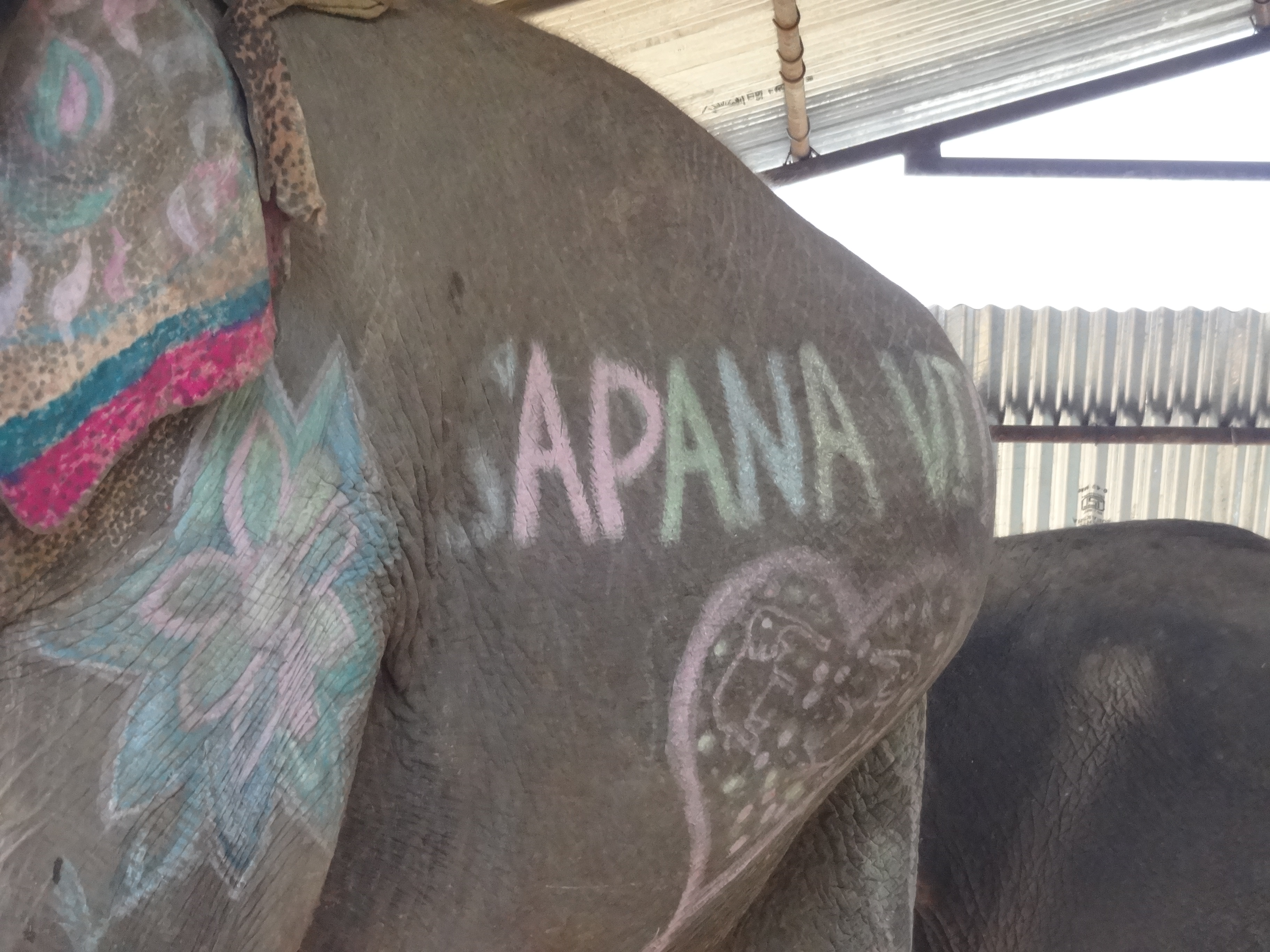
DSC01158

pregnant elephant

Now that’s a real “bump” Apparently it takes 20-22 months to make a baby elephant!

That afternoon we got wind of something going on in the village, and we were told we should walk down and see the Elephant Festival and watch “the game”. It was a beautiful walk down small lanes, through the yellow mustard fields, and there was a buzz in the air as everyone around was purposefully heading in the same direction. The closer we got, the more it became obvious that the Elephant Festival was very popular and there were going to be crowds. We almost turned around as we entered a bottleneck of people near the entrance, but we pushed through to get a quick look of what it was all about.

Sea of bikes

This is just one corner of a massive sea of bikes. Looks like everyone came to the festival on a cycle. There must have been a couple of thousand.

Pushing onward through the stalls on the ground, we headed diagonally over to the elephant soccer game. This wasn’t elephant polo — which I had heard of in Chitwan — but a football game. I think elephant soccer was actually cooler as the elephants kick the ball or whip it with their trunk. There’s even an elephant goalie. They looked like they were enjoying themselves.
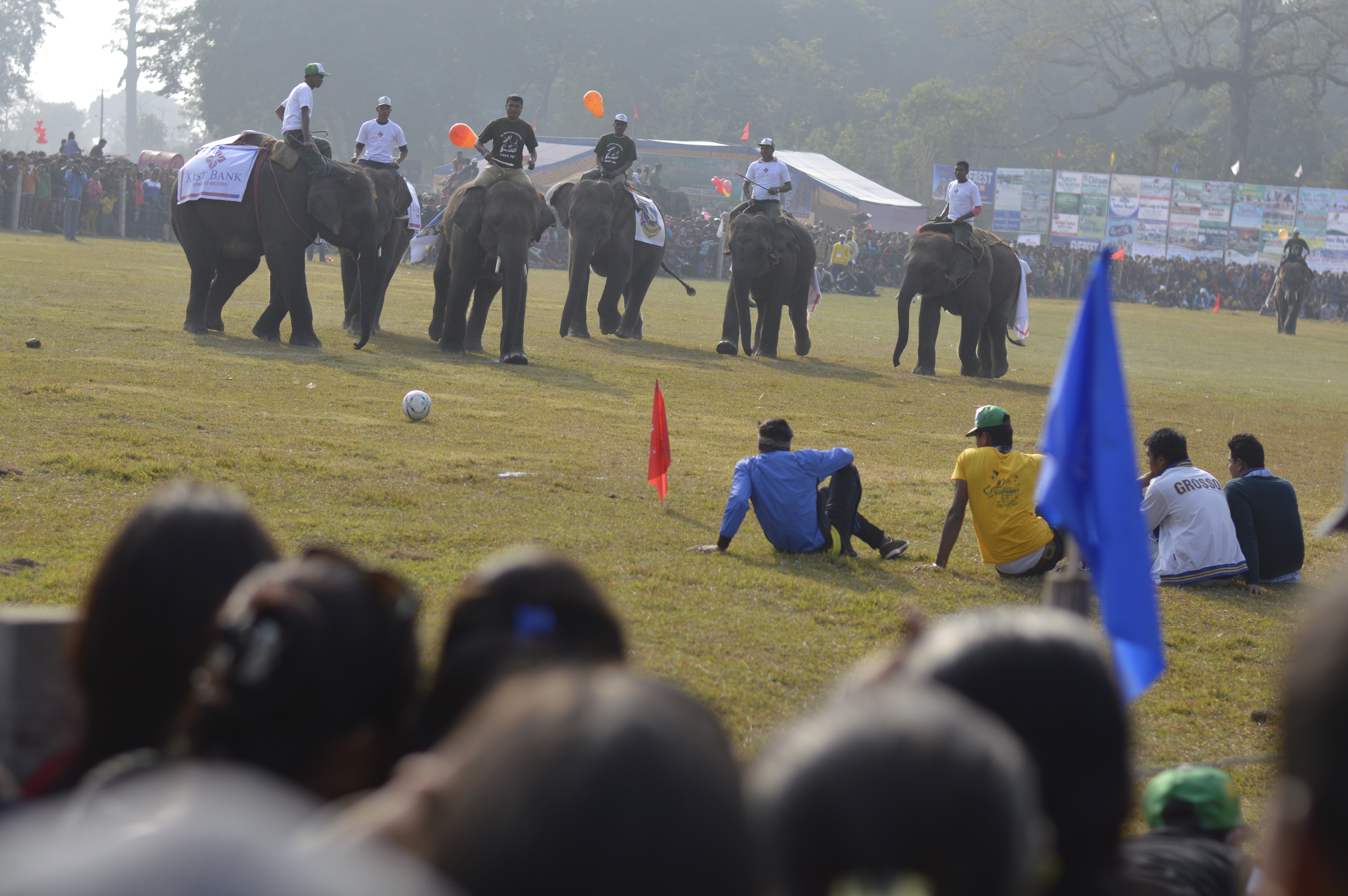
elephant football

elephant soccer

elephant football

Yes, its really an elephant goalie!

It was fun to see, but it soon became tiring stretching over everyone else’s head to get a view and the match looked like it was coming to a close. We headed back to the hotel to book more elephant activities for the following day, and early the next morning, while the mist was still pretty thick, we headed off on an elephant ride into Chitwan Park.
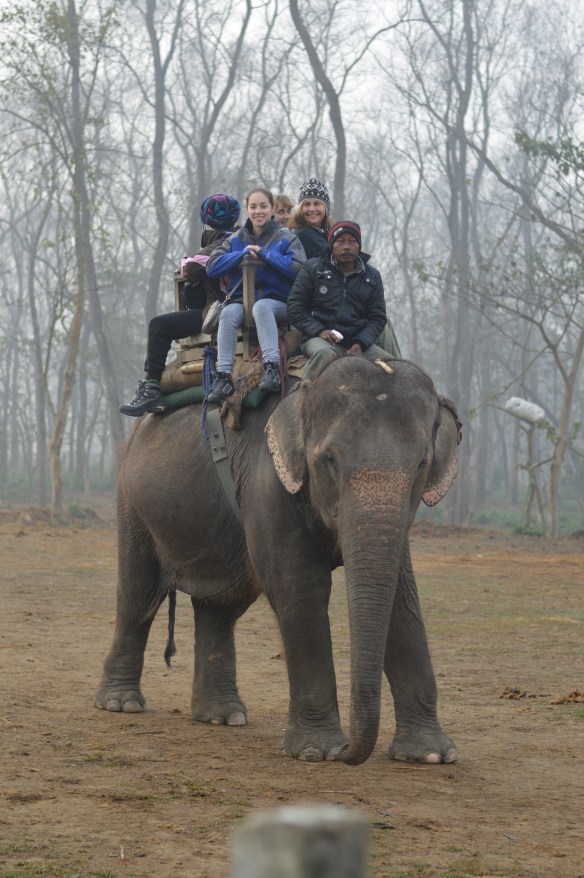
elephant ride, chitwan

With four to an elephant it wasn’t too crowded….but a long way up

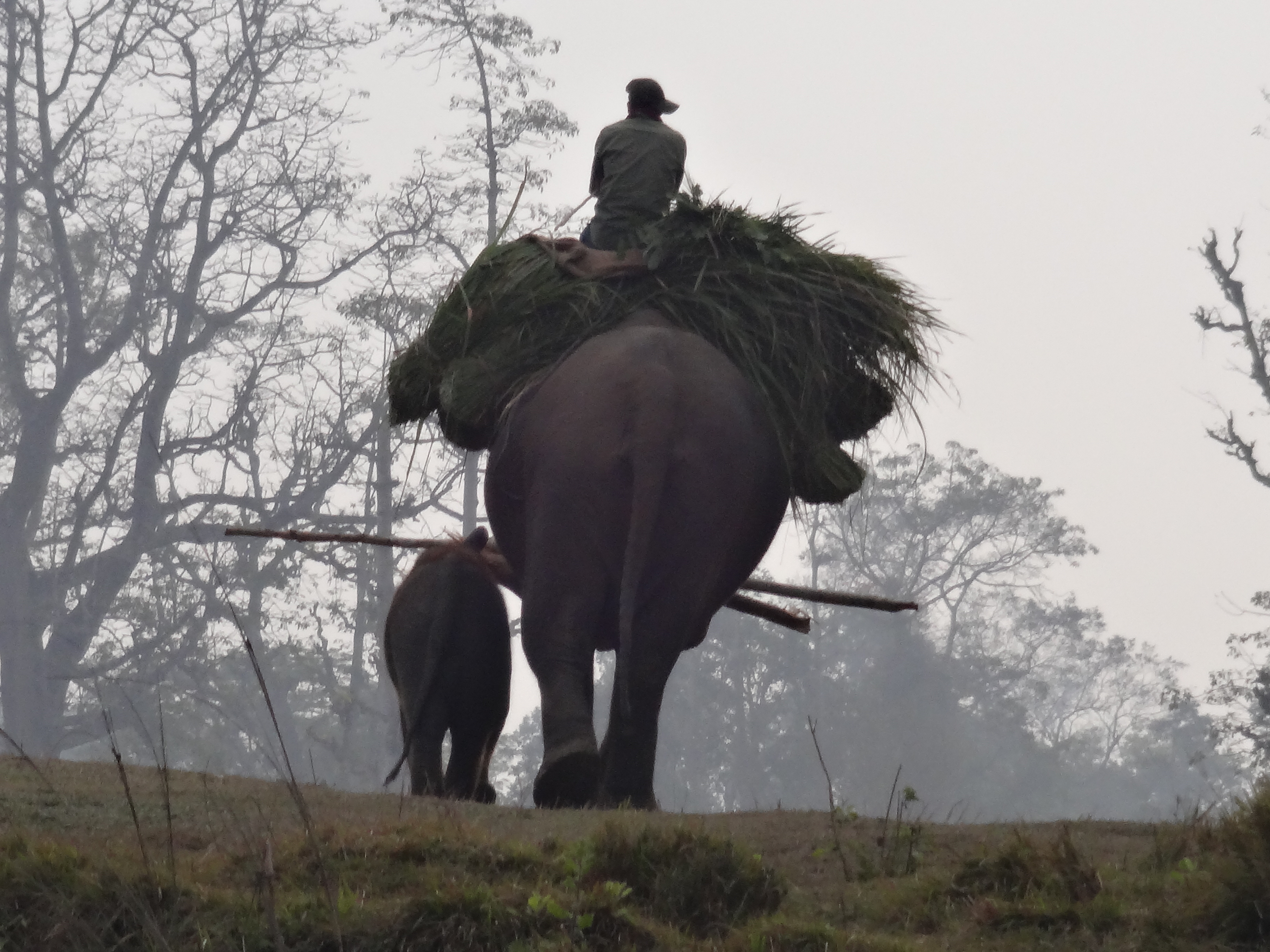
It took a while to get used to the roll and pace of the great animal’s stride. At first I could barely hold the camera, let alone click it, but you got used to the swaying after a while. The best thing of all was seeing her close up. The wrinkly skin and big fat hairs on her head, and the amazingly strong trunk. They are so large, gentle and strong. They seem so kind and intelligent.

We set off into the mist.  The first stop was a river crossing, where she stopped to drink and also to pee. We watched in amazement as she dumped about 10 gallons of pee in 30 seconds…I wouldn’t want have been standing behind her!  Of course, she probably drank twice that amount, but at the back end we didn’t get to experience that in as much detail!!

We rode for about 1.5 hours with about 10 other elephants, all following behind one another at an easy pace.

elephant ride across a river

Elephant ride on the river

chitwan national park

jungle terrain

The goal was to spot wild life, especially rhinos. Mounted on the elephant, we were able to go “off road” with ease, and I’m told that the elephant smell masks the smell of humans and rhinos, especially, are ok around elephants (apparently). I’d been warned that the wild life in the park had decreased significantly in the last ten years, and that spotting a Royal Bengal Tiger, was possible but very rare. We weren’t that lucky, but we did later meant one Dutch girl who had spotted one that day. We did see a couple of different breeds of deer, some exotic birds and then, finally, we saw two sleeping rhinos sleeping under a tree. They looked like a couple: Mr and Mrs Rhino. They didn’t seem bothered by us at all. And we didn’t bother them, we just took a few photos and left.
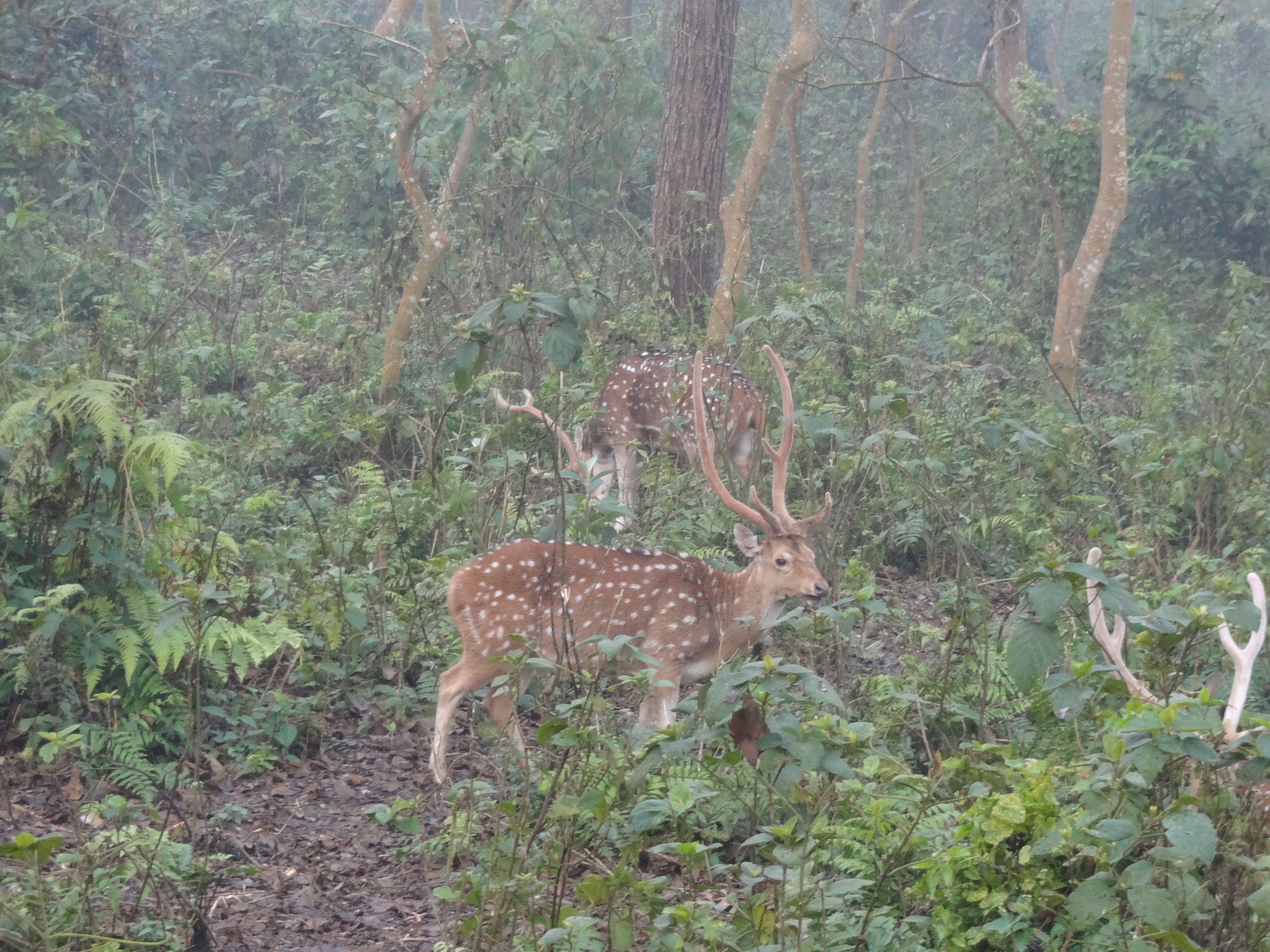
DSC01176

Spotting spotted deer (look at those impressive antlers!)

DSC01185

Mr and Mrs Rhino, cuddled up!

The elephants took several rides that day, I don’t know how long and hard they worked. But they seemed well fed and cared for, and relatively happy with their lot, which was encouraging after some the negative things I’d heard.

After lunch, Jess and Latham were booked to go down and bathe an elephant. Apparently bathing elephants frequently is important. Keeping the folds in their wrinkly skin clean is good hygiene, but they do get cold easily. In December there’s only a few hours warm enough to bathe them, and only if its sunny, or they freeze. We had such a misty start that it looked like the bathing would be canceled. But miraculously the sun came out and the kids put on swimwear and headed into the river on the back of a small elephant. It was so fun to watch! The elephant seemed to know the bathing drill very well, laying down in the water at the first opportunity…completely submerging herself in the river, except for her trunk. It was interesting to watch and surprising too. I never knew that didn’t that…but then it makes perfect sense if you have your own built in snorkel.

They didn’t stay on her back for long. They both slid off when she lowered herself down, and they then had to learn how to climb back up using her truck. As they sat perched on her back, the trainer gave a command and she filled her truck and sprayed them…over and over again…it was so fun to watch! Part of me wished I’d had the nerve to do it too but then I would have missed watching the fun.

elephant bath

Taking a bath…elephant style

elephant snorkelling

Elephant snorkelling

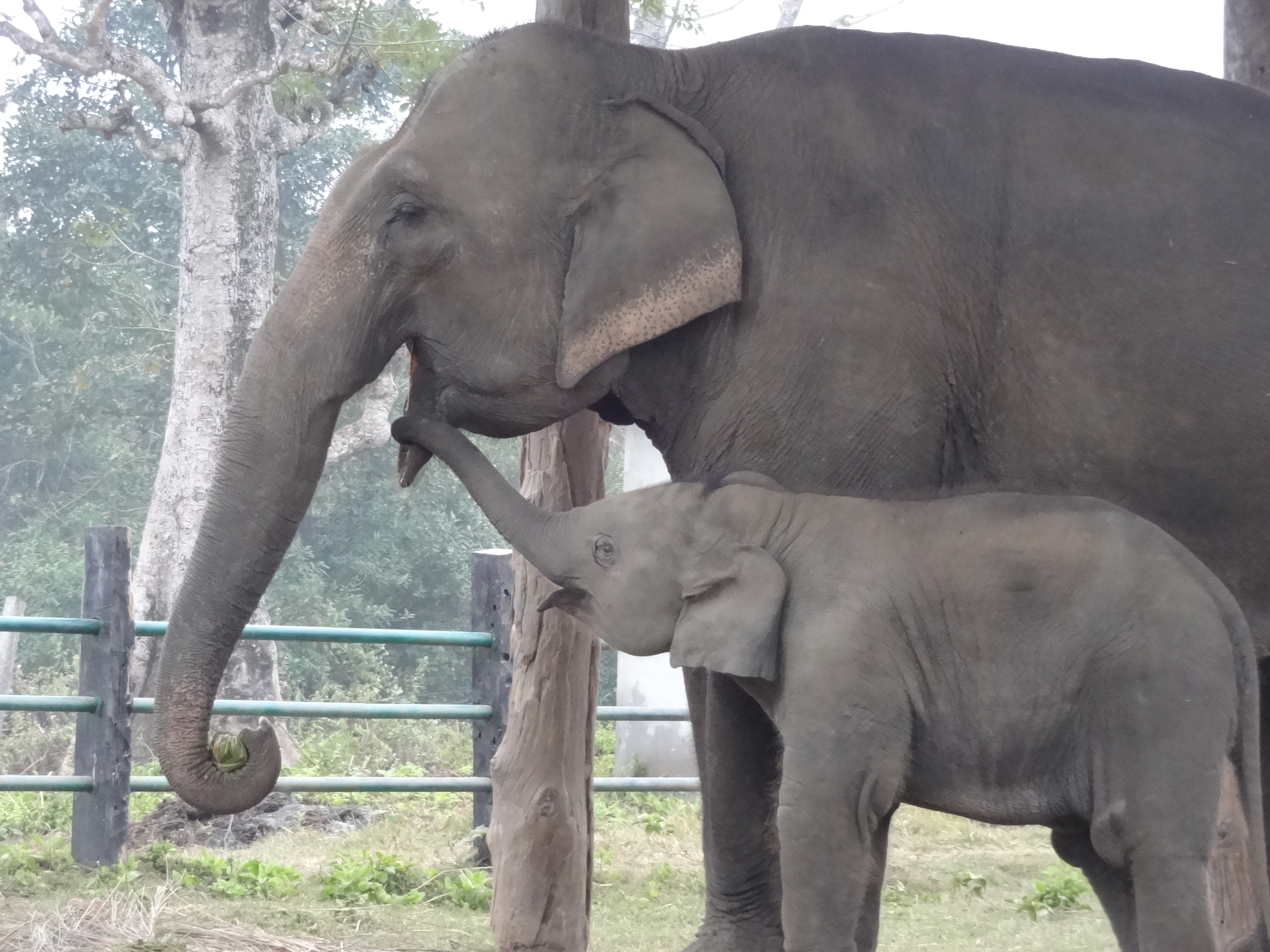
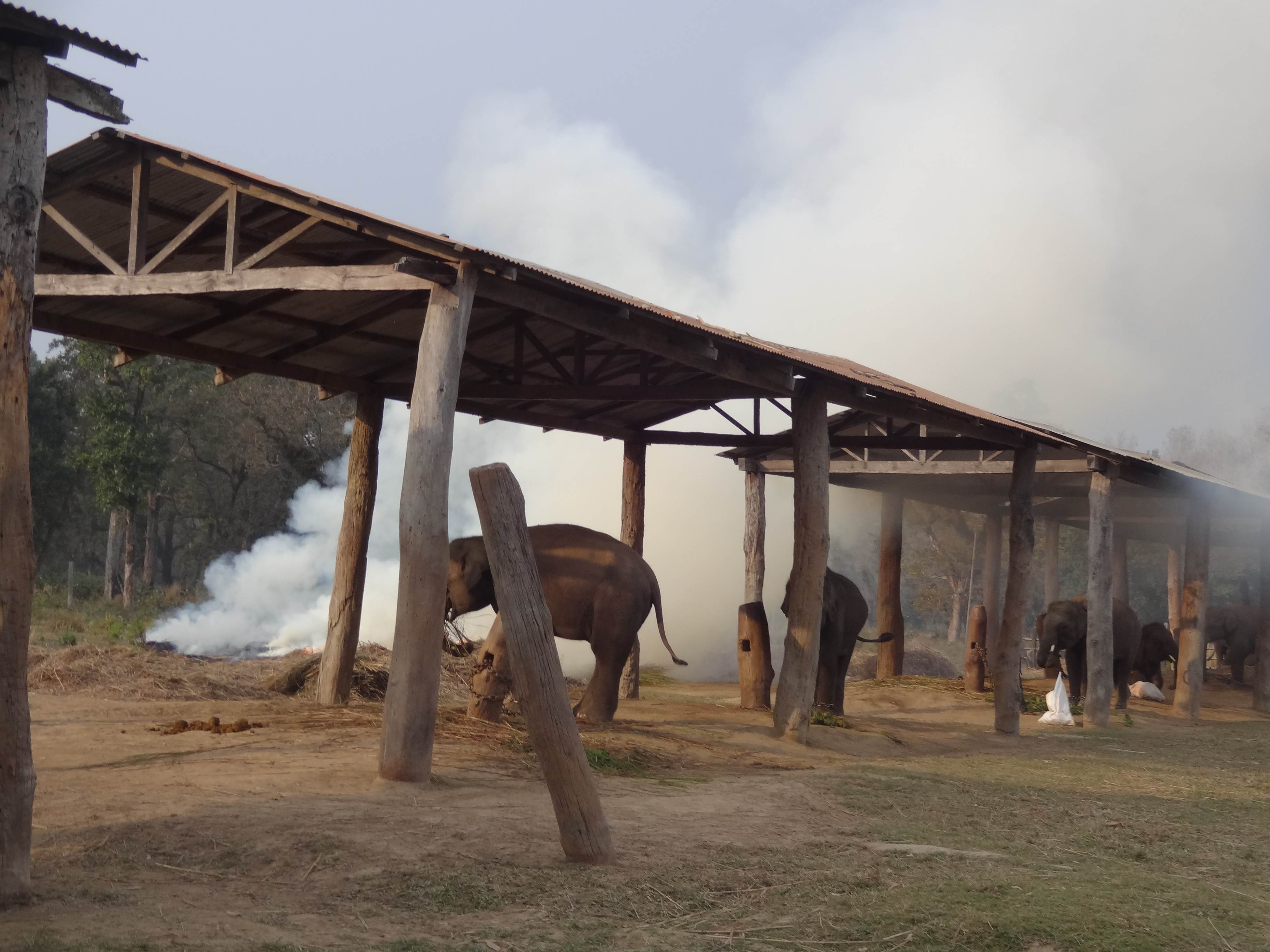
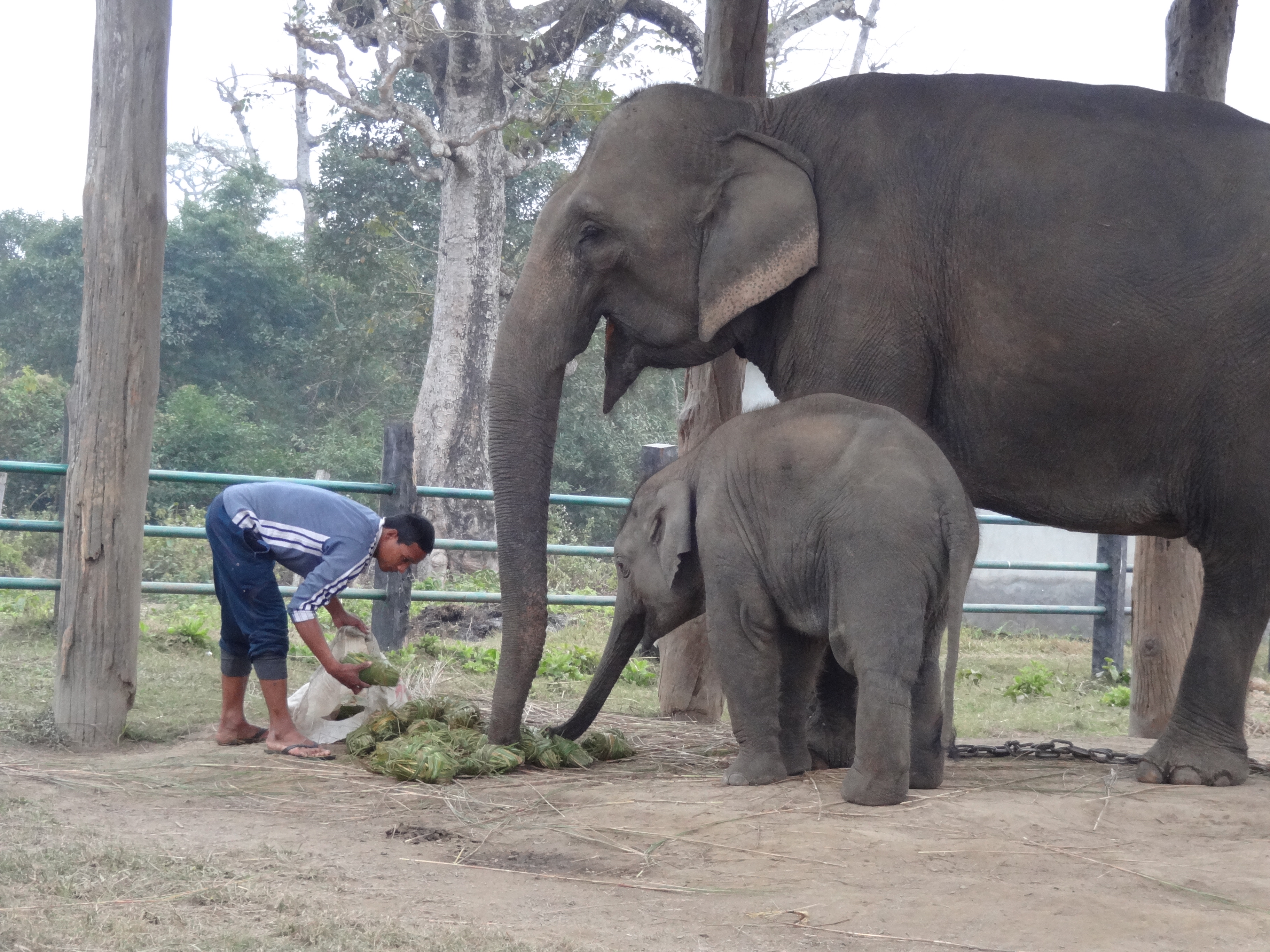
After the kids were dried off and rested, we headed out to see the last elephant activity of the day: the elephant breeding center. This is a government-run enterprise that breeds captive female elephants with wild males. The babies are reared at the center and the resident elephants are put to use maintaining the park and preventing poaching. (These aren’t the same elephants that take tourists on rides.) The working elephants spend their days out in the jungle and then return to the center in the afternoon. Here they are chained and fed, and spend the night with the babies.

It was hard to see them chained up. But its complicated. When I asked why the were chained, I was told that elephants are too strong and that they couldn’t build pens sturdy enough to contain them. Chaining was the only way to keep them inside.  The center helps to maintain their natural habitat and to go some way to keeping up the elephant numbers. I’ve heard bad stories of how elephants are trained in Chitwan, and how foreign NGOs are trying to introduce new training methods that are more humane. It was hard to see, but at the same time, their conditions weren’t worse than the human caregivers who lived and worked on the surrounding compound in very basic conditions. Until someone finds the money to build elephant-proof fences, the chains are the only way to keep them doing important work for their own survival. As, I said, its complicated.

I’m glad I went to see it. Not only because the elephants and Chitwan are beautiful, but I got at least a partial understanding of conditions there,  and gained my own perspective. At least now I am able to pass on a much better description of elephant breeding in Chitwan than anyone was able to offer me.

DSC01161

Elephant snacks:  a mixture of rice, grains, and molasses in a crispy tied treat!
DSC01242

I wasn’t sure of this and no one could explain. Why did the light the elephant dung right next to the chained elephants? Was it to reduce their fear of fire? Or just ignorance?

DSC01243

DSC01250

DSC01253

DSC01239

l

Chitwan River Experience


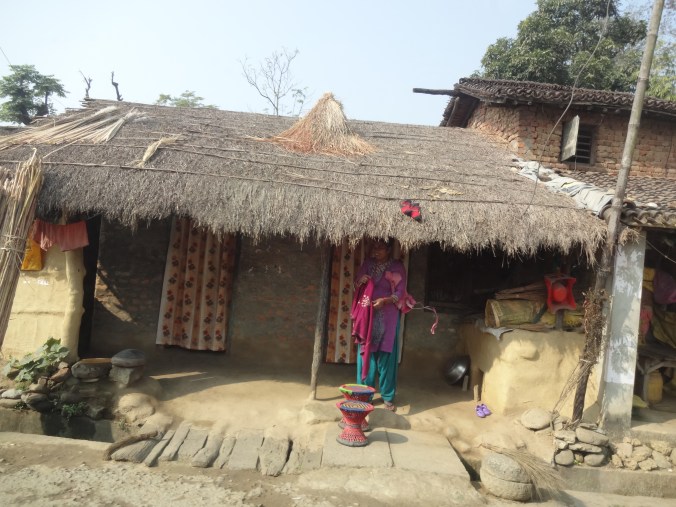
Chitwan is about a five hour drive from Pokhara –on a good day– with no delays or divisions. We left on a good day. About an hour later than planned, after five hours of straight driving, we got into Chitwan around 1pm. It was a fascinating change of scene once we took the turnoff at Mugling and went up and over a mountain, descending into the flat, warmer terrain of Chitwan district.

DSC01146

Thatched roofs….

DSC01148

…mud houses….

DSC01154

…and wide open terrain that made me feel like I was in the wild, wild west about 100 years ago.

The temperature was a bit warmer and it felt like a different country.  And it was mustard seed season, with brilliant fields of yellow as far as the eye can see.

_DSC0507

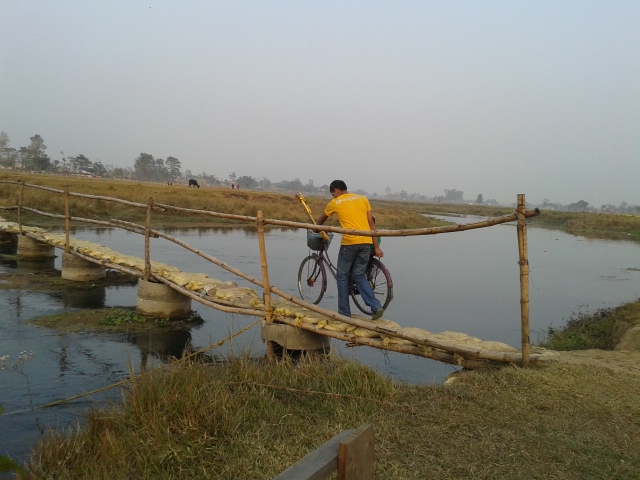
We settled in our hotel room and then headed down to a table next to the nearby river to watch the world go by.  I just loved the terrain.  From our hotel table we could watch everyday life and the river interact.  Everything was going on.  People walked or cycled from a nearby town to the main road, through the resort.  Others washed their clothes on the banks, children played in the water, and women collected river reeds which I guess were being harvested to make baskets.  With my binoculars I watched birds –  especially herons — hanging out on the river banks.

20131230_162509

Crossing the simple bridge, going back to town

20131230_162231

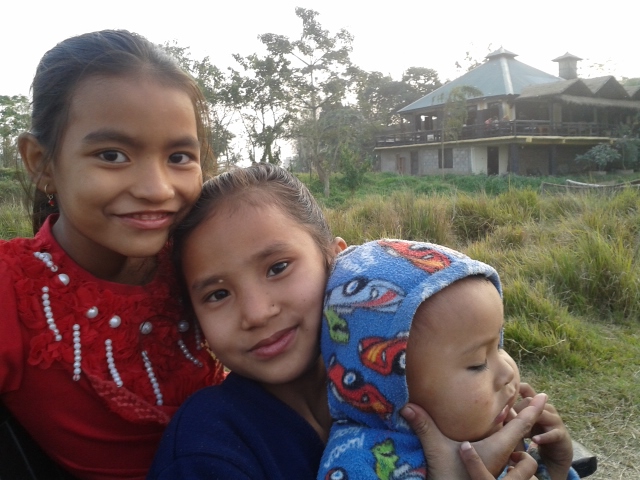
We also attracted the attention of some very cute local kids who came over to have their photos taken

20131230_162318

Why is it that kids everywhere do the same pose for the camera?!

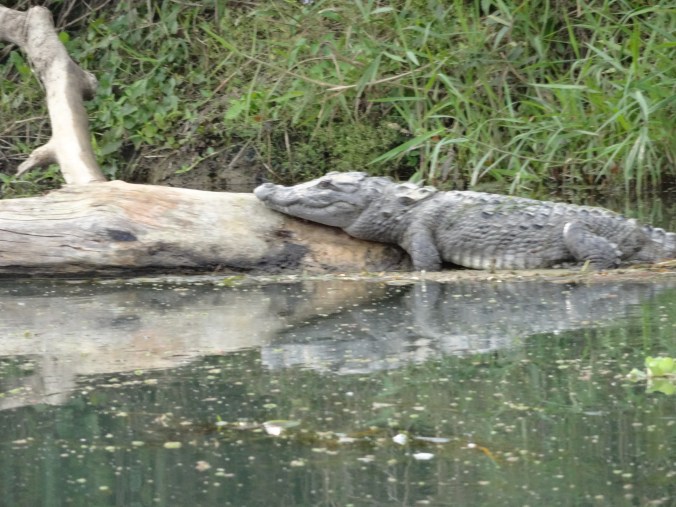
Later, we took a canoe trip out on the river. There were six of us in the canoe, with a guide and an pole-pushing oarsman, and it was the most unstable boat I have ever been in. The water wasn’t that deep…perhaps waist-height…and as we wobbled around in the dug out canoe, lurching at the slightest move, getting wet wasn’t really the concern. I wasn’t even really concerned about getting our cameras wet once I spotted what was on the banks of the river:

DSC01228

DSC01232

ALLIGATORS!

Alligators…now they were a concern! As the oarsman balanced himself at the back of our boat, he took small, gentle stabs at the water to direct us downstream. For our part, we tried to manage the water coming into the canoe from a very small leak, and all of us tried not to twitch or move suddenly, as any action seemed to escalate down the canoe and threaten us with capsizing.

DSC01233

Heading out in the canoe

_DSC0717

Mmmmm…they look wobbly in that canoe. I wonder if I can be bothered?……

_DSC0723

Precariously punting down the river. This ain’t Oxford!

The funny thing was that we felt protected inside the canoe. As though the alligators couldn’t have tipped us over if they wanted to. However, they did seem more interested in basking in the sunlight, and it was eerie how none of them moved. Not even a little bit….not even the blink of an eye.

Scary as it was, I loved being out there and seeing the peace, wildlife and danger of its banks. I especially liked our time at the hotel and how close we were to the water.  It may be a lot less enjoyable in the summer with humidity and bugs, but in December it was warm and clear and bug-free.  I look forward to returning.

Pokhara Revisted


The next stop on our roadtrip was Pokhara, my second visit since our first time back in November. It was much more interesting to arrive by road than by plane, especially since the last visit had been very foggy and there was nothing to see from the air. Mist still hung around the town and lake, but this time the Annapurnas weren’t so shy and we had great views each day of our three day stay.

Fewa Lake

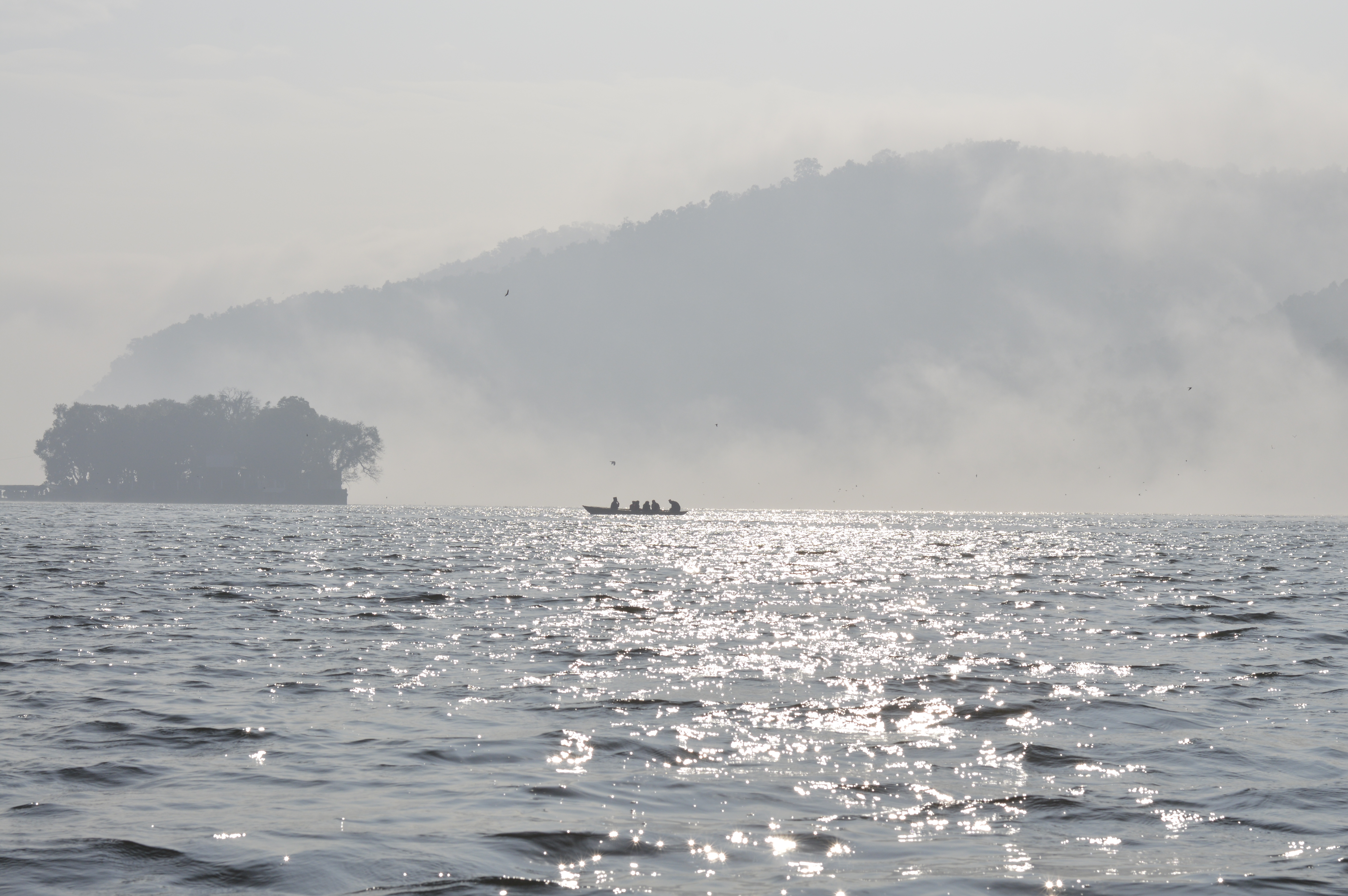
Early morning mist on the Pokhara lake

We took a morning boat ride across Fewa lake, while the mist still hung around. It was beautiful and a bit eerie at the same time as we watch silhouettes of oarsmen gliding over of the sparkling water.

Fewa Lake

…with a tantalizing glimpse of the Annapurnas in the distance

Our destination was the trail head up to the Peace Pagoda, a pleasant 1 hour hike up to the top of a hill. Halfway up we stopped at a small cafe for a cold glass of water and took in the views.

Annapurna mountains

Views of the Annapurnas from the halfway point

Annapurna Mountains

…and the view from the Peace Pagoda at the top

Pokhara Peace Pagoda

The Peace Pagoda sort of has a Greek thing going on with the white dome against the bright blue sky…

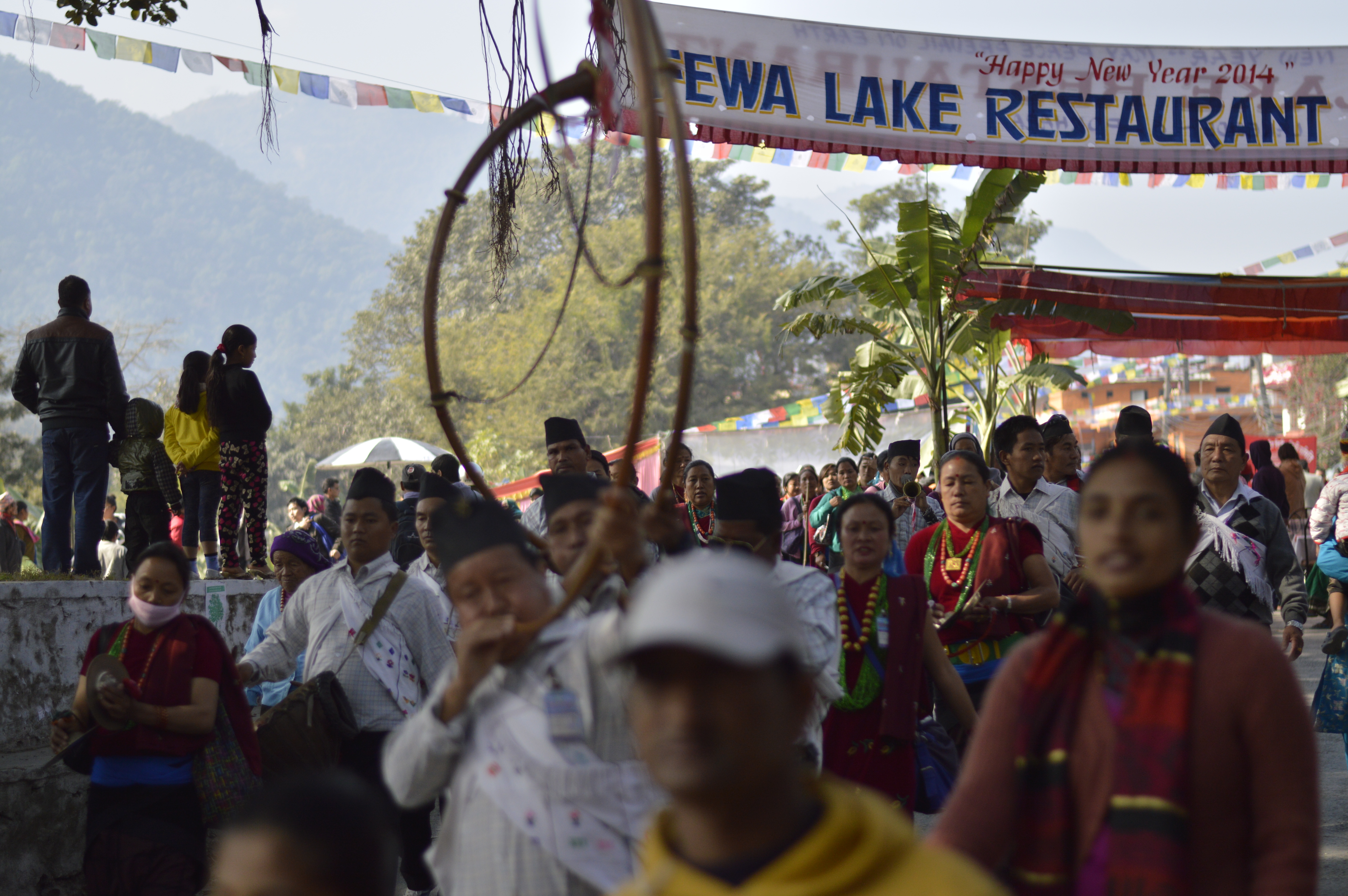
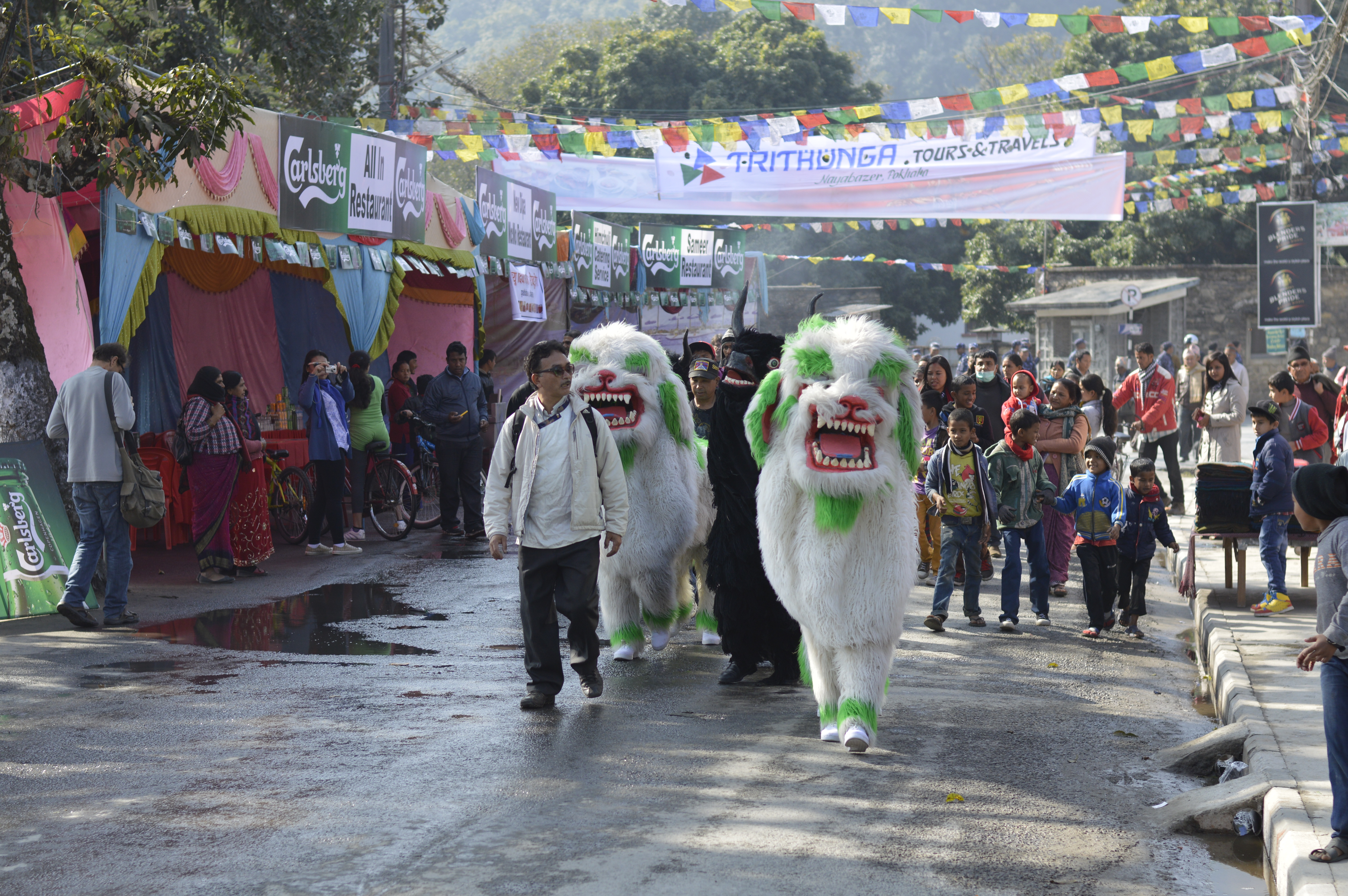
When we’d had our fill of stunning Himalayan views, we drove back down the mountain by car, which took over half an hour on the dusty narrow road. (We’d walked up in an hour). When we arrived back in town the police wouldn’t let us drive our car back to the hotel, so we parked out of town and walked. Pretty soon it became clear why, as music start and a group of Nepali VIP’s lead the start of what turned out to be a very long parade.

Pokhara Street Festival

Horns blazing at the front of the parade during Pokhara Street Festival

Pokhara Street Festival

Pokhara Street Festival

The colourful parade went by for a good half an hour: an amazing array of clubs, societies, musical and dramatic displays. It heralded the start of the four day Pokhara Street Festival, now in its 15th year, aimed at the tourist celebration of New Year. Restaurants took their food out on to the streets at night, and competing vendors with tinny music systems blared out distorted music over one another. I could have done without that! From our street-side hotel the racket went on til late, but some how we managed to fall asleep anyway.

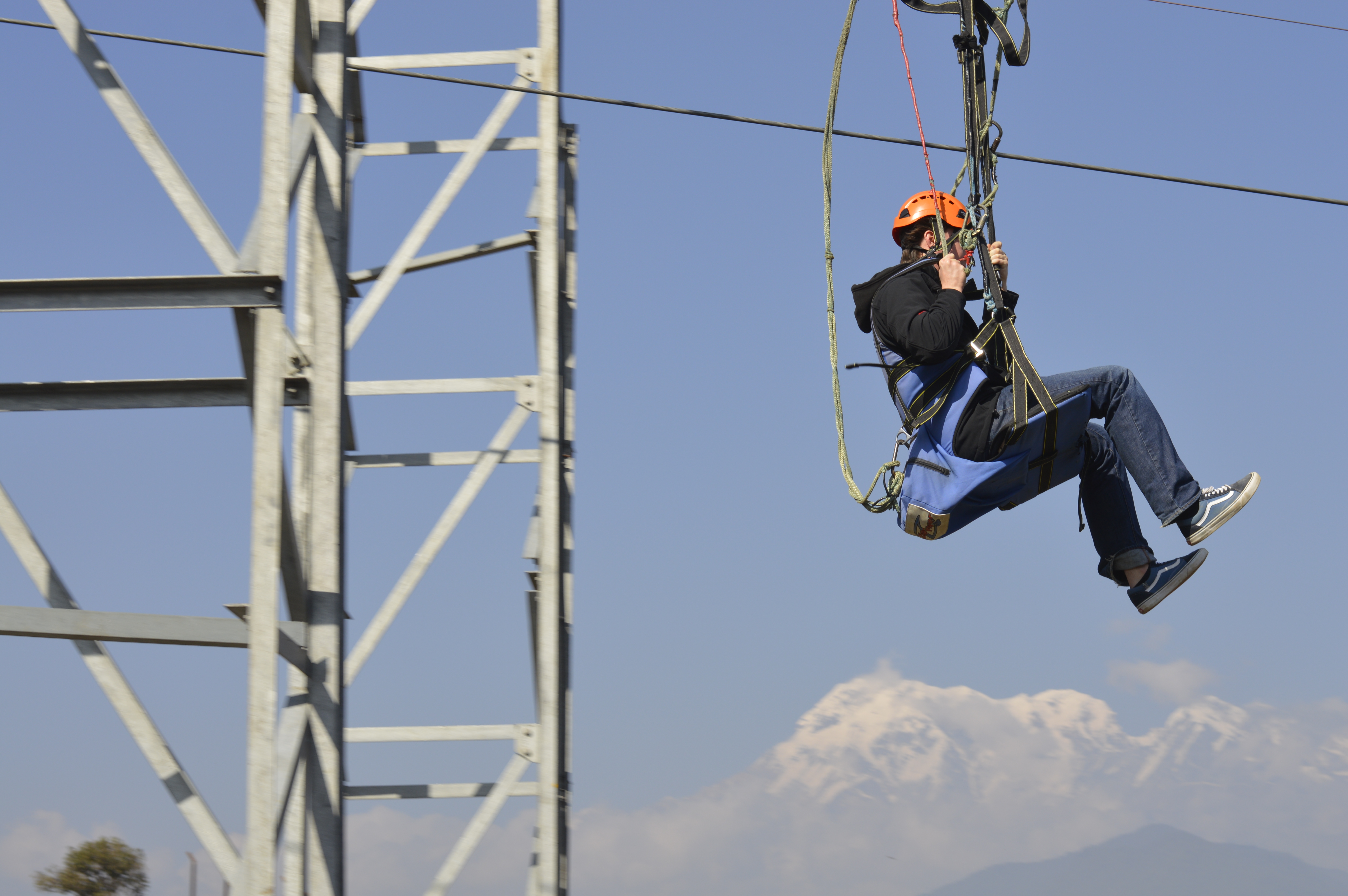
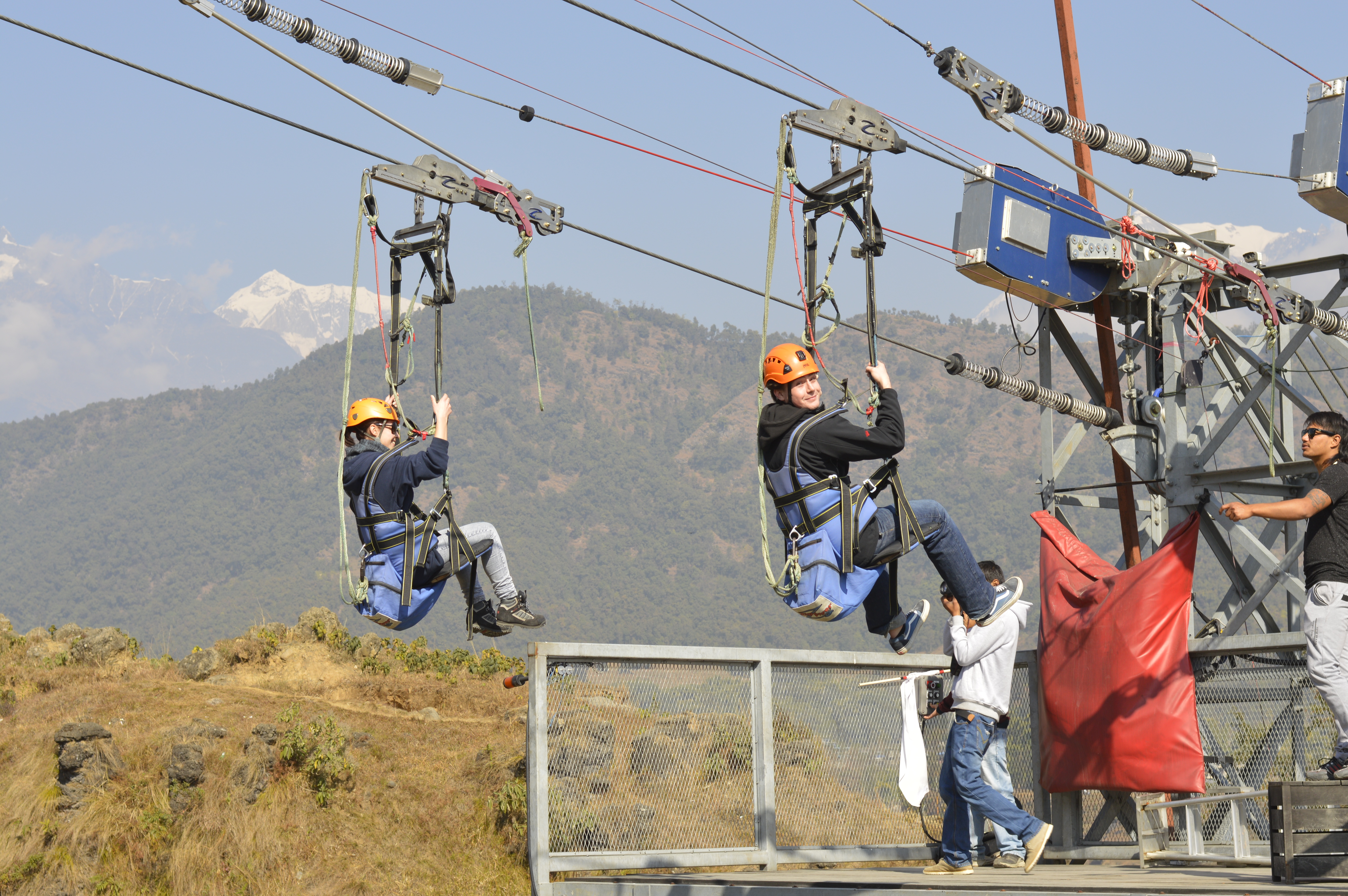
The next morning we had originally planned to take Latham paragliding and, although I wasn’t eager to pay good money for my son to jump off a cliff, I knew how badly he wanted to do it and are several reputable companies in Pokhara….so I agreed.  Unfortunately (or fortunately for me) they were fully booked.  So instead Latham and Jess launched themselves down from one hillside to another on the Zip Flyer, the world’s longest zipline.  Pokhara is rapidly becoming the Nepalese center for extreme sports, with a giant bungee jump in construction too…

After the thrill seeking duo returned, we headed out to lunch at Krishna’s Kitchen, a popular Thai restaurant on the North side of the lake. The food was good, but the best part of the experience was watching the paragliders land on the beach in front of us, some so low we could see the expressions on their faces.  The location was perfect too…a beautiful sunny day, peaceful sparkling waters and no noise or crowds.  Staying at Lakeside has been fun, but if we return for a few days, I think I’d like to say on the quiet North shore next time… it was a beautiful spot!

Pokhara Zip Line

Coming in for a landing!

Zip Flyer Nepal

At 1.8kms long with a vertical drop of about 2000 ft, riders catapult as fast as 100 miles per hour down to the magnetic brakes at the end of the ride. Latham arrived much faster than Jess just because of the difference in weight

_DSC0446

Watching the paragliders land. This one was some distance away. Many practically came in over our heads.

_DSC0450

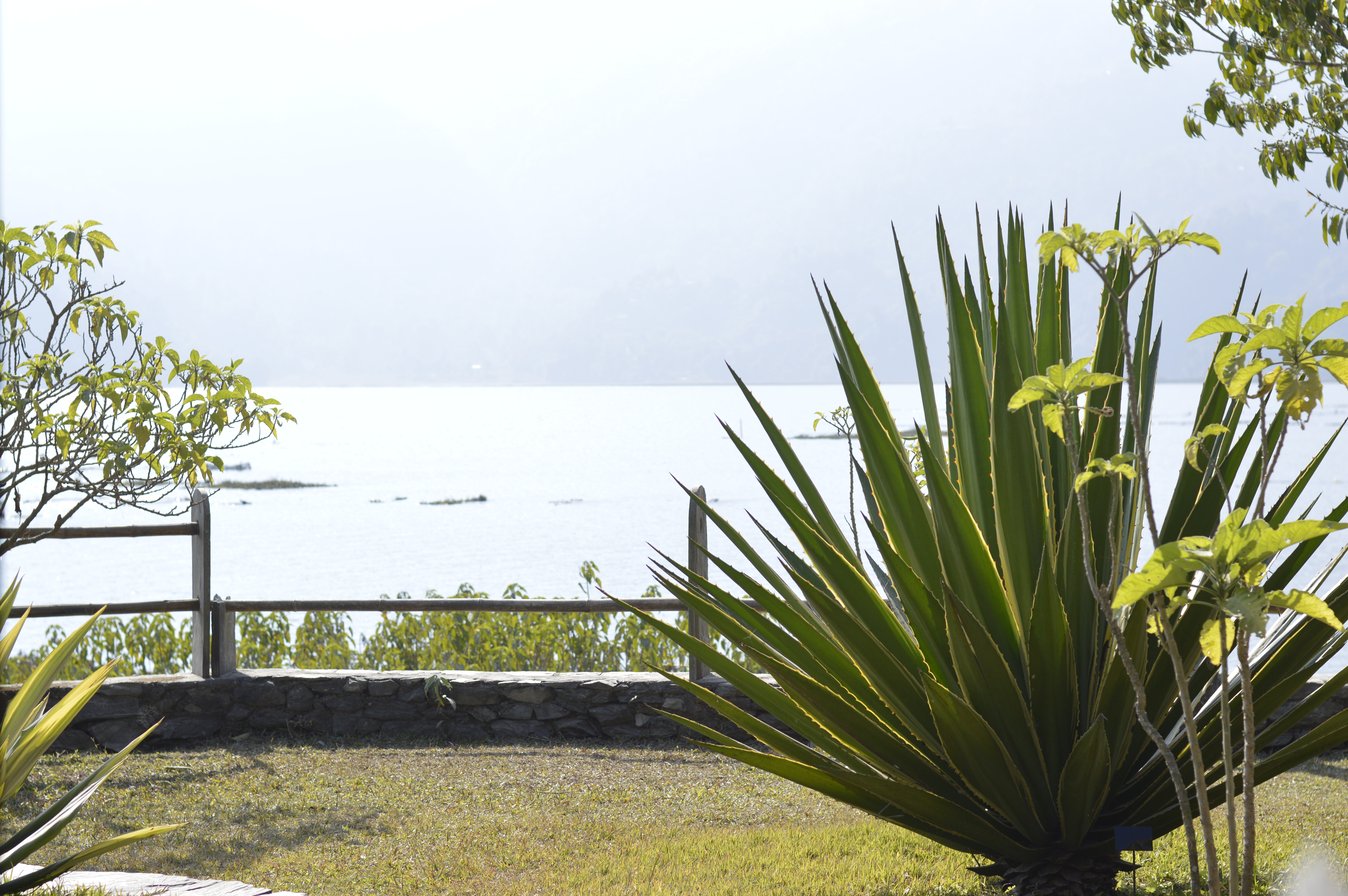
The serene view from Krishna’s Kitchen

Sign Language: Bandipur…Signs of Something Different


_DSC0293

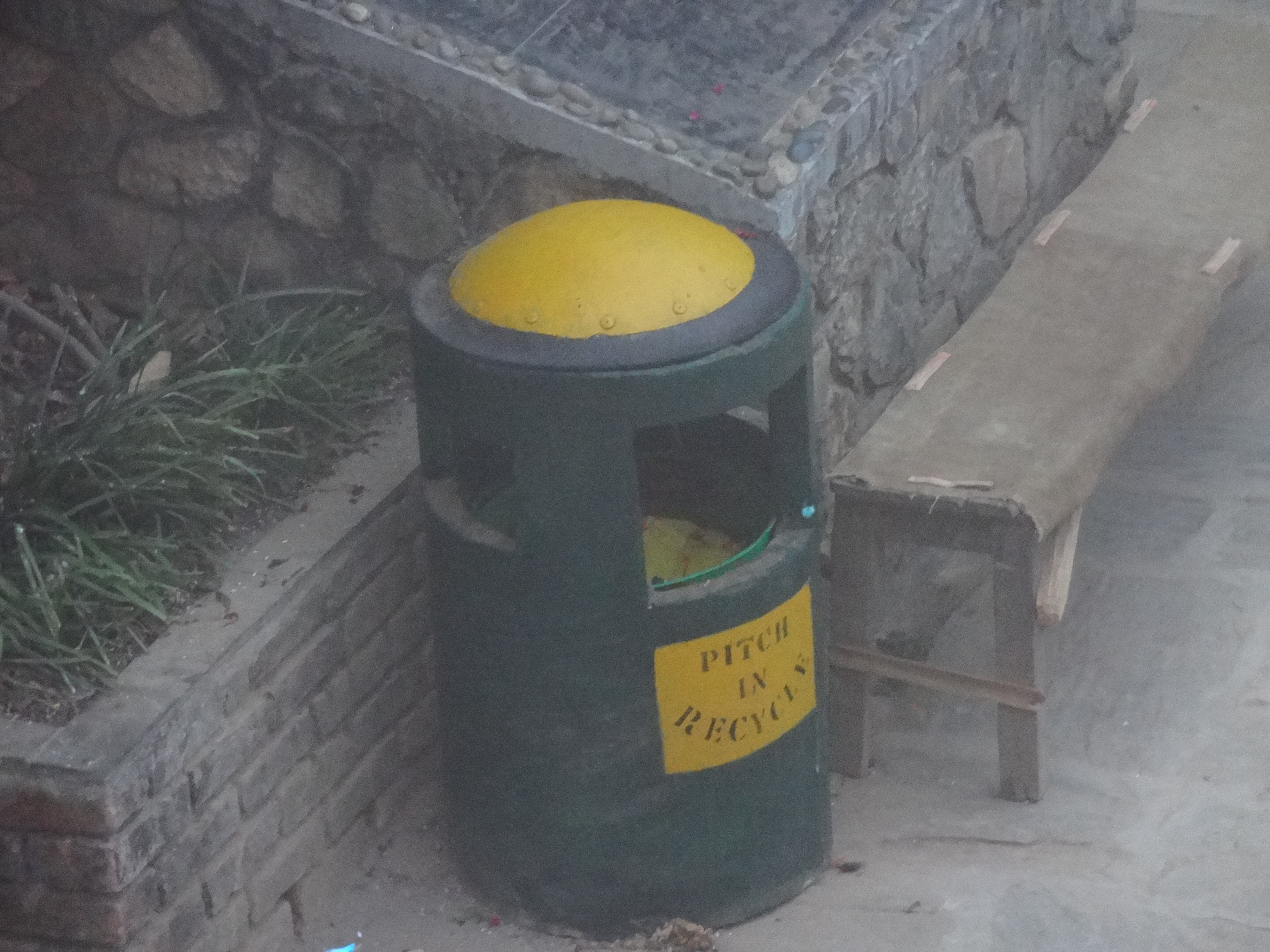
Its a little contradictory: a sign that encourages garbage to be put in garbage cans with a pile of garbage right in front of it. But its a very good start, if a little imperfect.  And one that seems to mainly have taken hold in Bandipur, which makes the town pretty exceptional just for that reason.

Its an attractive village with pretty views and the potential for tourism with so many trekking opportunities in the surrounding foothills.  Its not the only village like this I’ve visited in the short time I’ve lived in Nepal, but one thing really soon out for me…no garbage.  As the sign clearly indicates, they have a community mindset on the subject and it makes a huge difference.  I’ve seen other potentially, equally attractive towns that are trashed with garbage piled at street corners, and blowing down the street… plastic bags scattered everywhere.  Its hard for me to walk past shopkeepers on garbage-strewn streets and try to comprehend why they don’t take responsibility for the small space outside their shop.  If every shopkeeper swept up their own space, every morning their communal space would be a great deal more attractive.

In Bandipur they seem to have the message:  visitors like to admire the village sans garbage, and the streets are swept and clean. Its an excellent role model for other villages and a joy to look around. Well done!

DSC01068

A rare sight…the Nepali public garbage bin. I spotted several in Bandipur

DSC01079

More signs of outside investment…

DSC01081

A wider view of the restoration going on…

DSC01086

The main (only) street in Bandipur…swept and traffic free

Review of Old Bandipur Inn


Old Inn Bandipur

Old Inn Bandipur

Bandipur is about half an hour climb up from the main Kathmandu-Pokhara highway, about 2/3 of the way along the journey to Pokhara. I decided to stop here for our first night as I had heard many good things about the town, and the authentically renovated Old Bandipur Inn is considered the best place to stay in a place that has a lot of accommodation choices.

Bandipur

Bandipur town. Blissfully free of motorbikes

Bandipur is really a one-street town, but its a unique, single street, which is pedestrianized, clean and pretty. Many of the old houses have been restored and it retains a lot of its charm.  You can sit and watch locals going about their day without feeling that the authenticity of the town has been handed over to tourism. That’s what makes it unique.

Visiting the Old Bandipur Inn really is like stepping back in time.  We arrived around 4pm with the sun low in the sky, about an hour before sunset.  Stepping inside the inn with its low doors, low ceilings and small windows, it was already very dark inside.  The electricity had been cut so a few lamps burned on the tables and it took a minute for the eyes to adjust to the interior.  Inside everything was black and white with simple, traditional wooden furniture.  We walked across creaky floorboards up one floor via a very narrow steep staircase to our room.  Its narrow double doors were unpadlocked, revealing a room that was almost pitch black.  Our hotel guide walked carefully over to the shutters, opening them to allow just enough light to show us around, and pointing out the candle, matches and light switches to us for when the power came back on.  We unloaded our things, and took the opportunity to take a look a look around town a little before the sun went down.

We debated different restaurant options for dinner, but through acquiescence found ourselves eating the set menu at the inn.  The power was still off and the entire restaurant was heated and lit only by the smoky fireplace place, lamps and candles.  It was now getting pretty cold and we sat in the restaurant bundled up in jackets and scarves sipping wine and soaking in the atmosphere.  Unprompted they brought us bowls of good, hot tomato soup which we devoured to warm us up.  This heralded the start of the dinner service and a buffet was slowly set up behind us:  Piping hot roast chicken, gravy, mashed potatoes, cauliflower cheese and vegetables.  Served on stone cold (room temperature) plates, the food soon turned cold as we ate, but it was surprisingly good.  Desert was equally surprising: candied-minted fruit salad and yoghurt topped with a bourbon biscuit.  An odd combination that I suspect was an unintentional attempt at western deserts, but it worked.  Jess took a picture:

bourbon

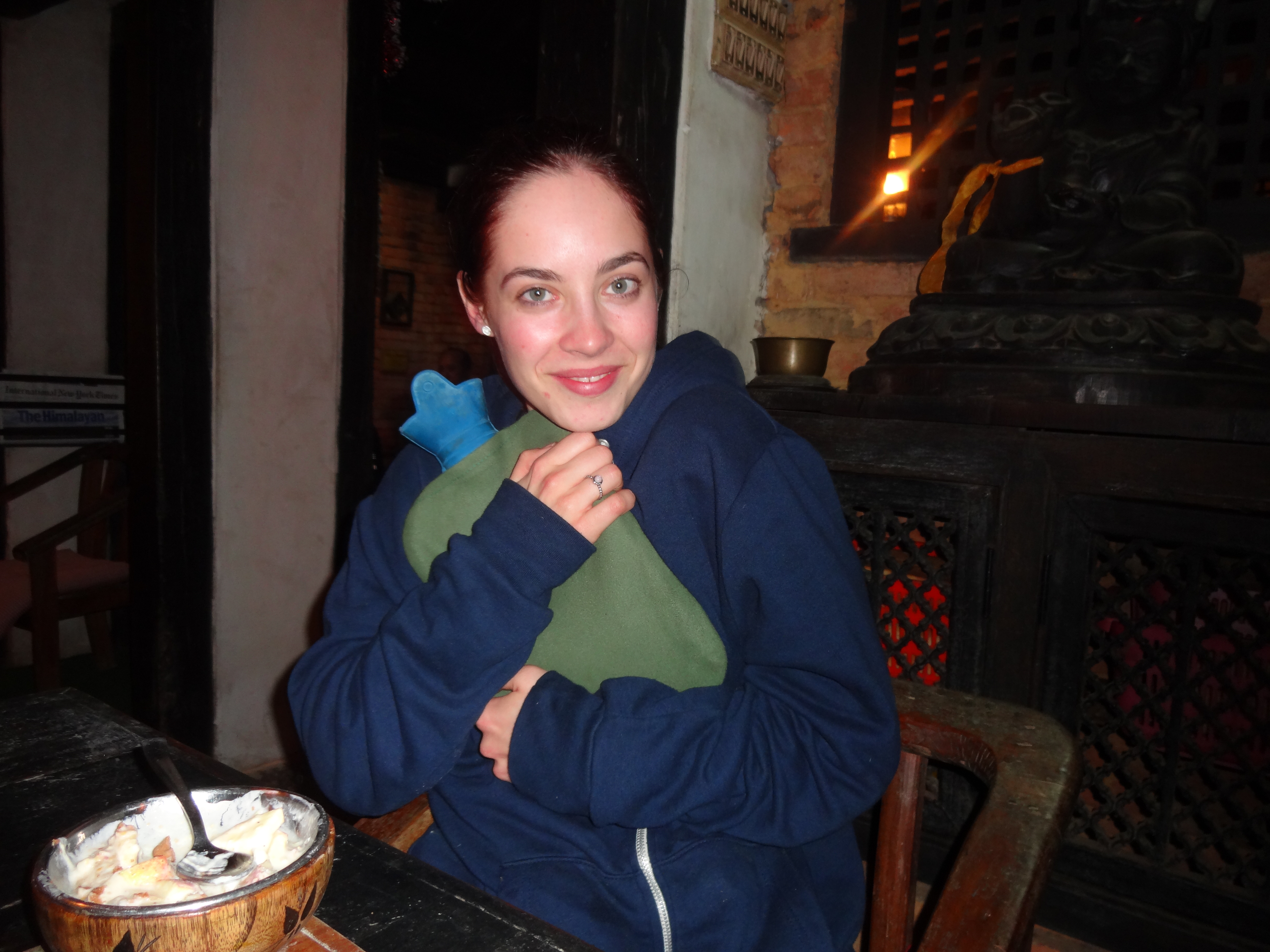
As I sipped the last of my wine a waiter came to the table with hot water bottles.  I pretty much grabbed one out of his hands.  It was such bliss to sit with with the hot water bottles stuffed down our shirts with full bellies.  The problem was we had to go to bed and the prospect of the dim unheated room wasn’t very appealing.  As the bottles turned from hot to warm, we summoned the courage to go upstairs and try to settle down for the night.

Old Bandipur Inn

Water bottles on a very chilly December night in an unheated inn. Bliss!

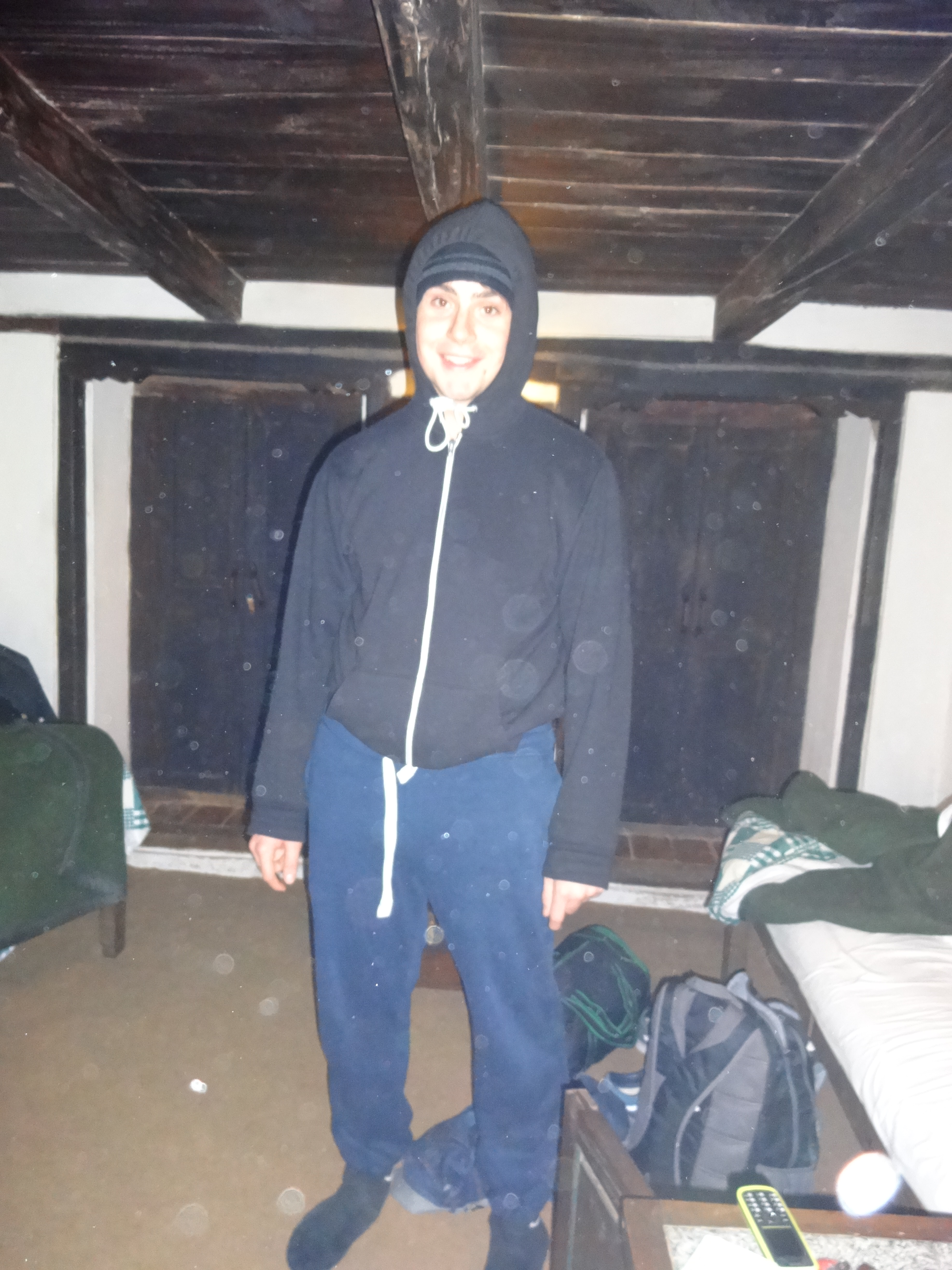
Fortunately the electricity was back on for a while as we regrouped for bed.  Pajamas were out of the question.  We slept in sweat pants, hoodies and socks.  We layed on blankets and climbed in our beds with the last of the water bottle’s heat, hoods tightened around our heads.

Old Bandipur Inn

Getting ready for bed

We never really got cosy that night, but none of us froze either, and we slept quite well. I awoke first and knew that if we didn’t open the shutters for light, we would end up sleeping way too late. Unfortunately, once you opened the shutters the cold morning air was upon you ….there was no glass.

Old Bandipur Inn

Early morning view once I was brave enough to open the shutters to let in the first light and early morning mist. This photo was taken with the flash…it was still really dim in the room.  With the wooden shutters open it was suddenly very damp and cold. No glass on the windows!

_DSC0298

Waking up to the morning mist

I was exceptionally misty that morning and the hopes of walking to a nearby cave before we left around lunchtime quickly died. Instead we went down to breakfast and took it in turns to face the prospect of showering in a freezing cold room. The shower was surprisingly good and the water was really hot. But it was a real leap of faith to take off your clothes, stand on the freezing old tiles and turn on the water….

Back at breakfast, we waited in the unheated dining area for hot coffee. It seemed very, very cold. We could see our breathe as we sipped our drinks and watch the waiter come and go through the open doors and windows. The line between “inside” and “outside” was truly blurred. In truth it wasn’t really so cold, perhaps somewhere around 8 degrees Celcius/or the early 40s Farenheit, much, much warmer than so many Winter temperatures in other places. But never truly getting warm all day and all night, creates a different sense of cold than experienced if your Winter is spent dashing through bitter weather from heated apartment to heated car.

Breakfast was decent oatmeal and eggs. We packed and took a look around the roof garden and some of the hotels nooks and crannies before moving on to Pokhara to meet Robert in the afternoon.

DSC01075

Old Bandipur Inn

Cute outside kitchen on the upstairs terrace

Old Bandipur Inn

Room balcony in the early morning mist

The Old Bandipur Inn is a beautifully restored place with authentic Newari architecture. They did a good job with the food and the service was decent. Ironically, if we had visited at a different time of year, our experience may have been more “chilled”, but it turned out to be chilly instead and that governed a great deal of our experience of the place. I thought the price was very high for Nepal…especially for an unheated hotel that made no concession for Western expectations of comfort. However,I chose to take the lack of heat as part of the authencic experience, and a reminder that most Nepalis live bundled up in unheated homes every Winter. And if I think back to my childhood without central heating, much of our house was pretty cold too…especially our Arctic bathroom! I don’t expect all foreigners to be that forgiving, though, especially at the prices they charged.  So be warned that this is the real deal on authenticity. Our driver stayed at another hotel for about 1/10th of the price, and I don’t expect we had anything that he didn’t except hot water and a touch more ambience.  Hot water, of course, is a big deal…how most Nepalis do Winter without hot water, I don’t know. But I appreciate very much that we have it normally… especially after the Old Bandipur Inn’s romantic reminder of my blessings!

Road Trip! The Road to Bandipur


Our eagerly awaited week-long road trip didn’t get off to the best of starts. Our driver started the engine as we stood waiting to load the car with suitcases and it made a very disturbing strange noise, and belched black smoke from the exhaust. Three hours, 2 mechanic visits, 30 phone calls, three trips, and one replaced air filter later…we loaded the car and left quite a bit behind schedule. I was grateful that it wasn’t something more serious, but the late departure meant that we hit some traffic on the way out of Kathmandu, but even that wasn’t too bad. And the prospect of driving out of the dusty congestion kept us going as the city disappeared quite quickly turning into a two lane highway up and out of the valley.

Kathmandu to Pokhara Road

The first part of the road westward out of Kathmandu. Narrow windy roads with trucks are one thing, but when they are also resurfacing the road as well, its something else. Fortunately it wasn’t too congested and drivers were surprisingly well behaved.

Kathmandu to Pokhara road

And the dust! Its the dry season and the unpaved (or partially paved) roads cause an incredible amount of dust which coats the roadside plants so heavily that they are almost unrecognizable. I managed to snap this banana plant with one new, still freshly-green leaf. Poor thing…it won’t be green long.

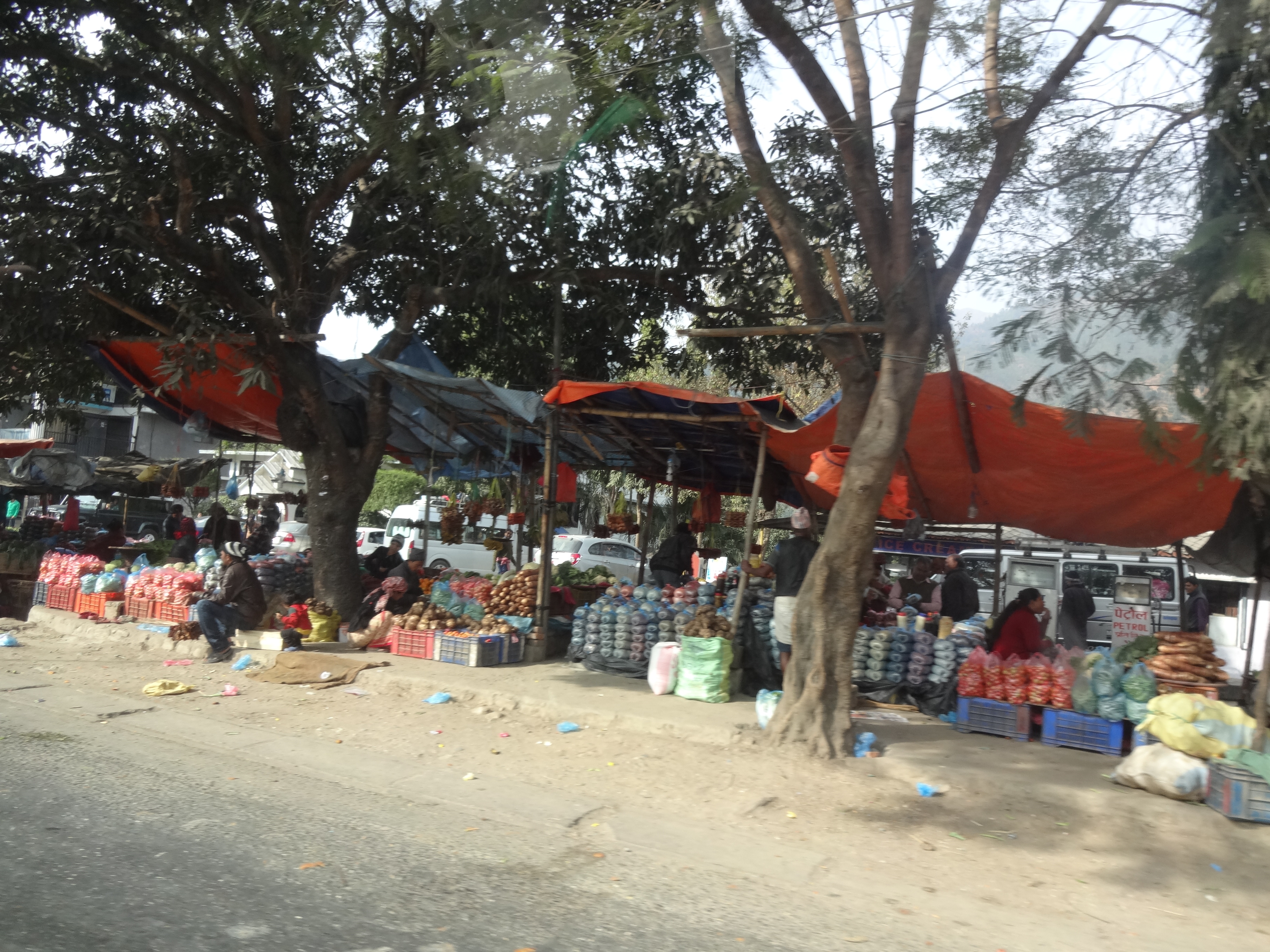
kathmandu market

Market day and mandarin oranges are in season

Trisuli River

First glimpse of the Trisuli River. The river is low as its the dry season. Apparently it can be a raging torrent in the wet season

DSC01050

One of many dusty towns that we drove through

I enjoyed our drive.  Nepal is so much more than Kathmandu’s chaos and trekking.  It was my first real chance to see villages without garbage, small town life, farms and farming towns, and the Trisuli river which ran with us on much of the journey.

The scenery was interesting and varied and the towns ranged from  pretty and agriculturally charming  to dusty, dirty transportation hubs.  I tried to capture a little of each as we flashed through it all on the 4-5 hour drive to Bandipur – our first stop for the night.

DSC01089

DSC01090

DSC01096

DSC01053

DSC01058

First glimpse of the Annapurnas as we climbed the 7km mountain road up to Bandipur.

To be continued

Smells like Home


Sometimes I think that if you blindfolded me and put me in a Star Trek transporter to an unknown natural destination, deprived of giveaway clues like language,  I could still tell which country I was in my the smells and sights of nature around me. Certain smells like mandarin oranges remind me of childhood Christmases, smells can be so evocative or time and space and memory.

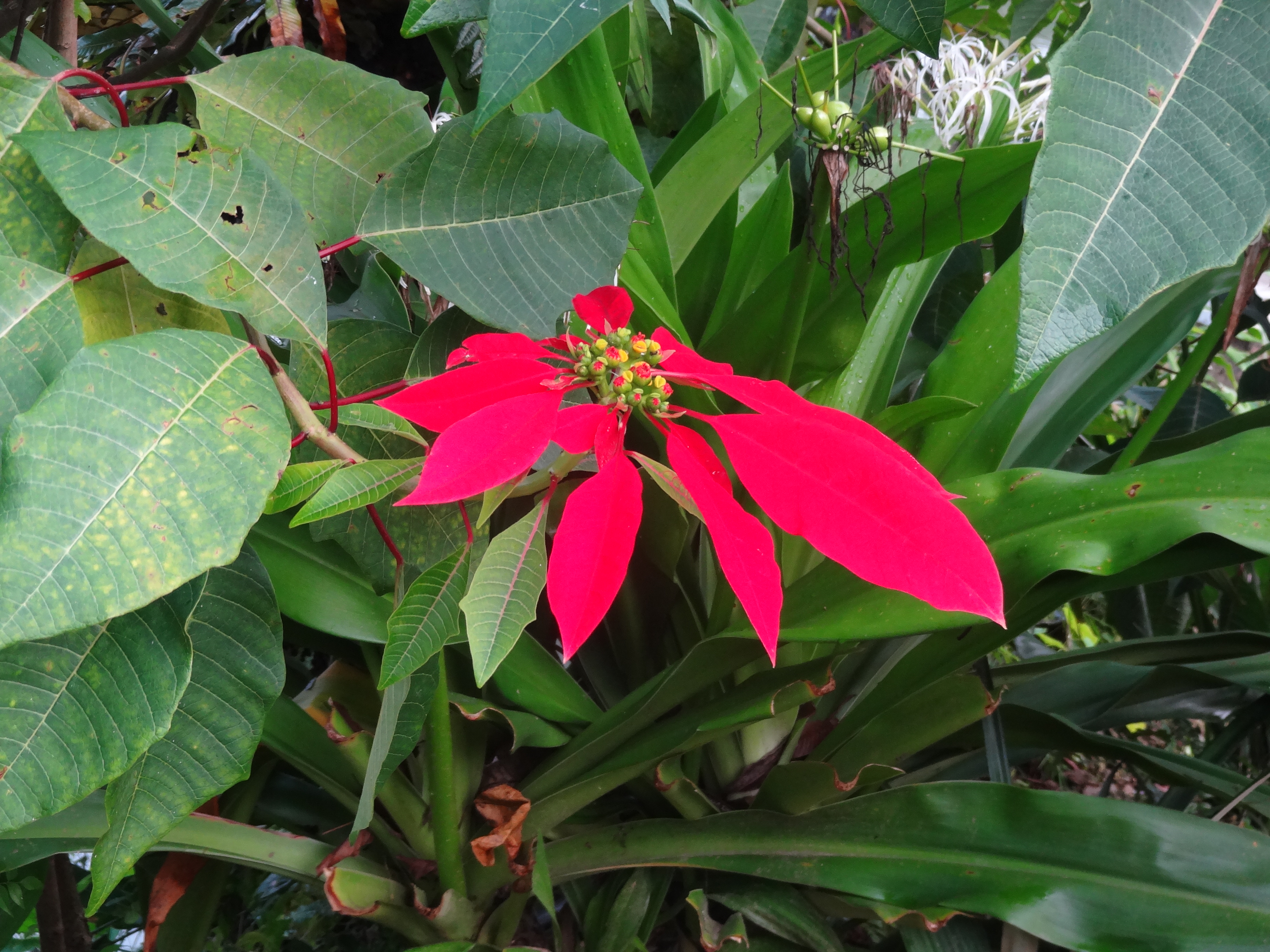
For me the smell of newly cut grass, marigolds, annual flowerbeds and roses are the England I knew when I was growing up.  Here is Nepal all of these are everywhere, looking very English and completely foreign all at the same time as they mix in with some very Nepali surroundings.

In fact if was dropped blindfolded in a Nepali garden, I might have a really hard time figuring out where I was at all.  Its all here…everything…from so many different places I have lived:

DSC00784

Salvias…very English

DSC00789

Zinnias….very English

DSC00790

Busy lizzies and marigolds…to name a few..

And yet the Himalayas and Hertfordshire are not the only mix I see. Let me explain about the Greek contingent going here too:

DSC00787

There’s no shortage of cacti like this classic paddle cactus that’s so common growing wild on the Greek mountainsides

DSC00679

…And there’s plenty of large trumpet-like flowers which I’ve seen all over the Med…but I don’t know their name…

DSC00791

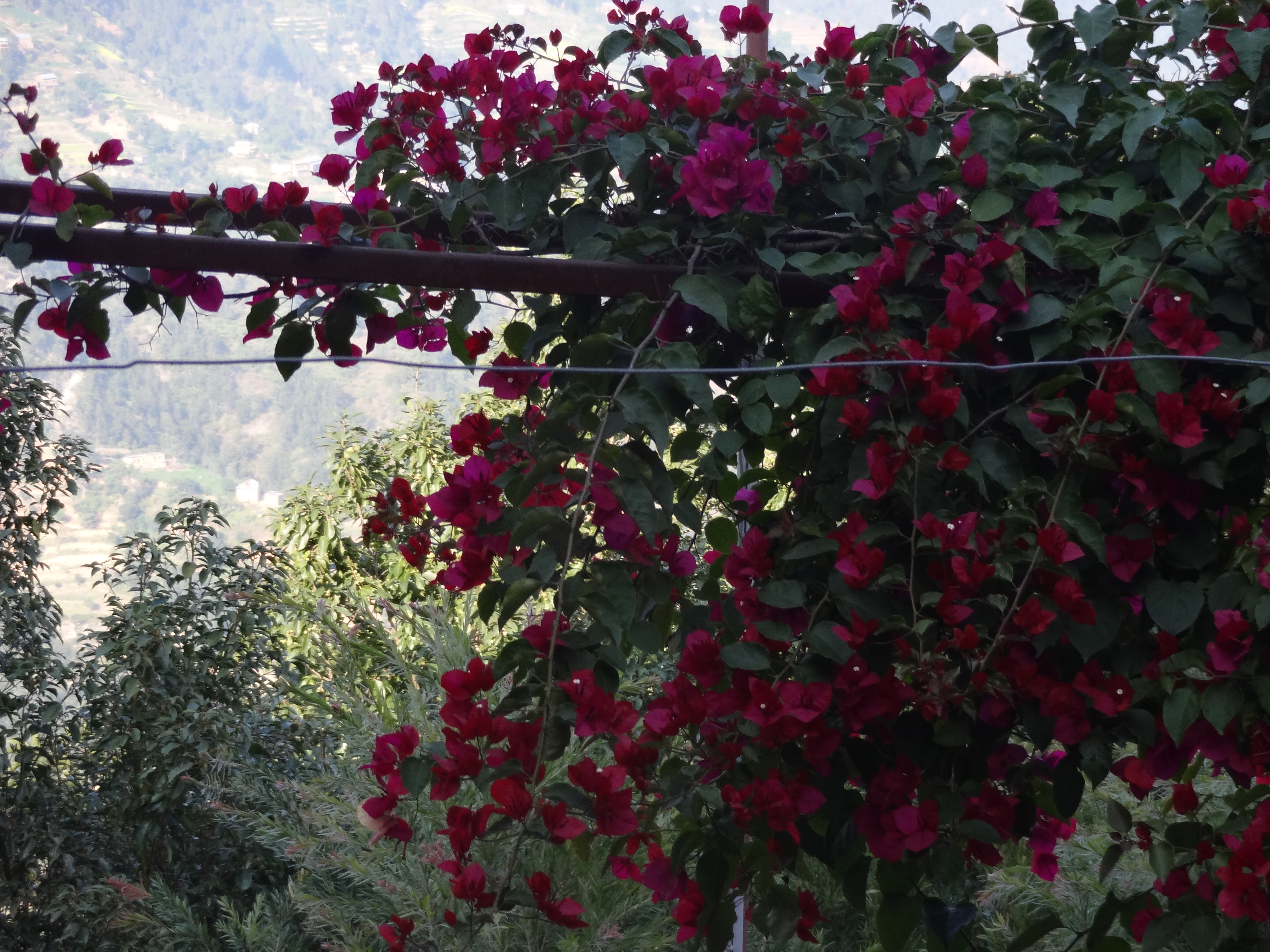
…and most strikingly, there’s bougainvillea everywhere. Sometime growing colorfully up a pergola – just like in Greece – except that in the background you can see snowy mountain peaks. Bougainvillea and snow in the same frame is hard to believe.


And before you think that Nepalese gardens are very European…let me shake it up a bit by introducing The Philippines into the mix:

DSC00740

Papaya….

DSC00680

….palm trees…

DSC00684

..and ancient Banyan-like, gnarly trees

And finally, just for good measure, a little North American Fall and Christmas….

DSC00741DSC00689

Is there anything that DOESN’T grow here ?!!

Review of Fishtail Lodge, Pokhara


Fishtail Lodge Pokhara

The attractive landscaped surroundings of Fishtail Lodge

One in a very occasional series of hotel/resort reviews…

I thought our stay at Fishtail Lodge was worth writing about because it seemed unusual in a world of hotels that largely don’t care so much, filled with employees who are just doing their job, Fishtail was different in that it actually seemed to respect itself. When you enter the reception there’s a big board on the left showing dozens of famous dignitaries, royalties and international stars that have stayed there. Its quite a dazzling display. Although I didn’t recognize many of the Indian dignitaries, many I did know: George Harrison, Prince Charles, Jimmy Carter…to name but a few. Nowadays it may not be their first choice.  There are other newer, probably fancier resorts, but for somewhere more than fifty years old, it was in pretty good condition. The landscaping and flowers are beautifully cared for, and the hotel buildings are well maintained. The rooms weren’t fancy and had their problems – our shower head was busted and the phone wiring was iffy – but room maintenance came to fix it and because everything else in the room was ok we forgave them. I think largely why I liked was because it delivered what I wanted, a comfortable space, a great view, somewhere to read and privacy. And it was the last advantage -privacy – that really helped justify the price. There are plenty of places to stay in Pokhara that are a lot cheaper. And there are other fancier places that cost the same or more. But I liked that the place had a staff  culture and a sense of self, it made me feel comfortable.

Fishtail Lodge Pokhara

Each room with its own little terrace

The room design was interesting.  Large circular buildings were cut into twelve slices of “pie”, each slice being a room, with the slender tip of the wedge being the bathroom in each unit.  Air conditioning and plumbing etc. were centralized in the center of the pie, which is a practical way to take care of maintenance.

DSC00680 DSC00692 DSC00693 We ended up in room 17, one of their heritage rooms, that had prime views over the lake and mountains (if you are lucky enough to be there at the right time, of course.) We were also in good company and the plaques outside told us that Prince Charles and Jimmy Carter had both stayed in our very same room — but not at the same time, of course…..( that would just be weird! )I don’t think it was really the same bed 30 years down the road, but it was a first for me none the less!

Lastly one of its unique features was how the resort was set on opposite side of the lake, very much “on it” in a beautiful, natural setting.  Yet it was only a short peaceful ride over on a small floating pontoon to the town on the opposite bank.  It gave the Fishtail the advantage of quiet and privacy, but with easy access to the town’s shopping and restaurants. A nice touch.  We spent four days which was just about right.  I liked Fishtail very much.

DSC00736

Sarangkot: First Glimpses of the Himalayas


DSC00765
I was warned before I arrived here. Seeing the mountains in Kathmandu isn’t a daily occurrence. The monsoons, mist, fog and pollution all play their part in keeping the giants hidden from us valley dwellers.  But I was also told that the early part of Winter (now), after the monsoons, is the best viewing season– before the pollution levels rise with the increased emissions that the cold weather brings. That was the rhetoric.  The reality has been quite a bit different:  Nothing.  Nada.  Zip. Not a snowy peak.  Not even a suggestion of one.  Certainly nothing like a majestic Himalayan view to frame the backdrop to my day. I was starting to joke that the whole Himalayan experience was an elaborate hoax.  How could something be so big and yet so elusive?

Even our journey to Pokhara was unable to deliver on the promise, even though it is the is the gateway to the Annapurnas and the Pokhara guidebooks are full of tantalizing photographs of crisp blues skies and rugged perfect peaks just sitting as an indisputable, omnipresent backdrop to the town.  For us, the Annapurnas remained stubbornly absent during our entire stay.  We would never have seen one glimpse if we hadn’t made the decision to take an early morning side trip to Sarangkot.

Sarangkot is a popular viewing destination as it is an a higher elevation than Pokhara. Above the bowl of the town and lake, the odds improve that you can grab a view of Machapuchare (or Fishtail) and the row of Annapurna mountains that are unimaginatively named Annapurna 1, Annapurna 2….3 and 4.

Everyone wants to take you up to Sarangkot at dawn to see the sun rise over the mountains, and the early morning offers the best odds of a clear view.  Dawn required something like a 5.15am departure and Robert didn’t want to do it.  He also didn’t want to do it with a crowd of bus tours, so we decided that we didn’t need to see the sunrise but would go just a bit later in hopes the crowds had left.

We arrived just as the last of the bus tours departed.  Their giant buses were parked along the roadside and our taxi had to squeeze past them as we drove up; the narrow mountain roads certainly weren’t made for tourist buses.  We walked up the dirt track to a viewing platform and climbed the stairs to the flat, empty rooftop.  It was covered with plastic chairs and we were the only ones there.  I sat and drank hot ginger tea and looked out at the mist.  No mountains, only mist.  It didn’t look very promising. The waiter told us that there had be no visible mountain sunrise that morning and everyone had gone home empty-handed.

DSC00755

Sarangkot viewing platform

DSC00758

Only birds and the occasional small plane broke the monotony of the mist…

And then it happened….very slowly.  The barest outline of a corner, of a peak, started to appear.  Then a little more, and a little more, until a whole peak was revealed.  Very, very slowly over the next 30 minutes, like a giant curtain being pulled back, the range came into view. There they were…not a hoax after all!

DSC00768

Not the best picture ever taken of the Annapurnas…but one patiently waited for. I hope to have a clearer view one day. But, for now, I take this one!

Pokhara: Peaceful Lake Life


DSC00688

A misty early morning start. The massive Annapurna range is in the background, but you would never know it.

Nepal is a landlocked country and after coming from the Philippines with its 7000+ islands, it slowly dawned on us that we hadn’t see a stretch of water for quite a while.  Pokhara has the country’s second largest lake, and the idea of being back on water again was very appealing.

There’s a small tourist industry here, built around the Annapurna trail which starts in Pokhara.  On the perfect day with no wind and clear skies, apparently you can see the Annapurnas reflected in the lake, but we weren’t that lucky. We arrived to a downpour of rain. Subsequent days were dry and sunny, but the Annapurnas remained obscured in mist for our whole stay. Fortunately the lake was there and beckoned us forth.

We stayed at a lakeside resort and it was an easy (and lazy) option to hire a boatman to take us across the lake to the trailhead up to the Peace Pagoda on the first morning of our stay. The lake sits in the middle of the town and its an easy paddle out to its center to enjoy the calm of the waters. There are no motorized vehicles and not much traffic. You can sit still and just hear birds and lapping of the paddle. Its very peaceful.

DSC00695

Heading out from the lake’s sound bank

The town lies on one bank and the jungle lies on the opposite side. We skirted the green edges of the lake, past fishing nets and allsorts of aqueous plants (or weeds, maybe?). Daily life of laundry, fishing, and tourist activities went on around, but it never felt crowded or spoiled.

DSC00700

The quiet, green side of the lake

DSC00697

Getting an early morning load of laundry in

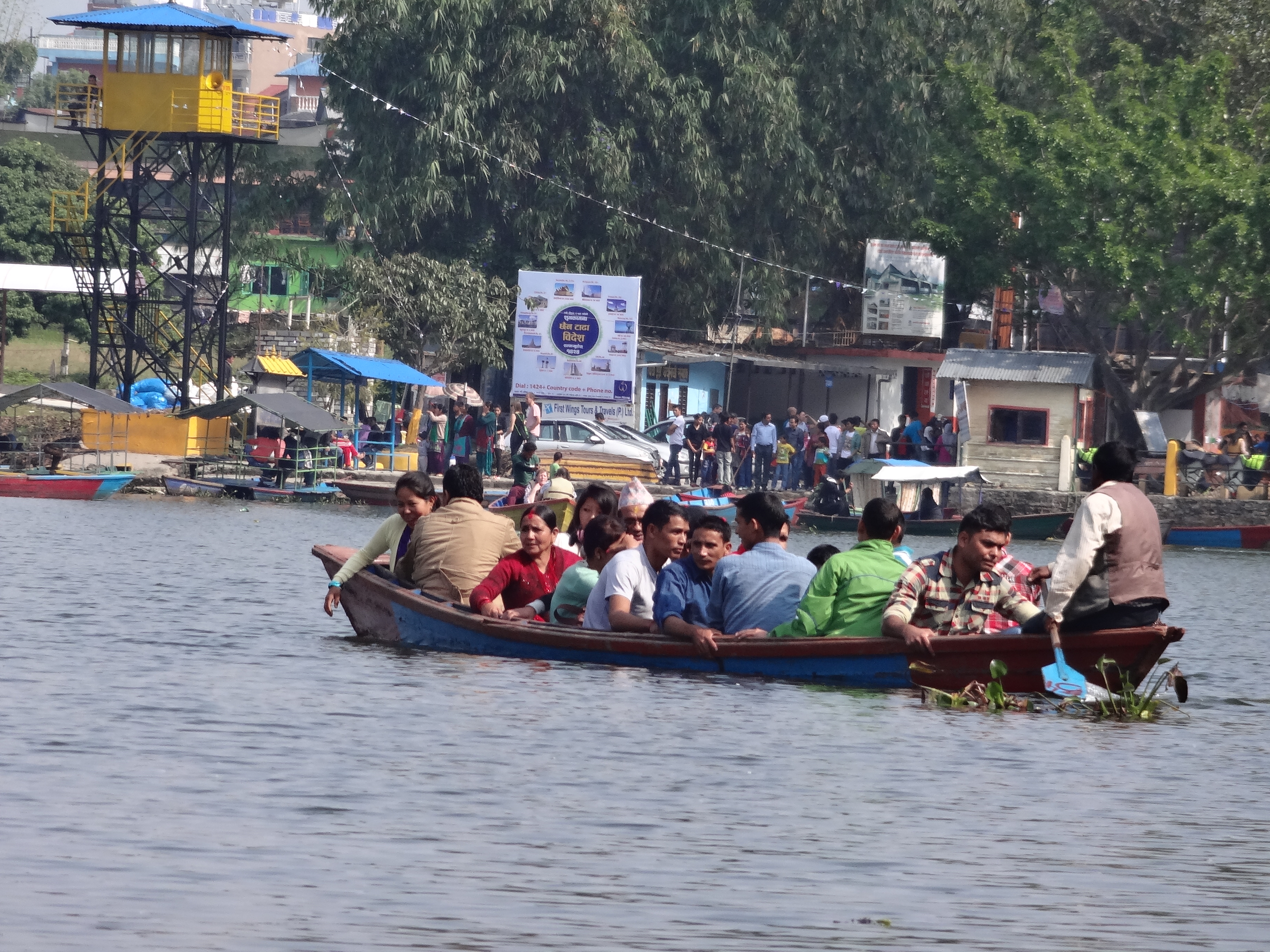
It was also a national holiday, and boat loads of visitors from the town were visiting the small temple island in the middle of the lake. For this reason we kept rowing past and didn’t stop to take a look.

DSC00729

Locals being ferried back and forth to the temple on the lake’s small island

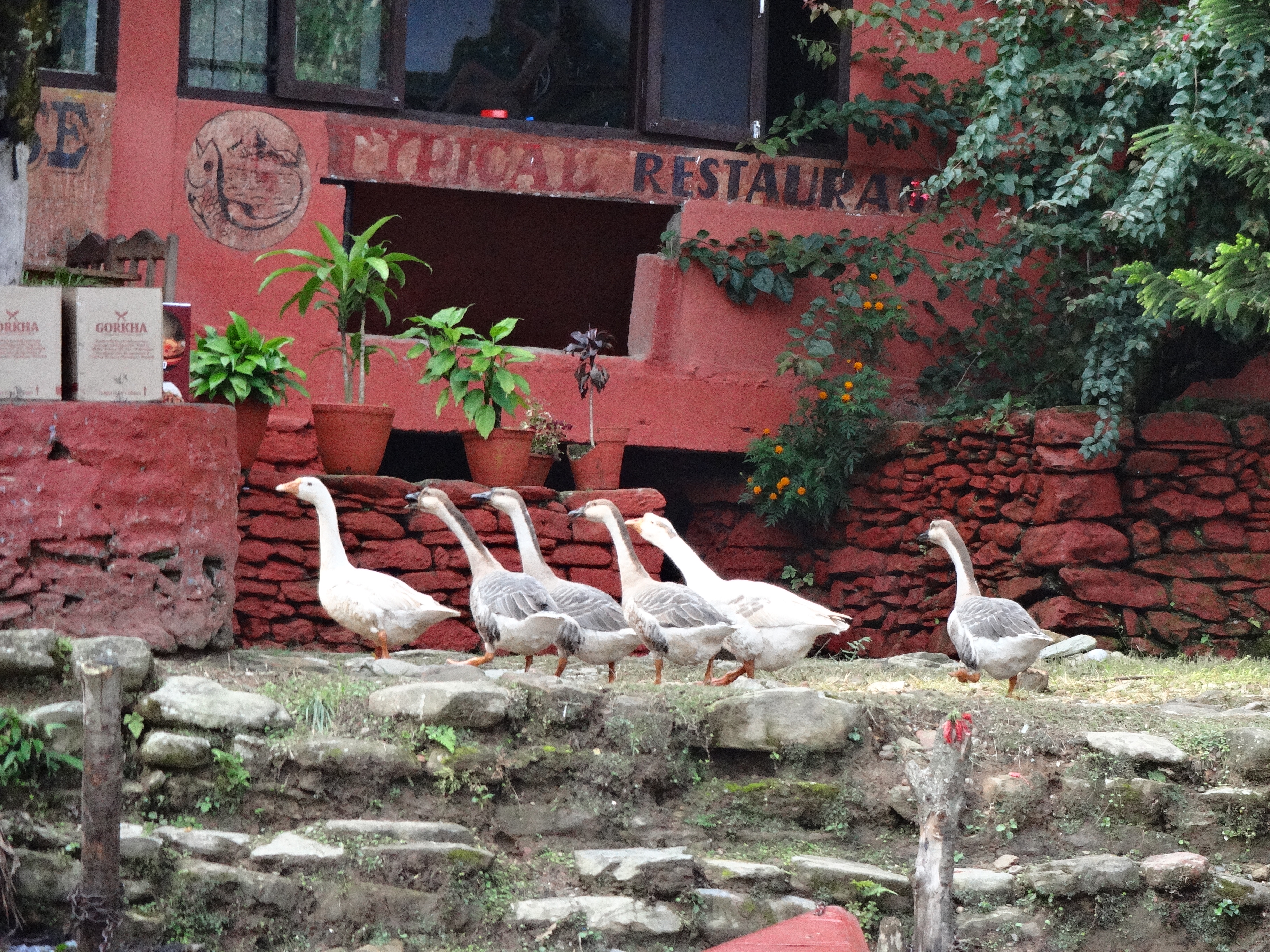
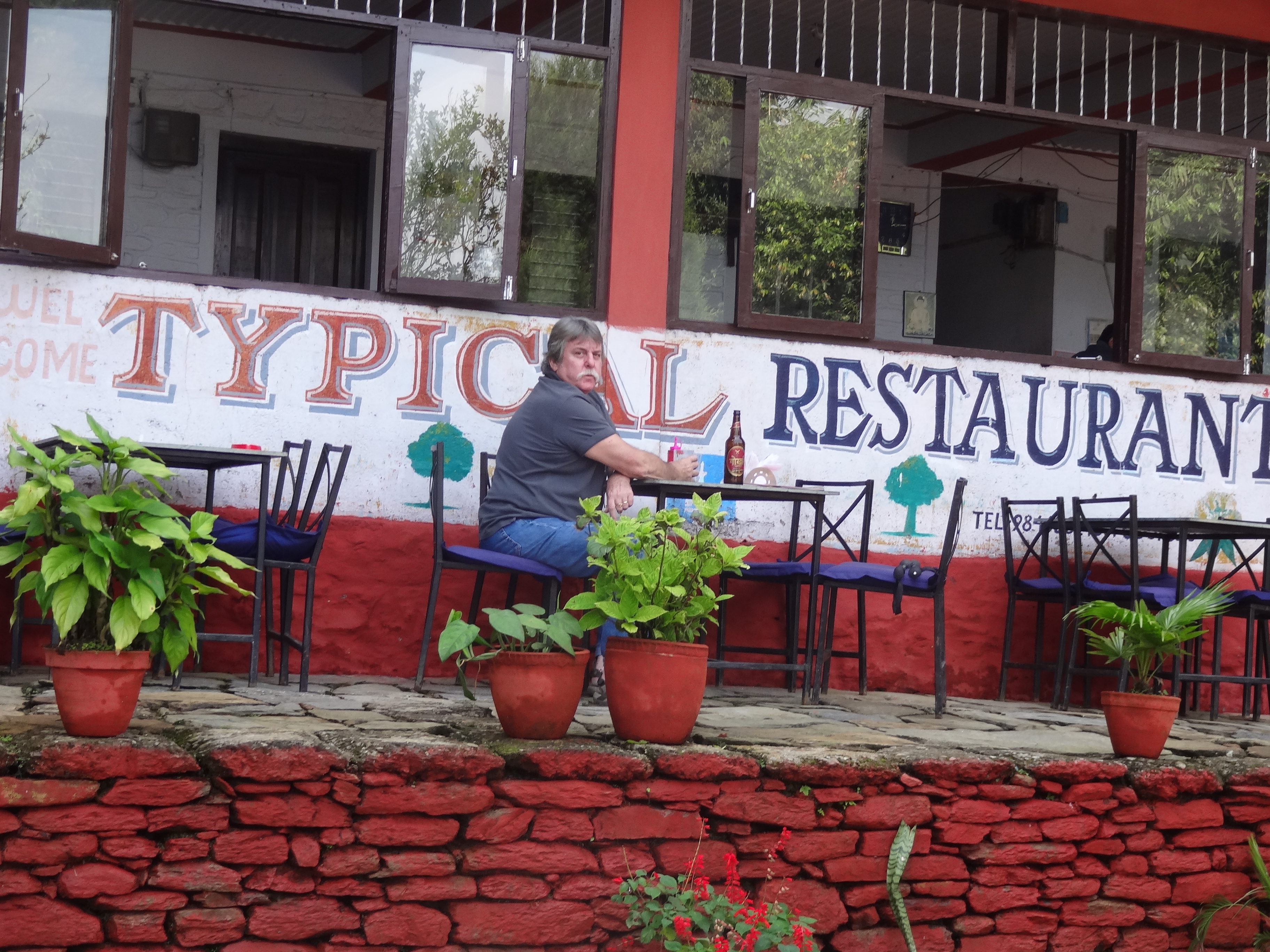
Our destination was the trailhead for the Pagoda Peace Temple trail, which was at a small lakeside restaurant called “Typical Restaurant”. I decided this was meant to mean “typical” in the traditional sense, although the geese didn’t seem to care one way or another.

DSC00707

Watching the geese run riot

DSC00726

Robert deciding whether the place is typical or not….

DSC00721

Colourful boats on Phewa’s shore

DSC00727

DSC00733

We made friends with a local who told us stories of the lake that he remembered as a child – a larger, less polluted lake that they would swim in as kids. But its still pretty clean compared to Kathmandu, and the water still looks reasonably clean. He tells me that there are environmental groups working to keep the lake alive, which I am sure is an uphill battle, but I’m glad to hear someone is working to protect it before it is too late.