Discovering Divisoria


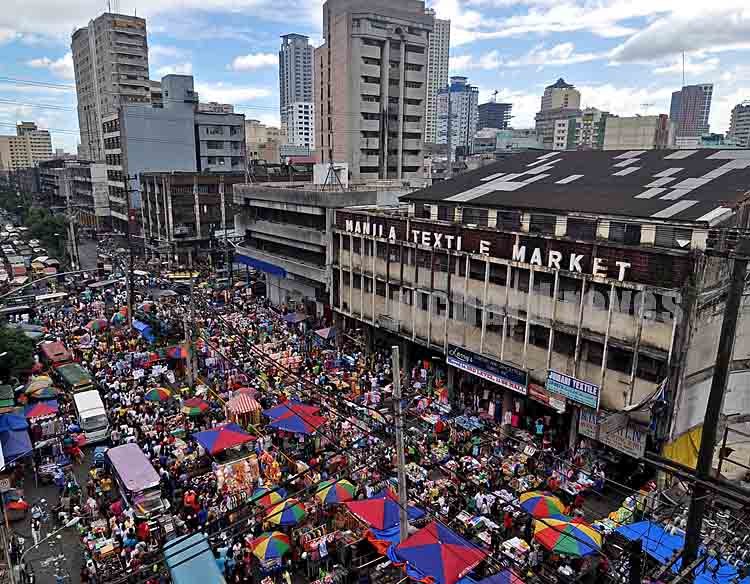
Part Two of our marathon party shop last week was to buy party decorations and other supplies from Divisoria, a sprawling street market, where you can buy anything and everything in different colours, shapes and sizes at vastly lower prices than anywhere else in Manila.   I’ve lived here for almost two years and yet last week was my first visit.  I’ve wanted to go for a while, but I knew it was best to tackle it with an experienced person (at least at first) as I don’t exactly blend in around there.  Pickpockets abound, not all vendors are honest, and its a real labyrinth if you don’t know your way around.

Its an assault on the senses in every possible way.  We visited after the heavy rain, so were lucky to find the streets unflooded, just really muddy.  Garbage is piled high in the middle of the streets, making the center traffic islands smelly and slippery.  Careful crossing the street!  Drains are clearly blocked by the debris, dramatically compounding the flooding problems.

Street with garbage-strewn centre island

Fortunately, the market wasn’t too busy.  At 10am it was still fairly civilized.  We picked our way through the narrow streets past distinct groups of different vendors:  car parts, fruit sellers, shoes, you name it.  It was hard to stay focused and move purposefully ahead with all the shiny objects beckoning in your peripheral vision, but we were on a mission looking for arts and crafts supplies, cheap toys for race prizes, and fruits and vegetables for the community dinner.

Meanwhile, my inner child is streaming my brain with dialogue like: Oh look at those shiny beads.  Why didn’t I realise before that I need shiny beads in fourty five different colours?  Wow, they’re so pretty.  I want to touch them. What can I make with all those beads?  I should learn to make jewelry…Oh look at those feathers… forty five different kinds of feathers….  But the first rule of shopping in places like this is to stay focused and look purposeful, so inner child suppressed, we headed in a small covered mall that sold crafts and toys.  I squeezed down the narrow rows between the warren of stalls and we found everything we were looking for within a few feet of each other. Goodness know how far back the labyrinth went, we never went the full distance in.  Instead we doubled back and headed to the fruits and vegetables.  The difference in quality between what I find in the grocery store and here was astounding.  The produce didn’t have the fresh dew still dripping from the stalk like in Greece, but I’m guessing most stuff was picked yesterday, not last week, unlike the unhappy looking veggies we so often see in S&R.  The prices were dramatically different too:  seedless grapes in Divisoria 120 pesos/kilo, in S&R about 300/kilo.  Carrots here, 30 pesos/kilos in S&R, 110 pesos/kilo.  Everything was considerably fresher and at least half the price.

Unfortunately, like the meat market earlier that day, going to Divisoria is a production and you need a crew to help.  So its not a weekly option for me.  However, I will certainly return before we leave, perhaps to look again at some of those shiny beads and heaven knows what else!

Shopping Like a Local


I’ve always shopped in the markets in different countries I’ve lived, or if I go to visit a new country, I make a b-line for the market to learn more about where I am through what’s available to eat.  As all market lovers know, its usually the best place to get the freshest food at the cheapest prices.  One of the challenges of living in Manila for me has been the strong lines of distinction that exist between expat shopping and local shopping – that’s geographically, product availability, and prices. Its not that we can’t shop in local markets, its just that after the first few months of making the effort to do so, it became more and more of statement rather than a practical way of getting in supplies.  It just isn’t easy.  There aren’t any within easy reach and people who live in upscale areas (like us) simply have a full-time cook and maid to do it for them.  Or they order from fancier grocers.  The rents are sky high here too, which makes it unaffordable for retail outlets to sell everyday items.

So I was glad to have the opportunity to go market shopping last week with a couple of filipina helpers from Embassy families who were helping us with the food for the Community Welcome party menu.  The first stop was a meat market in Pasay where we stopped to buy chicken and pork.  I’ve been to these markets before.  If you haven’t experienced the world of raw meat without refrigeration, stainless steel and gloves, it can come as a bit of a shock.  At each vendor, all parts of the dissected carcasses are piled — by body part — in large piles next to each other.  Aside from the usual cuts of breast, thigh, wing etc., you could buy chicken feet, necks, blocks of chicken blood (for bbq I learnt) and various cleaned innards.  Scrap bags were also for sale, containing odd trimmings, bones and discards from other sales for the poorest customers to make a broth.

Price was by negotiation, always.  Our cook haggled in Tagalog at several different vendors for 6 kilos of chicken, and finally settled on one that gave her the best price.  This guy however gave her a hard time.  He didn’t want to let her pick the individual wings and wanted to pour the raw “juice” in the tray onto the scale to include it in the weight.  She gave up on him in disgust and found a more helpful vendor who worked with us to prepare the chicken order.  It took quite a while and my eyes strayed around me to watch all the different scenes going on.  Butchers carried whole pig carcasses over their shoulder.  Customers rummaged through the raw meat on display like they were picking through the sale rack at Nordstroms – arm deep in different choices – seemingly unaware that they were handling raw meat.  Across from us a chicken vendor was piling cooked rice on half a dozen battered metal plates.  I wondered what he was up to until I notice a single burner and saucepan bubbling below the counter.  He’d been throwing meat scraps into the pot and was now ladling chicken bones and broth on to the rice plates.  Breakfast for the workers, I guess.  You would have to be very hungry to find it tasty, so I was in no position to judge.

I would shop here if it was easier and I had a little more time and training from a local.  You’d need to know who the better vendors were and learn how not to pay the expat premium prices.  Its not a realistic option this time around though.  Hope I can crack that nut in Nepal.

Trip to Eagle Point, Batangas


This is going to be a review of Eagle Point Resort in Batangas, a resort about a 2 hr drive from Manila. I don’t usually do reviews as such, but I thought it would be interesting to explore my very mixed feelings about the place.

Have you ever gone to a site like TripAdvisor and read a number of reviews about somewhere, and been in totally in awe of how one person can say “five stars, the food is fabulous” and another can say ” food was terrible. 1 star. yuk!”   Its unhelpful and confusing to read such conflicting opinions but not too hard to understand that we all have different expectations, experience levels and criteria when we visit somewhere.  In these situations what most of us do is just look at the general concensus: 100 people reviewed and it gets 3.8 stars. Must be an acceptable place.  However occasionally that logic doesn’t always work.  After all if 100 people reviewed and 50 people gave it 1 star and 50 people gave it 5 stars, you would end up a with a 3 star rating on a property that no one felt was average.

Eagle Point, for me, is kind of one of those places.  I’d heard drastically differing first-hand opinions on how wonderful/dreadful it was.  Could it really be so wonderful/dreadful as they say?

I visited over Labor Day weekend taking a tour group for work.  R and L couldn’t come.  Its primarily a diving resort.  So I’m a single, non-diver alone in the rainy season in a pretty remote place.  And, yes, it was raining.  Heavily.  So there’s my unique situation.  I’m sure I would be viewing it somewhat differently should just one of those pieces change, but I believe I’m also capable of applying objectivity filters.

It was neither wonderful or terrible.  They did a good job on the room.  It was clean, nicely laid out and modern with a large shower, large balcony and a fair amount of space to walk around.  Everything worked.  However, the sewage smell was strong and hit you in the face like a door when you entered.  The balcony’s solid high wall meant that you could only enjoy the beautiful sea view when you stood.  Reading a book and looking out to sea couldn’t be done simultaneously for very long.  A missed opportunity I thought.

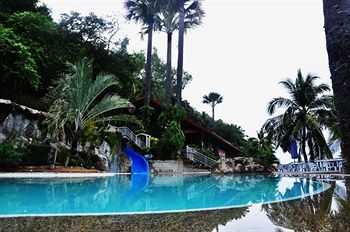
The restaurant was attractive and the food was pretty good.  Not wonderful, but decent.  The tables had great views out to sea.  The swimming pool was clean and quite large.  The architect had created two levels and a connecting slide which would be fun for kids.  However, there was no lounging area by the pool to set up camp for a couple of hours to relax.  And no shade.  So unless you actually wanted to swim, there was no incentive to stay.

Reef Pool

They offered snorkeling for non-divers with a reef pool so you could view baby sharks up close.  But the shore was rough, shallow rock with murky water and no evidence of much sea life, again with no beach and no place to hang.  Getting into the water was only for the tough soled or reef-shoe clad.  The water in the reef pool was green enough that I had no interest in going in.  However, the resort offered short boat trips over to a nearby island for a picnic lunch.  There we found a reasonable beach, snorkelling and good beach facilities.  Hammocks hung from the walls, there was toilet paper in the clean facilities, the beach was raked and clean, and the freshly cooked bbq lunch was very good.  Now there was a good hang out spot!

My verdict?  3 stars.  (1 star and 5 star reviewers be damned.)

A Development on Development


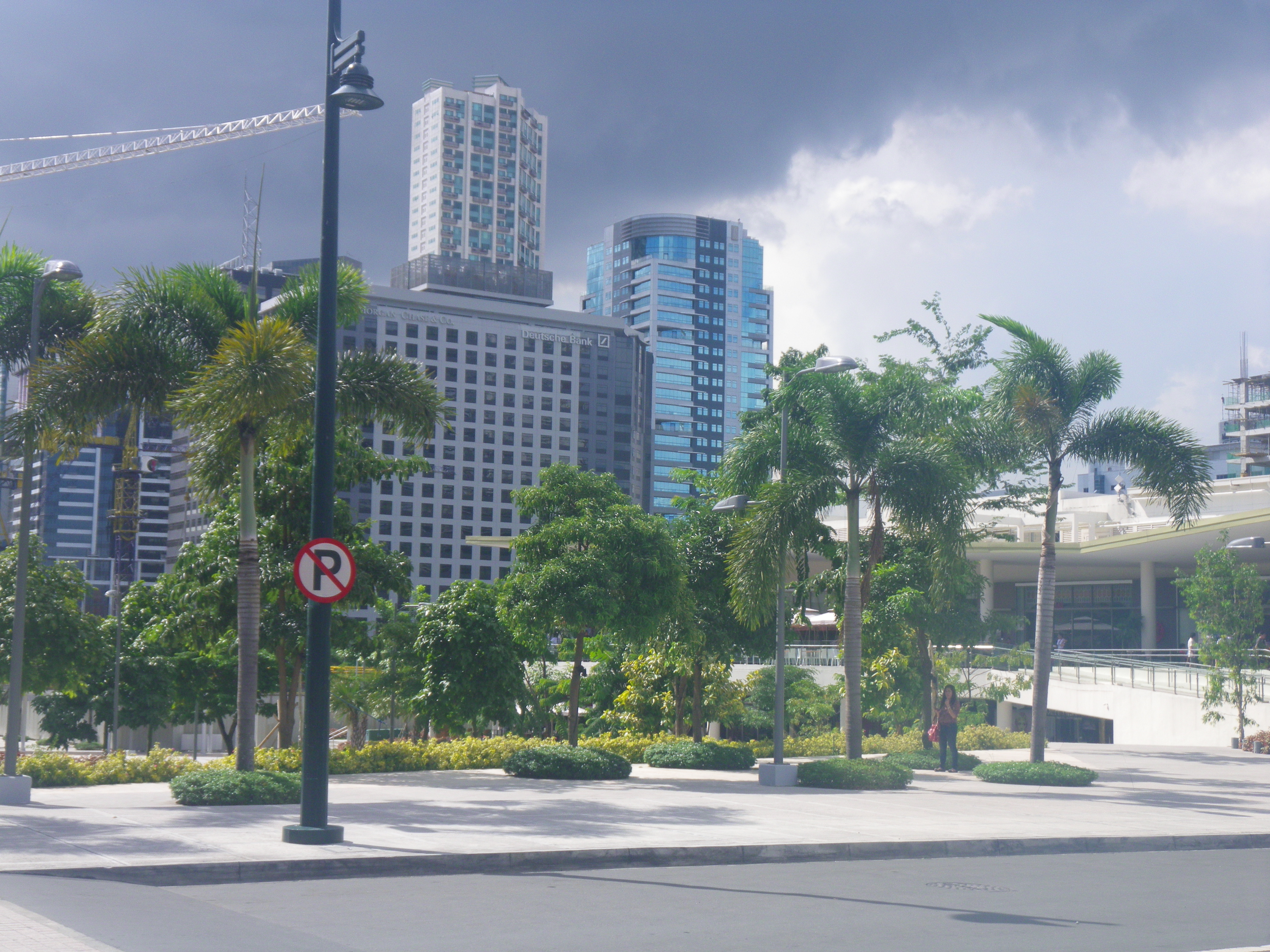
Ok.  Its been a while.  Over six months I think.  A lot can happen around here in six months, construction-wise at least.  Sim City (or Fort Bonifacio as it is officially known) continues to fly up in front of our eyes.  I’ve never been able to get a number of given construction projects going up at any one time, but its a lot and there appears to be no end in site.  No end, that is, until you count the end of our residency here, which now has a concrete finish.( If you pardon the pun.)  We now tend to separate buildings into those that we expect to see completed and those that we don’t.  Regardless, the city has changed enormously since we arrived in December 2010, and will continue to do up to and after we leave.  I’m sure we wouldn’t even recognize a good deal of it if we came back to visit 5 years on.

Probably the most collosal under development right now is the SM Aura building that started construction a couple of months ago.  Here is what is envisaged:

(Don’t be deceived by the green park-like surroundings.  I wish.  This is strictly artistic licence.  There’s plenty of existing concrete now and more surrounding development planned that certainly doesn’t involve park creation.)

As of today, here is the explosion in a cement factory that’s going on right now.  This photo only takes in the front short side.  The building stretches an entire block. I think it would be good to do a blog revisit of this one before we leave, by which point it could be high enough to see from behind the buildings that are currently obstructing my view:

Sept 2012

Developments continue to be a mix of residential, commercial and retail.  A lot of new buildings are a mix of all three.  Back in March 2012, the restaurant end to High Street hadn’t opened yet and we were still just looking at the construction sidings:

Now the siding is down and a restaurant centre with trees and graduated amphitheater seating has sprung up with more trees than you can see anywhere else in the city.  A central water feature sprays up in the middle courtyard after dark, keeping the kids busy while the parents dine.  One of the best changes I think. 1 year ago it was just a field.

One more…  March 2012:

Today:

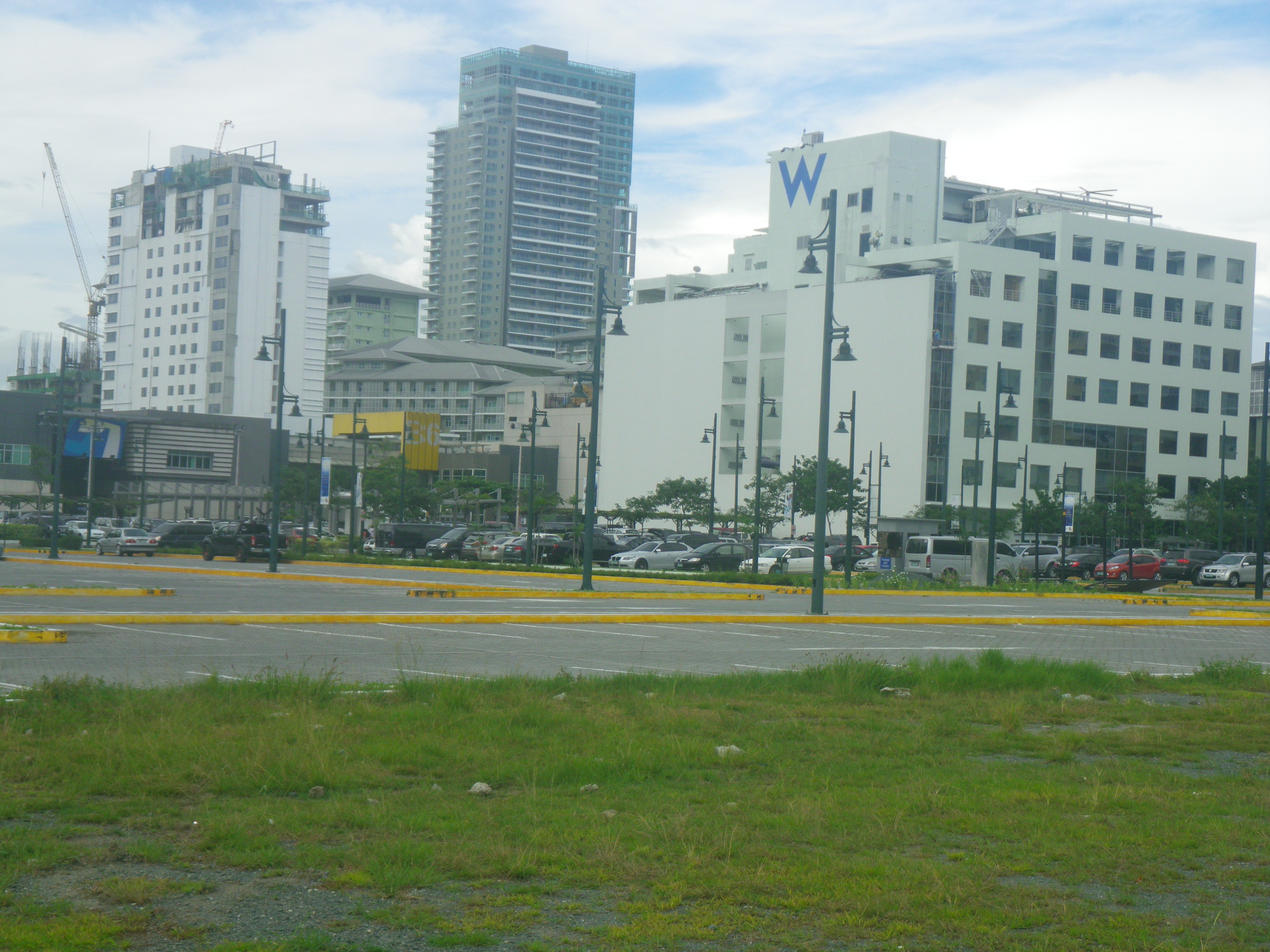
Same area Sept 2012. (Pic taken from last block of non-developed/developing land in the area)

Lastly, for consistency, here is the view from my kitchen window in March, and now again in Sept 2012.  Not so much difference at first glance, after all with 75% of the view blocked, most of the action is going on behind.  But if you play “spot the difference” with some of the taller buildings at the back, you can see a different skyline from just six months ago.

March 2012

The Space Between…


As I know I’ve mentioned already, I had a really busy summer.  We were on the road a LOT.  When we finally settled in our Greek home for a month it was really good to be back home with my stuff – my furniture, my kitchen — and see good friends and stay in one place that felt so comfortable and familiar.  But as our stay neared the end, part of me was ready to go back home to Manila and move on with our lives.  Isn’t that  what vacations are all about?  A much needed break from the usual grind, followed by a recognition that we all need routine in our lives.  I loved my time there and was sad to leave, but I was also ready to go back to work.

But we returned to the devastating floods that consumed 60-80% of this city, and rain and rain and more rain.  Of course its the rainy season here, “wet” is expected, but there’s rain and then there’s rain….  I was not expecting two continual weeks of deluge.  And while I sat in my apartment  feeling trapped, I knew that my problems were nothing compared to the suffering of others just a few streets away.  And yet the selfish feeling of boredom and discontent set in and coloured my view of the world.

The last two weeks since I’ve been back feels like two months, and I’ve been having trouble seeing the fun of being here in Manila.  Instead I’ve been seeing all the annoyances:  the traffic, the lack of open space, the difficulty of just going for a walk, wanting to just be able to jump in my car and go…..  Coupled with my sense of missing Greece and a rotten week at work, this has to be my low in almost two years of living here.  Blogging about these annoyances always seems petty in retrospect, and I usually avoid it.  But it creates a space in my blogging diary until the next event or interesting thing comes along, which perpetuates the image that some have, I’m sure, that life is one long beach trip or adventure.  Right now, ignoring that space — all the time — feels sort of dishonest.  No-one needs to hear about all my bad petty days, even if I can find the talent to write about them with sufficient humour or insight.  But a concession to add a little balance seems called for … so here it is:  Manila sucks right now!

A return to our usual programming follows shortly……

Update on the Flooding


For those asking for news, updates and information on the severe flooding in Manila, here’s a post to update everyone.  We’re ok!  The area that we live in (The Fort) seems to be holding up well as it has a modern drainage system.  The city has had about 30 inches of rain in the last 48 hours.  This is on top of heavy rains, tropical storms and high tides which have battered the city for the last two weeks.  The ground is saturated, rivers are overflowing and the inadequate drainage systems cannot even begin to cope.
Latham and I ventured out yesterday to Market Market to get some food.  Although we got very wet (despite the raingear and umbrella) it wasn’t too bad on the streets.  We did see one or two drain covers burst open from the water pressure as the drain was full.  So I think that it has the potential to flood here if it rained long enough.  Its actually just drizzling now, although there are still heavy rain clouds on the horizon over Makati….not sure what direction they are heading.  Here’s a recent video of Makati flooding:  http://www.youtube.com/watch?v=IQsu5-ZsXEA  Makati is the main business district and is considered an affluent area.  Many embassy homes are located here, most of them in apartments.  I haven’t heard from anyone housed in the villages, so I don’t know how houses are faring.
The coastal area where the Embassy is located is worse.  The high tide comes in and adds massively to the flood levels.  Robert says the flooding has been worse than the hurricane last September.  I can’t find any pictures online from the last couple of days, but to show how the problem compounded, here’s an article from Aug 2 that shows the state of things before the most recent set of heavy rains hit:  http://www.france24.com/en/20120802-philippine-floods-persist-toll-rises-23
Elsewhere it is much worse.  The northern part of the city, Quezon City, has the Mesa Dam which is the city’s main source of drinking water.  The reservoir is right next to the largest university campus.  All that area is seriously flooded and is now creating concerns for contaminated water.  Also in the southern area of the city, Las Pinas, it is really bad with flooding levels up to the second floor.  Our helper lives down there and she had cell phone reception at one point, texting me that they had moved up to the second floor of their home to avoid the water.
So for us the weather is just boring and a nuisance but the threat to lives and property elsewhere is very real.  Hopefully rains will die down today as forecasted.  Its going to take a long time for this city to dry out.

Volcano Hiking at Mount Pinatubo


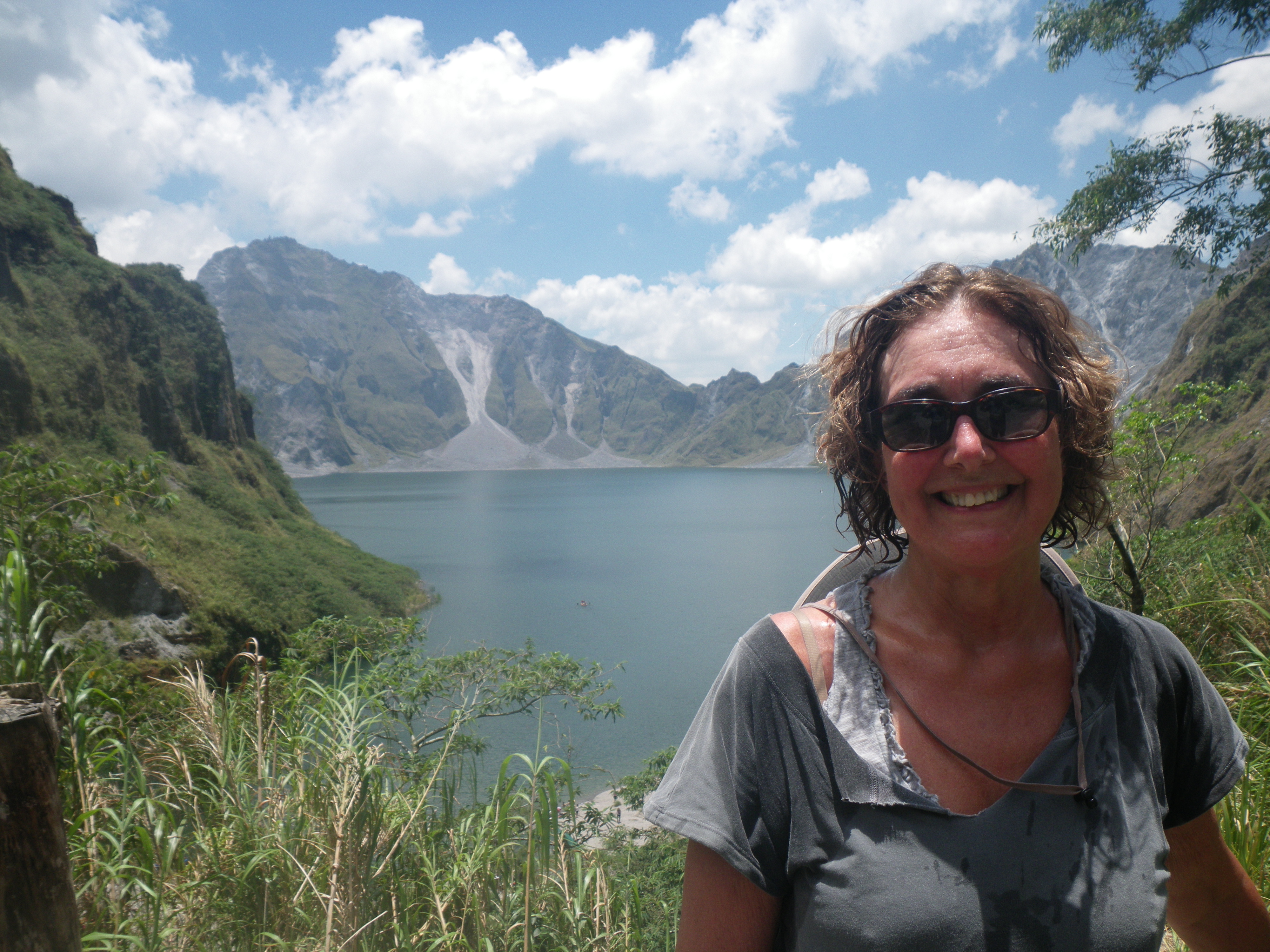
A few weeks ago now, while Helen was visiting us in April, we went hiking at Mount Pinatubo.  It’s something I’ve wanted to do for a long while, but it takes some organization and prior planning.  I had visited the area earlier, but we only viewed some of the devasation it caused to a local church.  This time we were going to get a close up look at the volcano itself.

It’s a pretty unique opportunity.  Mount Pinatubo is a volcano which erupted in 1991, causing the second largest volcanic explosionn of the 20th century.  Its eruption coincided with the heavy rainfall of Tropical Storm Yunya, which amplified the devastation significantly. The eruption lasted 9 hours, caused two earthquakes, and the erupting lava mixed with the excessive rain resulting in 10cm of ash covered an area of 2000 square kilometers, killing more than 800 people.  Half a billion dollars in property was destroyed and entire communities were wiped out.  The top of the volcano collapsed creating a massive caldera, which today is a large lake.

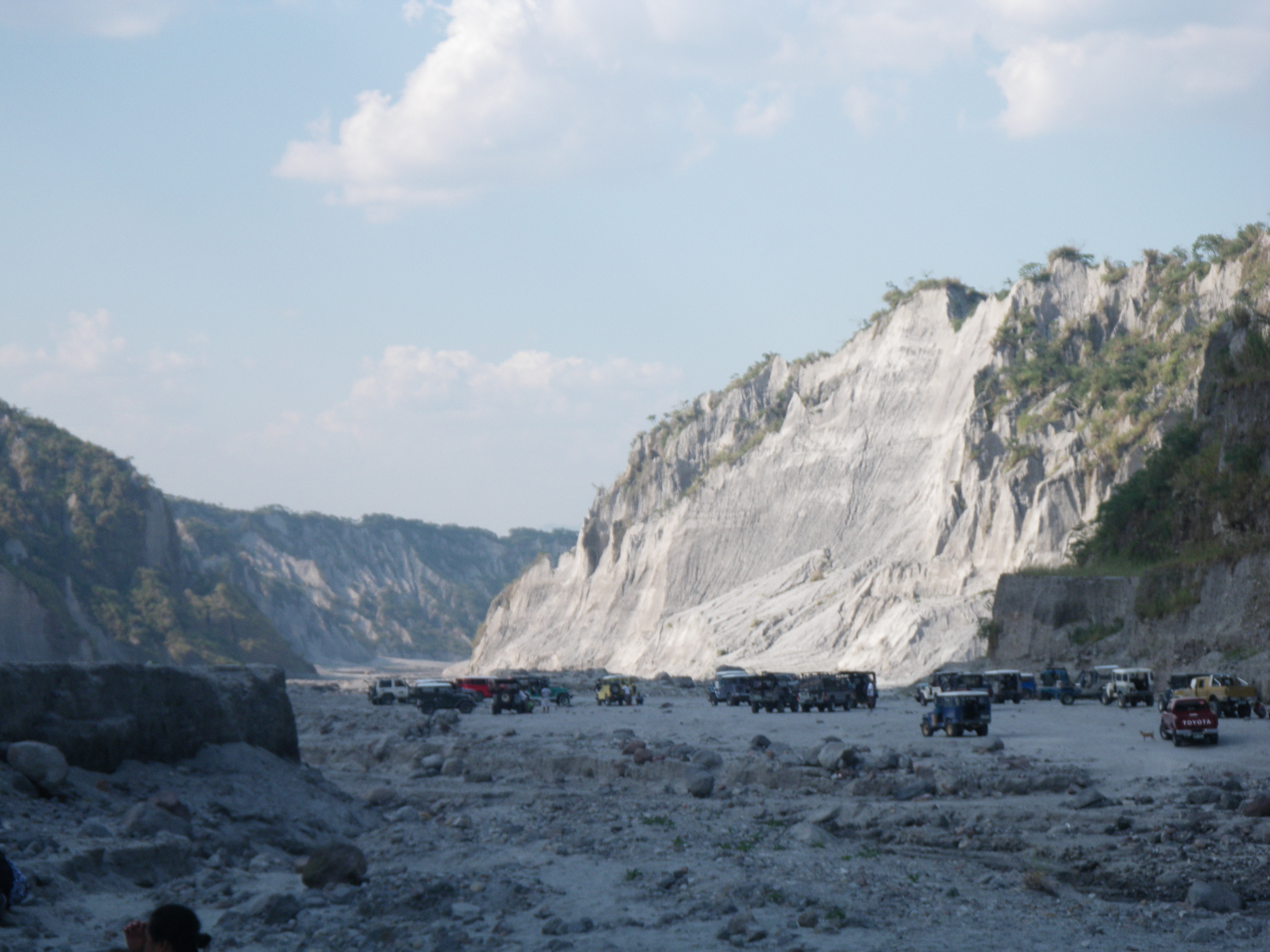
20 years later the cliffs formed by the volcanic explosion are starting to grow greenery

Today the journey from the outskirts of the devastation to the lake is across a lunar-like landscape, broken up by multiple riverlets running down from the caldera lake.  The first part is covered via jeep for about an hour, as it can only move at a very slow place across the rocky boulders and river beds.

The lunar landscape that is crossed by jeep

An hour out, the journey moves to foot.  Rattled from the jeep experience, and under the burning sun we walked for almost three hours to reach the lake.

The ascent is gradual, and the path is relatively straightforward. But that doesn’t make it easy. There’s lots of scree and its easy to slide on the loose gravel, and it was particularly hot that day. The sun came out and stayed out. I wore a hat but felt like my brains were being boiled! There was very little shade. It took almost three hours to reach the last part of the journey, up some steep steps to the plateau in front of the lake.

A victorious smile from Helen who was a trooper!

I was dismayed to see that there was little shade at the top, which was occupied by others, and it was another steep climb down to the actual lake shore, which meant another climb back up. We took a little rest and a food break and found the energy to go down to the shore.

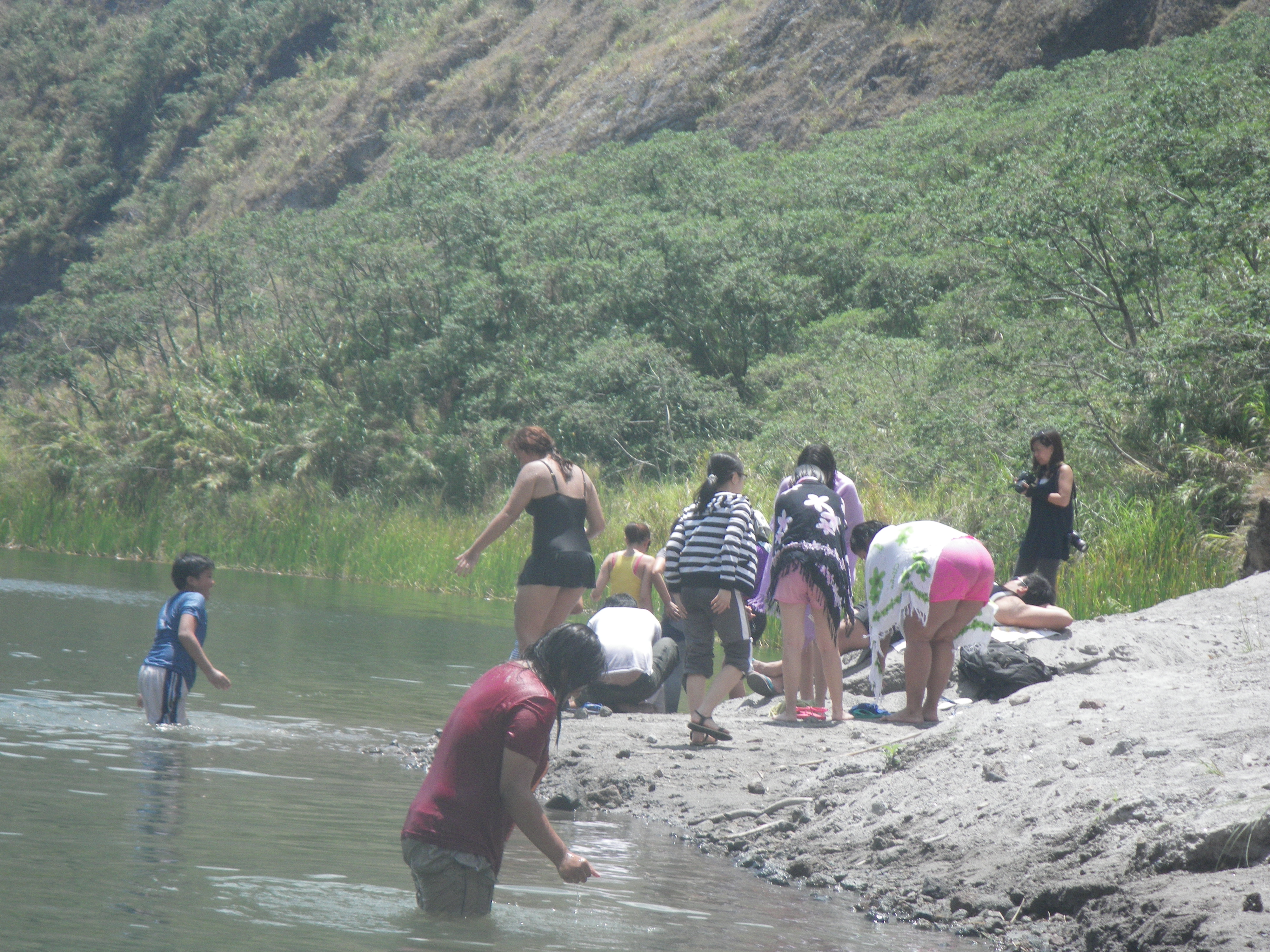
Others paddling down by the lake’s edge

Some were in the water, but changing into swim wear was not an easy option, and the banks of the lake were really steep – it was caused by a volcanic explosion after all – so we stayed on the lake’s edges and paddled. A bit disappointing really, because the thought of plunging into cold water kept me going all the way there.

Taking a boat out on the lake and a close up of a landslide, which were all around

We had started the day at 2.45am, waited in our building lobby one hour for the driver who didn’t actually show up until 4.30am. That put us at basecamp one hour late, and  there were no more jeeps available to pick us up. We were 7 people, and the jeeps only hold 6 (so we were told) so we had to split be up into two parties when the first jeep was finally found, which probably meant we couldn’t all hike together. 45 minutes later, Helen, Latham and I were finally picked up by a driver who didn’t know where he was going. The back door was broken, the side doors opened by themselves. We stopped to help another jeep with a flat tyre that turned out to be our stranded friends. We all piled into our jeep, which now was magically holding 9: the driver, the 7 of us, their guide and our guide. That’s three in the front, four in the back, one guide on the bonnet and the other holding on to the back of the vehicle. Photos don’t begin to show the whole picture!

The guide sat on the bonnet the entire time (with the other hanging off the back). How they stayed on is a mystery to me!

Being packed like sardines had its advantages when we drove in and out of river beds or bounced across dried mud and tire tracks. It stopped us flying around the vehicle as we were all jammed so close together. There were no handrails. The key fell out of the broken ignition on particularly bumpy spots, stalling the vehicle. The insides of the doors were missing, revealing the inner workings of the window and door handles. It was the crappiest, most abused vehicle I have ever traveled in.

However, our experience wasn’t even close to one reported by others. Other friends, coincidentally, had decided to visit Pinatubo that day. However, they had gone with a large group of about 30. Instead of supplying 5 jeeps to hold six-a-piece, some genius sent everyone out on a not-quite-large-enough bus, so some of the group had to sit on the roof. Of course, a long vehicle can’t handle the steep up and downs on the rugged trail, and after 20 minutes it got stuck out in the muddy, middle of nowhere. They were stranded in the lava fields for over two hours in the burning sun. They arrived at the crater lake, looking mighty pissed off, just as we were leaving.

The day was long and tiring, filed with amazing vistas and memories of a unique experience, but marred by really terrible communication and horrible transportation. It’s not the first time I’ve experienced this type of thing here. But for the uninitiated, the challenge is thus: Going in you know that the trip will probably encounter unexpected difficulties. What they will be, and how bad they will be, is unknown. Forewarned may be forearmed, but often there is nothing much you can do. Do you say no to the next one? Or do you make the best call you can and go for the experience?

Palawan Adventures: Part 4 Underground River


When in Palawan, everyone tries to visit the Underground River.  Its one of the Philippines most famous natural attractions and has recently been voted as a contender for the Seven Natural Wonders of Asia.  It’s essentially an extensive underground cave system that goes into the cliffs for quite a few kilometers;  Eight, I think.  What makes it so unique is that the entrance is at sea, and the cave system is filled by a mixture of tidal and river waters, making the whole thing navigable by boat.

To visit from our location, we needed to either rent a boat or drive.  I think it was about a 4-5 hour drive, or a 3 hr boat trip away.  We picked the boat trip, for the shorter, unique passage, but it did mean getting up at 4.30am for a 5:00am departure.  Three hours on the banca – each way – with that noisy engine and headphones had me hesitating.  But everyone was a good sport to do it, and we set off just before dawn for the long trip.

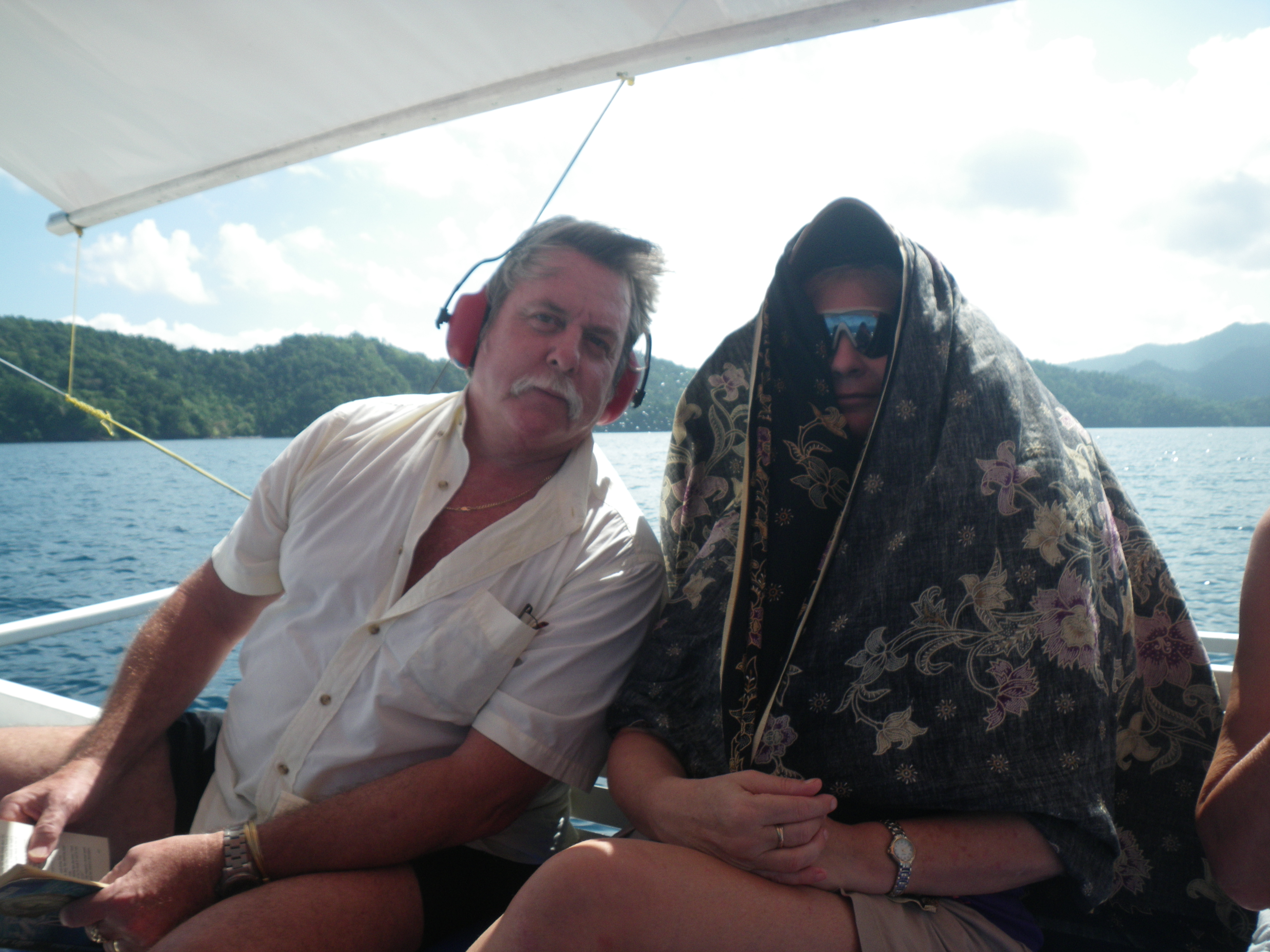
Sporting chic hat/headphone/headcover combo…

Three hours is a really long time on a vibrating, noisy banana with no cushions or real protection from the elements.  But it was such a unique experience to watch the sunrise over so much of the Palawan coastline, watch the early morning fishermen and putt past small islands off the coast.

Around 8am in the morning, we docked at a small beach and transferred to another little boat to enter the cave.  We learnt that they were expecting the heaviest traffic of the year that day, but we were the first into the cave.  4.30am paid off!  Our tour guide was awful and hilarious all at the same time.  His speech was a memorized script that was delivered in a monotone style – punctuated only occasionally in all the wrong places.  He pointed out the various stalactite and stalagmite formations to us as we sailed through, asking us to see Jesus, the Virgin Mary, mangoes and who knows what else in the formations.  I had a fit of giggles at one point.  He kept instructing Rob to point the boat’s light to the different formations, using the same language over and over again:  “Yes, yes, yes.  Move over there. Higher, higher.  More to the left.  Yes, yes, yes!” This was done so much, and for so long, that it got really creepy, like a bad porno script!

Robert asked him to shut up give us a few minutes of silence to enjoy the place.  I was reminded of our excellent kayak guide in Palau, who shared information and then paddled in silence a little, letting us enjoy the peace of the place.  (Not here I’m afraid).

Here’s a little footage of the cave entrance before it became to dark to film.  If you listen carefully you can hear our guide jabbering on in the background:

Aside from the guide, the cave was wonderful. I would like to have see more though.  More cave, less guide.  But that’s what happens with development.  Too many people.  I will say they do a very good job of preserving the mangrove swamp around the entrance, keeping tourists to wooden pathways and away from the forest floor.  The place was beautiful, but the boat trip views that really stay with me, despite the rain, hard seats and the god-awful engine noise.  A memorable day.

Palawan Adventures: Part 3 Chicken in a Box


No, we are not talking Kentucky Fried here.  The only thing fried about this chicken was her nerves.  This chicken was more than a little pissed off.  Her roosting place of choice was in a box next to the portable gas oven, where she hid and clucked like a mad thing.  No-one did effectively explain to me why she was ticked off but she crowed for a least half an hour.  Any attempts to go near her could get bloody.  We stayed away.

I’m not sure if she was named or not, but she was one of the many chickens roaming around the house.  I would go down to the beach in the morning and there would be one in the shade under my chair, or another pecking around for the early morning sand crabs.

It wasn’t hard to feel a connection between the food we ate and its source.  We were surrounding by coconuts, chickens, crabs and fish.  All our staples were ordered over the phone and brought in by boat from Port Barton.  But, with a little blood, sweat and tears, we could have mustered up a Robinson Crusoe style meal if we had to.  It was all right there.  So far, removed from KFC’s chicken in a box!

Palawan Adventures: Part 2 Ode to the Coconut


For some reason in Western culture, coconuts can be a little bit silly.  Throw a few coconuts into a skit and you have South Pacific spoof.  Two coconut shells and a grass skirt is a man in drag. Paint one up and stick one on a pole and you have a coconut deity.  You can “go coco” or throw things at them to win prizes.  This song sums it up really: 

Around the Philippines however, they are a major source of so many products and foods.  The trees are everywhere.  Leave Manila for one hour on the highway, and there they are:  Buko (young coconuts) to drink, dried coconut, fresh coconut, coconut oil, coconut matting, coconut fibre, palm fronds for roofing, woven palm frond mats, coconut shell products… the list goes on.

Walking around the house in Palawan, coconuts fell quite frequently from the trees.

I actually thought twice before cutting through the coconut plantation near us.  Every hour or two there would be a heavy thud, and a coconut would land on the ground.  Have one of those hit you and you’d know about it!  Stats say that 150 people a year die from falling coconuts.  More than sharks, I understand.  (But even that stat has an air of ridiculous about it.)

The caretaker cleaned the young coconuts for us and handed out buko drinks.  The machete handling is anything but silly: 

Occasionally the caretaker would go around and pick up the fallen coconuts and toss them onto a pile.  You see this piles all over the Philippines and they look like discarded  refuse.  But they will come back at some point and pick up the shells or the fibre casings to make something.  Nothing is wasted.