Making Hanging Baskets


DSC01740

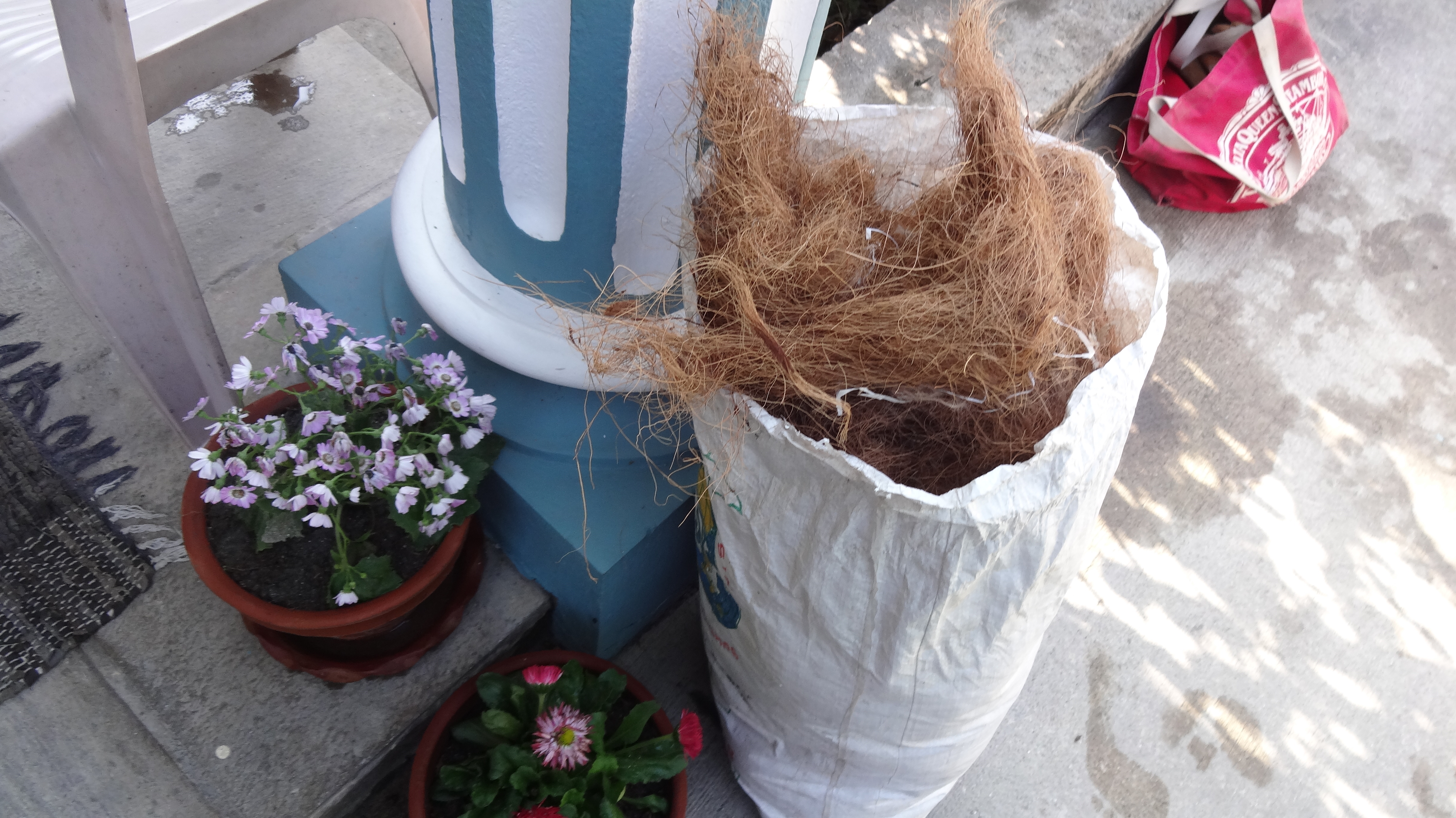
After living in a high rise apartment for almost three years, we were thrilled to get a house with a garden here in Kathmandu. The weather is warming up and the time has come to get outside and enjoy a little gardening. Our wire hanging baskets floated uselessly around the Manila apartment, but here they were ready for Spring! There’s no gardening centre here, so we needed to find all the components independently: chains for hanging, compost, seedlings and something to line the baskets. For the last part we decided to use jute, the hair from the outside of coconuts which a local store sold by the kilo. A lot of basket liners in places like Home Depot sell liners made from jute, but they are already pressed and pre-shaped. I would have to start from scratch.
DSC01703

A sack of jute, or coconut hair.

DSC01697

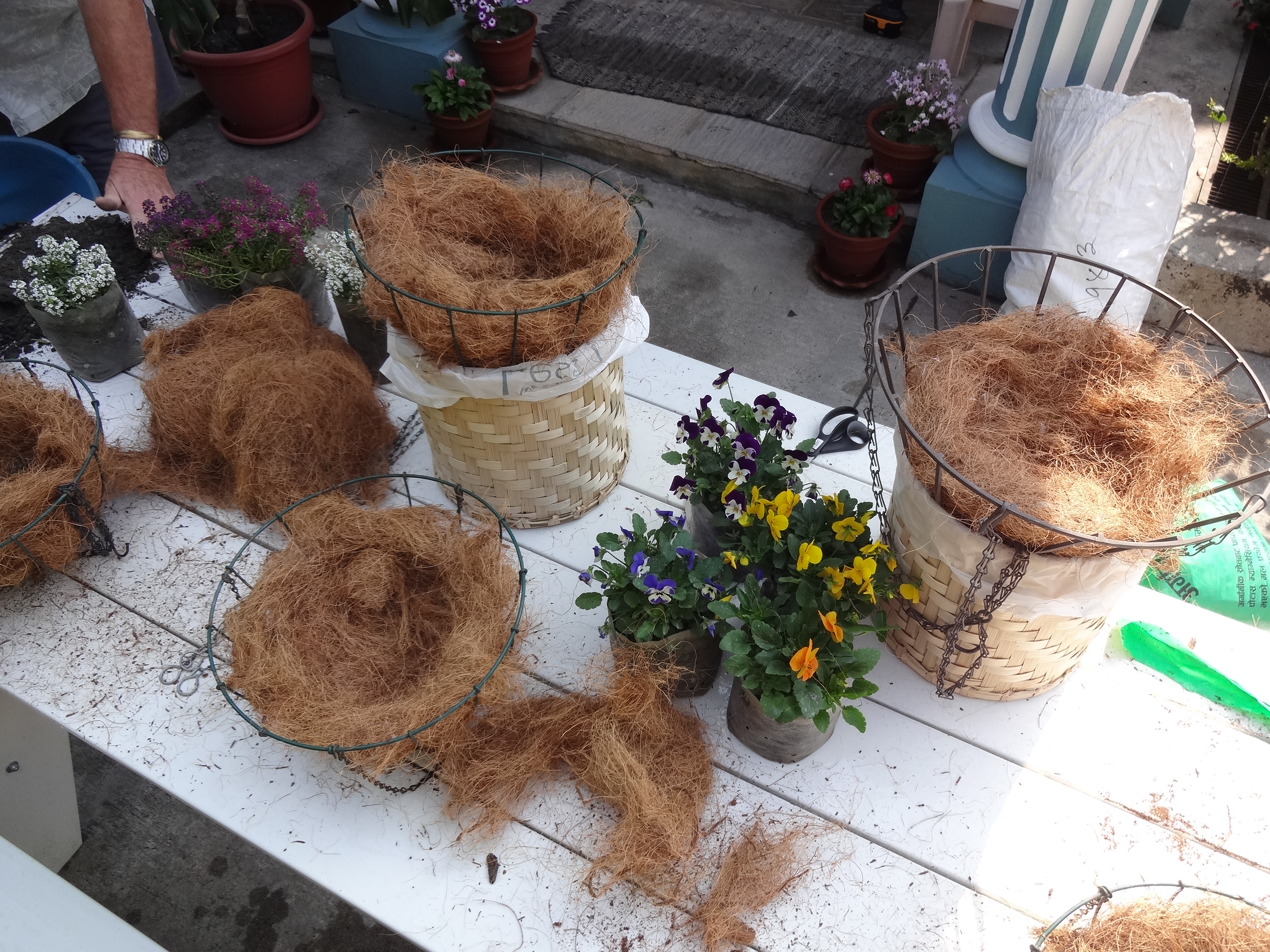
Five wire baskets ready to start

DSC01705

First step is to make thick, birds nest-like bases for the baskets by shaping the jute into thick layers

DSC01706

Then the nest are filled in with compost and the side plants are laid down along the edges. We used miniature pansies and allysium so they would make wonderful trailing bases for the baskets.

DSC01707

Next continue building up a wall of jute and fill the basket to the top with dirt. Plant. Looking good!

DSC01712

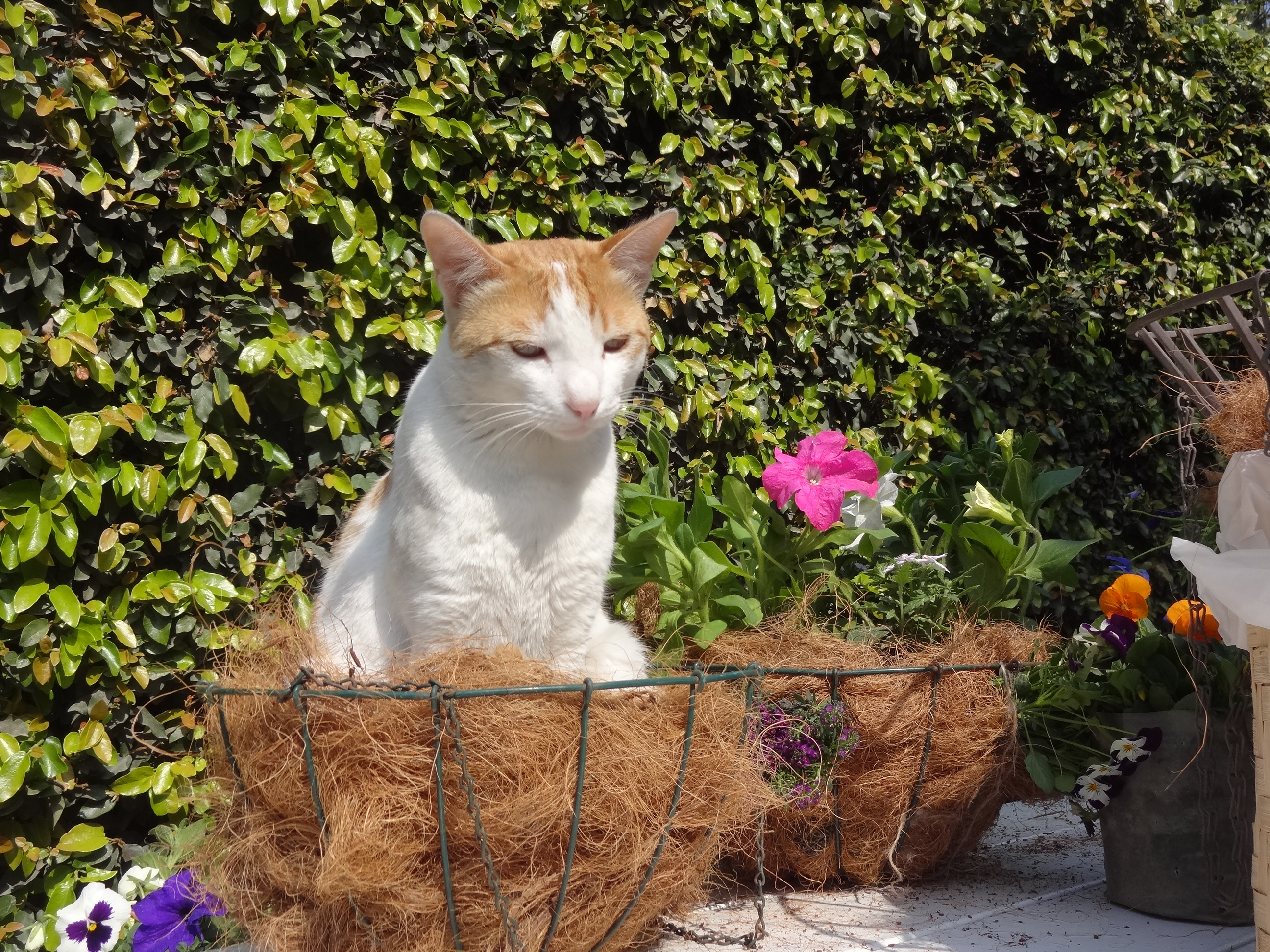
Our TDY cat, “Pickles” (or temporary feline visitor for non-FS types)….giving us a hand


DSC01737

The finished basket. Now to watch them grow…..


The Bhatbhateni Experience


DSC01649

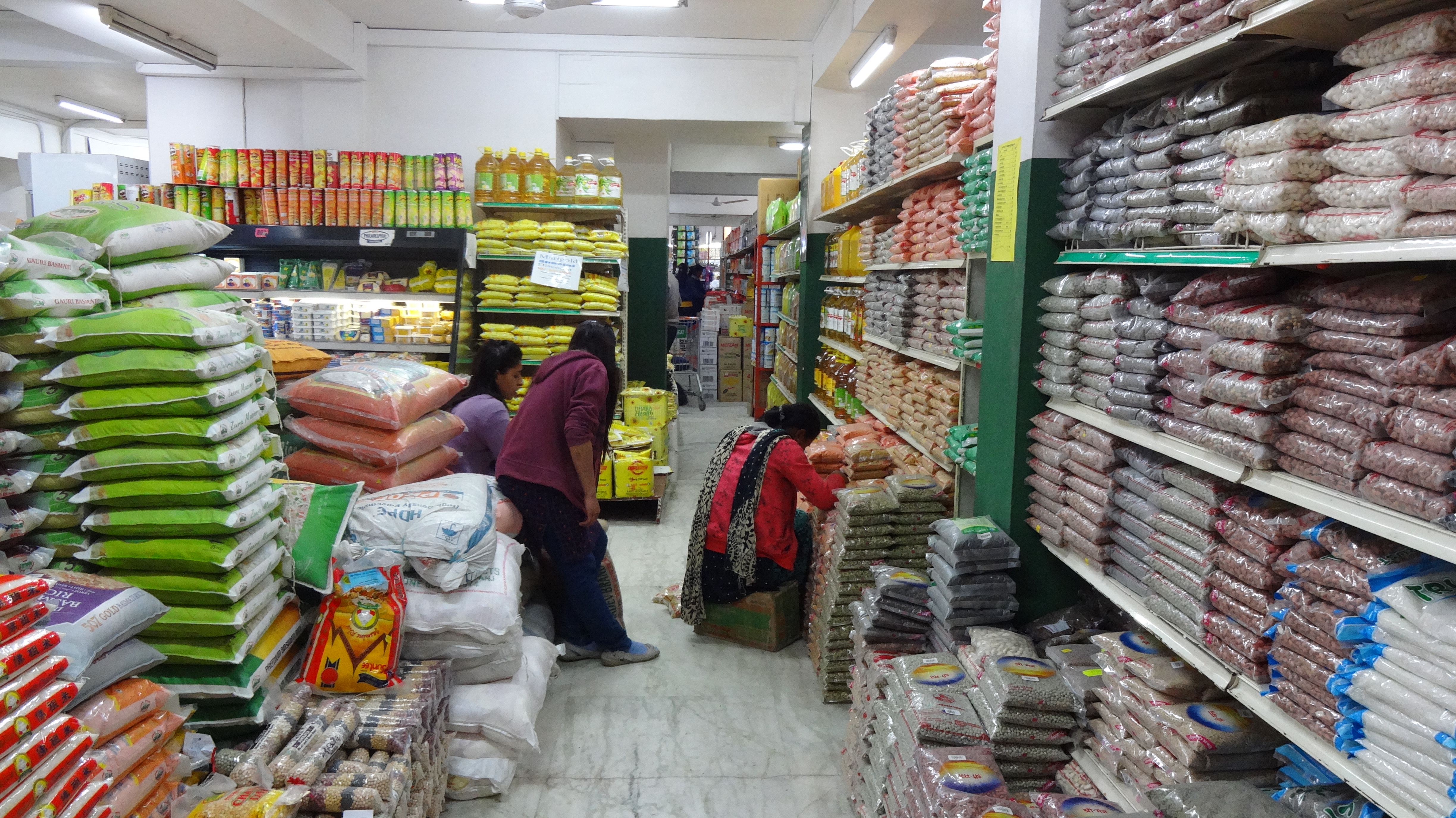
Figuring out how to feed yourself is, of course, a basic first step when you arrive anywhere. As I’ve been blogging regularly from Nepal, I’m surprised I haven’t told a story yet about Bhatbhateni, our local supermarket.   After a while in a new place, food shopping becomes a way of life and the story disappears into daily routine, as there isn’t so much to say. However, six months into our life here, I found myself shopping one lunch time at another supermarket, Saleways.  I started marveling at how clean and organized it was.  Remarkable even.  Everything was neatly stacked, the shelves were clean.  I could find what I was looking for.  Then I realised that it wasn’t remarkable, it was normal.  At least normal elsewhere, and my usual Bhatbhateni experience had lowered my standard of expectation to such a point that chaotic had become the new norm.

That’s not to say that I’m not grateful for Bhatbhanteni’s offerings.  Its almost the only place in the city where you can shop department store-style (sort of).  You can practically get anything you need from olive oil to shoe polish, without having to hunt it down in the small stores locally.

But, boy, is that place a mess.  Here’s a little photo story of what its like to push a cart around the store:

DSC01722

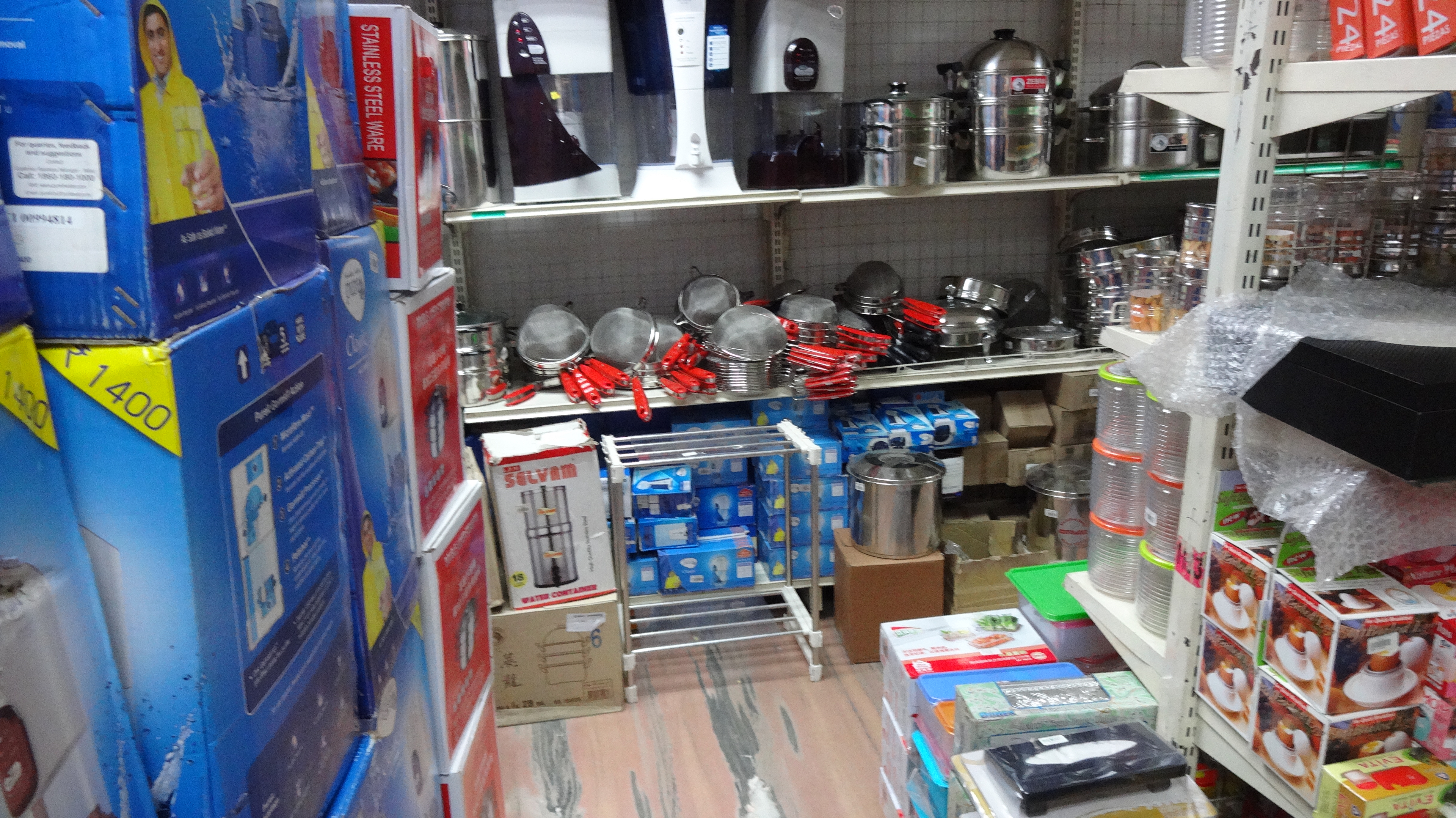
This is probably one of the neatest sections in the store. The aluminum ware is all stacked and sparkly. Only one third of the floor is covered with stuff. It gets worse….

DSC01726

….and here’s an example of how bad. Not sure who thought it was a good idea to dump stuff and completely block the plastics aisle, but I was glad I wasn’t pushing a cart.

DSC01727

And from bad to worse. This is actually a cross section between two aisles, but is it so blocked with stuff that it looks like a dead end.

DSC01732

As for the shelves themselves….I say “just chuck it in!”

DSC01733

If you use the floor along every aisle (on both sides) as a storage area, the bottom shelf gets completely blocked. Then someone will come along and start pulling out everything in front because they cant’t get to the stuff on the bottom shelf. And guess what….the aisle gets blocked even more!

DSC01735

To really top off the confusion, you must maximize the number of people aimlessly wandering around the blocked aisles by hiding stuff in weird places. Shaving brushes and razors? Next to the orange juice.  Eggs…? Why they are under the coffee!  At least this week.

Come on Bhatbhateni. If Saleways can do it, so can you.

Lingering in the Garden of Dreams


bench

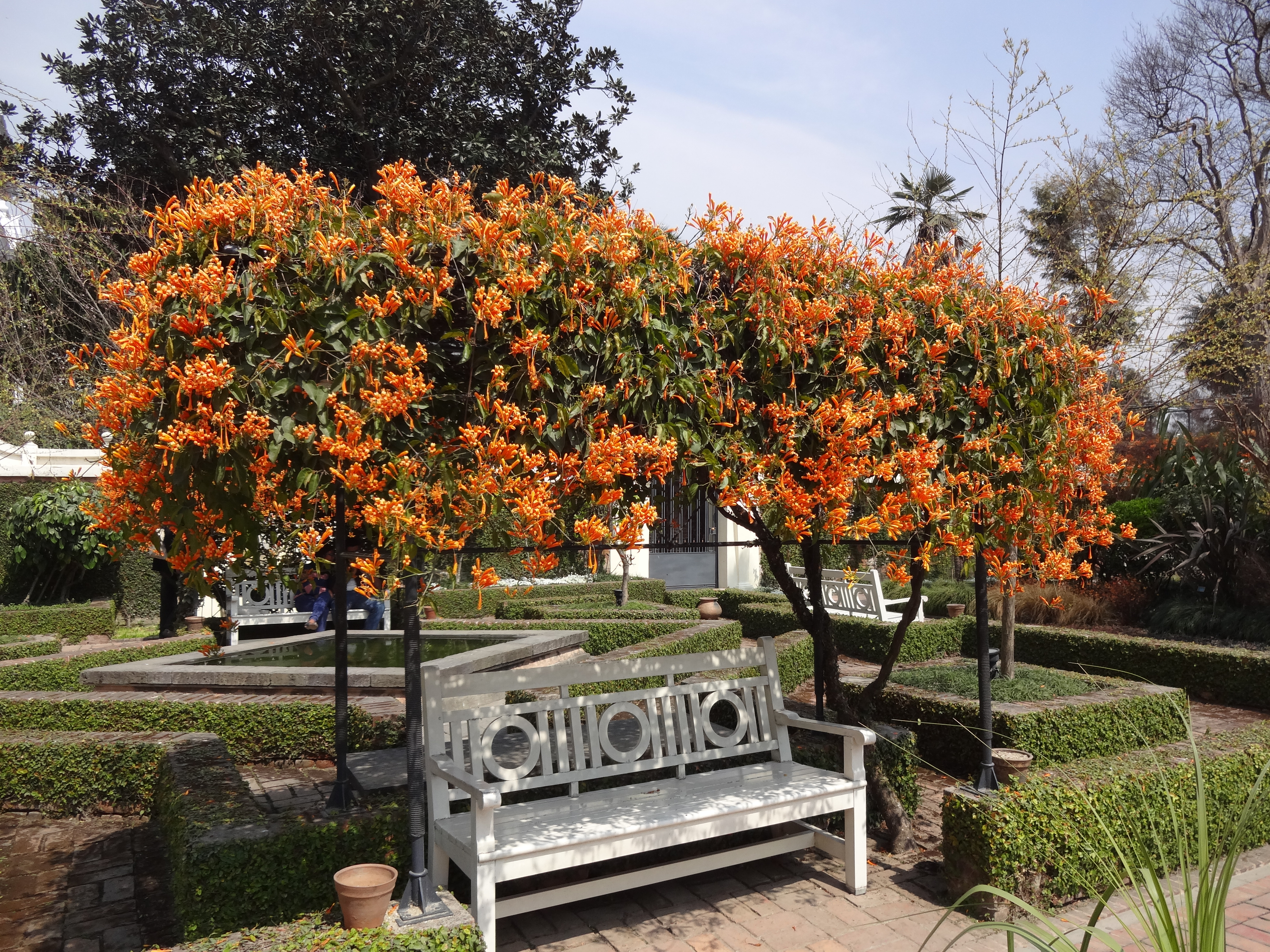
This very pretty bench is the perfect place to take some time to enjoy the sunshine, read a book, or just linger for a few minutes and take in the view. There’s nowhere else like it in Kathmandu.

Literally, nowhere.  Kathmandu streets are dusty, noisy and difficult to navigate.  Motorbikes don’t pay much attention to sidewalks.  And pedestrians have a very loose idea of where they’re supposed to walk.  So both mingle in a continual stream of near disaster and, if you’re not vigilant, you may well be standing in the wrong place when disaster happens.  And if you’re not looking down, you can trip, or twist your ankle or tread in something nasty. There are no benches, public parks or quiet spots, only gaps in the chaos where people dump their garbage.  It ain’t pretty.  Not surprisingly–especially as a foreigner–there is nowhere to stop and take a breath.

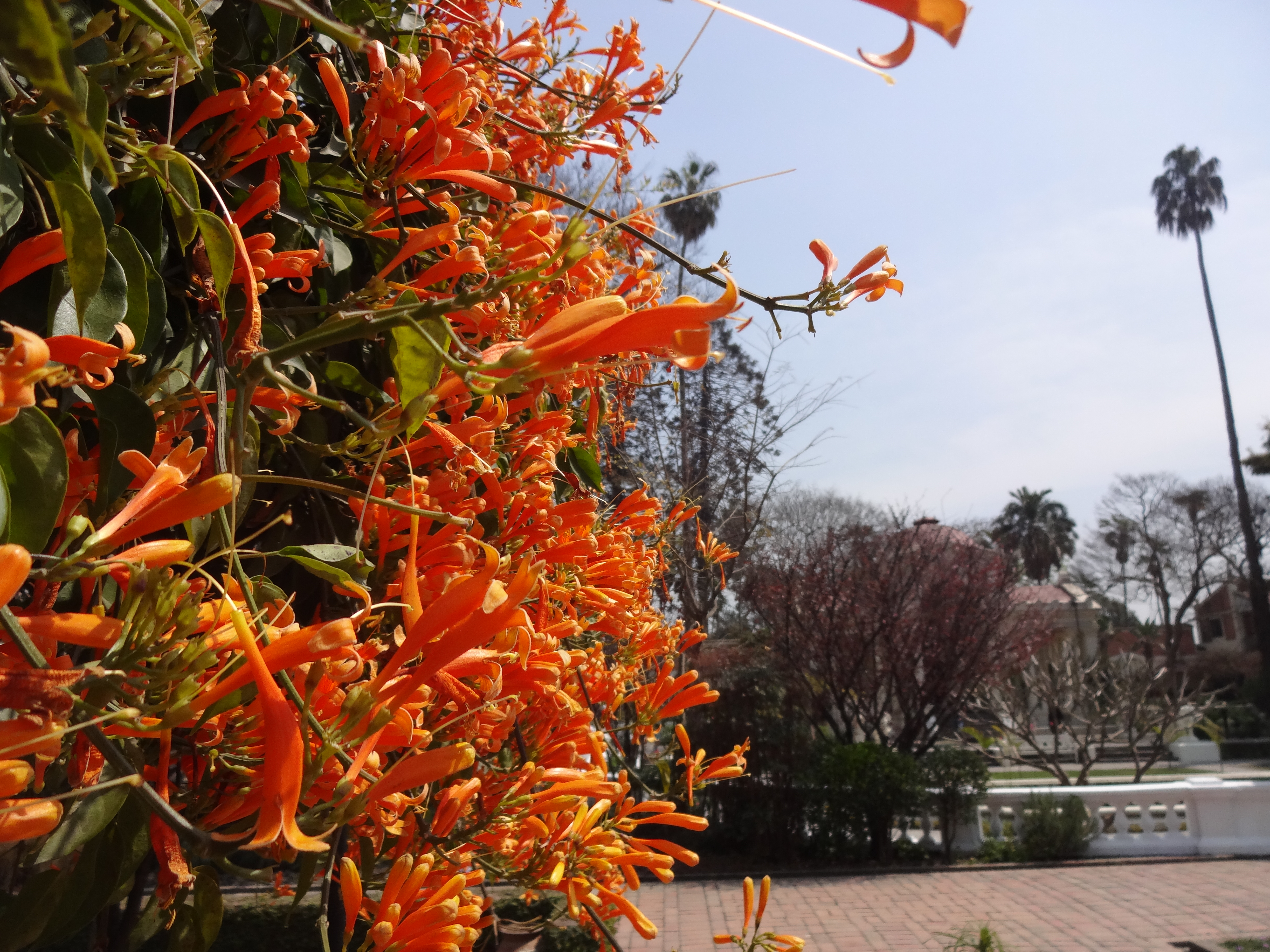
Except the charming Garden of Dreams, a paid park close to Kathmandu’s tourist district of Thamel, and a little haven of quiet and solitude amid all the chaos.  Getting out of Kathmandu to the beauty of Nepal is not always possible, but here at least you can escape for a little while.

DSC01604

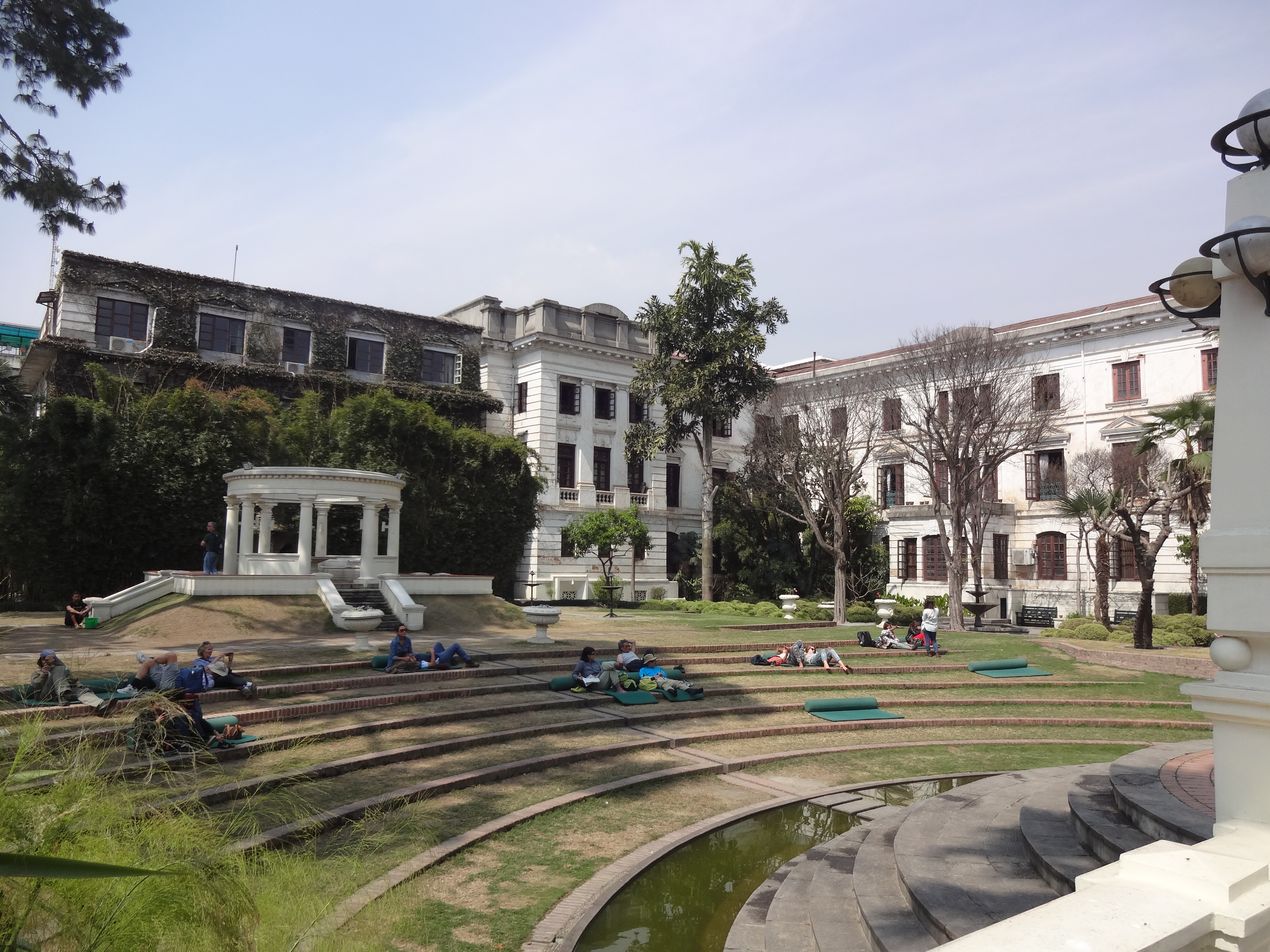
Hanging out on the grassy amphitheater at the Garden on Dreams. Here in the dusty dry season, its not so green. But is pretty, calm, and  no one bothers you.

DSC01605

The park grounds are from the former Kaiser palace and still retain their feeling of Neo-Classical splendor.

DSC01607

DSC01608

DSC01610

DSC01613

Garden of Dreams

This post participated in the Daily Post’s prompt, Linger

Special places for others:

  1. A Night At Billy Bronco’s | The Jittery Goat
  2. Daily Prompt: Linger- What Makes a Life Worth Living For | Journeyman
  3. The Last | Kate Murray
  4. A Monday free of an alarm call is wonderful, isn’t it? | thoughtsofrkh
  5. DP Daily Prompt: Linger | Sabethville
  6. Daily Prompt: Linger | The WordPress C(h)ronicle
  7. S. Thomas Summers: Writing with Some Ink and a Hammer | There Be Leprechauns
  8. Shared Lullabies: An Adult Who Wants to Stay Just a Little Bit Longer in Her Parents’ Bed | Kosher Adobo
  9. linger | yi-ching lin photography
  10. after that first bite, | y
  11. When Do I Stay Awhile? | Cass’s Useless Opinions
  12. Daily Prompt: Linger | seikaiha’s blah-blah-blah
  13. Hardships will not deter me from getting closer to my love | Outreach
  14. My pre-game Pre-Game | The Bohemian Rock Star’s “Untitled Project”
  15. Daily prompt: Linger | The Wandering Poet
  16. A Love Affair With Southern Italy | AS I PLEASE
  17. Home Sweet Home | Views Splash!
  18. Step by step | Le Drake Noir
  19. Daily Prompt: Linger | tnkerr-Writing Prompts and Practice
  20. Linger Longer… | Hope* the happy hugger
  21. Never fly solo | Perspectives on life, universe and everything
  22. If ever | Perspectives on life, universe and everything
  23. Love for lingering, drumming | Journey of a Culture Carrier
  24. Lingering longer | Sue’s Trifles
  25. The Trouble with Lingering | Wise Woman in Training
  26. Daily Prompt: Linger « cognitive reflection
  27. I see stars | littlegirlstory
  28. Linger At The Beach | Lisa’s Kansa Muse
  29. Lingering, all day today | sixty, single and surviving
  30. Linger | forgottenmeadows
  31. Not Wanting this Moment to End. Daily Prompt | Angela McCauley
  32. Linger | The Library Lady and Rosie Bear
  33. Lingering Sun | The Ambitious Drifter
  34. Joyful linger over Versatile Award | litadoolan
  35. 279. Don’t Let it End | Barely Right of Center
  36. Until Next Time | Lifestyle | WANGSGARD

Happy Holi: Run!


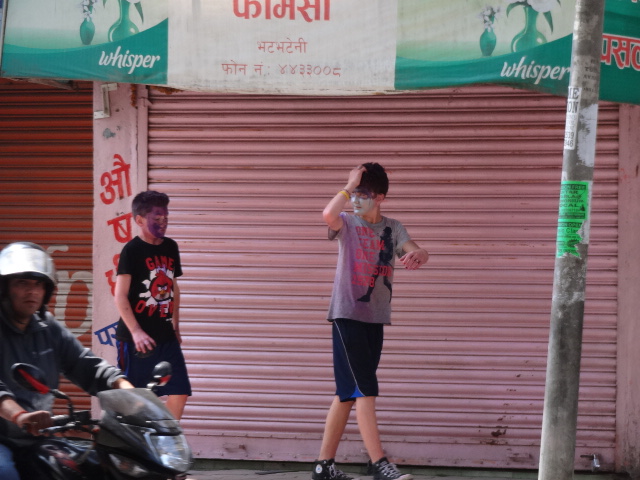
DSC01737You better run if you don’t want to get hit!  Today in Nepal it is Holi, a colourful local festival that celebrates joy and happiness. On this day, men, women and children throw colored paint, vermilion power and plain old water on each other and (hopefully) unsuspecting passersby.   It gets pretty messy!

Holi celeration

After dousing his sister in purple paint powder, this little devil is about to super soak her too!

Above every street or around any corner is someone with a paint bomb, ready to take you out! 

This little guy was hidden on a roof, waiting for his next victim.  Little did he know I was watching him!

This little red-faced guy was hidden on a roof, waiting for his next victim. Little did he know I was watching him!

Holi is a religious festival with its own set of legends celebrating Krishna, but I prefer its social message: putting color on each other symbolizes amity, friendship and mutual trust….although I’m not quite sure how ambushing someone with an unexpected shower of coloured water quite installs trust!  But its fun and the kids love it.

It was very hard to take photos surreptitiously.  The second they saw a camera I would have been a major target!  However I did manage to sneek a few through the window.  Here are some very colourful people returning home from the festivities:

Waiting for a lift?

Waiting for a lift?

Holi Festival

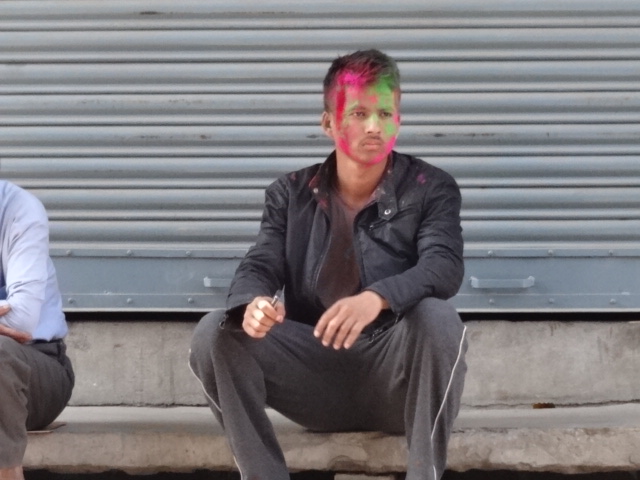
For some very colourful people, they are looking very sombre. Maybe they lost the pink powder fight?

DSC01740

A Word a Week Photograph Challenge

Bicycle Balancing Act


DSC_0589

25 years ago, I used to ride a bike as my only form of transportation along the coastline in the suburbs near Athens.  I cycled along the paralia into town daily.  One morning, laden down with groceries, dog food and dry cleaning, my bike literally snapped under the weight of the load, crumbling to the road and taking it me down with it.  I wasn’t hurt, but my bike lay on the ground contorted, with its neck snapped — fatally wounded with the handlebars still in my hands but joined to the bike’s main frame only by the brake line.  I looked like a freak show.   With my shopping scattered everywhere,  I had to leave the tangled mess abandoned on the curbside to  frantically find a phone and call home for someone to come and scoop me up.   Turns out my faithful bike was a bit of a wimp.

Here in Kathmandu, I remember that experience sometimes when I see  workhorse bicycles passing by,  laden with extraordinary heaving loads. These aren’t wimpy, modern bikes.  But antiqued, sturdy, bone-rattling warriors of the road…which may, or may not, have brakes.   They almost always don’t have gears.  But what they lack in suspension, they make up  for in brute strength.

Sometimes they are so overladen they can only be slowly pushed by their owners, who precariously try to balance their load without being run over by traffic or toppled by the many potholes.  Or sometimes they’re driven by vendors bringing produce from a farm outside the city on a bicycle-towed cart,  or some other creative incarnation of a bicycle that has been cleverly adapted for its owners cargo: the straw broom guy, the furniture sellers or the amazing construction assistants with 50lb bags of cement slung over their handlebars.  I’m awed at what I see ferried around by bike. 

And sometimes I am just horrified.  I see people carrying plates of glass or mirrors,  untethered small children, or horrible breakable, dangerous things that would end in disaster if someone mis-timed or mis-stepped in Kathmandu traffic.  And yet — at least for now — I’ve yet to see that happen.  These guys do this everyday, and are very good at it, and their amazing, trojan bicycles keep them in business.

DSC_0560

This post is was part of the Weekly Writing Challenge, Object ,at dailypost.wordpress.com.

Pashnupatinath Temple


DSC01448

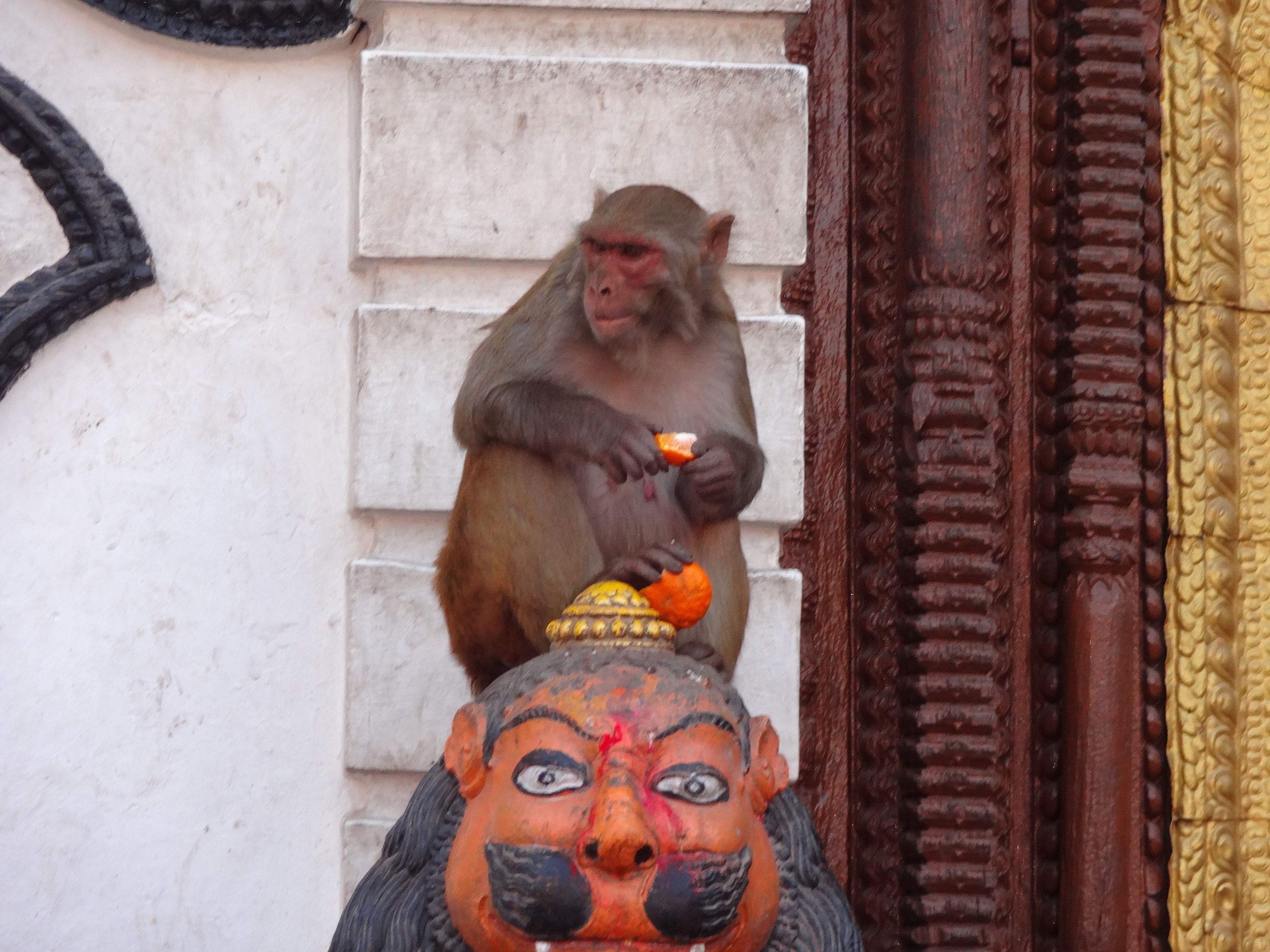
Monkey at Pashnupati Temple.  Don’t even ask…this guy’s not sharing his orange!

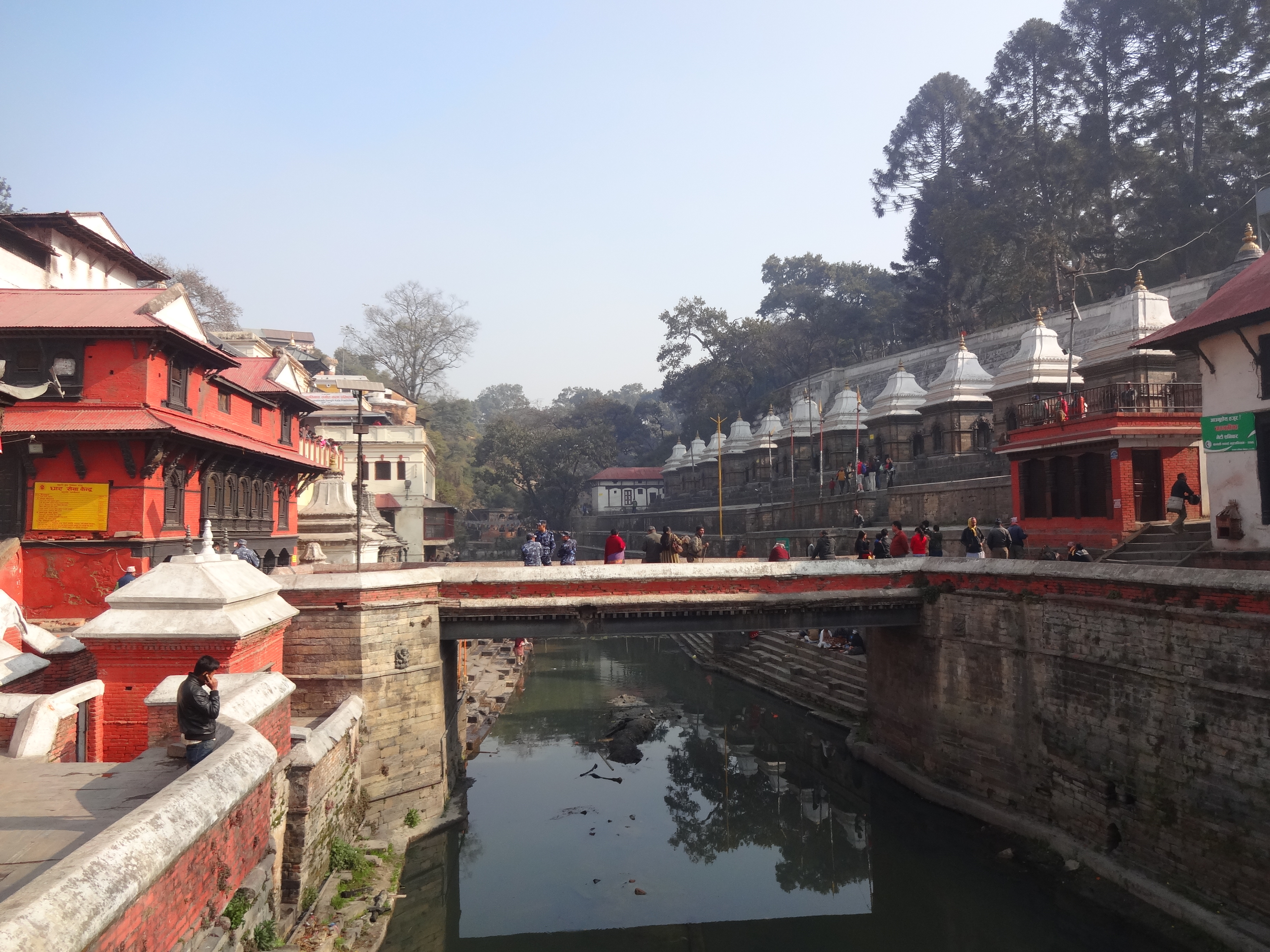
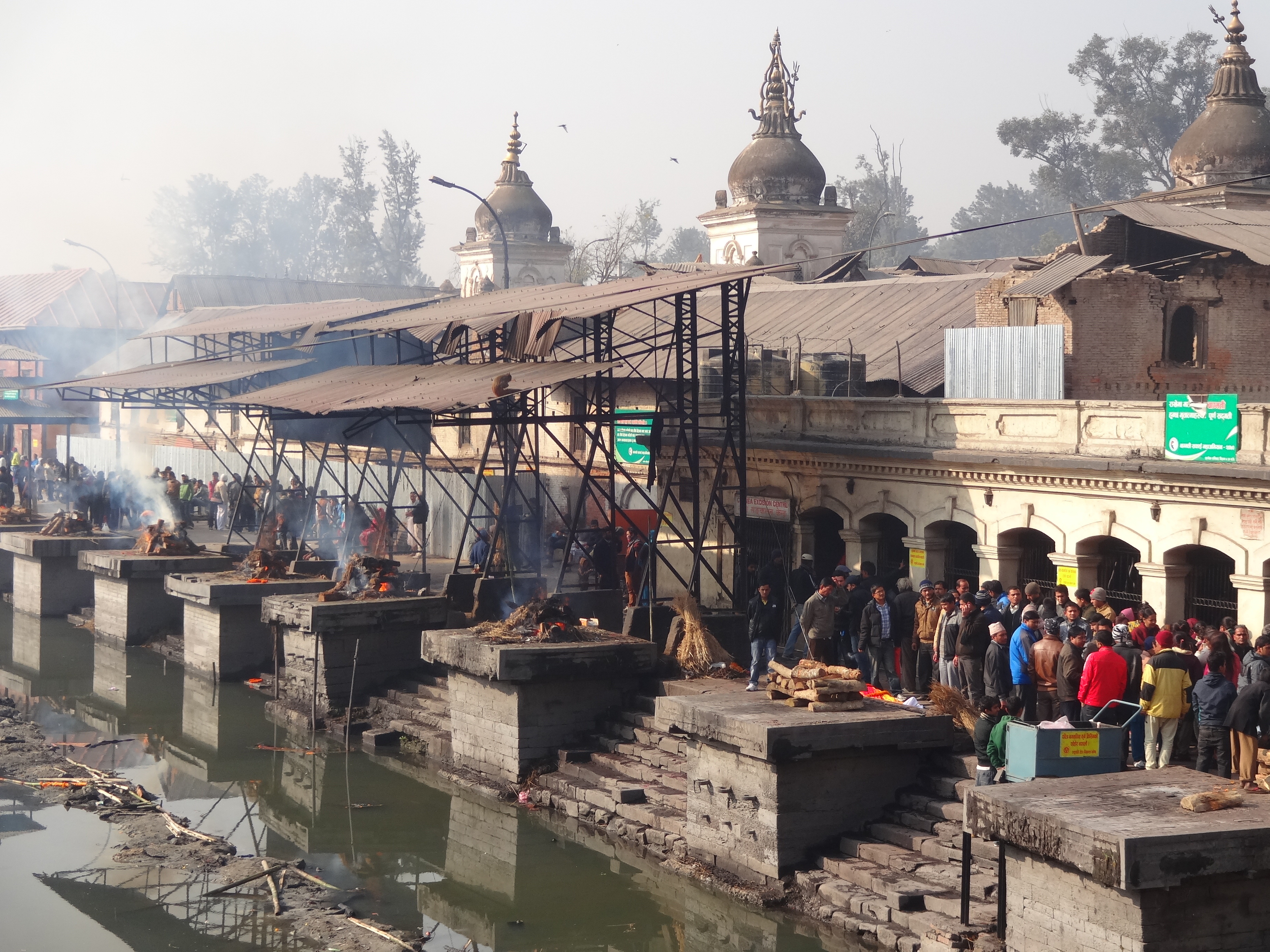
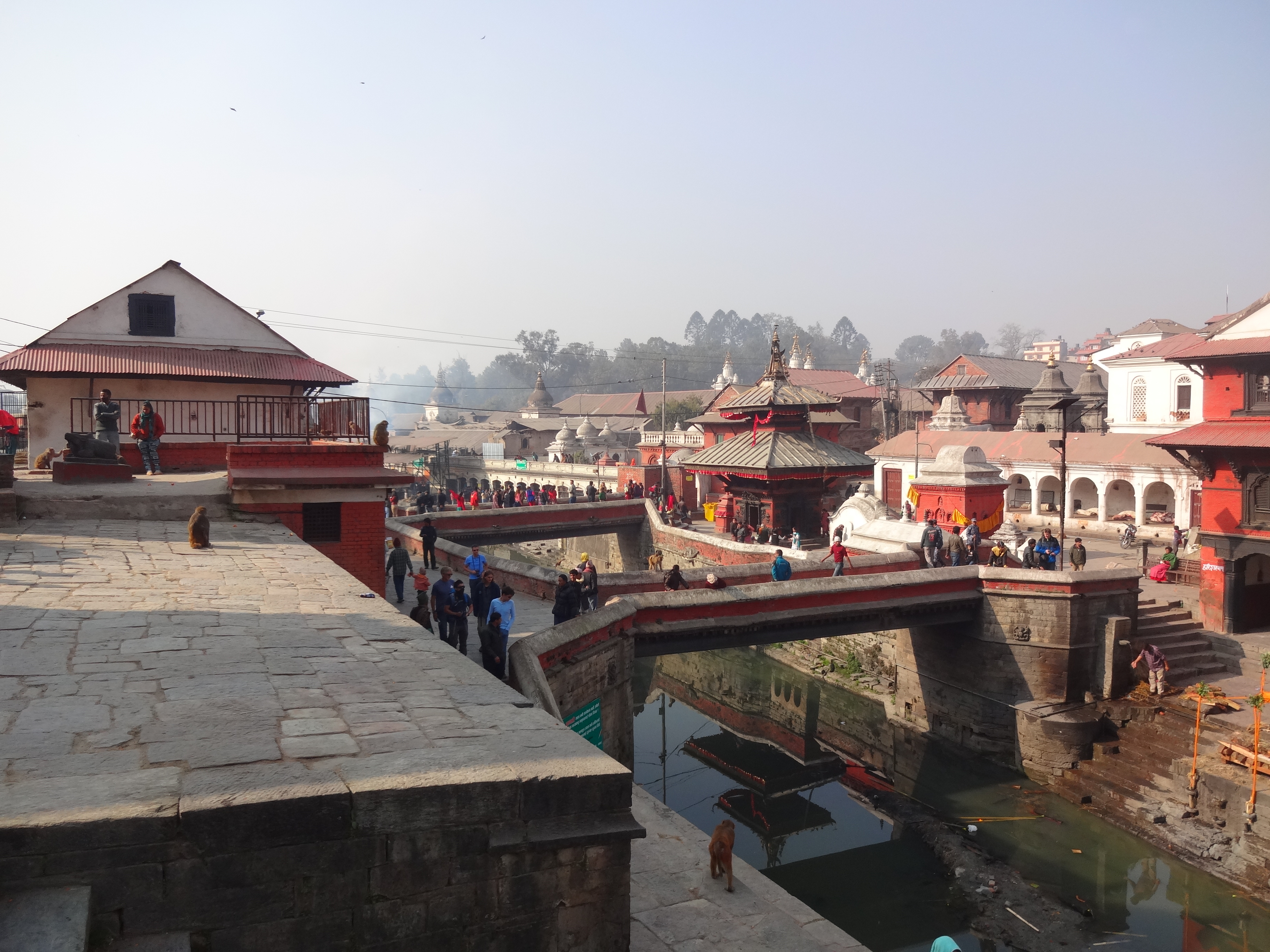
The first thing you see when you leave Kathmandu Airport is a “World Heritage Site” sign plastered several times along a rickety corrugated tin fence.  Behind it is an open area with garbage.  You wonder where the Unesco World Heritage site could possibly be in this ramshackle area and what kind of place it would be?  Its Pashnupatinath Temple, one of the most sacred sites in Nepal, attracting pilgrims from all over Nepal and India.  The temple complex straddles the Bagmati river which, until recently, people bathed in its very holy waters.  Unfortunately nowadays they are very dirty waters, and the bathing has stopped.  I’d heard terrible stories of a garbage-choked river, but now weekend clean up teams have been hard at work removing the trash, although the water remains very unclean.

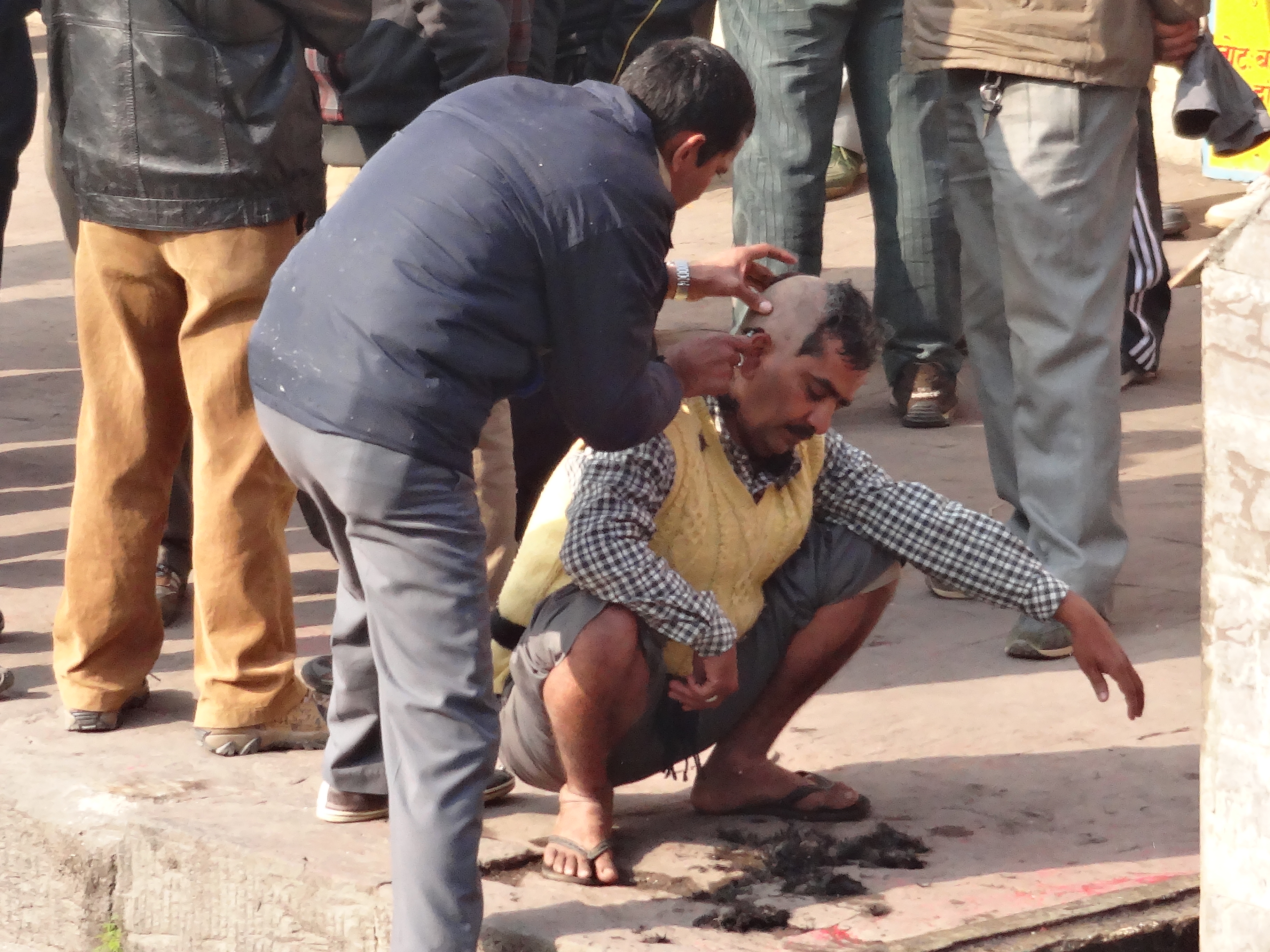
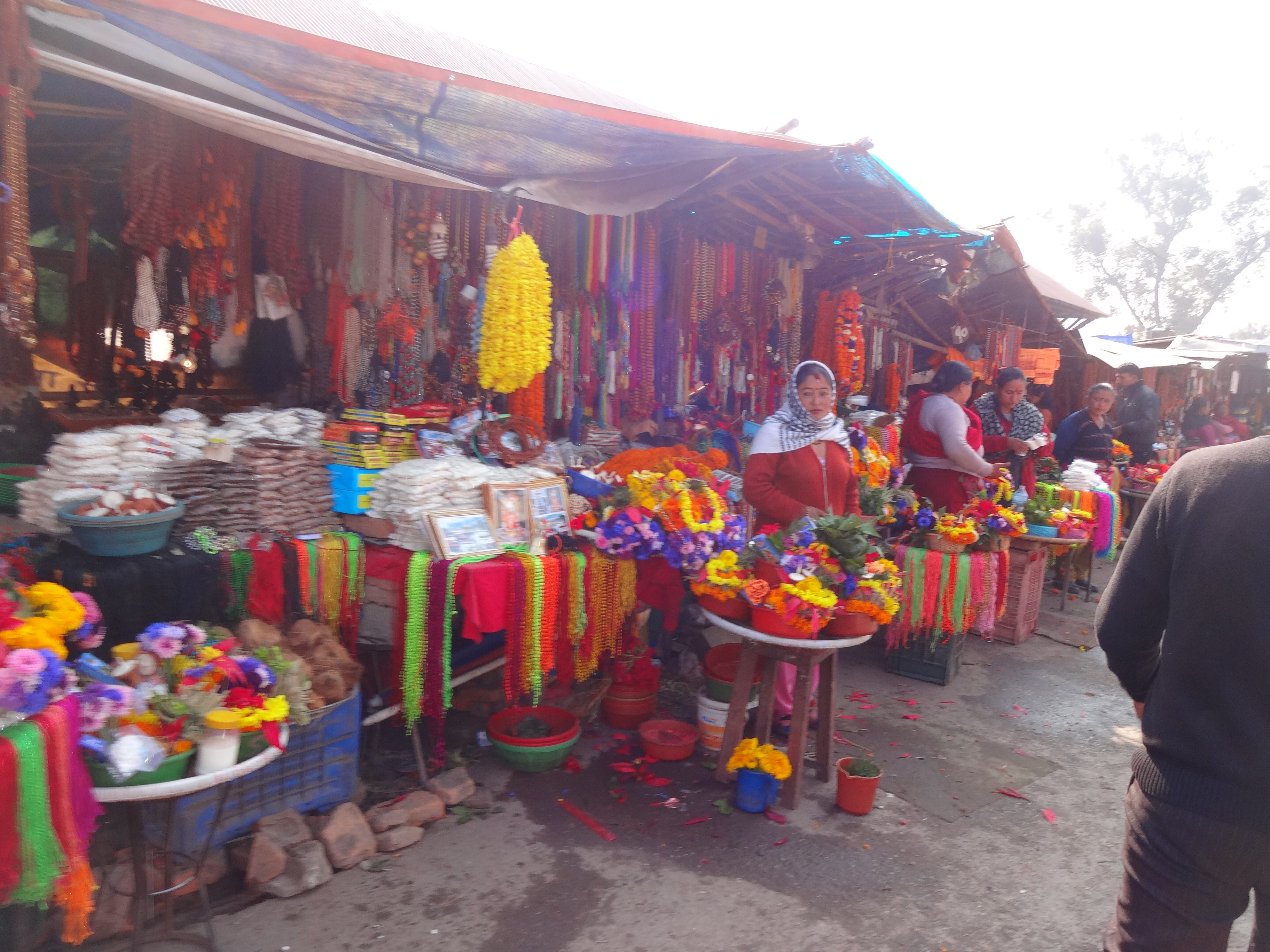
Pashnupati is also a crematorium, and the bodies are burnt on the ghats alongside the river …..out in the open, for all to see.  The mourners gather by the burning pyres, the men shaving their heads as a sign of mourning.  Onlookers are on the other side of the river, at a respectable distance. There were very few westerners.  Just devotees visiting the temple, funeral parties, monkeys, and vendors selling devotional beads, garlands and gifts.  It was busy but not crowded, and we walked around largely undisturbed to look in amazement at the vast array of “life” (and death) going on around us.

Here are some snapshots from the overwhelming array of scenes going on all around:

DSC01414

Crossing the Bagmati

DSC01425

DSC01415

Funeral attendees beside the crematorium ghats

DSC01418

Amongst the crowd, a mourner shaves his head.  Right there on the ghat.

DSC01421

Preparing the wood for the funeral pyre

DSC01423

The body is brought in

DSC01416

the crematorium

DSC01417

In case you are wondering, I was far enough away that I didn’t feel like I was intruding, otherwise I could never have taken the photos. It was so strange and so real at the same time…everything being played out in the open.

DSC01433

Back on our side of the river, holy sandhu men sat…..

DSC01440

….and the cows and pigeons hung out in peace…

DSC01442

….most of the time!

DSC01446

In front of the Hindu temple.  (Non-Hindus not allowed.)

DSC01450

A whole lane of flower sellers lined the entrance to the temple.  Our first and last view in the Pashnupati complex.

An A-peeling Cultural Discovery….


We recently had the opportunity to go to a traditional Newari ceremony, which was a great experience, but it did dig up a lot of challenges on the cultural context front.  So to continue the theme a little from my last post, here’s the story:

My coworker showed up with a very pretty red and gold envelope with my name on.  She explained my “daughter’s getting married party” and that I was invited to come to the event.  I thought I understood that it was her daughter’s engagement party.

I took the invitation home, but it was written completely in Nepali, so I couldn’t understand a word.  I showed my Didi as I was looking for advice on what to bring.  She looked at me and said, “Mam, its Newari wedding.  There are two daughters.”  Oh..I thought.   I misinterpreted her words.  She had not said “my daughter’s getting married” but “my daughters (are) getting married”… ok.  Got it.  The next morning I spoke to an American and she told me that it was a Newari custom for the girls to both marry because it saved problems with widowhood, should the husband pass away.  (Widows are vilified here.)  So ok….the two daughters were getting married to one man, or they were perhaps marrying both husbands at the same time.  Something like that, I wasn’t sure.

Next day I spoke to my Didi again.  She told me “no, no…no husband, mam.  They marry proots.”  Now I know that Nepalese have a problem with “p” and “f” (just like Filipinos and she really must have meant “fruits”.  But of course, that made no sense, as no-one marries a fruit.  “They are marrying fruits?!”  I asked, sure I was getting it wrong somewhere.

“Yes, mam. Proots”

“I don’t understand.  They are marrying fruits.  Like a banana?  I don’t get it?!!”

“No not banana, mam.  Bell.  They marry bell.”

Now I’m really confused.  “They’re marrying a bell or marrying fruits?  There’s no husband…and its a marriage?”  I gave up.  I was obviously missing something.

I asked for a recommendation for a gift.  My didi suggested maybe some toys, or we could give some money in an card. Now I was buying toys as a wedding gift.  Why?

“They are little girls, mam.  You can buy toys or give money.  Now people prefer if you give money”

So now we had a child wedding…two child brides and no husband.  It was getting really odd.

It was only in the car on the way back to work that my driver explained it so I understood.  Young Newari girls are married before puberty to the nut of the Bel Fruit, an actually fruit, which is worshiped as a symbol of Lord Vishna. And, yes, the ceremony is done to prevent widowhood. As they are married to an immortal god, the Newar girls never become widows should their human husband die first, for they are still married to the god.  In the same way it helps to prevent child marriages – there is less need to marry very young girls since they are already married to the bel fruit and, later, to the sun, and are protected.  So actually, traditionally, Newar girls marry three times in their lives. The first marriage is to the bel fruit, then they are also married to the Sun and finally when they marry a real man, it is their third marriage.  So who knew?!  Its a little strange…and also strangely practical…and I learnt something new this week.

Sign Language: Cultural Context


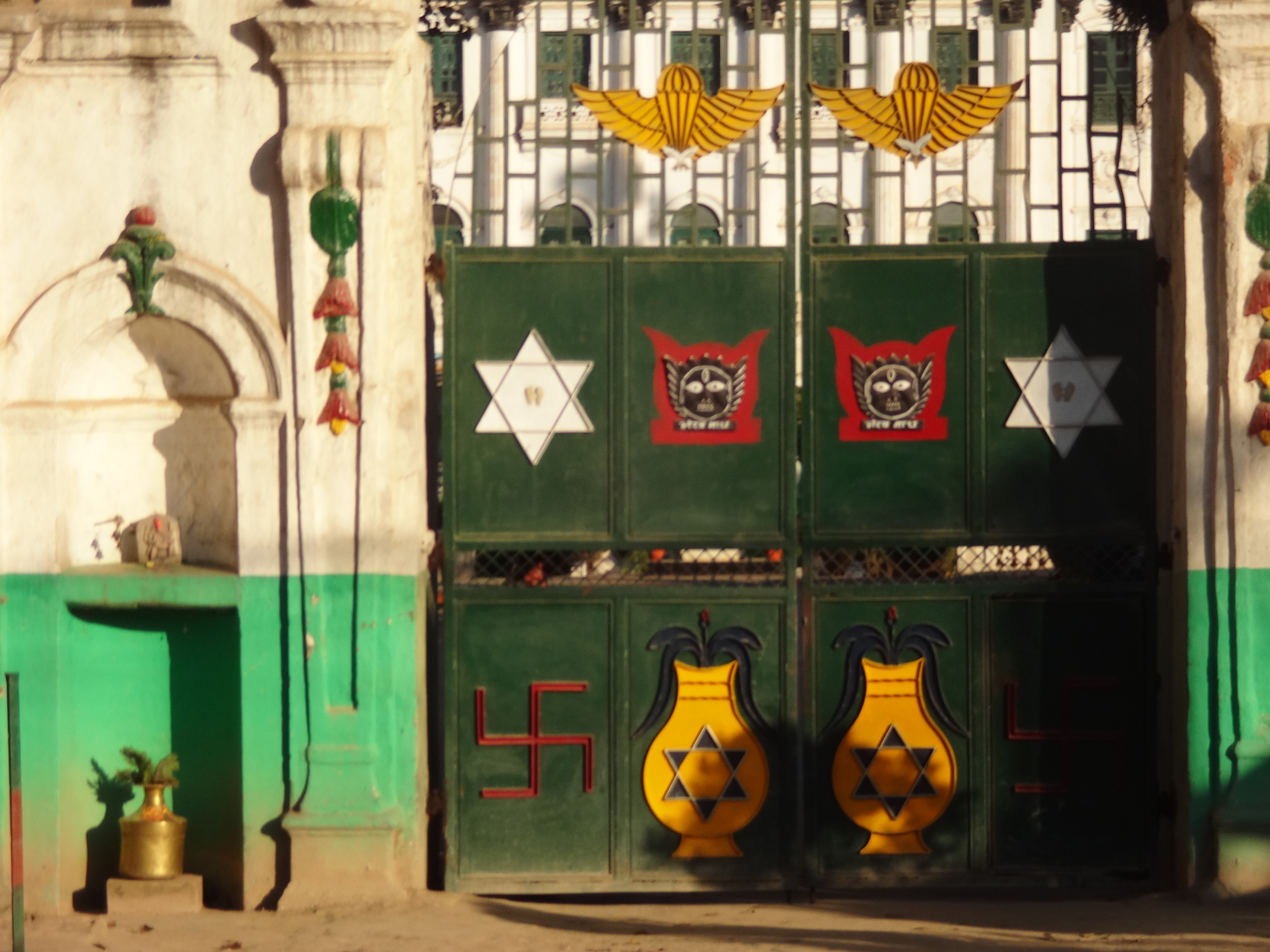
DSC01454

I first saw this gate on the first day or two after we arrived in Kathmandu. I did a double take. It was extremely strange to see the Nazi Swastika and the Star of David side by side. Just bizarre really. But moments later I remembered reading that swastikas are all over Asia, but the meaning was very different. However, I had no idea that the hexagram (or six pointed star) was anything other than Jewish….but here they were on the same gate.

The Hindu (or Buddhist) swastika is a symbol of luck.  It bestows auspiciousness on people or things that it embellishes, and that explains why you see it so often on residential gates or painted over shops.  Its so ironic that the Nazis hijacked the symbol so that Western eyes see it as a mark of evil, and yet its original meaning is so different. Slowly, I have become less startled when I see it around.

The Buddhist Shanmukha, or six-pointed triangle, has a similar spiritual meaning as the swastika, so it makes sense that you might see them side by side.

In Buddhism, I understand that some old versions of the “Tibetan Book of the Dead”, contain a hexagram with a Swastika inside. If I see one of those, I’ll let you know.

The post is being revisited for https://dailypost.wordpress.com/dp_photo_challenge/symbol/ as I cannot think of a better example in all my travels.

Live Television


DSC01410

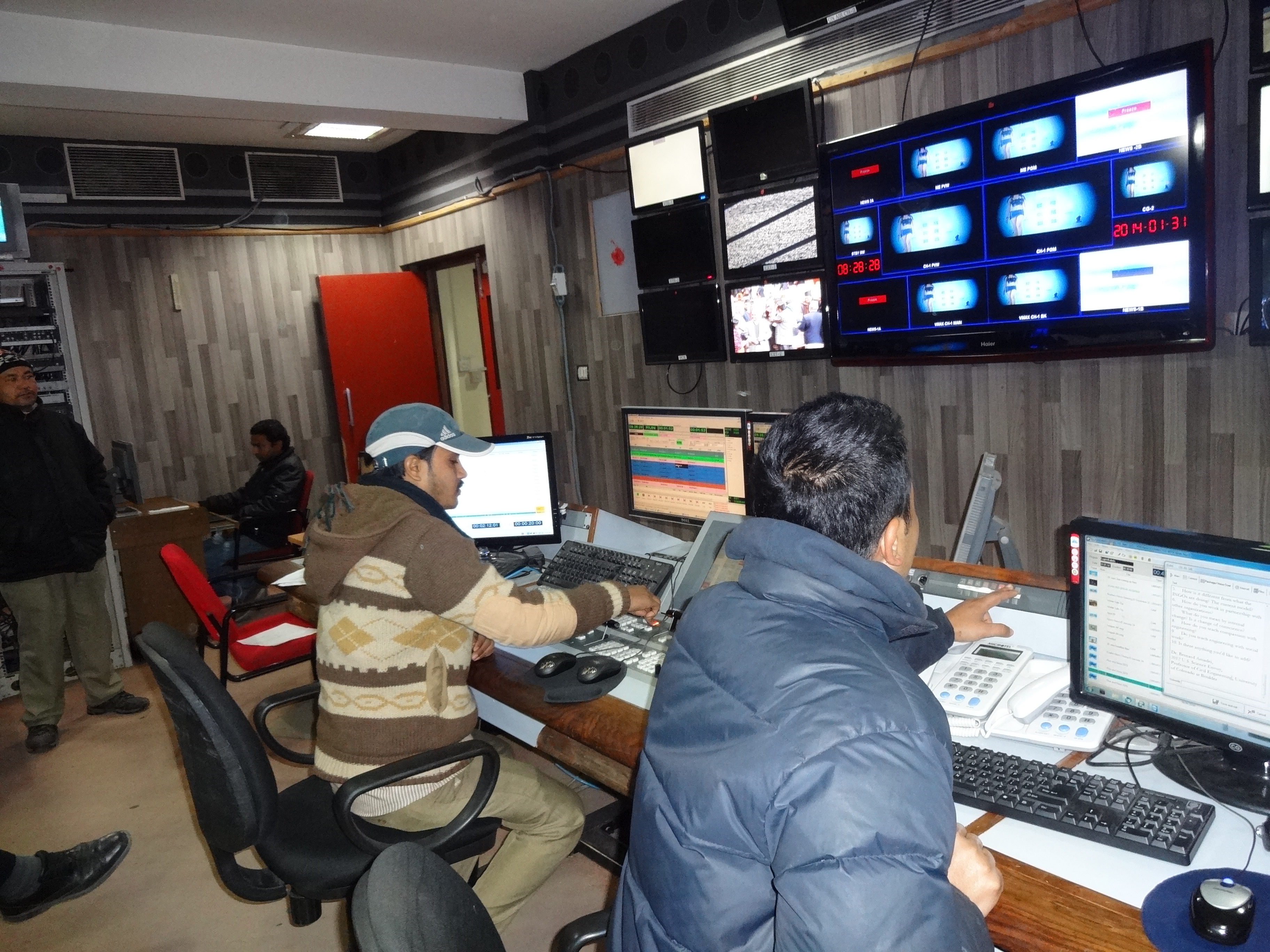
I had an opportunity last week to go along and see the live broadcast on an interview on the English-language morning show “Rise and Shine”. They were kind enough to let us into the control room during broadcasting and it was very interesting to watch. I had never been so close to a producer at work, and I watched over his shoulder as he controlled the camera, monitored the teleprompter, spoke into the interviewer’s earpiece, and ran breaks for commercials.  The TV offices were shabby but the broadcasting and journalism was very professional.

Launched in 2003, Kantipur TV was the first commercial television station in Nepal, and then quickly behing it a wider, more diverse selection of broadcasting channels emerged. Prior to KTV, only the state-run Nepal TV offered programming and, as is often the case with government-run monopolies, it was essentially a government mouthpiece and the only voice of news and opinion that the Nepali public heard.   In just 10 years, broadcasting has opened up enormously.

DSC01412

it was a great experience watching a live television show at work. But I think my greatest takeaway that morning was yet another insight into how many changes this country has undergone in the last ten years and how easy it is to forget that in just a few years its gone from a Kingdom to a Republic to a fledgling democracy, and with that its undergoing so many changes …. free journalism being one of them.

The Big One


DSC01403

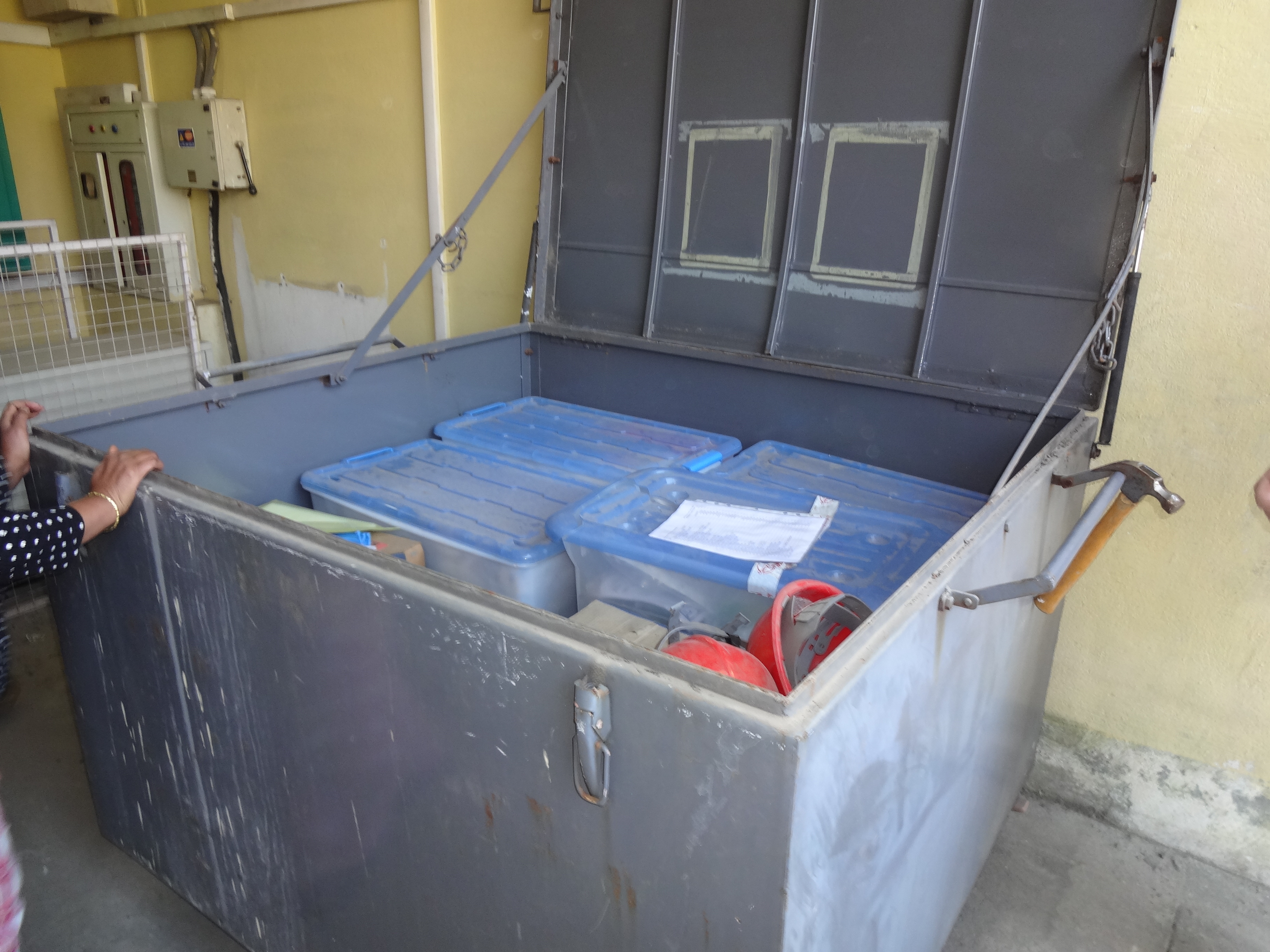
Opening that baby up….

We live in an earthquake zone. A high risk earthquake zone that is due to experience “the big one” every seventy years or so. The last big one was in 1934…you do the math. It’s overdue. Knowing this is part of the Embassy’s strategy to try and keep us safe, and with that policy comes an “earthquake kit” that we store in our garage. It looks a lot like a dumpster, but its full of essential supplies in the event of an emergency. What’s more in contains supplies for about four families. We are the rally house for our Embassy community as our home is deemed the most earthquake resistant in the area.

Annually we’re required to do an inventory of the contents to make sure they aren’t expired, damaged or missing. So this past weekend we did a thorough check of the contents. What’s in it?  I wondered the same and opened the big metal bin to go through everything. There’s mats, blankets and tents for sleeping, water and MREs (meals ready to eat), a wide selection of medical supplies, ropes, axes, hammers, crow bars, torches, batteries, even pens and pads of paper for leaving messages.  We did search and rescue training back in October, which teaches the basics on what to do in the immediate aftermath of an earthquake.  The helmets, head lamps and crow bars brought up memories of training on how to move huge concrete slabs with wedges and levers. The list of items was long and it was a reality check of what it might really be like if a disaster happened. It so hard to imagine a scenario when the contents of the chest are all we have to survive for an indefinite period of time. Let’s hope it never happens.

DSC01404

Everything was dusty from sitting around for a year in the world’s dustiest city (almost)

DSC01407

DSC01405

Items were stored in plastic containers that looked like they needed replacing more than their contents.

DSC01406

Checking items off from the list

According to this blog — at least lately — my life is one long resort visit. Its not. But its more fun to post about the joys of life than its problems…at least that’s the way it works for me. Occasionally, I think its interesting to share some of the less romantic, gritty realities of living in a developing country. At least, a few of them as the pertain to me. Earthquakes are the flip side of the coin to living in this extraordinary place.