Power Mad!


Some days when I go to plug something in you can hear some pretty choice four letter words ring through the house!  Yet again, someone has removed the only adapter that will run my laptop/hairdryer/whatever from the chosen socket.  I keep buying more….but there’s never, ever enough!  All I want to do is dry my hair and I have to go through an IQ test of adapter puzzle pieces and there’s always one missing!

Basically here’s the problem:

DSC00882

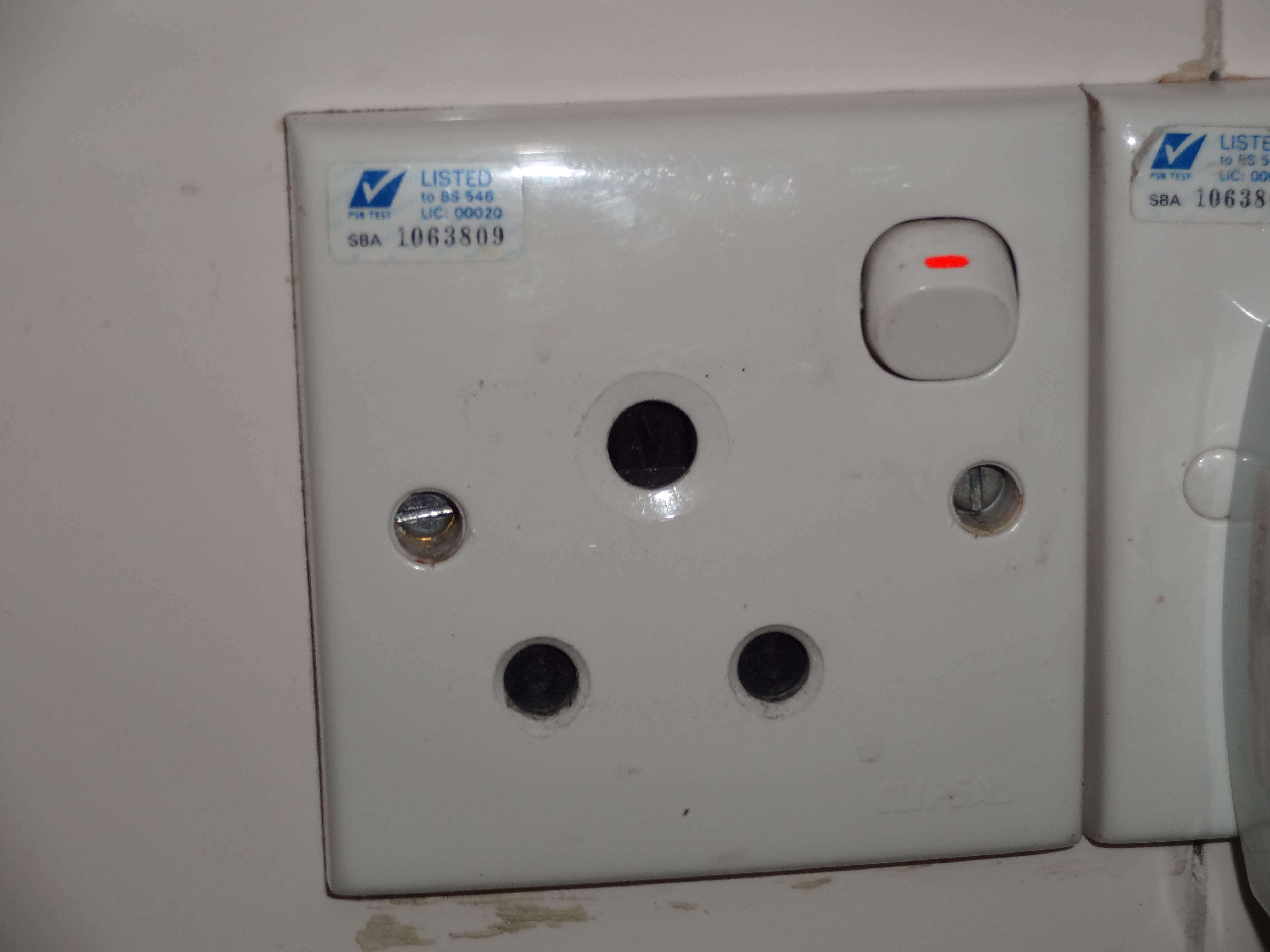
Small version of round three pin socket.

Here in Nepal we have our own, very original, socket design.  No, that’s not a British pin configuration….the holes are round.  To add to this… the Nepali sockets come in two sizes: small and large.  I guarantee that no plug adapter that you own comes with a round three-pin choice.  I know ours doesn’t.  No problem.  You can buy them on the local market.
DSC00879

Large version of same. They look pretty similar, don’t they?

Of course we make the Nepalese power socket confusion a lot worse by adding our own variety of world plugs into the mix:

DSC00878

That’s a Greek plug on the left, a British plug in the middle, and an American two prong plug on the right. How to get a these square plugs into round holes?!

DSC00880

This is the required adapter. Don’t forget….you need them for both the large size sockets and the small size ones that are randomly dispersed around the house.  If you like puzzles you can figure out how the various different style plugs fit in. We have them all!

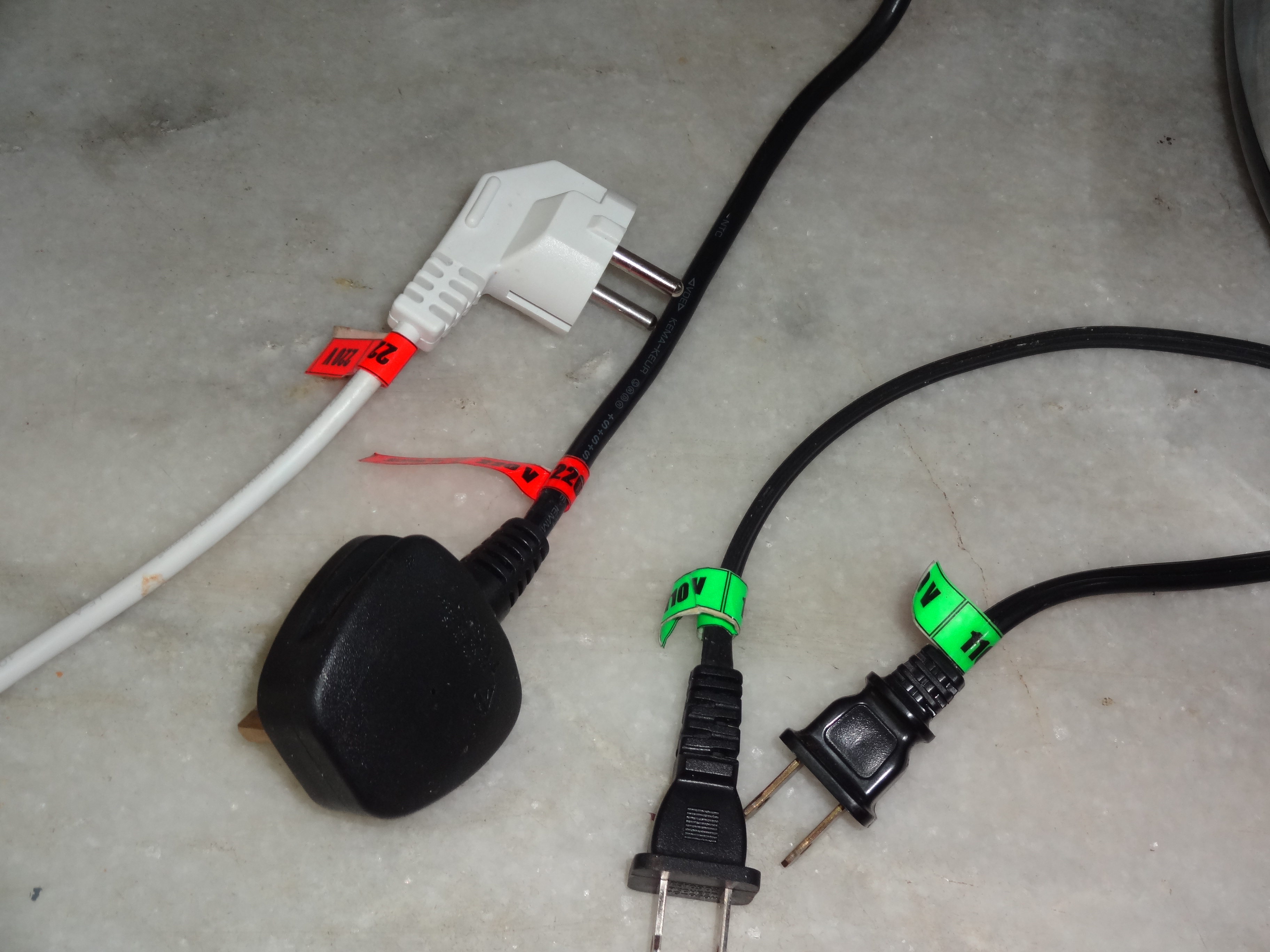
We won’t even get into the necessary colour-coding required not to blow up our 110v devices in 220v power sockets:
DSC00881

Red is 220v. Green is 110v. All power here is 220v, but the Embassy supplies step down voltage adapters so you can run your US equipment off the local power supply. Just plug it in right!

So let’s take the example of this very laptop which is — fortunately– dual voltage so you can forget about the need for orange or green tags. Much more relevant here is that the laptop has an American three-prong grounded plug.  THE worst offender of the bunch.  Of course from a safety point of view that isn’t true….but from a “how the f**k am I going to plug this in?” perspective…its a nightmare.   Let me explain:

DSC00884

This is what it takes to plug in my laptop in some locations: Converter from 3-pin round Nepali to two-pin American, plus a second converter to three pin. Oh…and make sure you have the right size Nepali converter before you run all the way upstairs again…. Oh and the housing for the Nepali to US 2-pin isn’t very tight.  One yank and it sparks or falls out.

To date, I have only managed to fry one device:  a 110v Cuisinart mini-blender with no green tag that met its demise in a 220v socket only days after Amazon delivered it.  (Gotta have the tag!) But I was recently talking about kitchen appliances with FS friends where we were agreed that buying cheap appliances is a waste of money. They don’t work well and break in five minutes.  But when you invest hundreds of dollars in a quality blender that will last forever, you need to remember that “forever” may come sooner than you think if someone (most vulnerably household help) absentmindedly plugs the darn thing in the wrong hole.  Of course, the odds go down here in Nepal because someone has already taken the friggin’ adapter anyway!

Sign Language: Nepali Elections


DSC00800

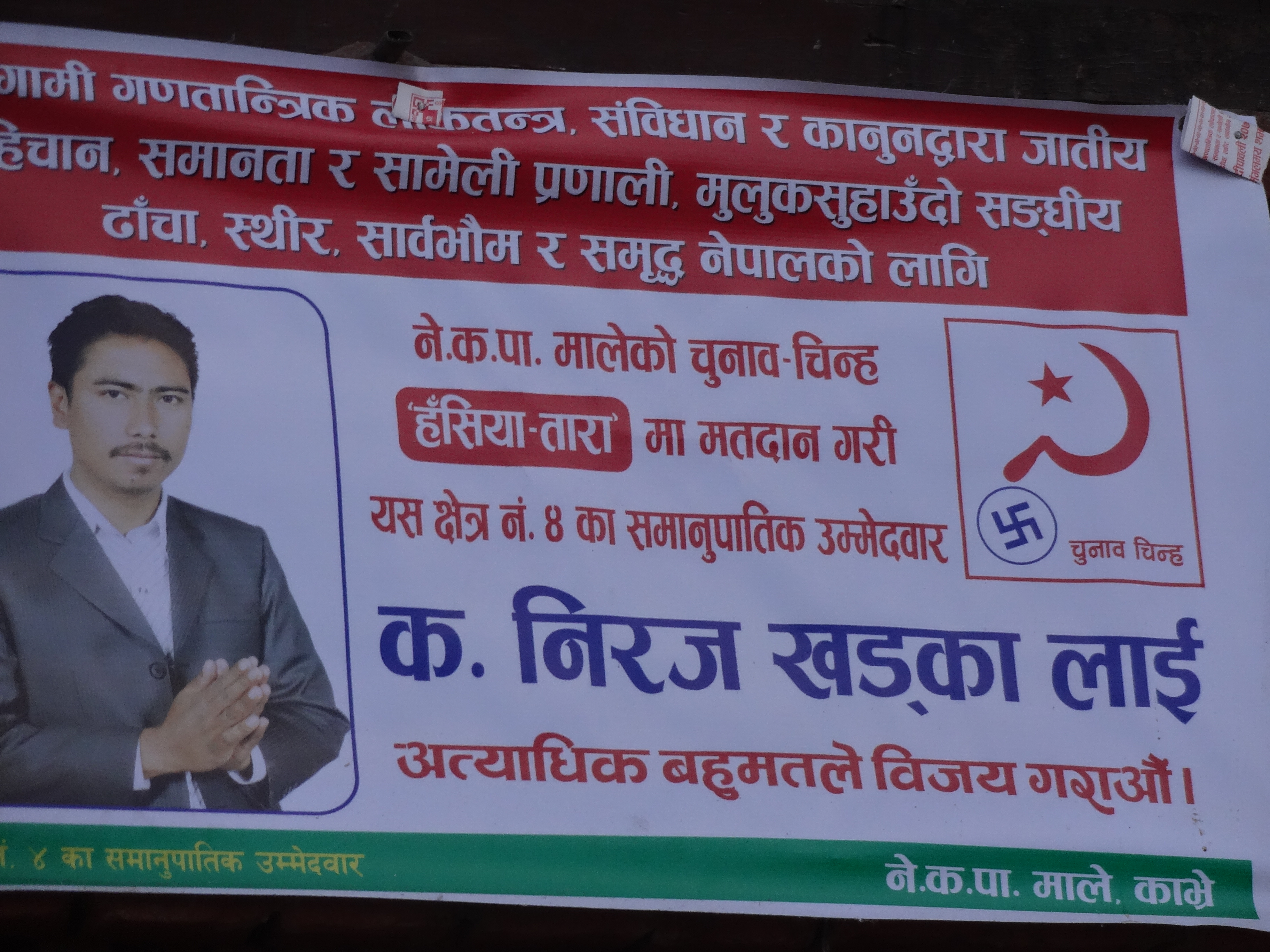
For the last month or two, Kathmandu has been strewn from one end to the other with election posters from the ranks of its 100+ parties running for election on November 19. Usually, I steer away from political topics on this blog, but its hard to ignore politics these days. The posters are particularly poignant for me. As someone who can remember the Eastern bloc, the days of Soviet Communism, and Mao as leader in China, its a very weird “blast from the past” to see the hammer and sickle plastered around the city. Yet in Kathmandu, the Maoists are a force to be reckoned with here. A 33-party alliance of Maoists have tried to hold the city to ransom for the last 10 days with a transportation strike to disrupt the elections, and it has been a nuisance at best for those of trying to get things done. The strike was only partially effective for the first day, after which it was downgraded to a night-time transportation strike so no-one could safely drive around at night. This morning, the day before the election, ironically the streets were quieter than during the strike because most citizens have left to return to their home place to vote.

Effective or not, the strikes have created some real violence in places, and it is probably not over yet. Tomorrow is the actual election day and, again, the streets will eerily be bus, car, bicycle and motorbike free. Except this time it is a government-mandated transportation ban designed to avoid illegal busing of voters in a fledgling democracy. Tomorrow we are walking to work.

The upside is the city is silent, the skies are clearing and the Kathmandu’s beautiful mountains are visible again in the distance.

DSC00819

This is my favourite poster based on the design. (I can’t read Nepali – yet.) Driving past I swore it was Mao himself because of the pose. Someone needs to explain to me the significance of the traditional drum.


Tomorrow is going to be a big day for Nepal.

Cow Among the Pigeons…


20131030_103355
When I got out the car today in Dhurbar Square, there was not one, but two cows looking at me, both surrounded by a sea of pigeons…above them, around them and sitting on their heads.  Here’s the other one:

20131030_103402
It was quite a sight.  I know, I know. I have a bit of a cow theme going on this month…but who cares.  One day, I’ll stop noticing cows in the street and think its normal, right…?  But for now I can’t stop marveling at the incongruity of having bovine vagabonds hanging out on street corners, rummaging through garbage and generally behaving like stray dogs.  Its just weird and amusing.

Here’s a few more that I have snapped on my travels around Kathmandu streets.

kathmandu cows

Having a scratch on a sidewalk somewhere

DSC00665

Resting by the side of a bridge

Kathmandu cows

This one was just wandering through traffic looking for its mum

All these cows and no McDonalds!

Sign Language: Don’t Toot Your Own Horn (Pleeeeease!)


DSC00661

Why is this sign in English? Its Nepali drivers that have the horn habit.  A foreigner on a bike is a rare thing. Perhaps they have dozens of other signs in Nepali and I just can’t read them yet, but it was kind of a mystery….and clearly wasn’t working!

Buried in a motorcycle parking lot, I risked bodily injury taking this photo. The lot was a chaotic sea of parked bikes and aggressive cyclists trying to park or leave…and the horns were blasting. People blast their exceptionally loud horns here at the slightest provocation or for no apparent reason at all – take your pick.

Sometimes when I’m walking down a narrow sidewalk and a semi-stationary bike starts to hit on his horn in some insane random way — its everything I can do not to go over, confiscate his keys, and clip him around the ear. It deafening and annoying.  It can make you jump out of your skin if you don’t see it coming.  And when I am crossing the street at a pedestrian crossing with adequate warning, and they speed up and blast me as though I stepped out in front on them…well that just makes me mad.

Horns here go full on all the time…reaching a crisis level during the rush hour.  They blast so often as to be totally meaningless.  And then at night something strange happens….they stop.   The power goes out and the city goes to sleep and all you can hear is barking dogs.

Kalimati Produce Market


Anyone who has asked me in person about my big challenges living in Manila knows how I felt about the lack of quality fresh produce.  Its not that the Philippines doesn’t produce quality fruits and vegetables, but it has the hardest time getting them into the city before they start to expire. Often we found produce flown in from Australia that was fresher — much more expensive — but fresher than anything grown just 6 hours north of Manila in cool, fertile Bagio.

So a important goal of the settling in process here in Kathmandu was to explore the produce available, learn what was seasonally available and figure out the best way to get some of it on our plates at home.  So I asked my Didi what kinds of vegetable markets were available and to take me to the best one in the city.

When I got in the car with our driver he seemed a bit confused.  He pointed at the plenitude of small fruit and vegetable shops, indicating to me that everything was available locally rather than driving what seemed to him a long way to the market.  But I really wanted to see for myself if there was some kind of central market that offered clues to the best variety and freshness with produce in Kathmandu.  It was a way to set expectations and to answer the question:   What does produce look like when it first arrives in Kathmandu before its sat on the roadside for hours on end?  Once I know about how things worked here, then I could set my expectations accordingly.

So off we went to the market.  I really wasn’t sure if I had managed to communicate things properly, but was pleasantly surprised when, less than half an hour later, our driver turned our car into what was clearly a big produce market, Kalimati Wholesale Fruit and Vegetable Market to be precise.

kalimati wholesale market

First glimpses of Kalimati market. At 10am it was busy but not crowded. Most stalls were under a large, central, covered area, although many spilled out on to the surrounding side streets.

kalimati wholesale market

I was heartened to see some variety in the different type of vegetables. In Manila you really could only get one type of potato, or carrot, or bean…. Here there was more choice on some of the produce, like potatoes for instance…

kalimati farmers market

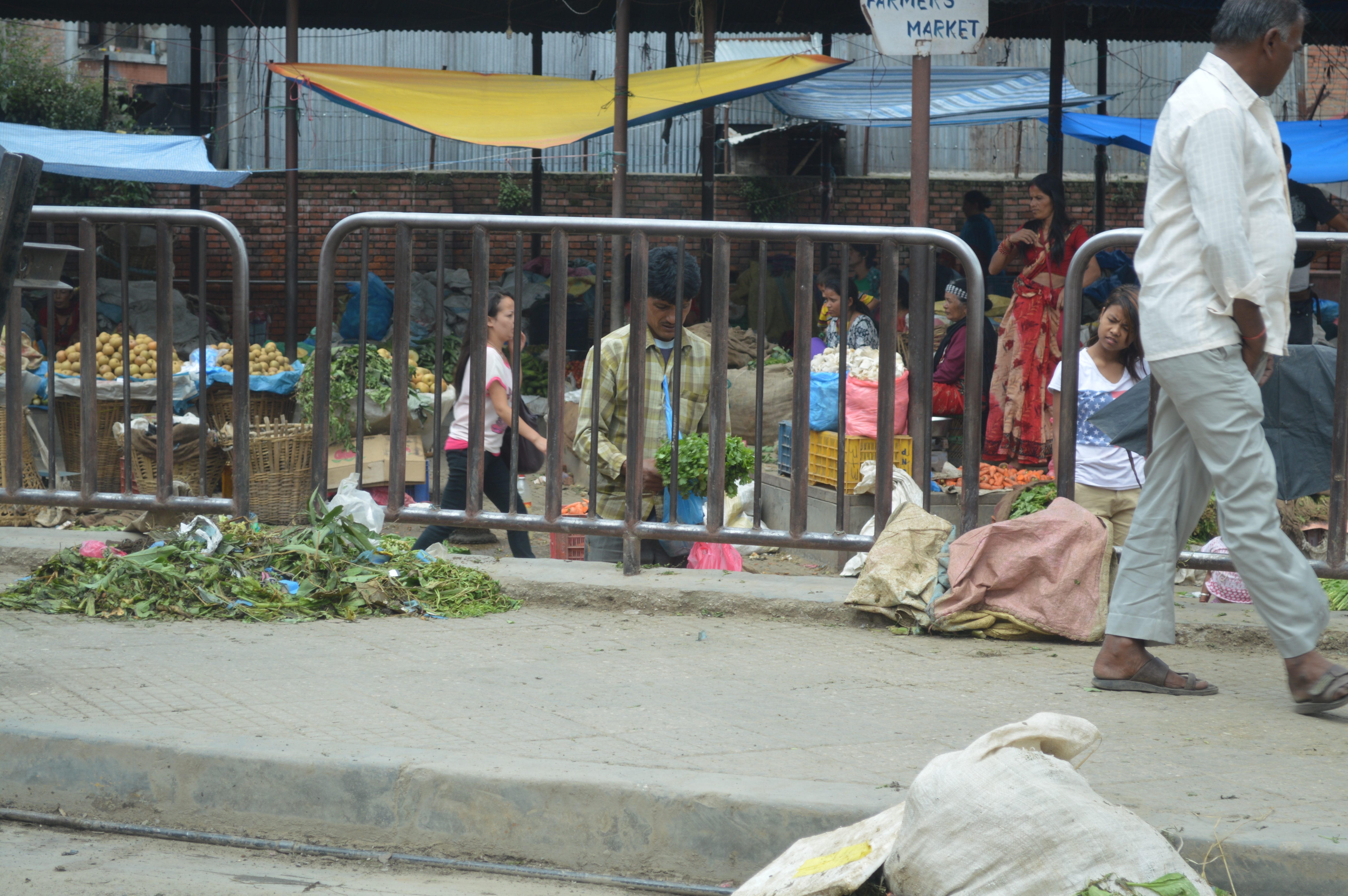
The level of freshness was pretty good too. The market was pretty rough around the edges but the produce looked decent. I tried to snap the English “Farmers Market” sign but only managed part of it…

DSC_0577

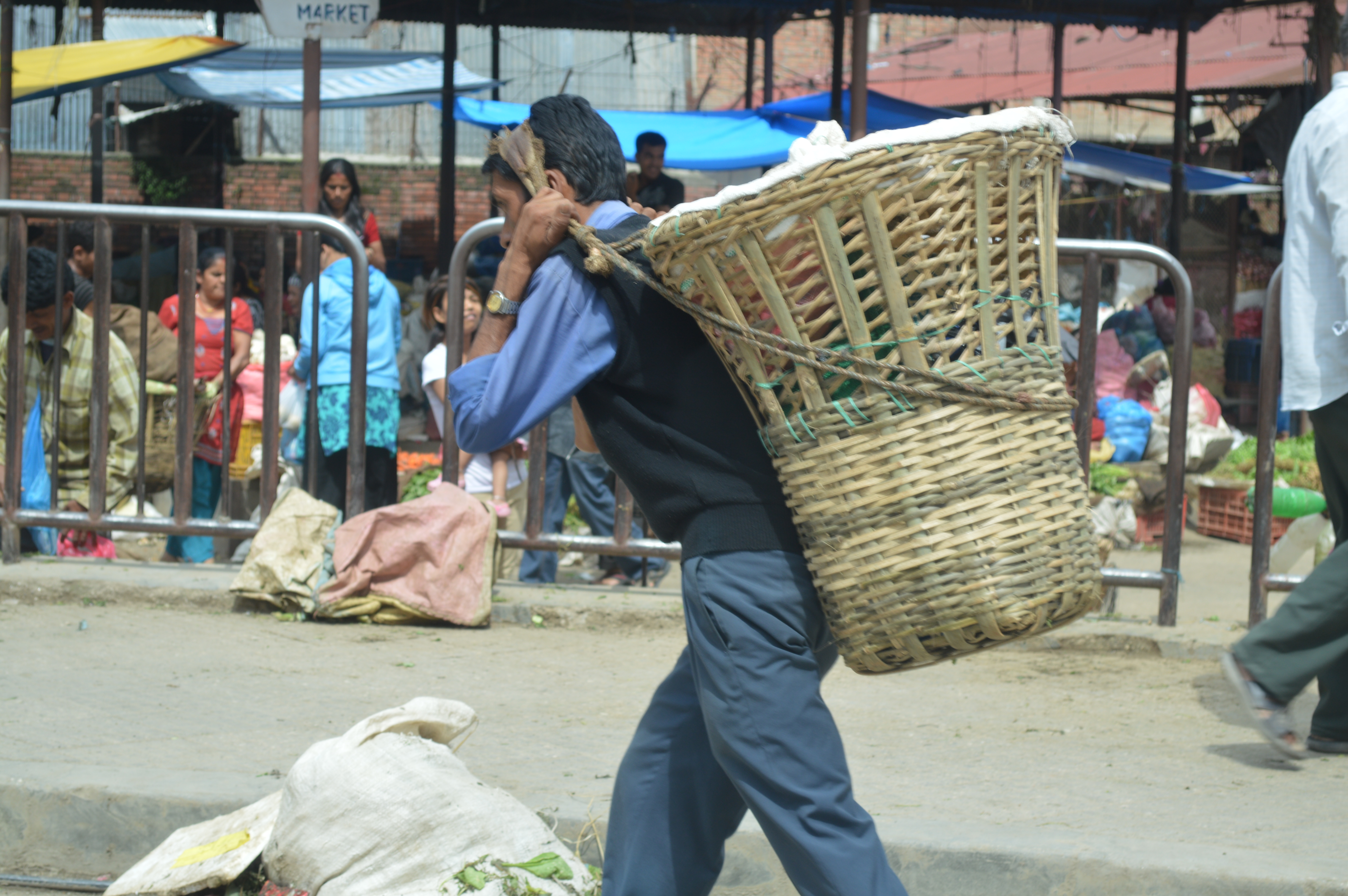
Using a head strap to carry heavy weight on your back is very common here. It much be really bad for your neck and shoulders!

So how does Kathmandu produce stack up against Manila’s? Considerably better, I’d say. Our local supermarket here is still inferior to the street market, but comes up with very fresh things occasionally. Also here the producers also come into the city and sell directly from their own blanket pitch on the pavement. I’ve seen some good looking produce around, not consistently, but its there.  And of course, for me, the fact that vegetables feature on menus and the food here is pretty good is a good thing.  Now I just have to find my chef’s hat once again and head back into the kitchen…. I’ll keep you posted on that one!

Yak Cheese. Its What’s for Dinner…..


Yak Cheese

Half a kilo of yak cheese please…

Here in Kathmandu, cheese is available but imported cheeses are very expensive and its a bit of a gamble whether your expensive imported cheese has had a good journey from its source to your table.  I can’t bring myself to shell out over seven dollars for a tub of philadelphia cream cheese.

We are lucky to have an excellent farmers market with cheese producers who sell locally made international cheese at more reasonable prices than the supermarket anyway. And they are very good.  However, I don’t always have a Saturday morning free to go to the farmers market to obtain them.

Locally made cheese such as paneer and mozzarella are very reasonably priced and readily available and we have had success buying those.  Also on our purchasing list is yak cheese, and I hesitated a little at first, but it has turned out to have a small but relevant role in our fridge.  Here’s an introduction:

DSC00655

Half a Kilo for about 520 rupees. Thats approximately $4.50/pound.

Yaks Cheese

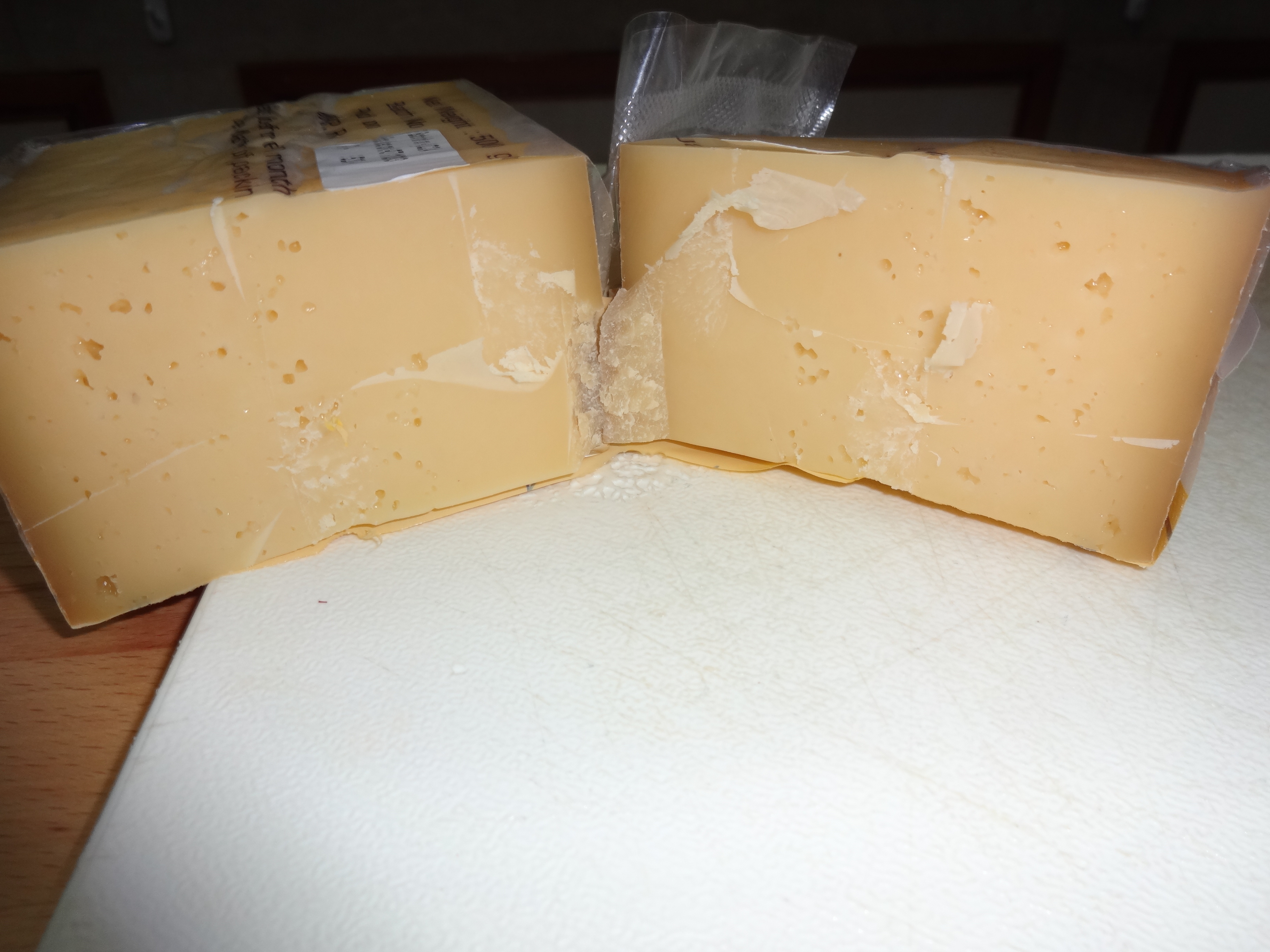
Whats the texture like? Quite firm, but no hard. A little waxy but not rubbery. Interestingly enough, it has a very mild flavour. Not at all what I expected.

Grated Yaks Cheese

It grates pretty nicely too…

Grated Yaks Cheese on Homemade Soup

Grated on a little homemade minestrone. Which I sort of regretted actually, it melts with a bit too much stringy-ness. Might be better in a different kind of dish

The verdict? Yaks Cheese is ok. I don’t love it, nor do I hate it. The flavour is pretty bland and it melts with a stringy-ness that reminds me of mozzarella, but without the creaminess. I wouldn’t eat it on crackers because by itself it’s not worth the calories. But in a recipe that uses cheese to bind things together and relies on other flavours to make in shine…its just fine. There you go…Yak’s Cheese…not at all what you expected!

Puja!


Here in Nepal we are coming towards the end of the biggest holiday of the year known as Dashian.  Kathmandu closes down, many businesses are closed and different festivals are celebrated on a daily basis.  There are way too many of them for me to keep up but one of the best known is Puja.

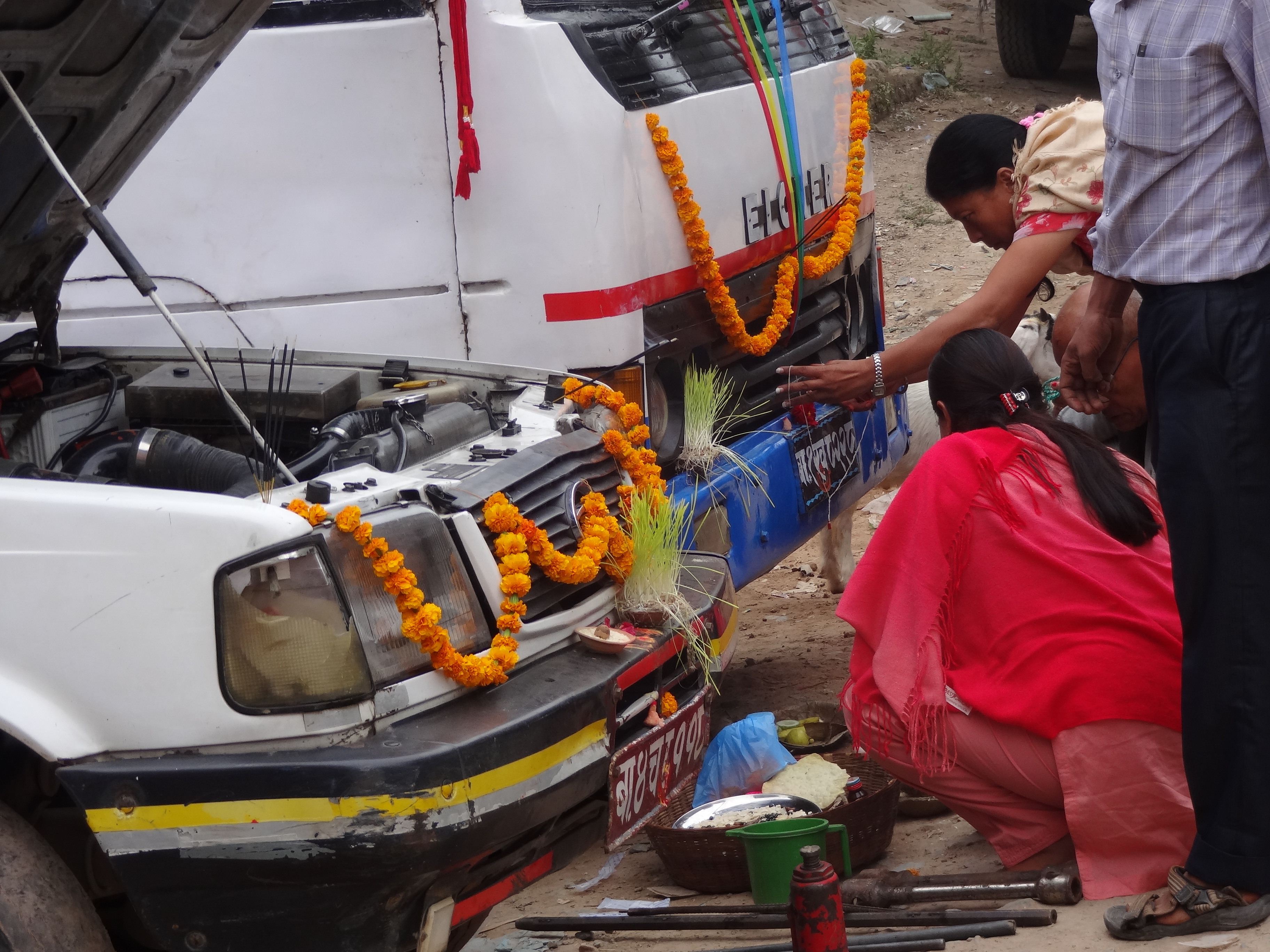
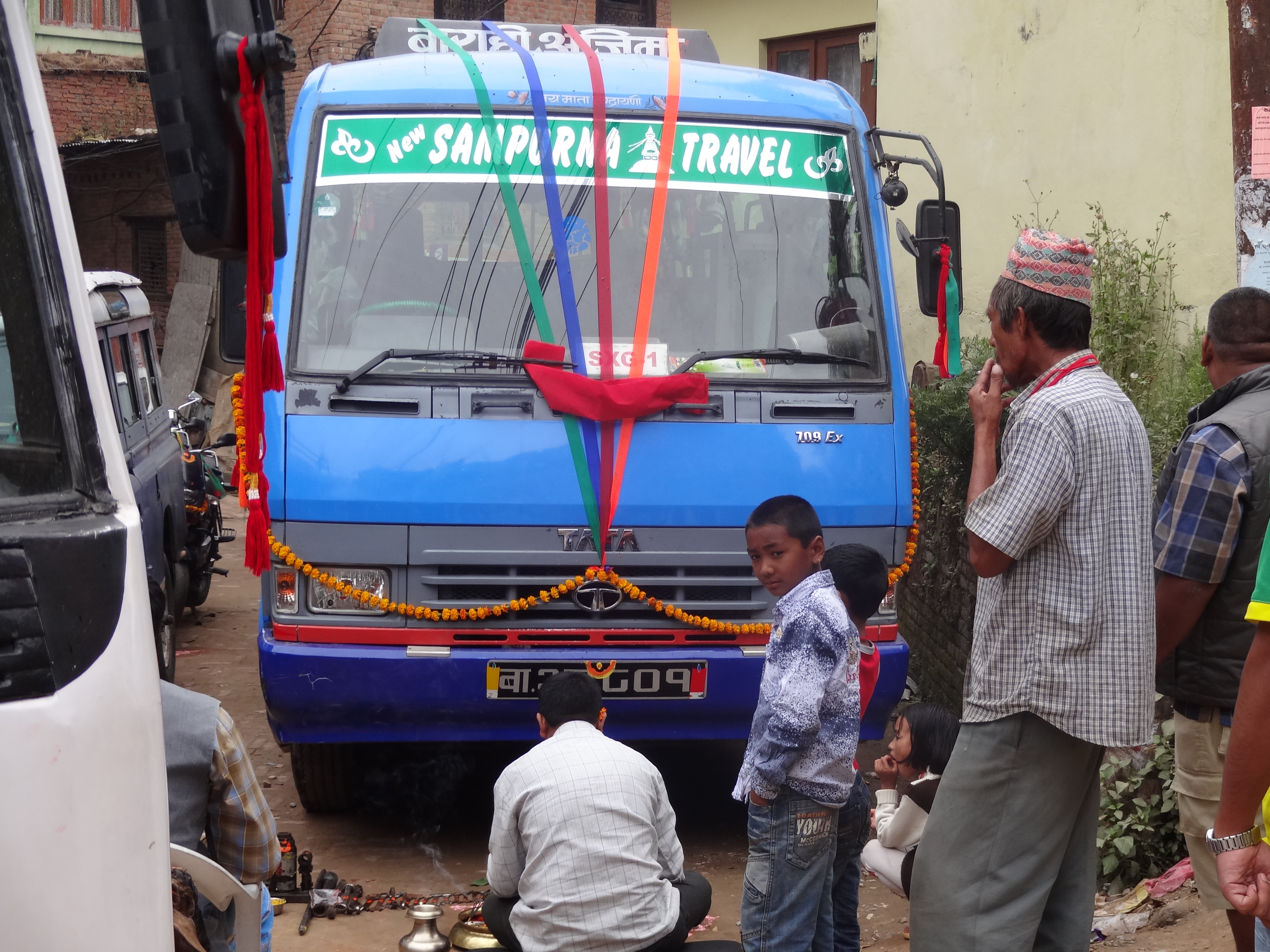
During Puja, goats are sacrificed and all manner of property – factories, vehicles, any machinery instruments and anything from which a living can be made is worshiped. The goats are sacrificed to all moving machinery like cars, aeroplanes, trucks etc. to get the blessing from goddess Durga for protection for vehicles and their occupants against accidents during the year.   Its quite a colourful spectacle.

Walking around Sankhu, the village where we spent Dashian, ceremonies were underway all over.  Here are just a few:

DSC00605

Blessing the family car

DSC00606

Nothing to do with the festivities…but I just thought he was the cutest dog. (I think animals have a day of blessing all their own).

DSC00609

Even this sad, abandoned tractor with flat moss-covered flat tyres was being blessed. I like to think that someone who remembered the importance of this piece of machinery in years gone by decided to honour it as an old friend. Maybe a bit too romantic for a tractor, but then this whole world of blessing machinery is a new one for me…

DSC00623

Blessing the family micro-bus. May it travel safely on Nepal’s narrow and precipitous roads

Swayambhuneth: Monkey Temple


opening

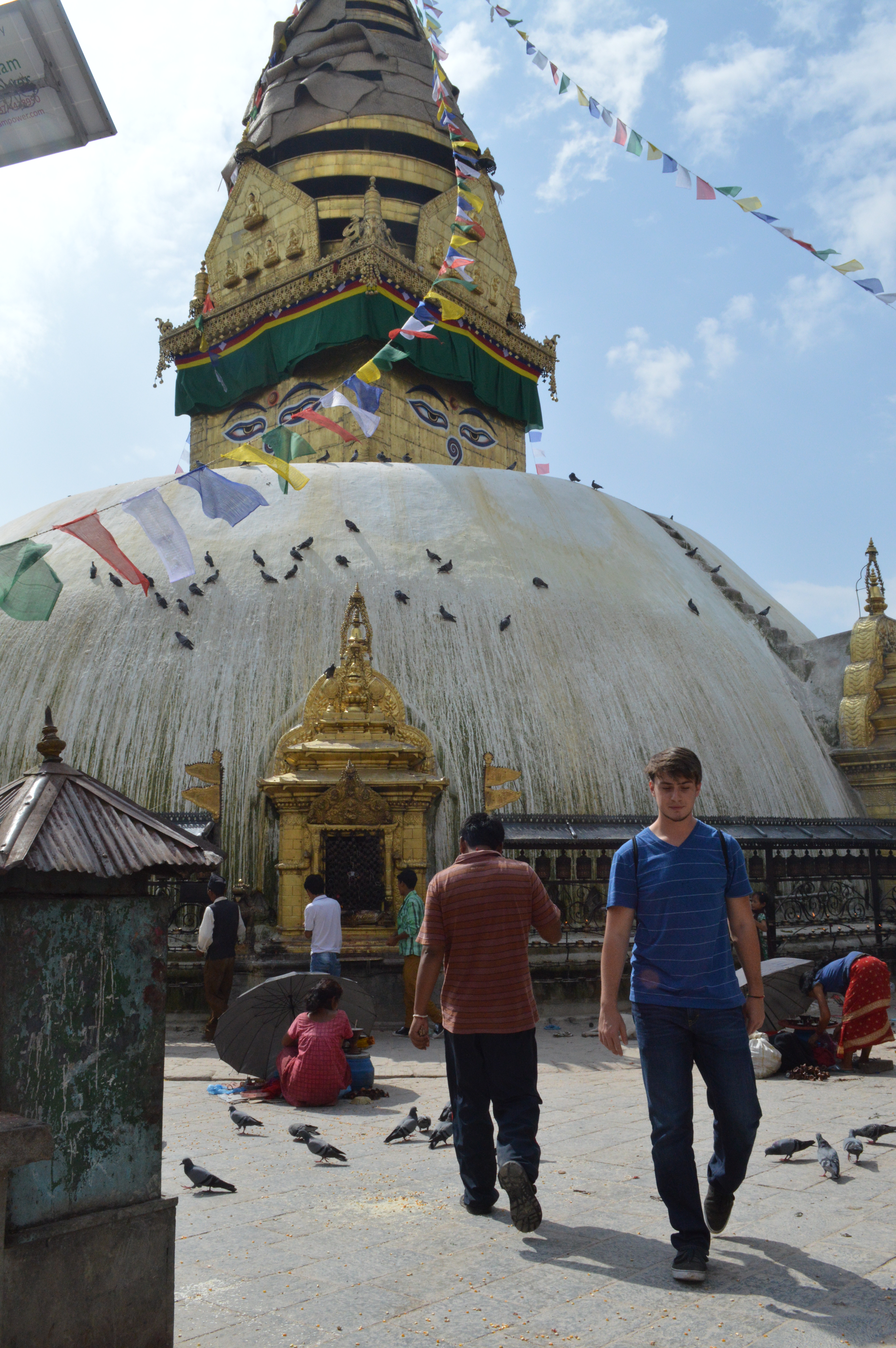
Buddha’s eyes looking down from the temple dome

We’ve not had much chance to be tourists in the ten days we’ve spent in Kathmandu so far.  Life has been full of work paperwork and procedures, hiring and settling staff, settling ourselves, unpacking stuff, figuring out the grocery store and what and where to buy 10,000 other different bits and pieces that we need.  Before Latham leaves for uni on Monday, I wanted to get a couple of tourist days in so his impression of Kathmandu wasn’t just grocery shelves, an empty house and crazy traffic.

So yesterday we headed off to Swayambhuneth Temple, a UNESCO world heritage site also known as Monkey temple. The temple is located on the top of a hill and its a steep 365 step climb up.

climbing up to Swayambuneth Temple

Fortunately there were level stone steps and a hand rail which made the climb much more doable. Seeing your goal in the distance helped too!

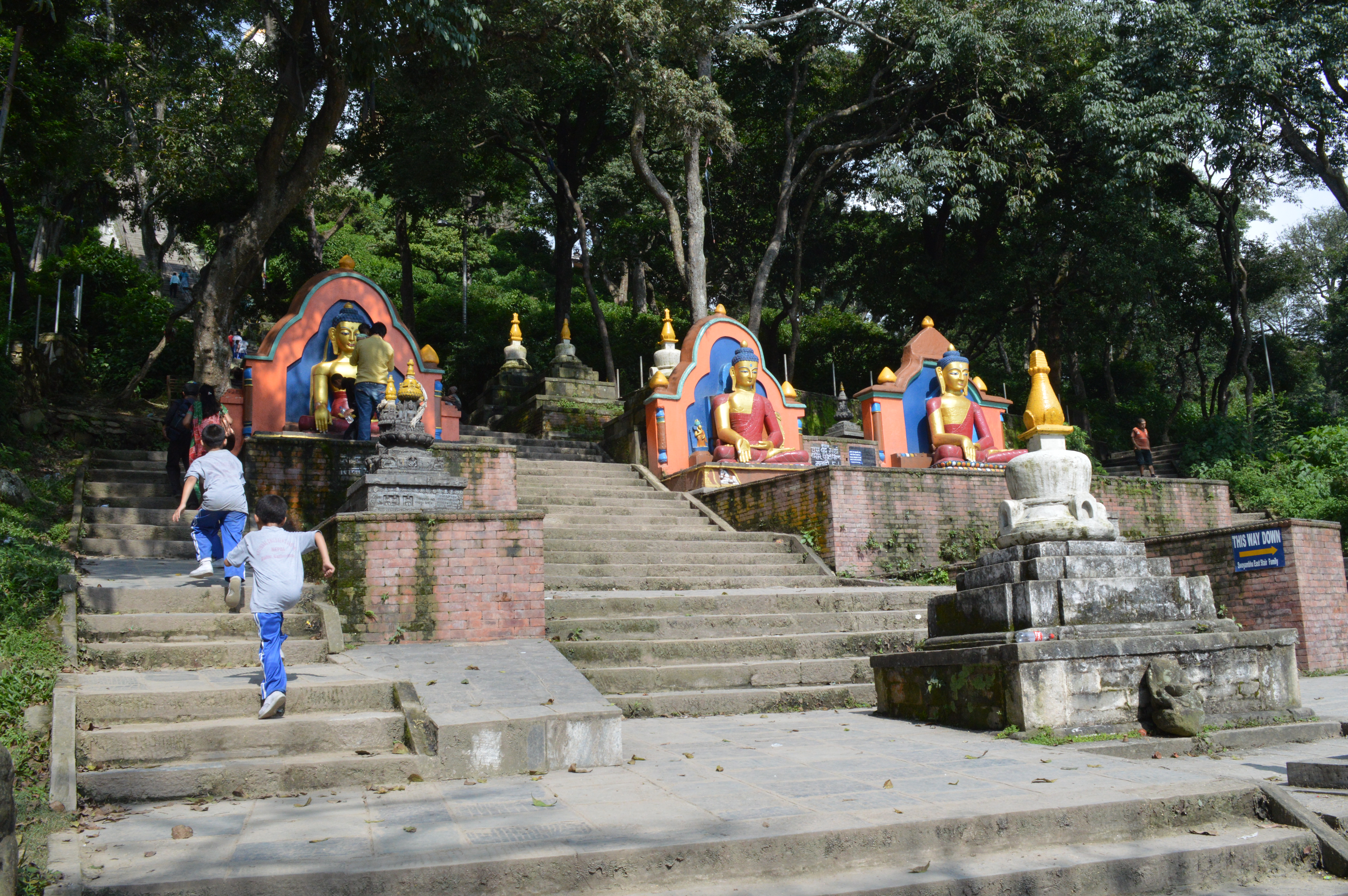
The climb is also broken up my all sorts of interesting things to look at on the way up…lots of excuses to stop and look at the details. The climb starts with troops of monkeys running around at the stairway entrance.  They are very tame, very entertaining, and I imagine pretty obnoxious too, although they gave us no problems. More on those later….  Then there’s plenty of vendors, statues, shrines along the way. Half way up there is a sort of Buddha garden with well kept statues to keep you company as you catch your breathe.

Buddhas at Swayambuneth

Close up of Swayambuneth Buddhas

Reaching the top you are rewarded with a close up view of the temple which sits in the center of a large multi-level courtyard that’s like a small village.

DSC_0711

DSC_0739

Strolling around Swayambuneth courtyard

There are viewing platforms all around where you can take in amazing views of Kathmandu. The temple itself is surrounded by rows of prayer wheels, flower sellers, strings of butter candles and incense burners, souvenir sellers, more statues of Buddha and, of course, more monkeys. The devout were chanting and circling the temple with drums, cymbals, and horns. Pigeons fly everywhere, stray dogs are sleeping in the most unlikely places, and monkeys pop up on the rooftops above you. There’s a lot to take in!

Views from Swayambuneth Temple

The views were a bit too hazy that day, but they were 360 degrees out across and around the city. I particularly loved these prayer flags strung out through the trees.

Buddhist Prayer Wheels

Getting a close up view of the prayer wheels. Notice how they are polished by many hands, but no one touches them at the top.

Swayambhuneth

Water break at one of the many, many shrines

Courtyard at Swayambhuneth Temple

I loved all the activity. There was lots going on but it didn’t feel crowded and the vendors weren’t too obnoxious either.

Swayambuneth Monkeys

We spent a good hour up there….I could easily have spent two. We were too early to go up to the rooftop cafe and get a birds eye view of the square, so instead we took pictures of monkeys. Here are a few of the best. Loved the visit and want to go back many times!

Swayambuneth Monkeys

Swayambuneth Monkeys

The baby was fast asleep and still clinging on. Adorable!

Weekly Photo Challenge: Kathmandu at Night


DSC_0549

The city seems so calm and quiet at night.

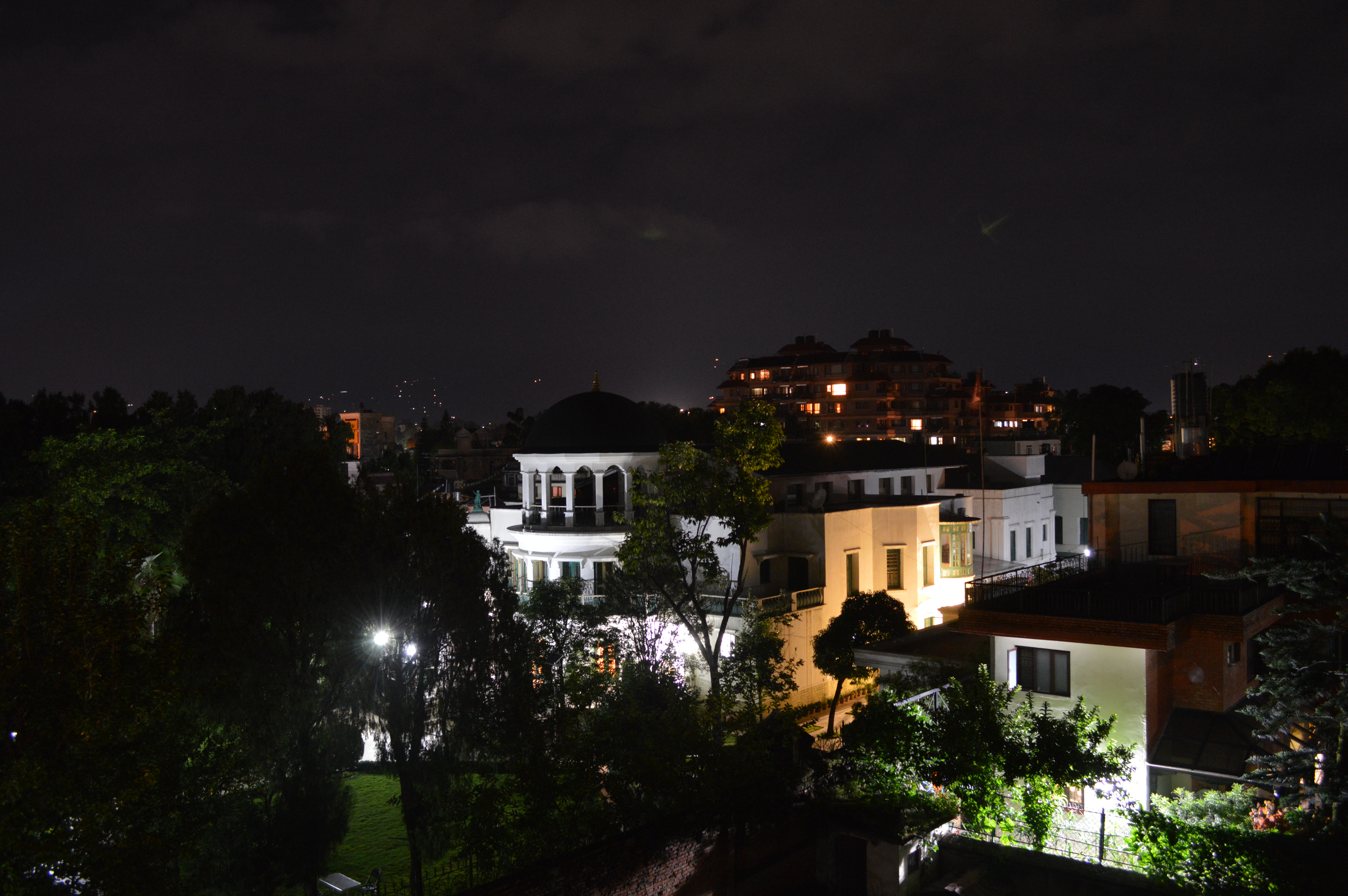
No, this post isn’t about the nightlife — if there is any here — its about the city after nightfall in a place where power outages are scheduled to handle the overloaded demand for power. Load sharing ensures that the power goes out every day at scheduled times, although no one seems to be sure if the schedule means anything. Power seems to go out anytime during the day and at night. For us its just the inconvenience of a one or two second delay while we wait for the generator to kick in. But for most people its a way of life.  Even we have stopped looking up when the power goes out.

kathmandu by night

For those lucky enough to have a generator (including us) the night lights remain on. These are the pools of light glowing in the otherwise dark. It reminds me a little of Spetses during a power cut where you can see the flicking light of kerosene lamps from across the valley.

DSC_0551

From the other side the blackout is even greater. Above the skyline of the houses are the foothills with just one or two shining lights above in the blackness. I imagine how dark it must be on the other side of the hill without even the distant glow of Kathmandu to light the sky. I want to go there!

This post participated in the Daily Post’s Weekly Photo Challenge: Nighttime

First Glimpses of Kathmandu


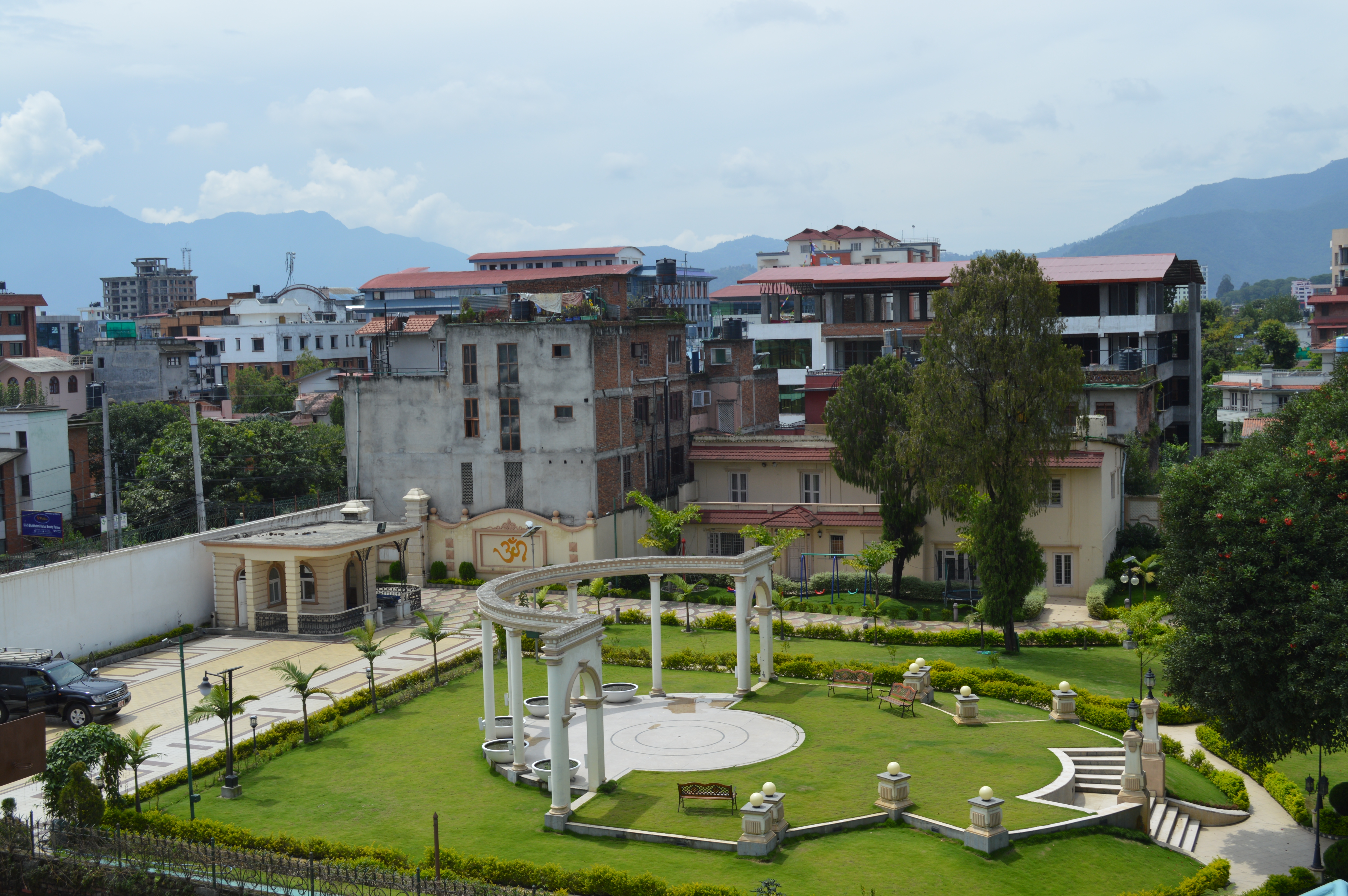
Well we made it through the first few days of settling in, survived jet lag, filled in a million different forms and encountered the minor difficulties of the newly arrived. What’s it like everyone is asking me?  So to illustrate, here are a few pictures taken from our three rooftop terraces showing the area around our home:

Kathmandu Rooftops

From our upper rooftop….I’m so glad that we have some views of the mountains. I hear they get better later in the year.

Kathmandu Rooftops

Not so many trees but little pockets here and there….and occassionally open views to the distant countryside that remind you that Kathmandu is not so big

Kathmandu Rooftops

View from my lower rooftop. Crumbling house next door is still occupied. Note the broken satellite dish with pieces missing on the roof and the newer, smaller one alongside. Abandoned yard behind has overloaded persimmon tree and a pomelo tree.

Kathmandu Rooftops

There’s some smarter looking homes in the other direction.  But generally speaking our central location is a mish-mash of old and new, rich and poor, all thrown in together.  As far as I can tell there isn’t really a smarter area of town.

Roofs of Kathmandu

View of a neighbour’s yard. What is that? Well I think it is sort of a ostentatious temple to wealth. I guess you could throw garden parties in it….but talk about incongruous.

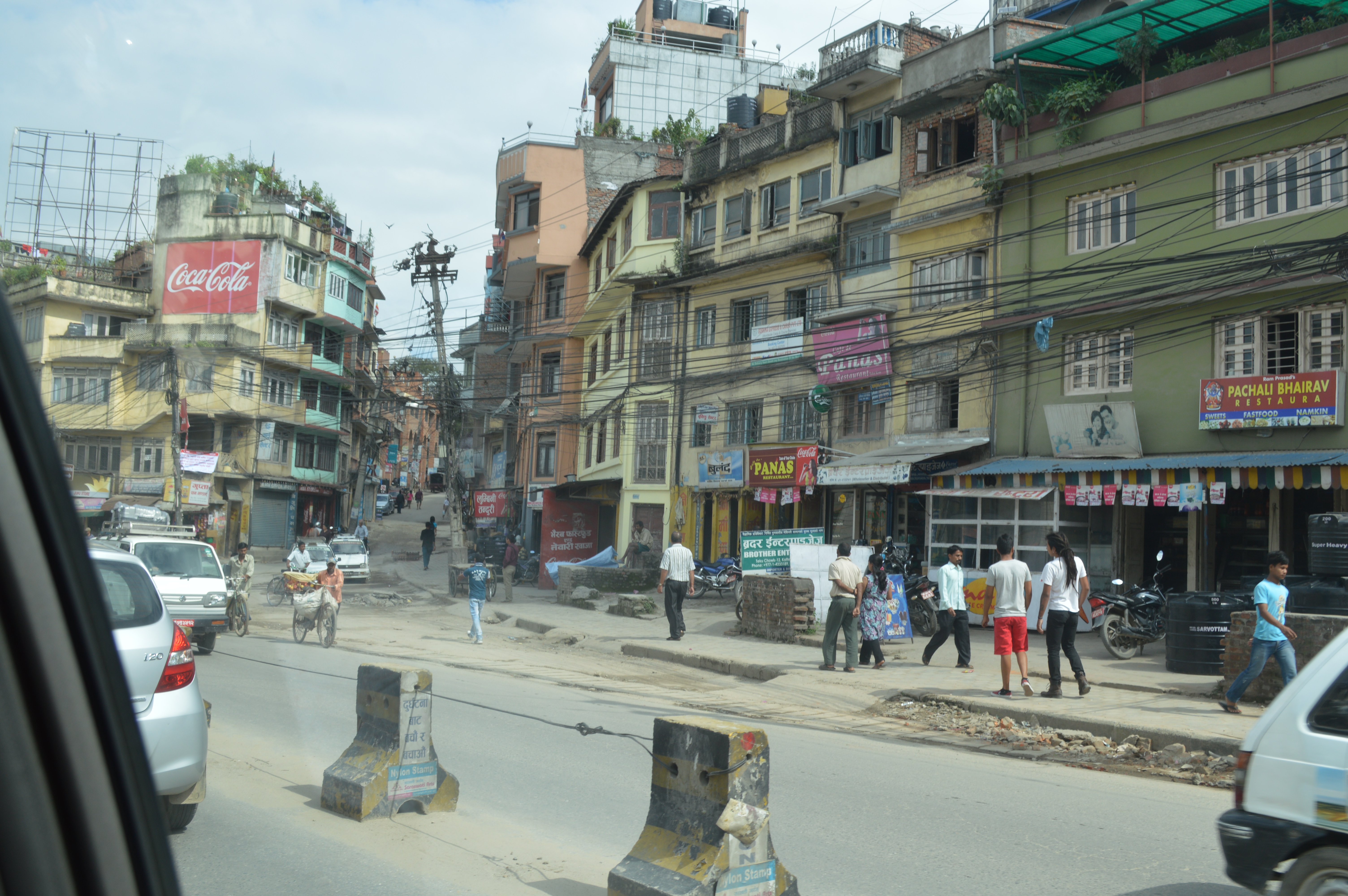
Outside the gate things there’s plenty going on.  After Manila, the traffic volume doesn’t seem nearly so constantly high, but I’ve been here for five days now and have yet to see a traffic light anywhere.  You can imagine what that does to intersections.  Here are some snaps around Kathmandu from the car as we take our first drives around the city:

Kathmandu Roads

Driving with motorcycles. There’s a lot of them. Not as heavy as Jakarta (Kathmandu doesn’t have the road infrastructure) but they are everywhere and fearless…

Kathmandu electric cables

Crazy wiring is everywhere. You should see the route of our internet cabling over other people’s rooftops…

Kathmandu Streets

Typical street scene. There are a few main arterial streets and a ring road but most streets are smaller like these.

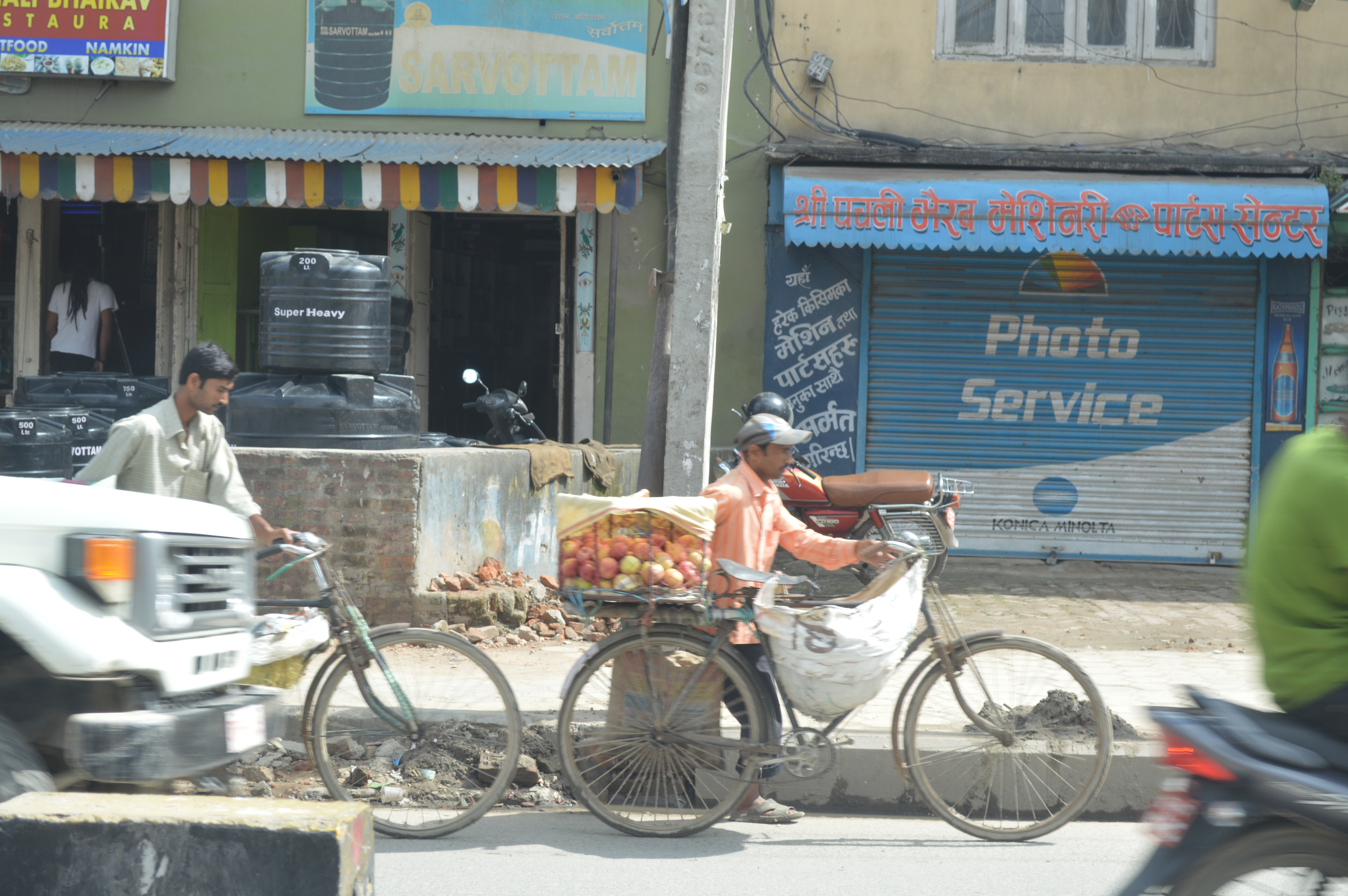
Kathmandu Streets

Lots of produce loaded bikes around. I think these guys had picked up produce from the nearby wholesale to sell at the their own stands.

Kathmandu Streets

Although the river water’s polluted, it still looked like a river which you could imagine flowing to a cleaner place. It was full of garbage but still cleaner than rivers I have seen in provincial areas of the Philippines.

DSC00359

…and finally, stray cows. I had been warned but saw none for days. Today they were everywhere. Three brown cows walked three abreast today in the middle of the road outside my gate. Of course, I didn’t have my camera, so these garbage-eating cows at a local market will have to do.