Devon Revisted


My blogging has slipped for the past month.  Its hardly because of lack of things to blog about, more that things have been crazy busy and I’ve been unable to catch up.  But here on the long Nepali holiday weekend, the rain has messed with our plans and I am at home with some time to do just that….catch up.

I’ve been back from the UK for two weeks now, have started a new job and unpacked the our many boxes in the attempt to make our new house into our new home.  But before we get to that post…a little back tracking….

Around the middle of September I managed to sneak a few days down in Devon to visit my friend Katie. Its been a long while since I visited both Katie and Devon. She recently bought a traditional Devon Longhouse “fixer upper opportunity” which, coincidentally, is in the same town where I was married, so it was wonderful to go down and see their new home and poke around the area where we honeymooned quite a few years ago now.  The house is vast and beautiful, and in need of lots of TLC but they are no strangers to fixing up period houses.  This one dates back about 400 years.  The traditional long shape comes from the ancient practice of combining human housing and animal stables into one long building, especially in the Winter.  Nowadays many have been fixed up into large country houses or converted just to barns.

DSC00466

The gorgeous new house which is a great deal larger than this picture suggests.

Devon Long House

Yup its the whole building…along with a “L-shaped” wing. Nine bedrooms altogether.

Devon Hedgerows

Bombing down Devon hedgerows

My memories of the area were like pieces of a jigsaw puzzle that hadn’t been fitted together. I remember the town where we rented a cottage, the little pub, the little church, and the narrow country lanes that connected it altogether.  And it was all still there, just like I remembered.  Charming and timeless.  The Drewe Arms was still there too.  Back in the Eighties the pub was run by a ninety-something old lady who put the money for your beer or cider into a little cash box.  There was no register – no bar either – and no service to speak of.  You helped just yourself to your drink from the wooden barrels lined up against the wall.  Today she has gone, of course, but I’m told the pub retains in original character. I would have liked to have sneaked a peek inside but unfortunately, we just didn’t have time to stop for a drink.

Drewsteighton Church

Drewsteighton Church

Drewe Arms, Drewsteighton

Drewe Arms, Drewsteighton

Drewsteighton Church

The beautiful, peaceful church yard. We walked around it many times in the cold of the Winter.

Devon Farmland

Catching a glimpse of the farmland between gaps in the hedgerows

For me, the visit wouldn’t have been completed without a visit to Dartmoor.  I’ve rarely been there in the Summer, usually visiting in the depths of Winter, when it can be incredibly cold, exposed and can freeze your face right off.  But I do have a thing for moors in general.  I love their wildness but I fear them too.  On Dartmoor you can ride right through them by car and on a sunny September day with no rolling fog, there was just scenery and sheep to enjoy.

Dartmoor

A fleeting glimpse of Dartmoor from the car. Must add the “Two Moors Way” to my hiking itinerary!

Dartmoor

Its only when I come back to England that I remember how much sheep are a part of the countryside. Katie has over 200 of them on 100+ acres of land and I barely had time to get out and meet them. But I loved my short visit and seeing their new home and I thought about the prospect of returning to my new home in Kathmandu. A lovely corner of the world.

Devon Sheep

A couple of Katie’s beloved “Bluefaced Leicesters”!
DSC00485

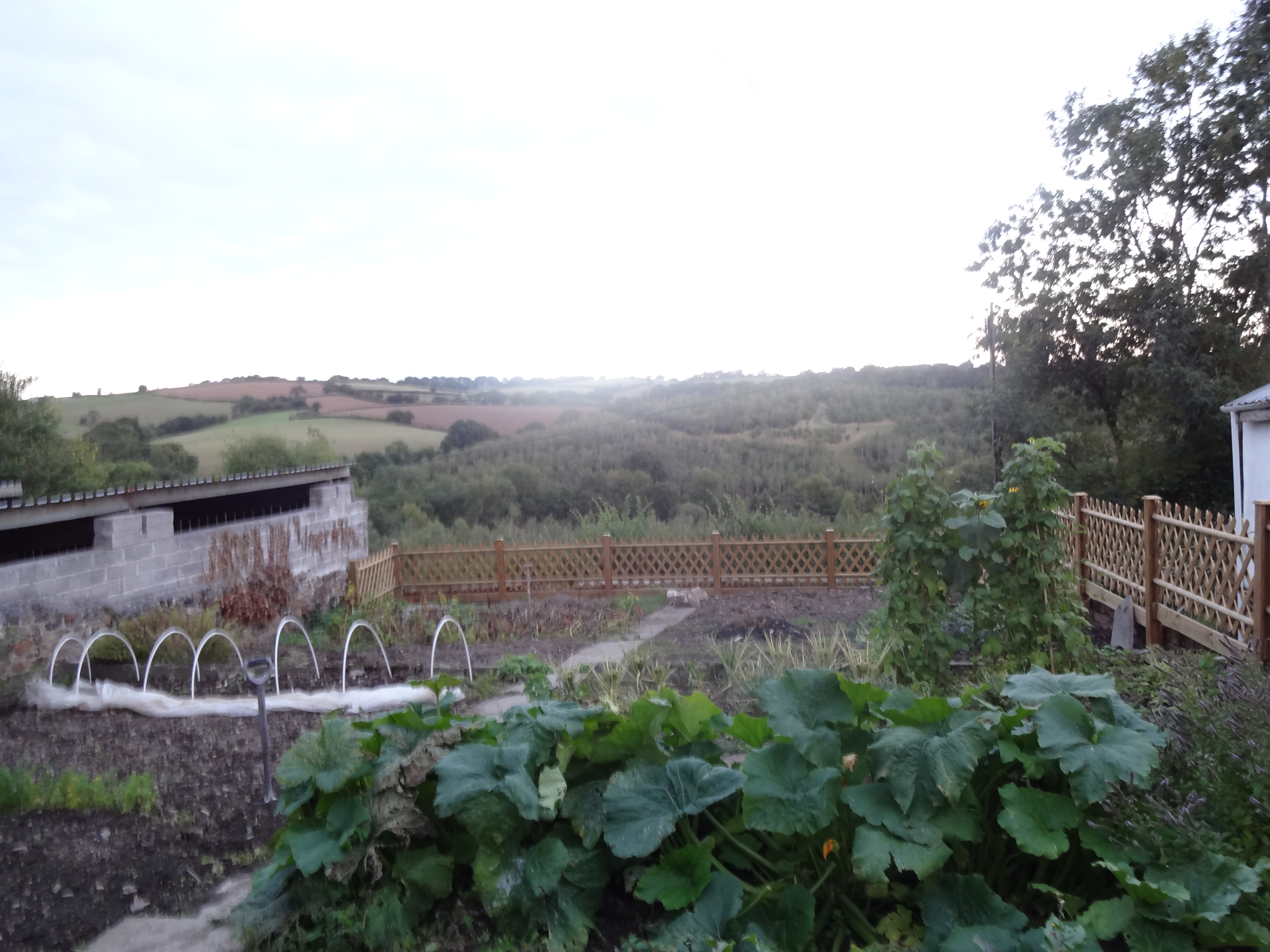
My favourite corner of the farm….the vegetable garden. Past its best in late September, it was still producing late Summer vegetables. Beautiful loam and a beautiful view. I wish I had one of these in Kathmandu!

 

Bhaktapur – Medieval Trades Up Close (Part 2)


Bhaktapur is a beautiful city that’s world famous for its historical and religious architecture. But I felt that it deserved a separate post here on its amazing array of living, ancient trades that I had never seen before in such hands-on detail all in one place.  These weren’t museum activities, reenactments for tourists, or struggling ancient trades desperately trying to survive in modern society, but everyday life, money-making pursuits of Bhaktapur village.

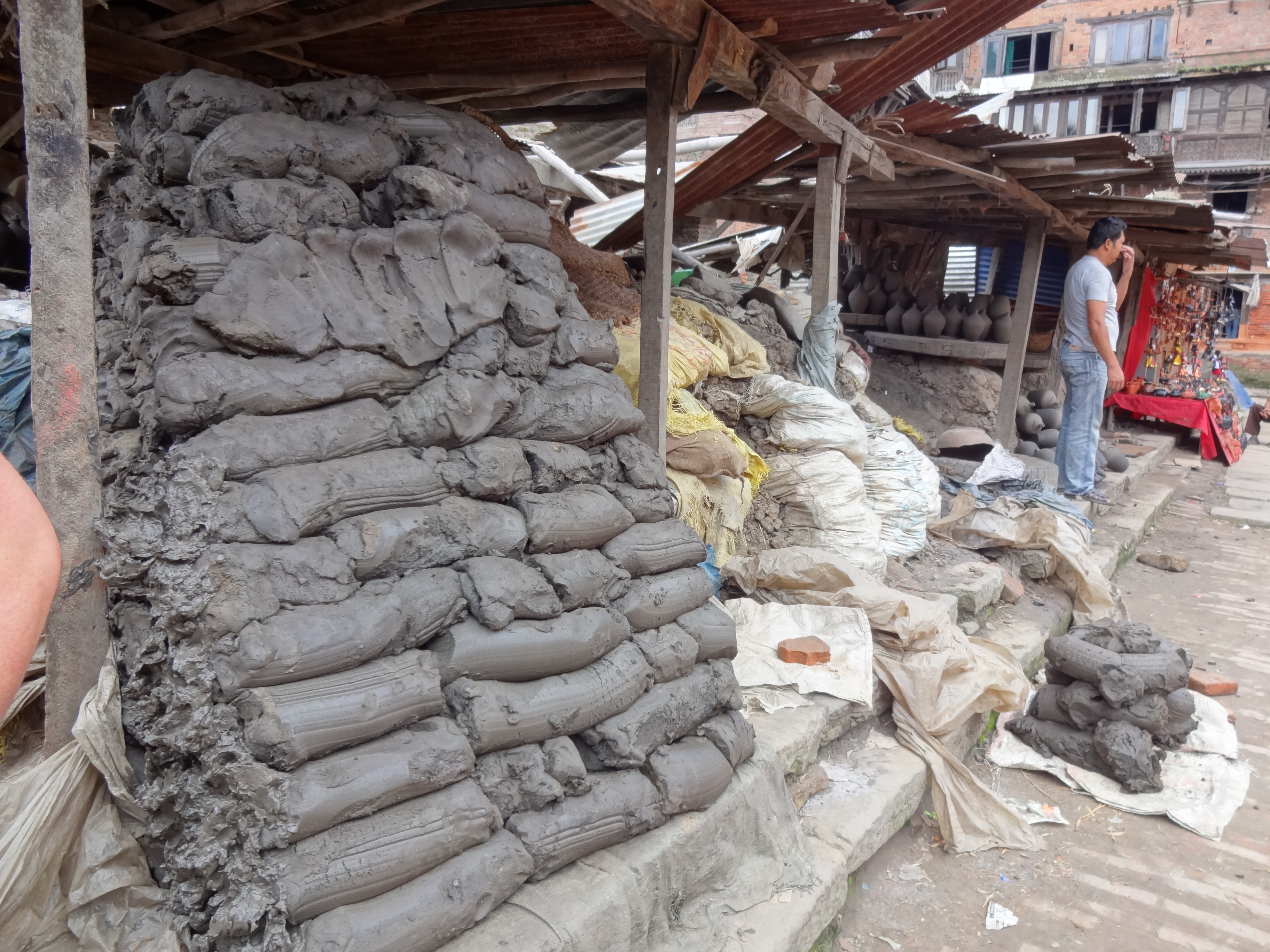
As we walked through the narrow streets, almost every other open doorway had an ancient trade behind. We saw carvers, potters, metalwork, bakers and butchers, creating and crafting from raw materials without power or technology. We saw full processes and complimentary trades working side by side.  It was particularly fascinating to see the clay arrive in bags, a potter spin pots, and then watch them dry in the sun before heading to the open air kilns.

It was also highly unusual to me that this other medieval world existed alongside a national and international tourist attraction that was still unspoilt, still preserved, and still part of living history. The city’s famous architecture must help support Bhaktapur’s economy, but the pots they made and the flour being ground was not just to produce tourist income. There were tourists shops and touts, but it was very low key. The town felt authentic but at the same time was familiar enough with outsiders that we didn’t feel voyeuristic as we walked around. A very difficult and rare balance achieved and an amazing glimpse into the past.

Bhaktapur Pottery

Piles of clay waiting for the potter

Bhaktapur Pottery Square

Potter shaping a pot on a manual pottery wheel

Bhaktapur Pottery Making

Processing corn husks ready for kiln kindling

Bhaktapur Pottery Square

A potter stopped to show me his kiln. Love the Superman tshirt!

Bhaktapur Pottery Square

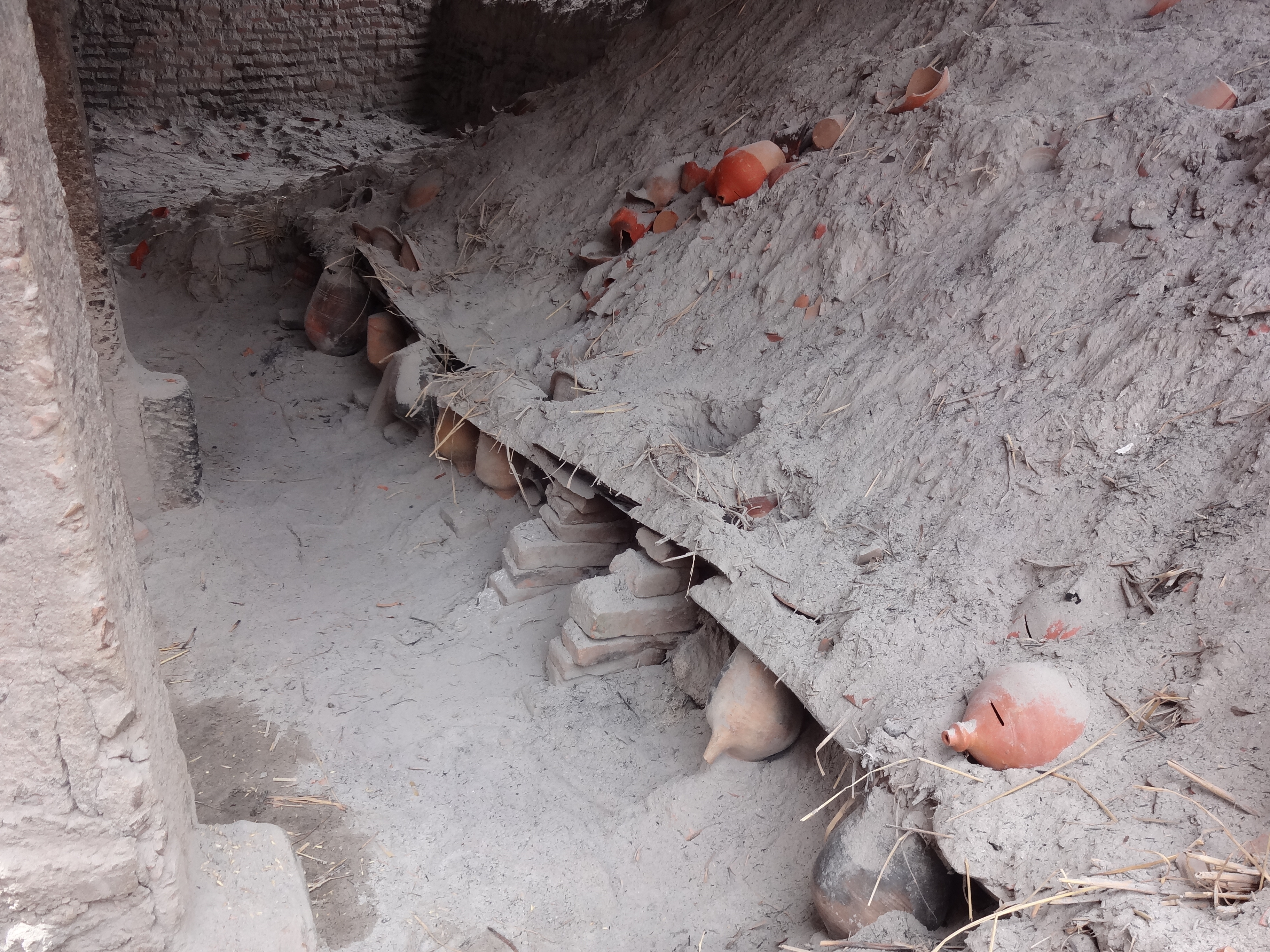
Newly baked pots from the kiln

Bhaktapur Pottery Square

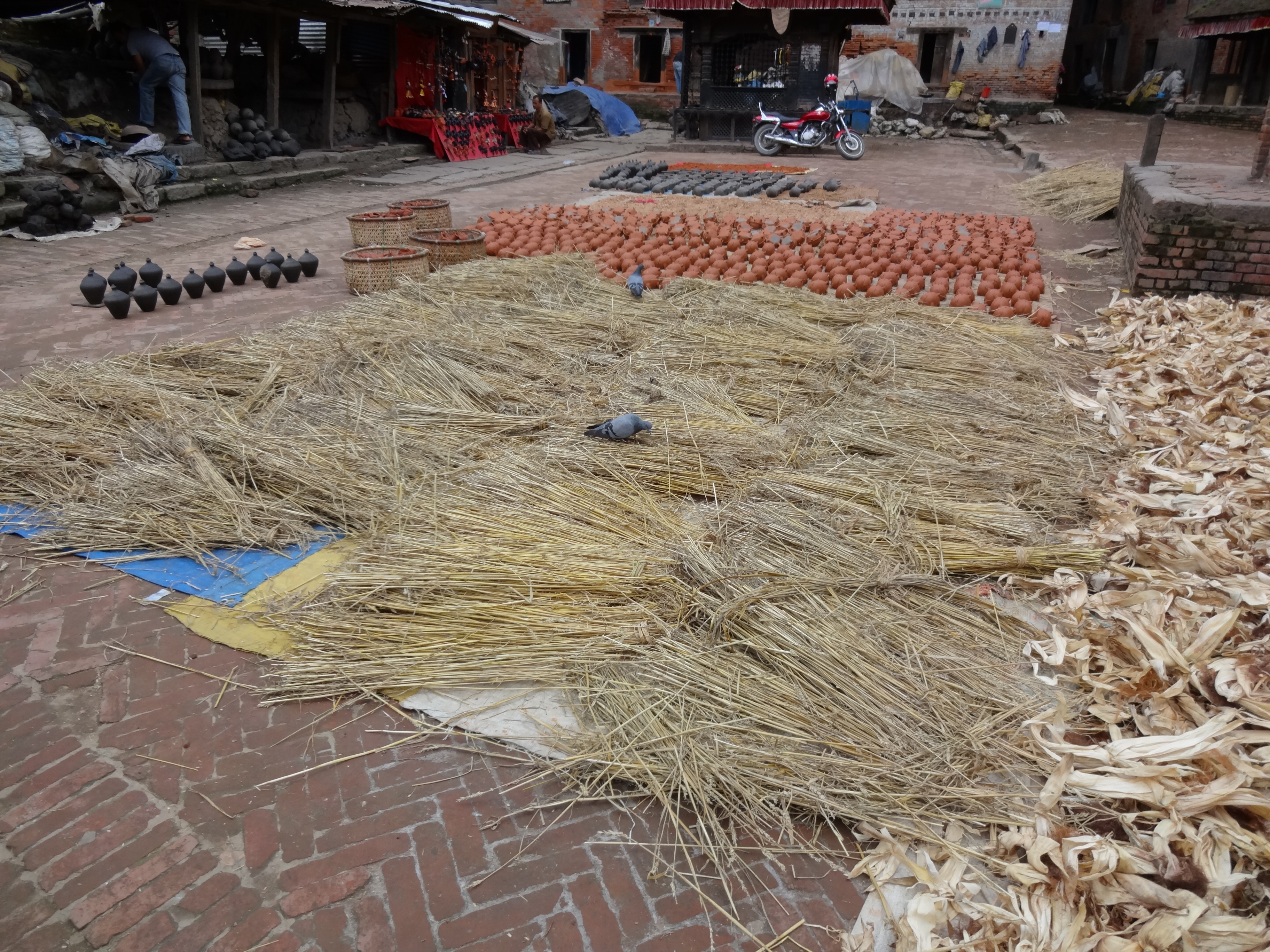
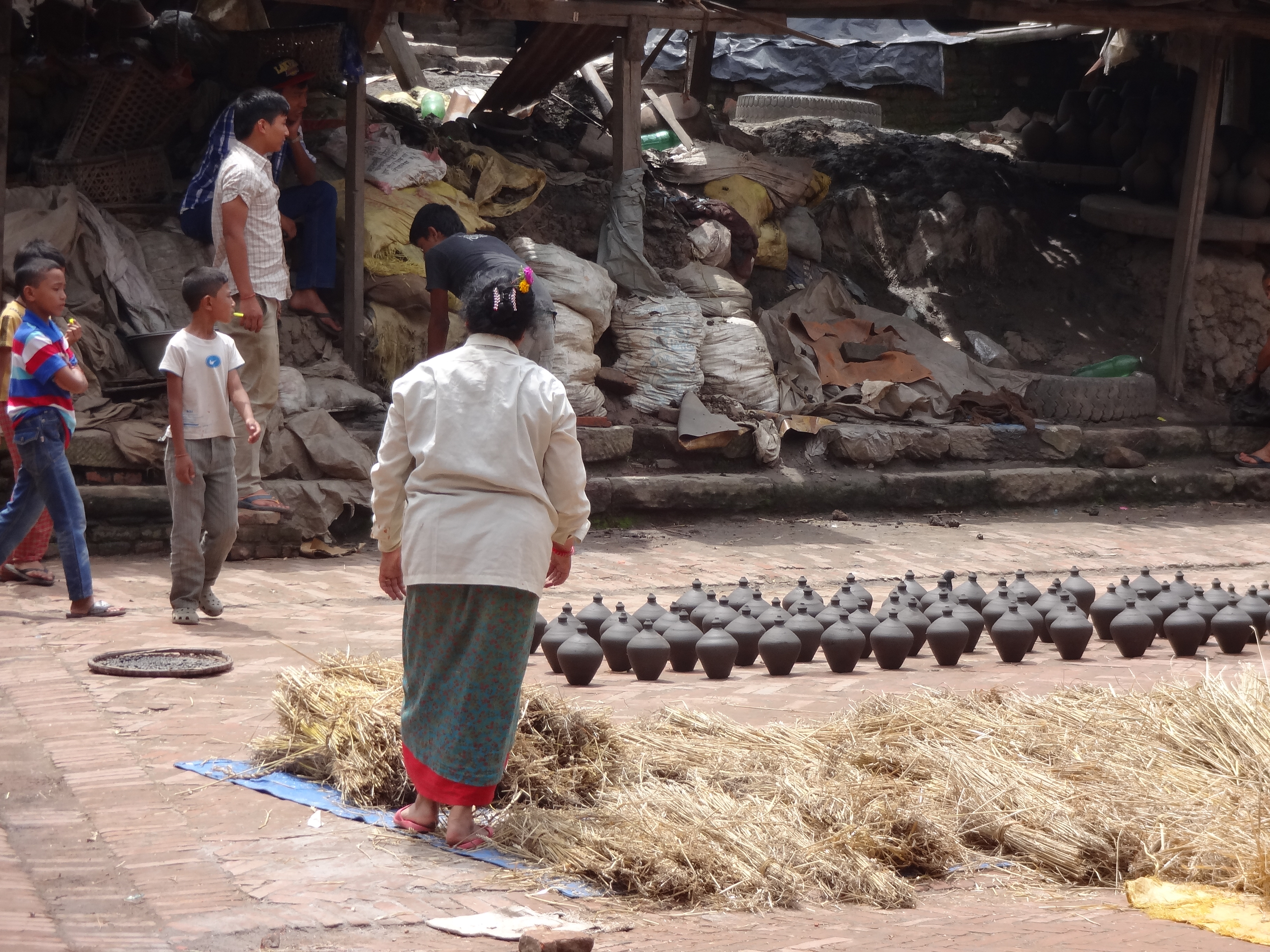
Corn and rice husks drying side by side in the main square…..

Bhaktapur Pottery Square

….. alongside the freshly turned pots.


Bhaktapur Doorway

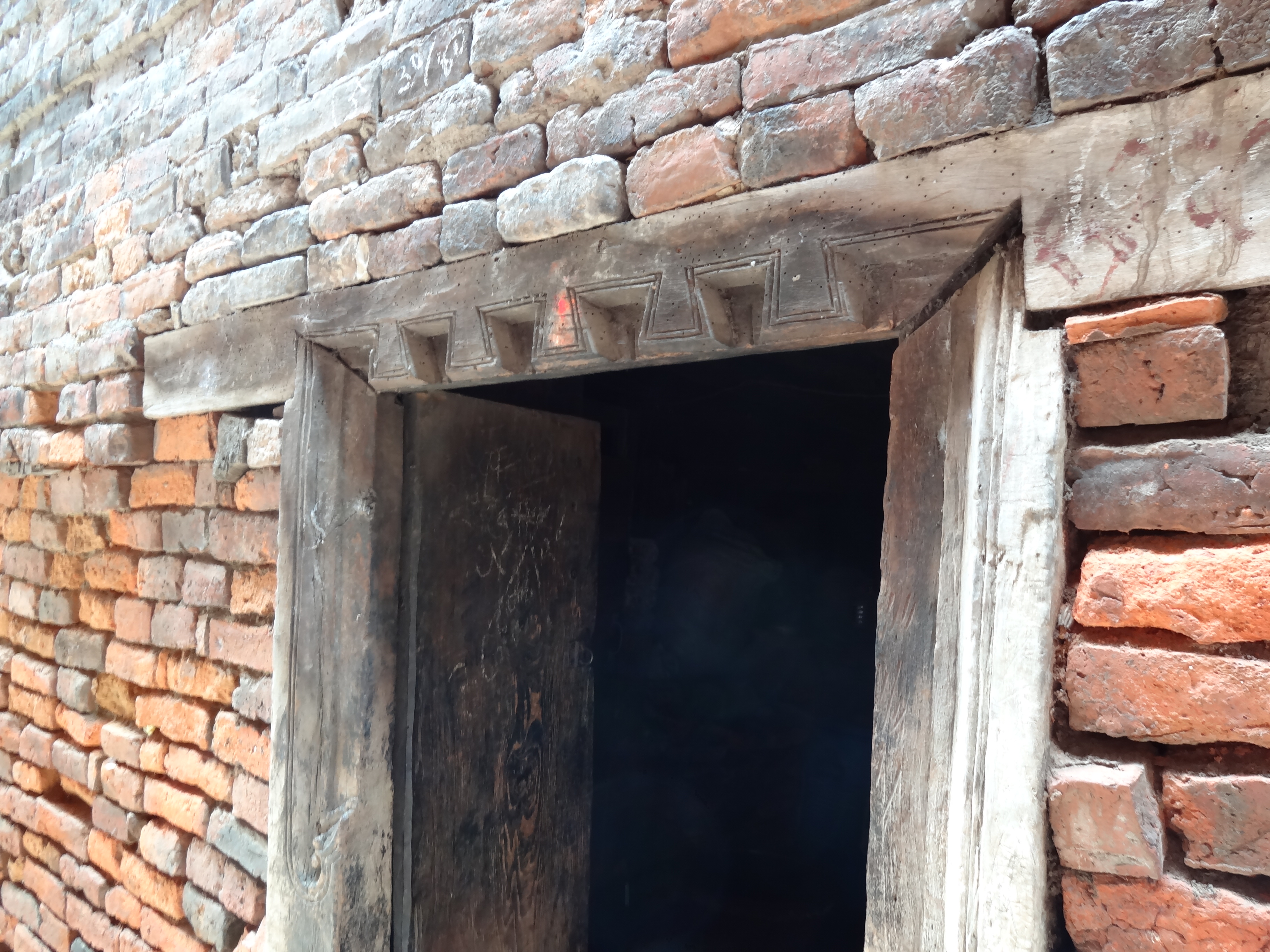
Typical Bhaktapur doorway with decorative lintel. Peering through one would reveal anything from a small living area to a trademan working.

Bhaktapur Weaving

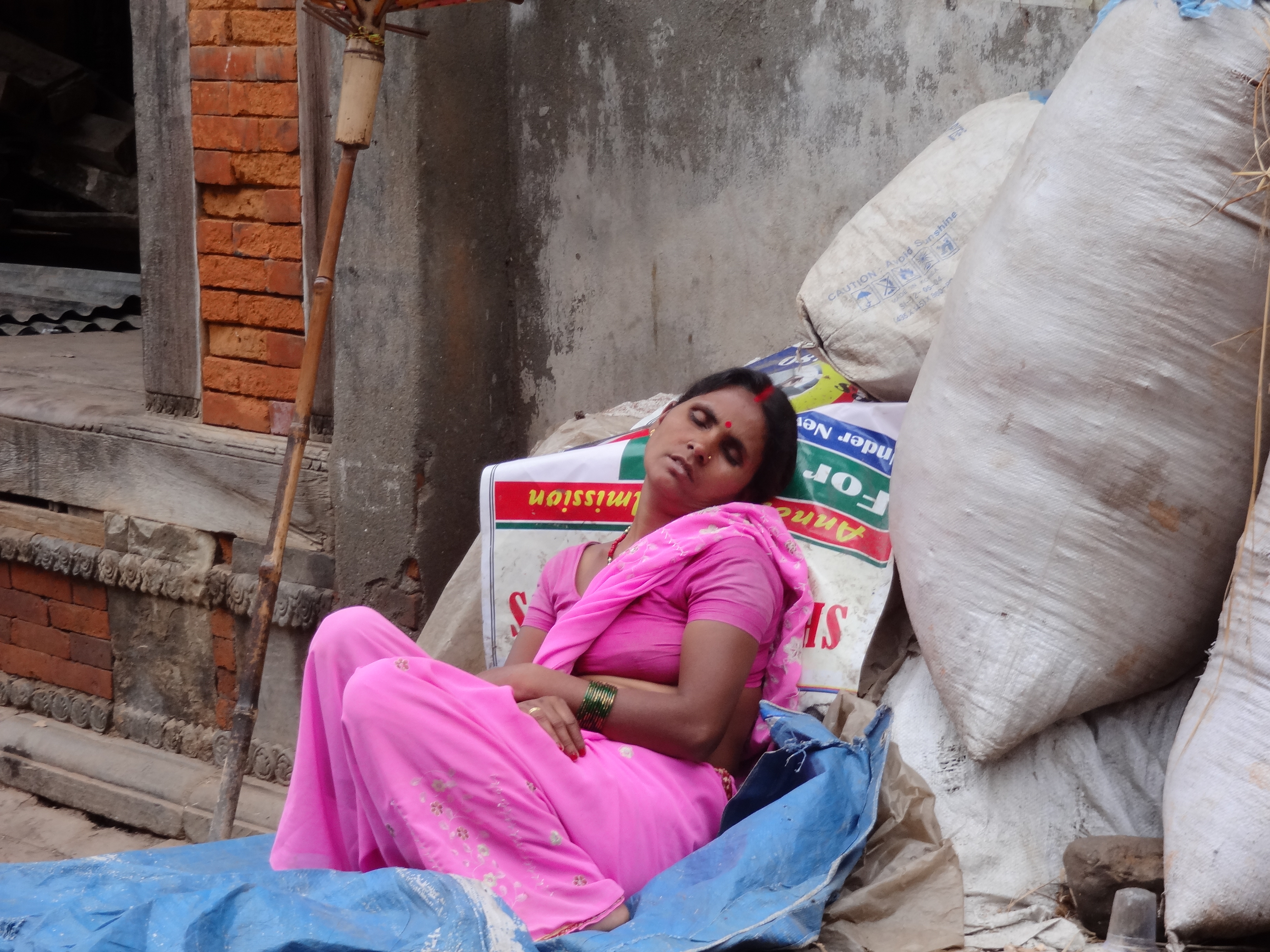
The lady is spinning yarn. But she also had a side business going of making mats from reeds.

Grinding Flour in Bhaktapur

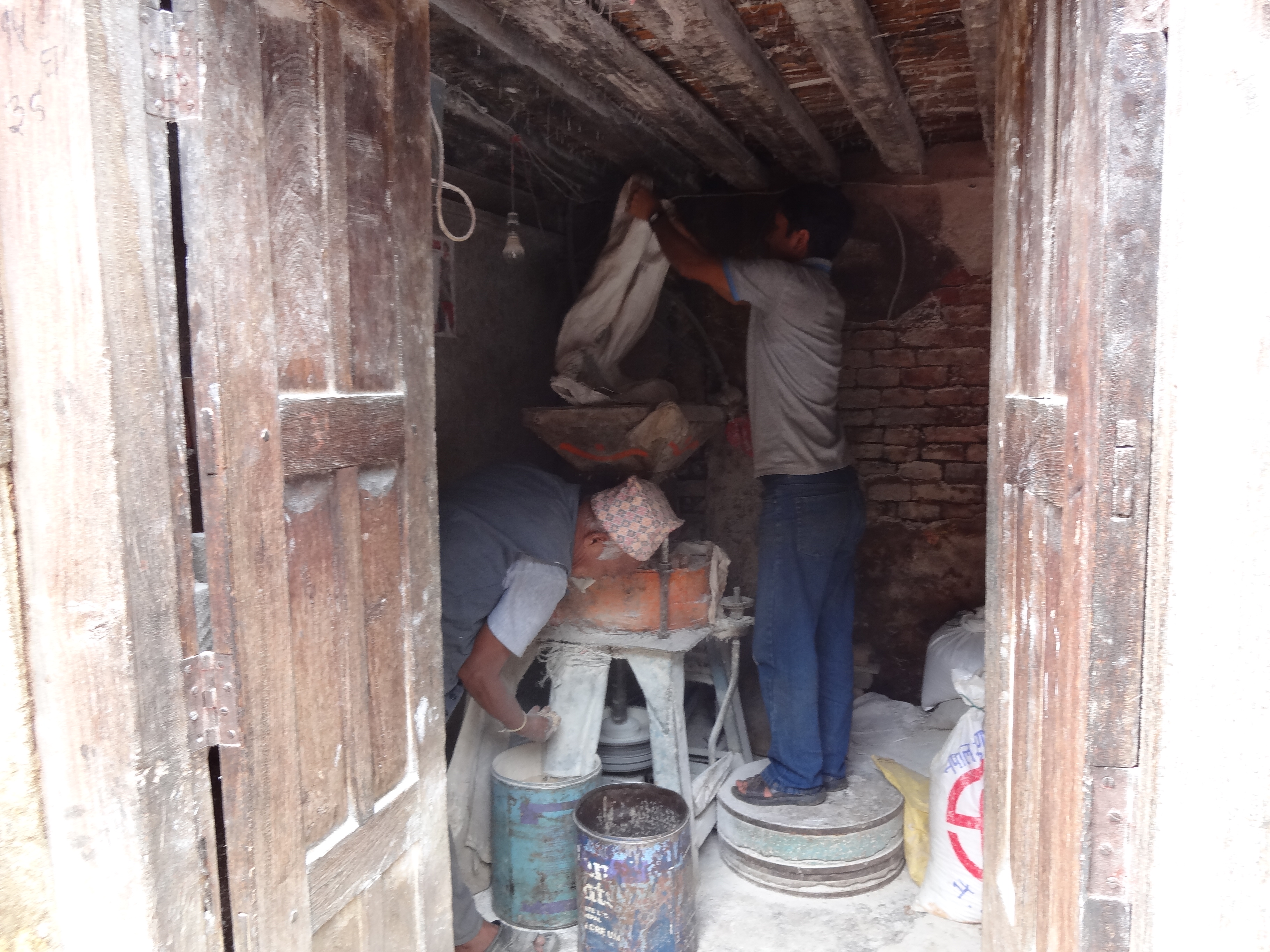
Wheat (or rice?) being emptied into a grinder to make flour. We watched the white powder and husks being collected in sacks

Bhaktapur Bakery

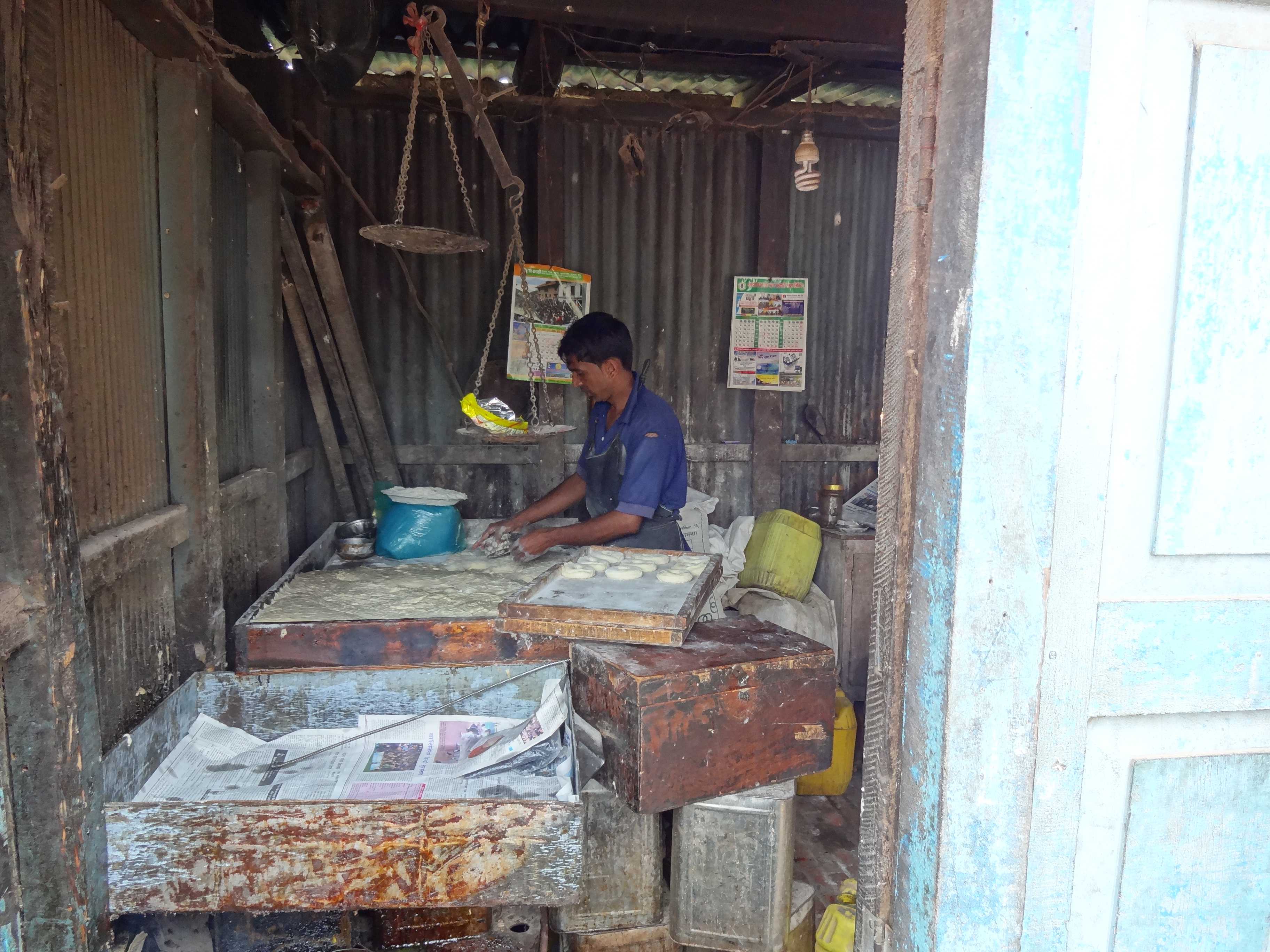
We watched this baker hand shape donuts from his huge tray of dough, stacking the donuts and leaving them to rise some more.

Bhaktapur Bakery

Tray of handmade donuts ready to be fried in the large wok of oil on the floor. We returned in the evening — cameraless– and saw these for sale, crispy brown and dusted in sugar.

Bhaktapur – Around Town (Part 1)


DSC00396

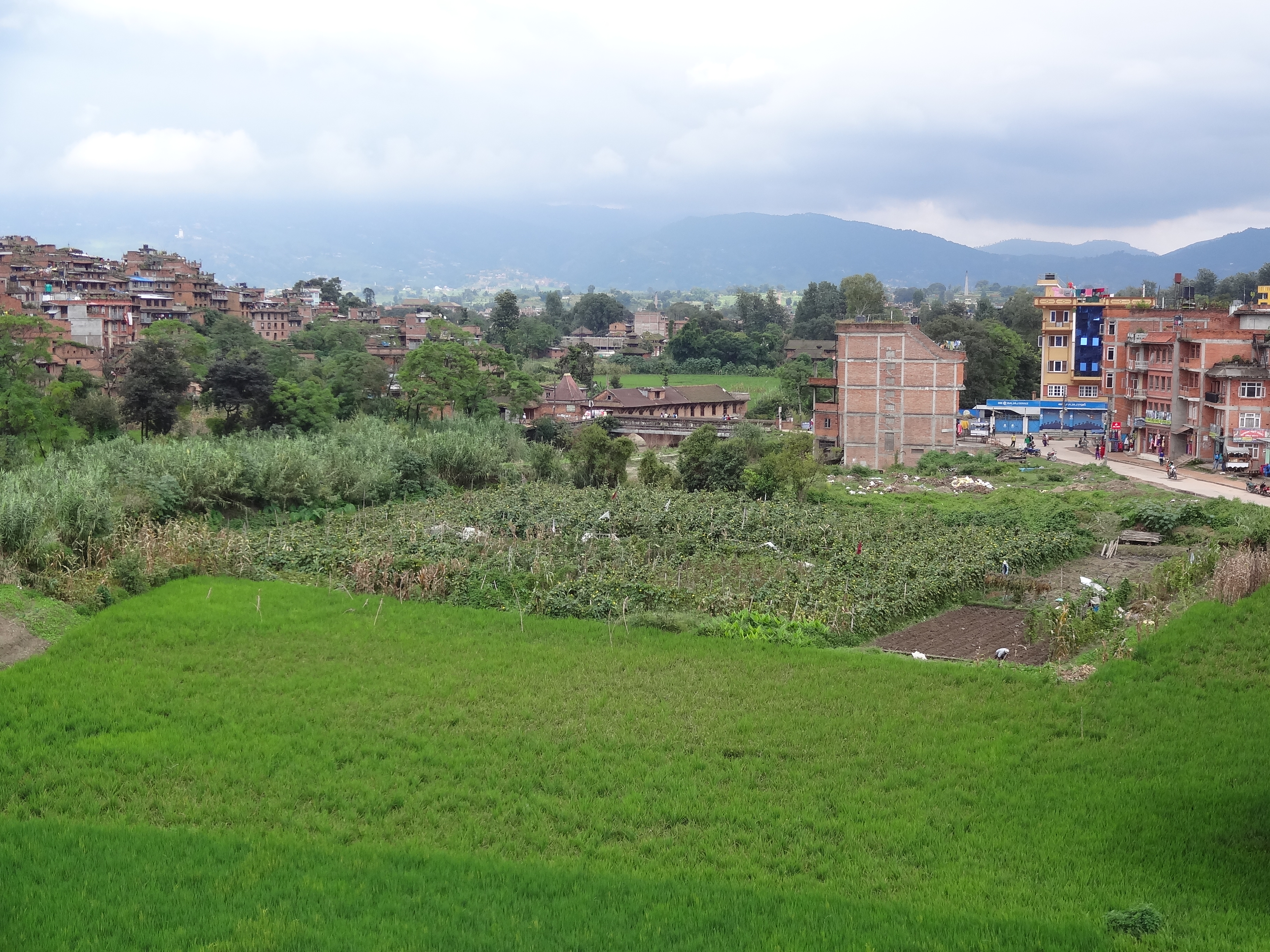
Bhaktapur village. From a distance the village looks quite large but ramshackle. Close up its a different story.

Shortly into our first few weeks into Nepalese life, it was a three day weekend and our only and last chance to see something of our surroundings before Latham and I had to leave for London to settle him into University. Knowing very little about where we were and what there was to do, I asked around for advice. Bhaktapur is a short drive of less than an hour out of Kathmandu and recommended by many, so we headed there for a two night stay.

DSC00397

Surrounding rice fields with Bhaktapur in the distance

We stayed at the attractive Heritage Hotel a short distance outside the town, surrounded by rice fields. From our room on the 5th floor we had access to a roof terrace and 360 degree views to the town and its outskirts. It was wonderful to be out of a city environment after such a short drive and watching every day life and the world go by was fascinating.

DSC00393

Watching crops being planted in nearby fields. That’s okra growing to the left.

DSC00399

Small shrines and unexpected antique construction is tucked away in unexpected places.

DSC00401

DSC00406

Crows seem to everywhere in Nepal. These were watching over the world just like me.

The village was a 5-10 minute walk from the hotel across an ancient bridge. There’s a quite steep entrance fee of approximately $11/person for foreigners which is towards the preservation of the village (hopefully). With a photocopy of your passport the entrance fee becomes valid for several days, but no one seemed to be watching after our first visit. There weren’t many western tourists, so perhaps they just recognized us and left us alone.

DSC00369

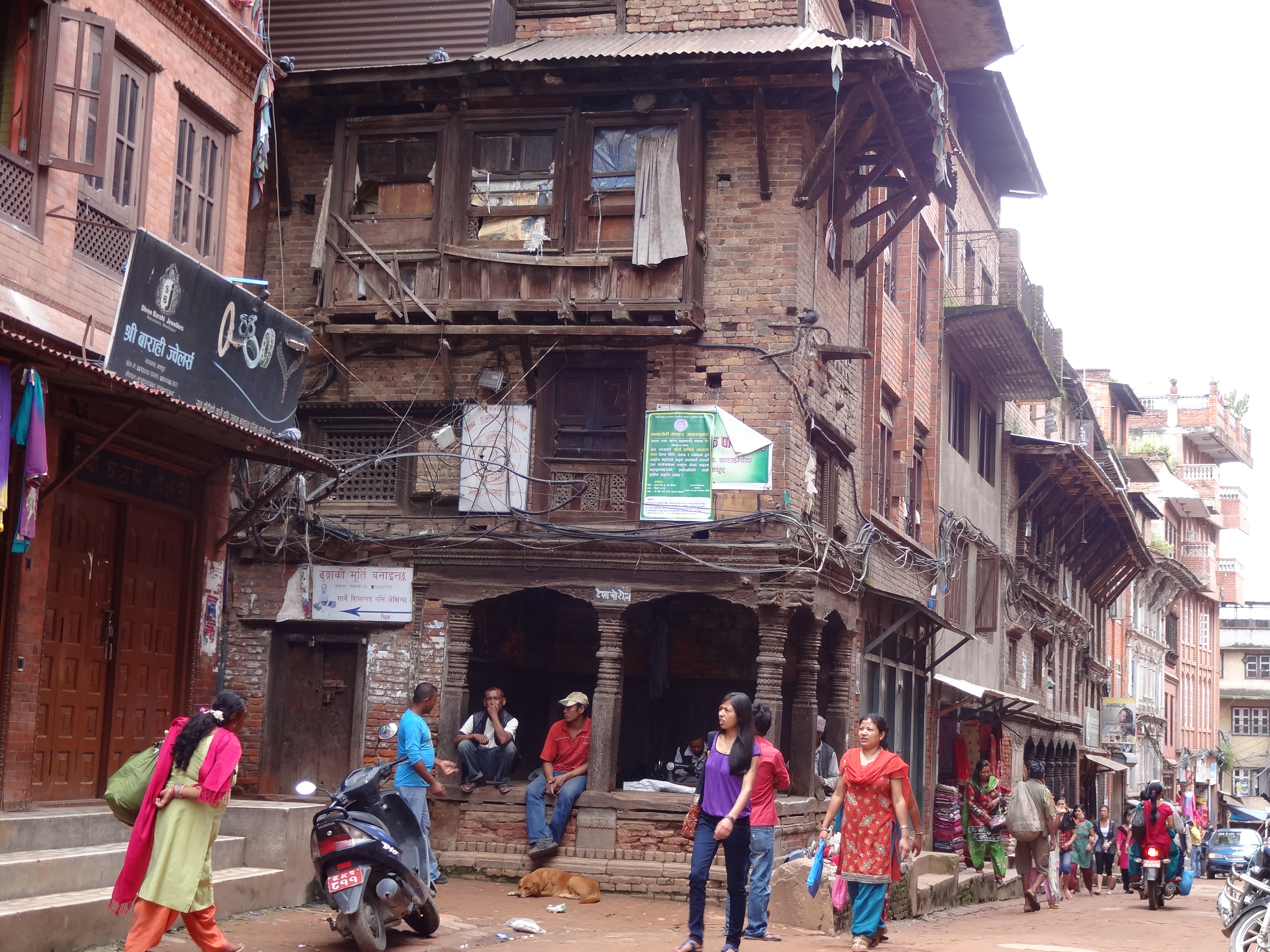
Bhaktapur streets were bricked and narrow. Busy with everyday traffic, apart from the occassional motorcycle, car or printed advertisement, there was very little of 21st century life to be seen.

DSC00370

Considering there were few western tourists, I felt pretty comfortable walking around. I felt noticed but not conspicuous, so it was easy to wander and explore.

DSC00374

DSC00379

DSC00380

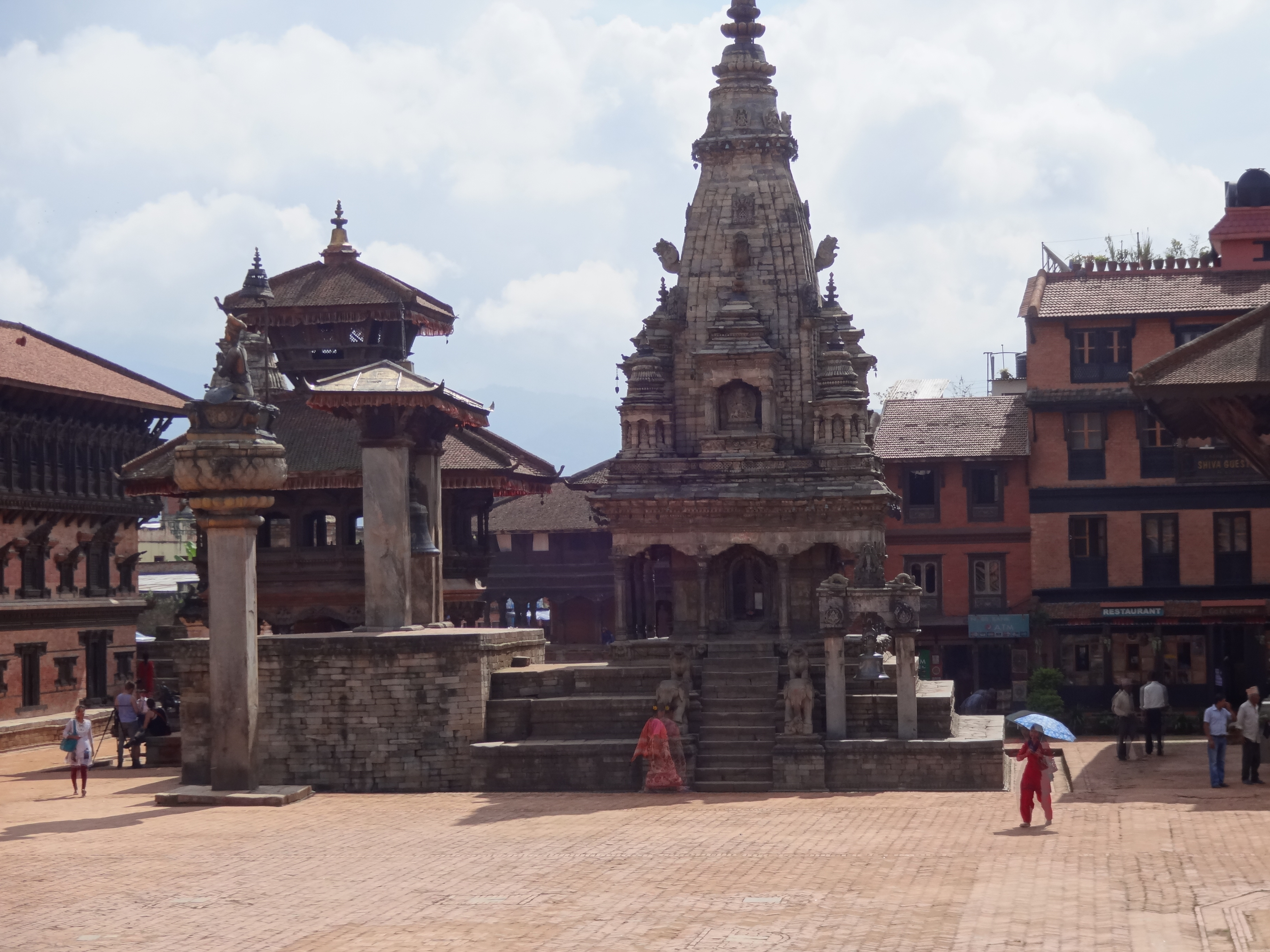
Bhaktapur is pretty large to explore on foot and a warren of streets. We spent two days looking around but certainly didn’t discover it all or see find half of it secrets. The main attractions are the large squares, Durbar Square being the largest and a world heritage site. Its a pretty amazing collection of temples, sacred sites, statues, gateways, and ancient architecture which is all mind-blowingly packed into a large medieval square. All of could do is sit and stare in wonder. Most amazingly of all, if you explore a little further out, there a more and more squares to discover. Durbar Square may be the largest and most impressive but it is not a small remnant of ancient Bhaktapur, it is just part of the whole amazing medieval preservation which is alive with everyday life and not just a tourist enclave.

DSC00412

Impressive gate guards in an old square doorway

DSC00417

Durbar Square, Bhaktapur

DSC00424

Highest man made temple in Nepal

DSC00428

DSC00430

Living rooves too!

DSC00445

DSC00446

Anyone mad enough to come and visit us absolutely needs to spend a few days here. We’ll be back too.

Swayambhuneth: Monkey Temple


opening

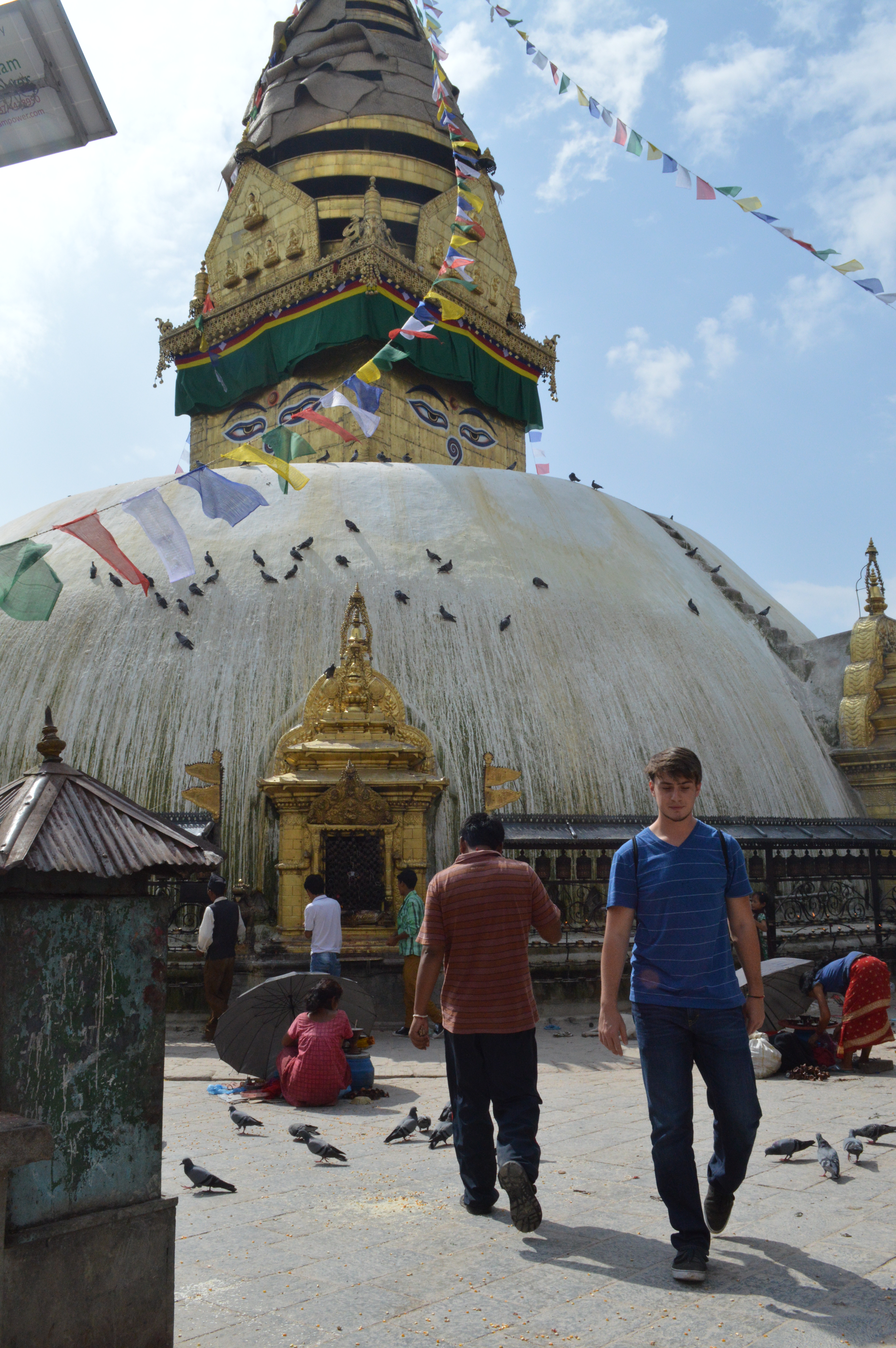
Buddha’s eyes looking down from the temple dome

We’ve not had much chance to be tourists in the ten days we’ve spent in Kathmandu so far.  Life has been full of work paperwork and procedures, hiring and settling staff, settling ourselves, unpacking stuff, figuring out the grocery store and what and where to buy 10,000 other different bits and pieces that we need.  Before Latham leaves for uni on Monday, I wanted to get a couple of tourist days in so his impression of Kathmandu wasn’t just grocery shelves, an empty house and crazy traffic.

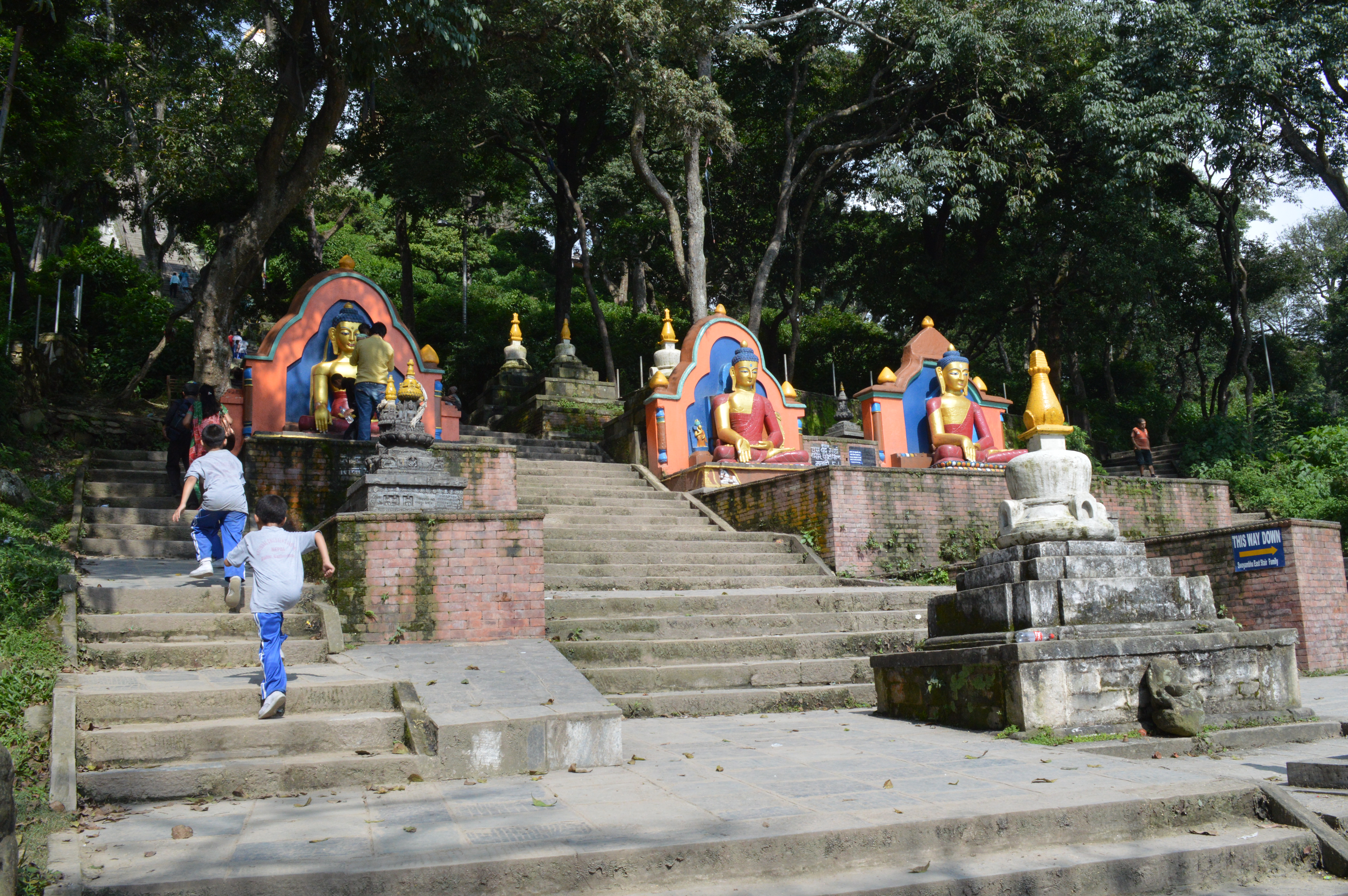
So yesterday we headed off to Swayambhuneth Temple, a UNESCO world heritage site also known as Monkey temple. The temple is located on the top of a hill and its a steep 365 step climb up.

climbing up to Swayambuneth Temple

Fortunately there were level stone steps and a hand rail which made the climb much more doable. Seeing your goal in the distance helped too!

The climb is also broken up my all sorts of interesting things to look at on the way up…lots of excuses to stop and look at the details. The climb starts with troops of monkeys running around at the stairway entrance.  They are very tame, very entertaining, and I imagine pretty obnoxious too, although they gave us no problems. More on those later….  Then there’s plenty of vendors, statues, shrines along the way. Half way up there is a sort of Buddha garden with well kept statues to keep you company as you catch your breathe.

Buddhas at Swayambuneth

Close up of Swayambuneth Buddhas

Reaching the top you are rewarded with a close up view of the temple which sits in the center of a large multi-level courtyard that’s like a small village.

DSC_0711

DSC_0739

Strolling around Swayambuneth courtyard

There are viewing platforms all around where you can take in amazing views of Kathmandu. The temple itself is surrounded by rows of prayer wheels, flower sellers, strings of butter candles and incense burners, souvenir sellers, more statues of Buddha and, of course, more monkeys. The devout were chanting and circling the temple with drums, cymbals, and horns. Pigeons fly everywhere, stray dogs are sleeping in the most unlikely places, and monkeys pop up on the rooftops above you. There’s a lot to take in!

Views from Swayambuneth Temple

The views were a bit too hazy that day, but they were 360 degrees out across and around the city. I particularly loved these prayer flags strung out through the trees.

Buddhist Prayer Wheels

Getting a close up view of the prayer wheels. Notice how they are polished by many hands, but no one touches them at the top.

Swayambhuneth

Water break at one of the many, many shrines

Courtyard at Swayambhuneth Temple

I loved all the activity. There was lots going on but it didn’t feel crowded and the vendors weren’t too obnoxious either.

Swayambuneth Monkeys

We spent a good hour up there….I could easily have spent two. We were too early to go up to the rooftop cafe and get a birds eye view of the square, so instead we took pictures of monkeys. Here are a few of the best. Loved the visit and want to go back many times!

Swayambuneth Monkeys

Swayambuneth Monkeys

The baby was fast asleep and still clinging on. Adorable!

Weekly Photo Challenge: Kathmandu at Night


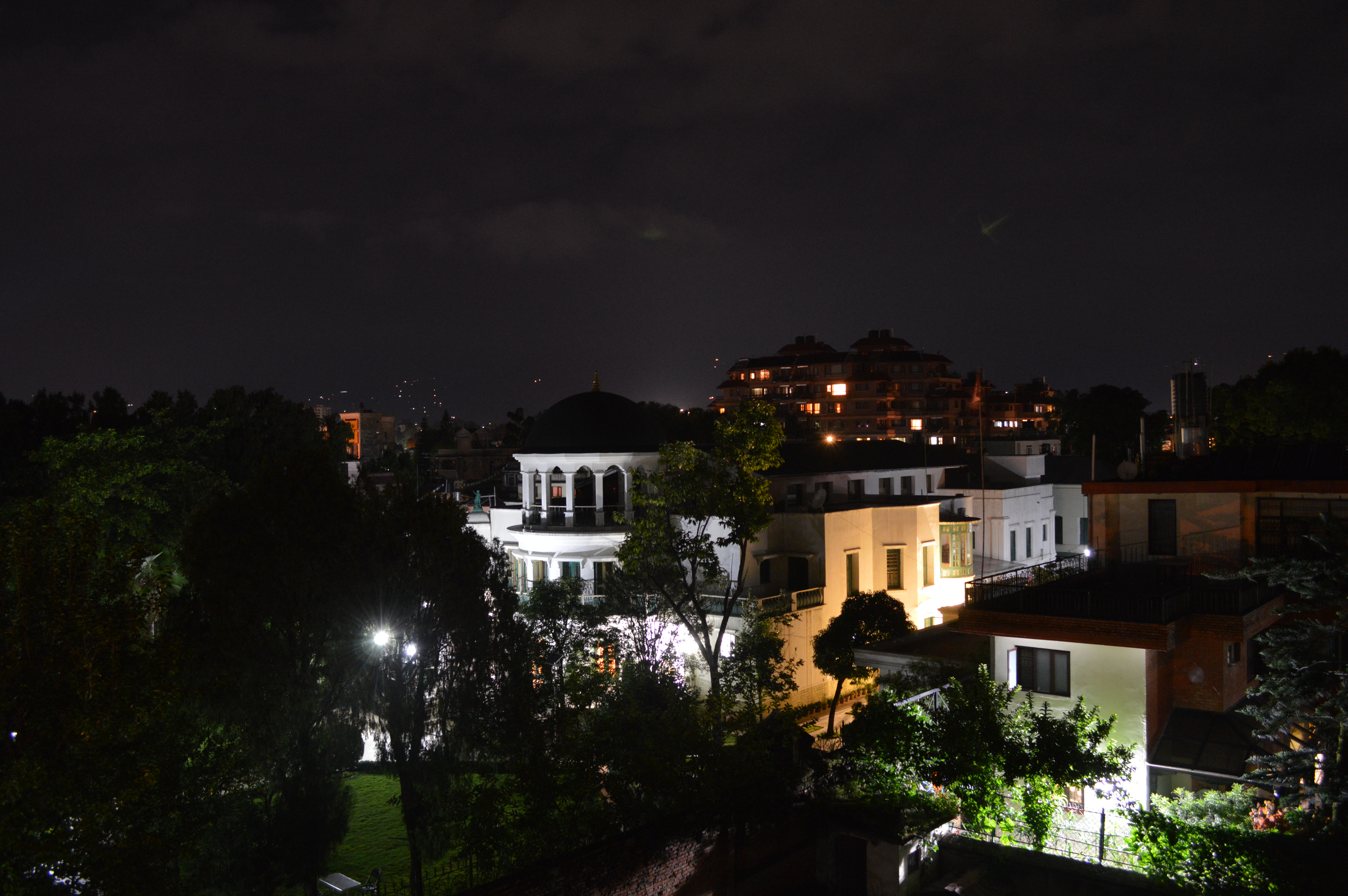
DSC_0549

The city seems so calm and quiet at night.

No, this post isn’t about the nightlife — if there is any here — its about the city after nightfall in a place where power outages are scheduled to handle the overloaded demand for power. Load sharing ensures that the power goes out every day at scheduled times, although no one seems to be sure if the schedule means anything. Power seems to go out anytime during the day and at night. For us its just the inconvenience of a one or two second delay while we wait for the generator to kick in. But for most people its a way of life.  Even we have stopped looking up when the power goes out.

kathmandu by night

For those lucky enough to have a generator (including us) the night lights remain on. These are the pools of light glowing in the otherwise dark. It reminds me a little of Spetses during a power cut where you can see the flicking light of kerosene lamps from across the valley.

DSC_0551

From the other side the blackout is even greater. Above the skyline of the houses are the foothills with just one or two shining lights above in the blackness. I imagine how dark it must be on the other side of the hill without even the distant glow of Kathmandu to light the sky. I want to go there!

This post participated in the Daily Post’s Weekly Photo Challenge: Nighttime

First Glimpses of Kathmandu


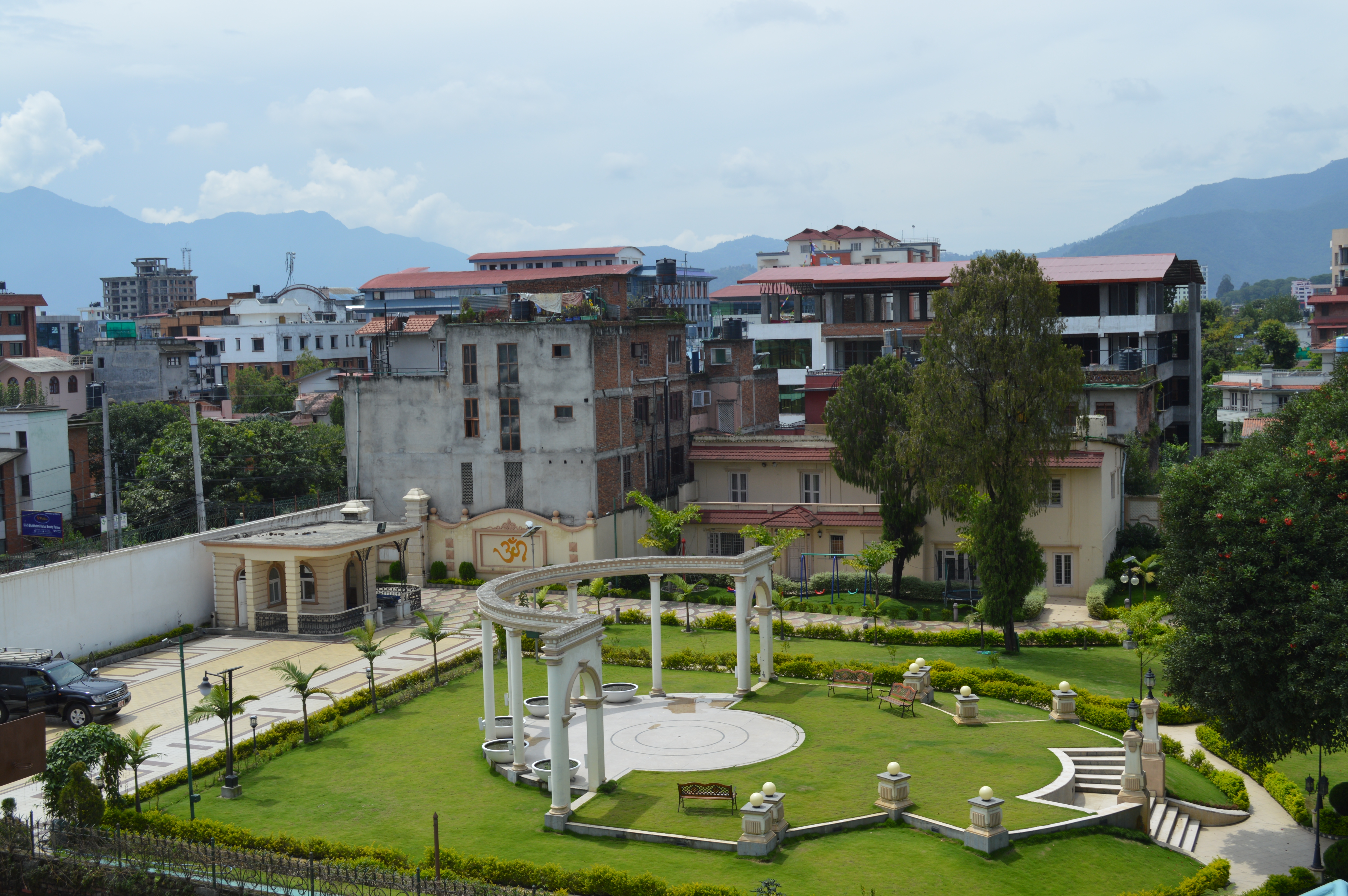
Well we made it through the first few days of settling in, survived jet lag, filled in a million different forms and encountered the minor difficulties of the newly arrived. What’s it like everyone is asking me?  So to illustrate, here are a few pictures taken from our three rooftop terraces showing the area around our home:

Kathmandu Rooftops

From our upper rooftop….I’m so glad that we have some views of the mountains. I hear they get better later in the year.

Kathmandu Rooftops

Not so many trees but little pockets here and there….and occassionally open views to the distant countryside that remind you that Kathmandu is not so big

Kathmandu Rooftops

View from my lower rooftop. Crumbling house next door is still occupied. Note the broken satellite dish with pieces missing on the roof and the newer, smaller one alongside. Abandoned yard behind has overloaded persimmon tree and a pomelo tree.

Kathmandu Rooftops

There’s some smarter looking homes in the other direction.  But generally speaking our central location is a mish-mash of old and new, rich and poor, all thrown in together.  As far as I can tell there isn’t really a smarter area of town.

Roofs of Kathmandu

View of a neighbour’s yard. What is that? Well I think it is sort of a ostentatious temple to wealth. I guess you could throw garden parties in it….but talk about incongruous.

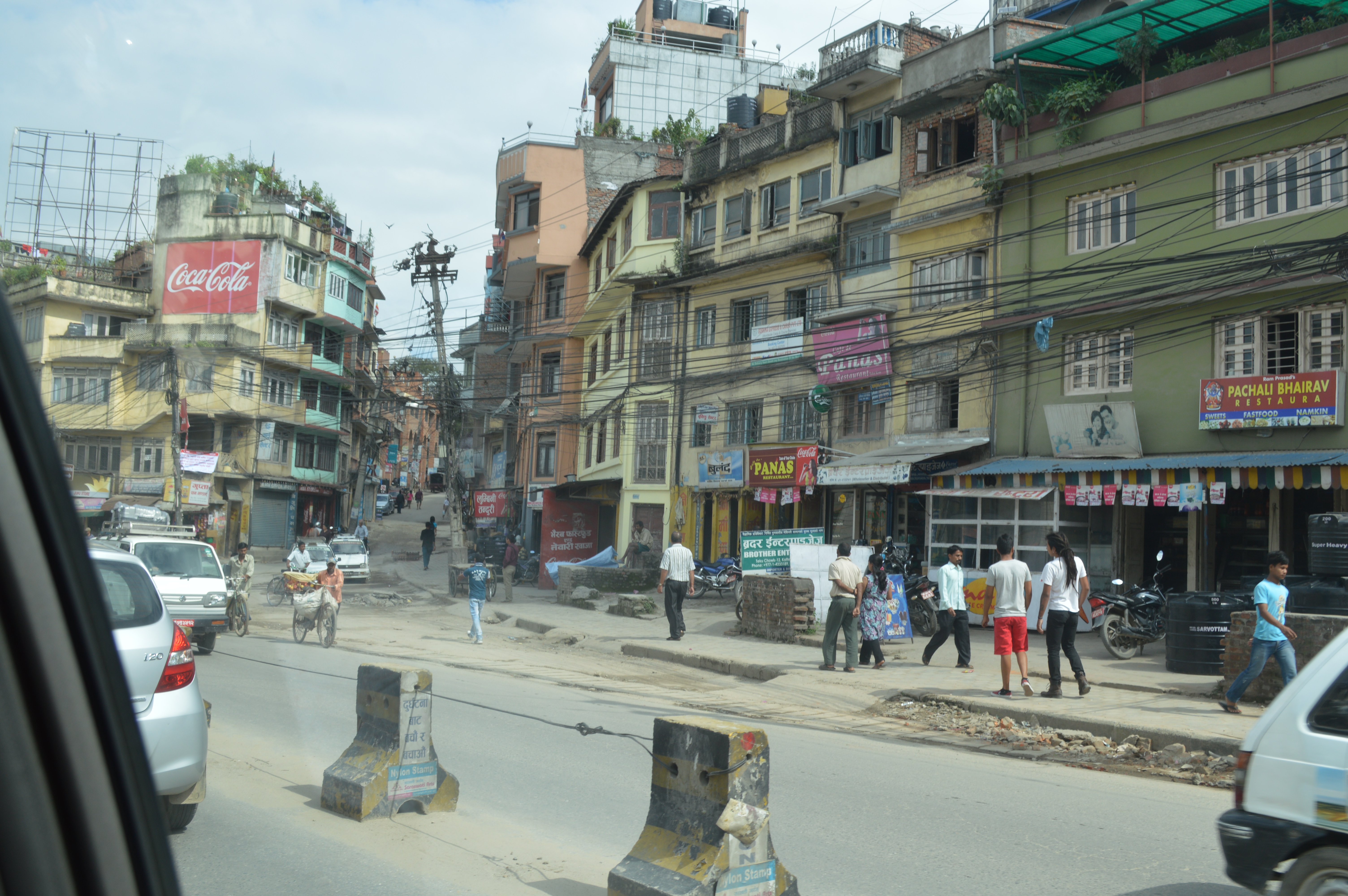
Outside the gate things there’s plenty going on.  After Manila, the traffic volume doesn’t seem nearly so constantly high, but I’ve been here for five days now and have yet to see a traffic light anywhere.  You can imagine what that does to intersections.  Here are some snaps around Kathmandu from the car as we take our first drives around the city:

Kathmandu Roads

Driving with motorcycles. There’s a lot of them. Not as heavy as Jakarta (Kathmandu doesn’t have the road infrastructure) but they are everywhere and fearless…

Kathmandu electric cables

Crazy wiring is everywhere. You should see the route of our internet cabling over other people’s rooftops…

Kathmandu Streets

Typical street scene. There are a few main arterial streets and a ring road but most streets are smaller like these.

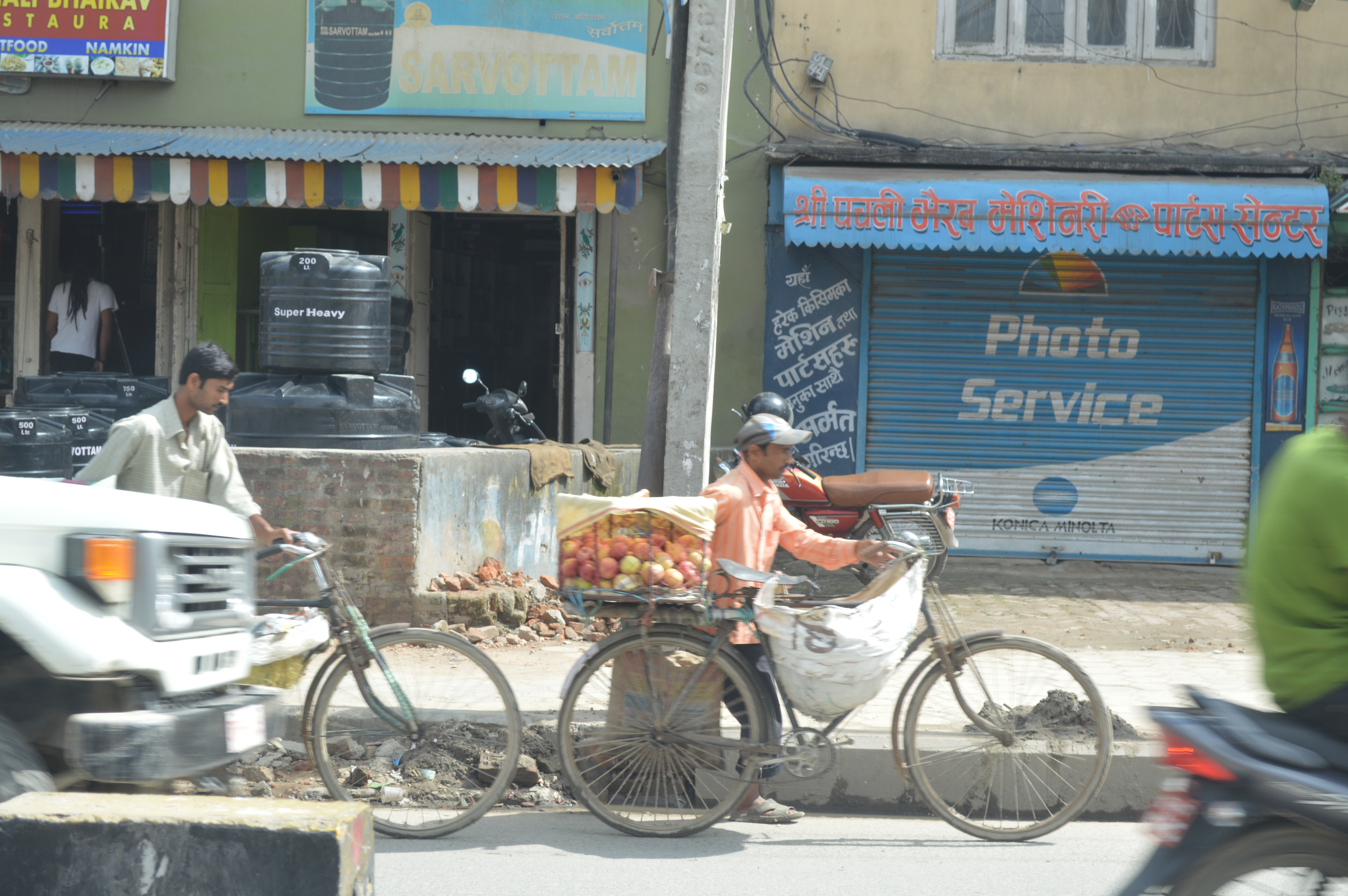
Kathmandu Streets

Lots of produce loaded bikes around. I think these guys had picked up produce from the nearby wholesale to sell at the their own stands.

Kathmandu Streets

Although the river water’s polluted, it still looked like a river which you could imagine flowing to a cleaner place. It was full of garbage but still cleaner than rivers I have seen in provincial areas of the Philippines.

DSC00359

…and finally, stray cows. I had been warned but saw none for days. Today they were everywhere. Three brown cows walked three abreast today in the middle of the road outside my gate. Of course, I didn’t have my camera, so these garbage-eating cows at a local market will have to do.

Sign Language: No Comment


nocomment

Usually the Sign Language feature on my blog is about public signage and the comments it make about the culture, economy, or character of a place. Heading on the highway towards Athens airport dozens and dozens of billboards appear, but they are all advertisement-free, except for the occasional scribble of graffiti. It was interesting how saying nothing could comment so much on the current state of affairs in Greece. I hope things improve soon.

Coming Home


DSC_0272

We get around more than most people, I know.  Last summer was pretty intense with travel.  This summer even more so.   My travels started in June and will continue until the end of September thus:  Manila – Washington DC – New York – Washington DC – Greece – Kathmandu – London – Kathmandu….with enough side trips at the various locations to keep us permanently living out of suitcases for a long while yet.  When we got to Greece a couple of weeks ago, I posted “Home, finally!” on Facebook and someone asked me to explain what that meant.  It  made me wonder about the definition of the word, and what feels most like home to me.  I certainly would have defined home as Manila at different points in the last two years, but our Greek home is Home in so many ways.  For others, working overseas for a while and planning to return to the place where you grew up is pretty straightforward classification:  permanent home and temporary home.   We however have been moving around for so many years that I have lots of definitions.  There’s:

Original Home:  London.  Where I grew up and where I visit almost every year.  That’s where my family is and so many familiar things.  Many unimportant, trivial, yet comfortingly familiar things like chocolate bars, tv shows, bus stops or familiar streets.  Going to London is like a grounding in who I am and where I came from.  But as the years go by there are very little concrete remains of the old memories, and very little real “home” except for the care that my family gives me.  Out on London streets there are very few doors left that I can knock on any more, but I still consider myself a Londoner.

Adopted Home:  New Jersey. There’s the NJ town where I lived for lots of years (one of my favourite places) and American friends and family and the cultural connection I have built over the last 25 years of being married to an American.  Its less about the place and more about the culture.  I don’t miss NJ.  I do miss the town where I lived.  Now I am an American but I’ ll don’t think I’ll ever consider myself a New Jerseyite.

Assigned Home:  Wherever we are posted.  It was Manila, its about to be Kathmandu.  I’m sure I will learn to love (and dislike) many thing about Nepal and, like the Philippines, it will become part of my world “home” places as all the crazy new stuff becomes normal and navigable.  But in an assigned home for a predetermined period of time works very well to deter you from the kind of attachment formed in other places.  Its really just the people that stick with you.

Permanent Home:  Greece.  Home of our house, our things, and friends we see every year. The place where we raised our son for his preschool years, a place of consistency…sort of.  Every year is different and this year more so than most.  But there’s something about returning to a place where your clothes are already in the closet and your favourite sheets are on the bed that makes it a Home with a capital H.  I’m sure we are classified by many locals as one of the temporary summer families that are around for a short while and then are gone through the majority of the island’s year.  But, unlike other Summer families, we ain’t got no other home to go to!  (You’d have to be a Londoner at chucking out time to get that one.)

The Elusive Greek Tomato


Greek-tomatoes

Greek Tomatoes from Crete. Perfect, regular and probably tasteless

Greek-tomatoes

More perfection of appearance (only)

Mythological Fruit or Lost National Treasure?

When I first came to Greece in the early eighties it was a vastly different place.  Since then so many things have changed — for the better and worse — before we even get to its economic troubles today. It always easy to look back and see a kinder, simpler time and let sentiment cloud judgement.

Back then I was a twenty year old English girl who grew up on fresh fruits and vegetables from the local greengrocer (not a supermarket) including seasonal Canary Island tomatoes and home grown tomatoes from my dad’s greenhouse in August.  Canary tomatoes are small, uniform, and not particularly special, but they sliced up beautifully in perfect little segments on a salad.  When I first saw a Greek vegetable stand the lemons were piled high with leaves still attached and knobbly, misshapen bright red tomatoes were everywhere.  When you cut them open, they were red through and through, juicy, sweet, and full of seeds which seemed to randomly cluster throughout the flesh of these tomato monsters.  Quite frankly, they looked a bit weird.  Cut up on a Greek salad they were easy to eat because they tasted so good, but they shook my limited definition of what a tomato should be.

Flash forward twenty five years and I am beginning to doubt that those tomatoes ever existed in Greece.  Now they seem impossible to find, and have been replaced by large, uniform fruit that look impressive and much more perfect, but cut them open and — I’m sorry — they are just not Greek enough.  I’m told time and time again that “so and so” has fantastic tomatoes this season, and off I go to buy some.  Only to be disappointed in what I find. So much so, that I’m starting to question whether I have idealized them to the point that no mere tomato can ever live up to my expectations?

I’ll illustrate this with a story.  My husband loves the Greek dish, Macaroni me Kima.  Its a Greek version of Spaghetti Bolognese with the distinctive addition of cinnamon.  The basic recipe is not complicated and there’s not that much variation on how to make it.  I would make it for him and ask how he liked it and he would always say “its very good, but its not like Maria’s”.  He could never tell me what Maria did to make it so good and she wasn’t around to ask.  I tried numerous versions of the recipe, but as I say that’s not that much room for variation.  From time to time I would ask a Greek friend (or better still her grandmother) to show me how to make it.  Every time the preparation seemed pretty standard to me and Robert’s reply was the same:  “very good but not like Maria’s.”  It literally took me 15 years to realise that it was not Maria’s skill as a cook that my dish missed, but the long hike to her house and the hard work outside in the Greek sun that preceded the reward of her Macaroni me kima lunch.   It was the context and sentiment that my recipe lacked.  So, my question to myself was whether this was happening here with my elusive Greek tomato?

Greek-tomatoes12345

These are tomatoes?! You have to friggin’ be kidding me! I would be embarrassed to give these away.

Greek-tomatos12

Perfect, shiny and a beautiful red. Buy me it screams…but look at the cut away. That white ring is a good sign its tasteless and probably mealy too. No thank you! I’m not obsessed with this….really!

I went to buy tomatoes last week from a local grocer who has fresh produce three times a week.  She is a lovely woman and I don’t question her sincerity one bit. She told me the prices of two types of tomatoes she had and one was twice the price of the other as it was the better product.  The more expensive variety was mostly green and had the shiny, plastic appearance of wax, the hallmark of something raised in a greenhouse. I asked her if they were imported as that might account for the difference in price.  But no, the box showed they were Greek.  Really?!  Here we are in August, in Greece, and this is the best you have on offer?  Something is really wrong here.  Has everyone bought into this myth that perfect-looking tomatoes must be better?  Am I the only sane one left?!

I don’t think its me.  I don’t think that the Greek tomato of the 80s and 90s is a myth in my mind.  I think its demise is the work of the bastards at Monsanto and other giant seed companies who are messing with our food, messing with our culinary heritage and messing with our seed stocks.    Its heartbreaking to know that profit is driving them to purchase traditional seed stocks with the intention of discontinuing them permanently, so they disappear from our tables forever.  The replacement is proprietary, hardy seed stocks which produce perfect-looking produce that resist disease and transport better at the price of quality and taste.  People buy into the glossy perfection of perfect produce and forget about taste.  How else could I ever explain the grocer’s honest belief that she was selling me a better product?

Greek-tomatoes123

Now this looks like a good tomato! I can’t taste the picture but my money is on this one. Do you know how many google images I had to scroll through to find this..? Which is kind of my point…

But I still live in hope that one day I’ll bump into an old farming family in the corner of a laiiki somewhere who will sell me tomatoes from his grandfather’s seeds that really taste like a Greek tomato.  If this ever happens, I don’t know that I’ll even eat them.  I may just scrape out the seeds and save them and start my own subversive tomato farm somewhere.  Someone has to save this national treasure if it hasn’t already gone forever!

Walking NYC


20130723_174331

A quick snap from the back of a taxi. I sort of love the weird poses of the walkers!

Aside from our Central Park adventures, there was lots to see and explore in the Upper West Side.  Interesting architecture, cafes, stores and restaurants made the area very walkable and it wasn’t nearly as crowded as midtown.  We were there during a spate of extreme heat which made exploring a little challenging at times.  Having been in a deep sweat for 2.5 years in Manila, I really had to push through my fear of being boiled alive as I walked around.  After 2.5 years of non-stop heat, there are days when I look up at a clear, sapphire blue sky and pray for clouds.  The heatwave in NYC didn’t help with that!

Fortunately, towards the end of our stay we got a break in the weather.  It was blissfully coolish in the upper 70s and the perfect time to get outside for the day.  It even threatened to rain a little.  Carla was visiting for an overnight stay and the next morning we decided to do another of our destination walks down to the High Line in Lower Manhattan.  From W 87th it took about 1.5hrs, walking straight down Columbus and 10th St, through midtown and down to 23rd where it currently begins.  If you’re not familiar with the High Line, it is a park, recently developed from an abandoned raised railway line and an excellent, imaginative use of space in crowded New York.  However, it seems to be the “undiscovered” trendy thing to do, and everyone is doing it.  Undiscovered it is not.   Especially on the first cool morning for weeks. Seems like everyone else had the same idea.  It was packed! Maybe this would have been a better experience off season on a Monday morning? We decided to leave the trail at the first exit and grab some lunch, after which Carla took the train home and I decided to walk alone back up to the Upper West Side. By now we were on 34th near Penn Station and I snapped a couple of typical New York scenarios:  iconic yellow cabs,  walk/ don’t walk, traffic, people, non stop everything…

20130725_115920

Walking the narrow Hi Line from W 23rd St

20130725_120208 (1)

A quiet walk in the park? I don’t think so. Too many people for me.

20130725_125854

A glimpse down 34th and 8th

20130725_125923


My route back was up 8th, taking me through Times Square at an hour approaching the end of the work day.  Big mistake….I cut back over to 10th, weaving through the throngs of people to a much more tolerable walk home.

I was so glad for the break in the weather which allowed me to see New York on a grander walking scale than before, piecing together the different neighborhoods on foot.  Had we been blessed with more cooler weather and a little more time, I would have done the same North, West and East, but time had run out.  At the end of the week we were heading back up to Washington DC for one more week, and then on to the vacation part of our trip:  Greece!

20130714_192551

The wonderful Upper West Side garden where we stayed, caught up with family, and got a little respite from the hustle and bustle of the city.